SaaS Email Marketing: 12 Strategies That Work When Everything Else Is Changing

SaaS email marketing is one of the most reliable product growth levers for acquiring, onboarding, retaining, and expanding customers. The channels teams have long relied on are getting harder to earn returns from. Organic social reach is contracting while AI answers are hurting SERP click-through rates, but email has never had these problems because it has never depended on an algorithm. That independence comes from four structural advantages that no platform can replicate:
- Permission-based: Subscribers explicitly opted in to hearing about the product.
- Direct access: Your message reaches their inbox without any algorithm filtering it.
- Measurable: Every campaign produces actionable data that informs your strategies.
- Owned: The list is an asset you own, regardless of what any platform decides to do next.
That combination is what makes email compound in environments where other channels are contracting. In fact, the average email open rate in B2B SaaS is 21%, at a time when organic social reach for most B2B brands has fallen well below that. HockeyStack found that email marketing yields a 2x better conversion rate than Facebook, a 1.6x better conversion rate than Bing, and a 1.2x better conversion rate than Google Ads. The channel that was supposed to become obsolete is now outconverting the channels that were supposed to replace it.
KB Digital’s email consultant Katelyn Baughan highlights a truth that most email marketers believe but rarely say:
“Email isn’t flashy. It’s not the newest thing. But it works. And in a world where engagement is falling everywhere else, ‘it works’ is exactly what we need.”
Best of all, email marketing’s unmatched measurability creates a flywheel that allows you to continuously optimize your campaigns in a way no other channel can.
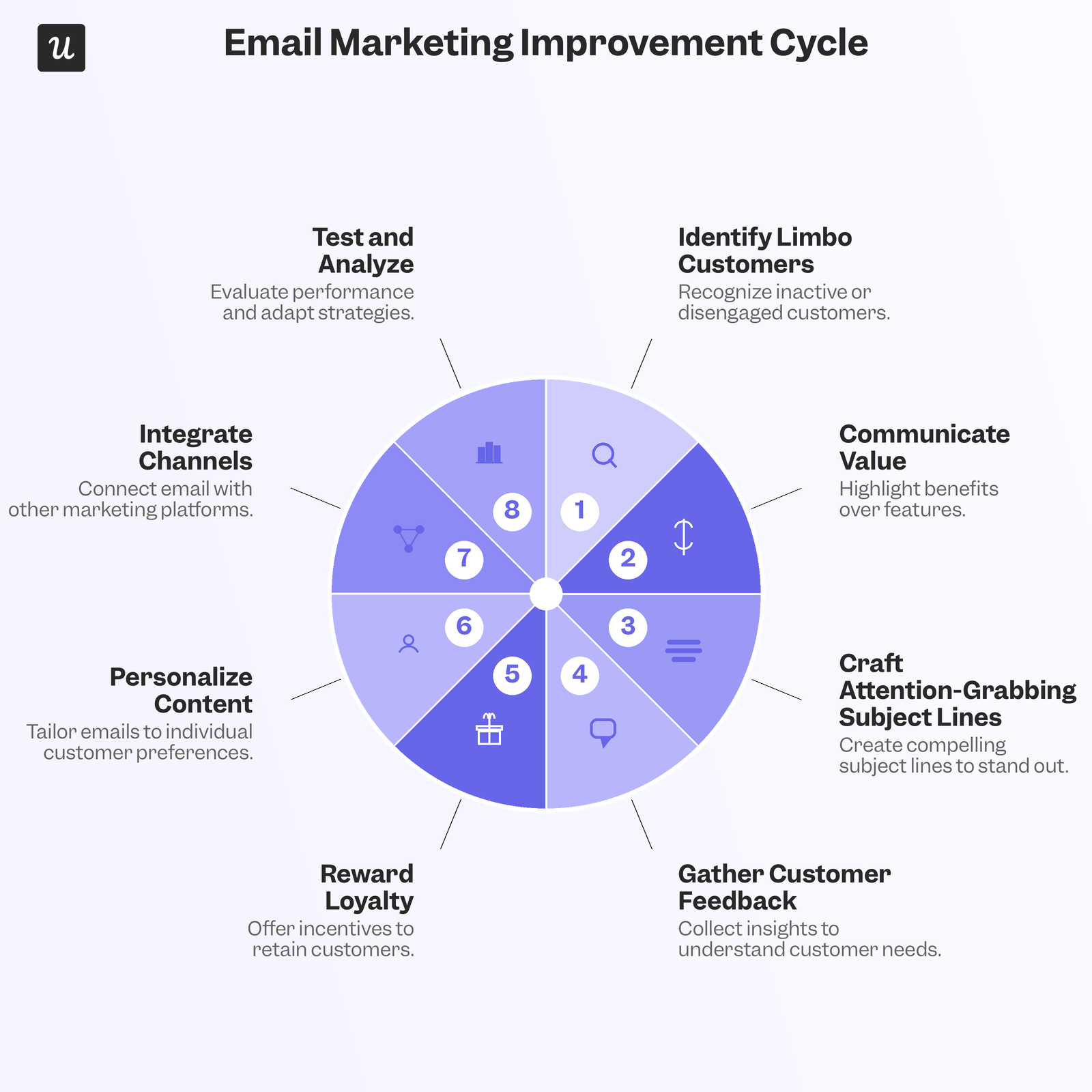
I’ve curated a dozen of the most effective SaaS email marketing strategies below so you can take all this theory and put it into action.
12 SaaS email marketing strategies that actually work
The 12 strategies below cover the full customer lifecycle from fresh lead to loyal advocate, spanning acquisition, onboarding, retention, and expansion.
1. Know your goals
Every SaaS email marketing campaign starts by answering one question: what is this campaign trying to do? The answer determines the sequences you build, copy you write, tools you choose, and metrics you use to judge whether any of it worked. Getting this wrong at the start means optimizing the wrong thing for months. Common email marketing goals in SaaS include brand awareness, trial signups, freemium conversions, customer education, user retention, and expansion revenue through upselling or cross-selling.
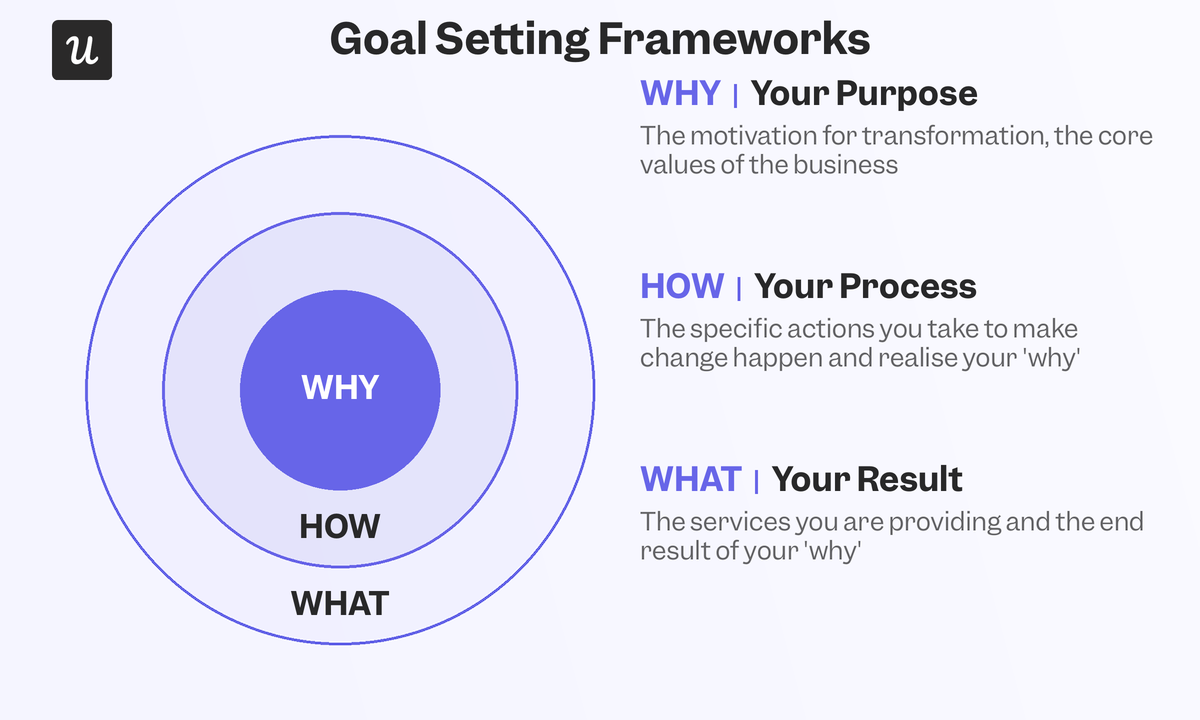
A retention campaign requires different triggers, copy, and metrics than a conversion-focused campaign. The goal defines everything downstream of it, so you need to set it in stone before pen meets paper. Knowing the goal also saves teams from sending dozens of emails with no coherent objective, tracking everything, acting on nothing, and concluding that emails don’t work for their product goals. Before building any sequence, write down one sentence describing what success looks like and frame everything else through that lens.
2. Build a lead generation strategy that fits your channel mix
SaaS email marketing only works if you have people to email. Building that list used to be easier when organic social and SEO reliably sent traffic to lead magnets or signup pages. Both channels are now harder to grow mailing lists from than they were three years ago, which makes owned landing pages and direct list-building strategies more important than ever before. Viable customer acquisition strategies include company websites, landing pages, social media, PPC campaigns, free webinars, gated content, and thought leadership. The optimal channel mix depends on your target audience, and running several in parallel is safer than depending on a single source.
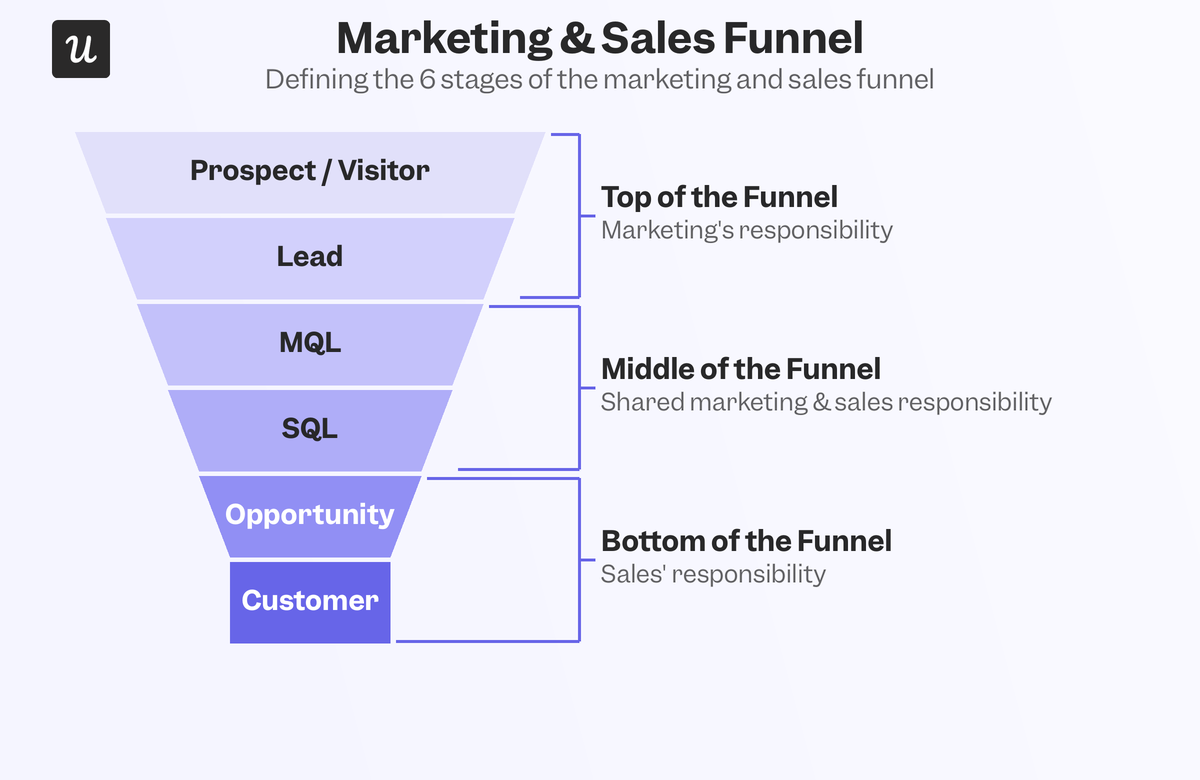
Whatever channels you use, the objective is to gather marketing-qualified leads (MQLs) who have expressed genuine interest in your brand by subscribing to your list. MQLs can then be nurtured into sales-qualified leads (SQLs) and eventually into paying customers through targeted sequences and conversion funnel optimization.
3. Segment your audience
SaaS email marketing campaigns can’t serve an entire audience with a single message. Segmenting your audience closes that gap by grouping subscribers with shared characteristics, so you can send each group messages that are relevant to where they are and what they need. A campaign that ignores these differences underserves everyone it reaches. Useful segmentation criteria include lifecycle stage, job-to-be-done, position in the sales funnel, and original acquisition channel. Segmenting by lifecycle stage in particular produces meaningfully different sequences for each group.
Acquisition-stage users need onboarding guidance, conversion-stage users need feature adoption support, retention-stage users need value reminders, and loyalty-stage users need expansion-focused messages.
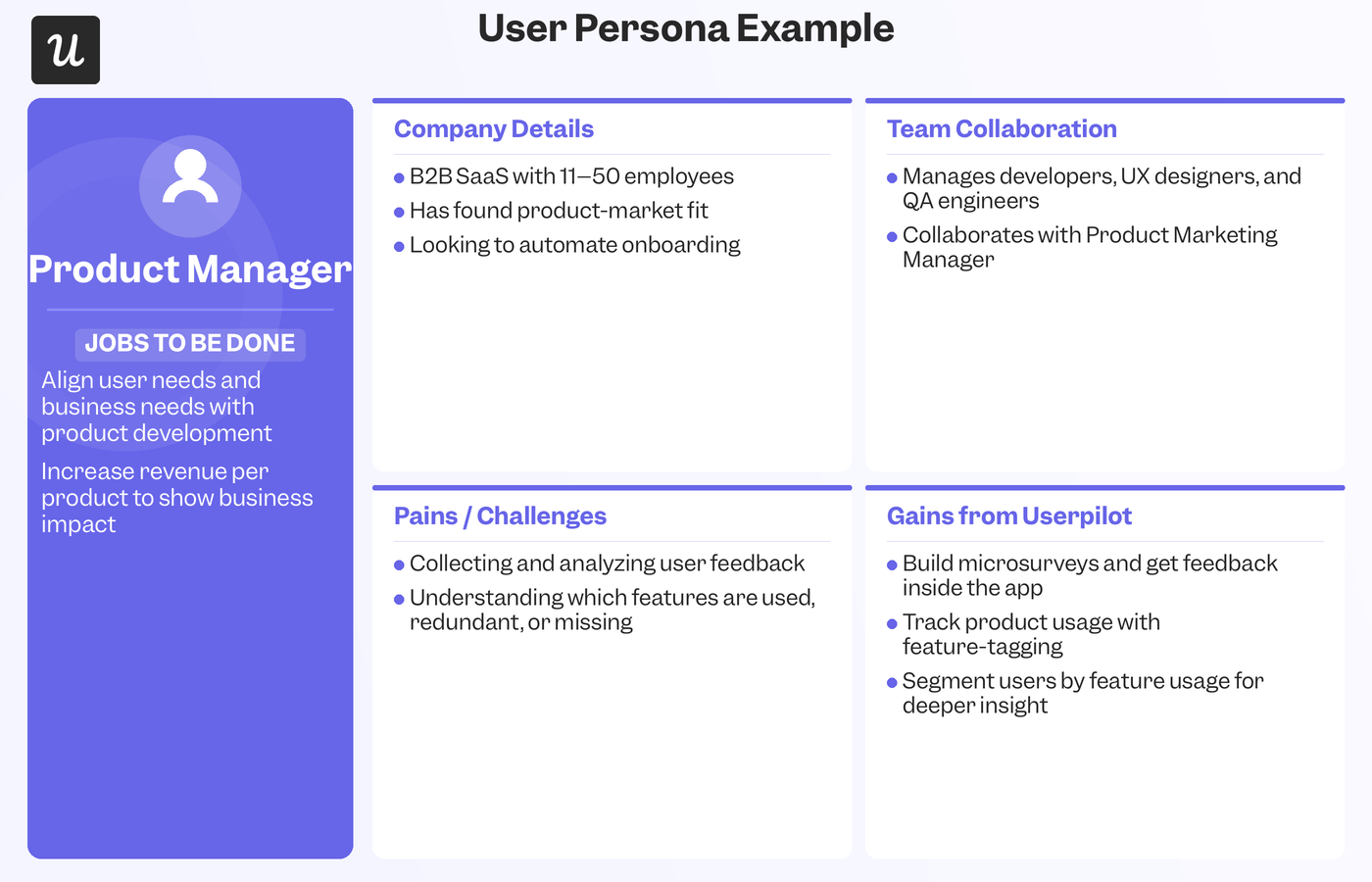
Customer lifecycle management through email only works when the sequences match the stage. Regardless of which segmentation approach you take, create detailed user personas for each segment to formalize what you know about each group. This will make it easier to write email copy that matches their specific jobs, pain points, and expectations. The customer lifecycle map for each segment is a useful companion document here because it shows exactly which lifecycle moments email should be addressing.
4. Personalize your emails
Email personalization is what makes a campaign feel contextual rather than generic. You can get away with similar welcome emails across multiple segments, but this approach loses effectiveness quickly as users move down the funnel and their needs diverge. Personalization by lifecycle stage gives your sequences real specificity. Acquisition-stage emails guide users toward activation and their aha moment, conversion-stage emails encourage adoption of the features that drive retention, and retention-stage emails remind users of the value they’re already getting.
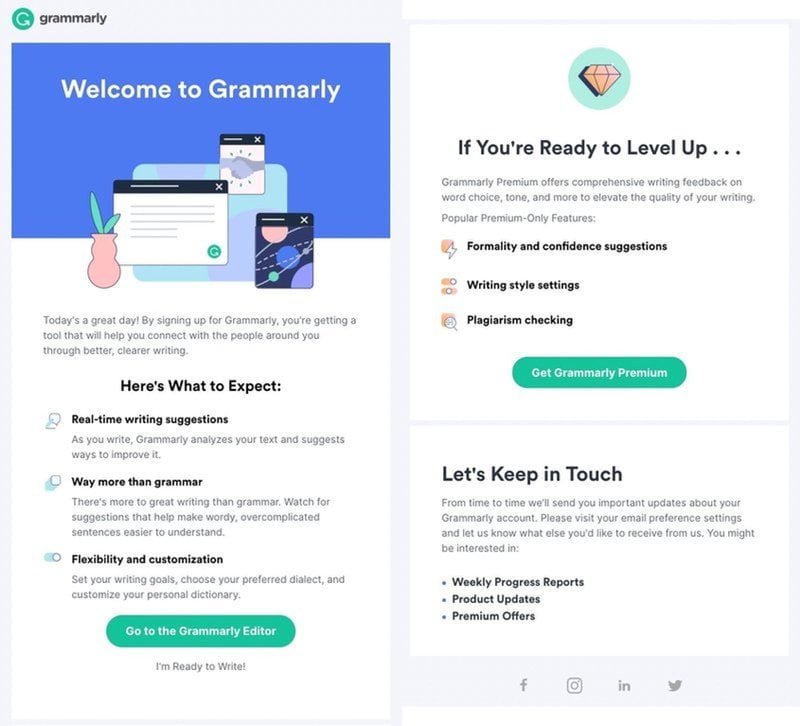
Customer education emails belong primarily in the conversion stage, where reducing time-to-value directly increases the likelihood of a paid conversion before users disengage from the product. For products with a free trial, personalization at the trial stage can boost trial conversion rates. Sequences that show free trial users how to get the most value out of their trial window and spotlight the stickiest features can get trial users to convert. Grammarly’s welcome email applies this well by sending emails targeted to a free trial user’s specific stage, with clear guidance on how to extract value before the window closes.
5. Set behavioral triggers for time-sensitive moments
Scheduled email sequences send messages on a fixed schedule while behavior-based triggers send them based on what users actually do, which makes them significantly more relevant and harder to ignore. The best email marketing automation examples are contextual, consistently outperforming equivalent scheduled sequences because the message arrives when the user’s action already signaled they needed it, not because an arbitrary calendar said so.
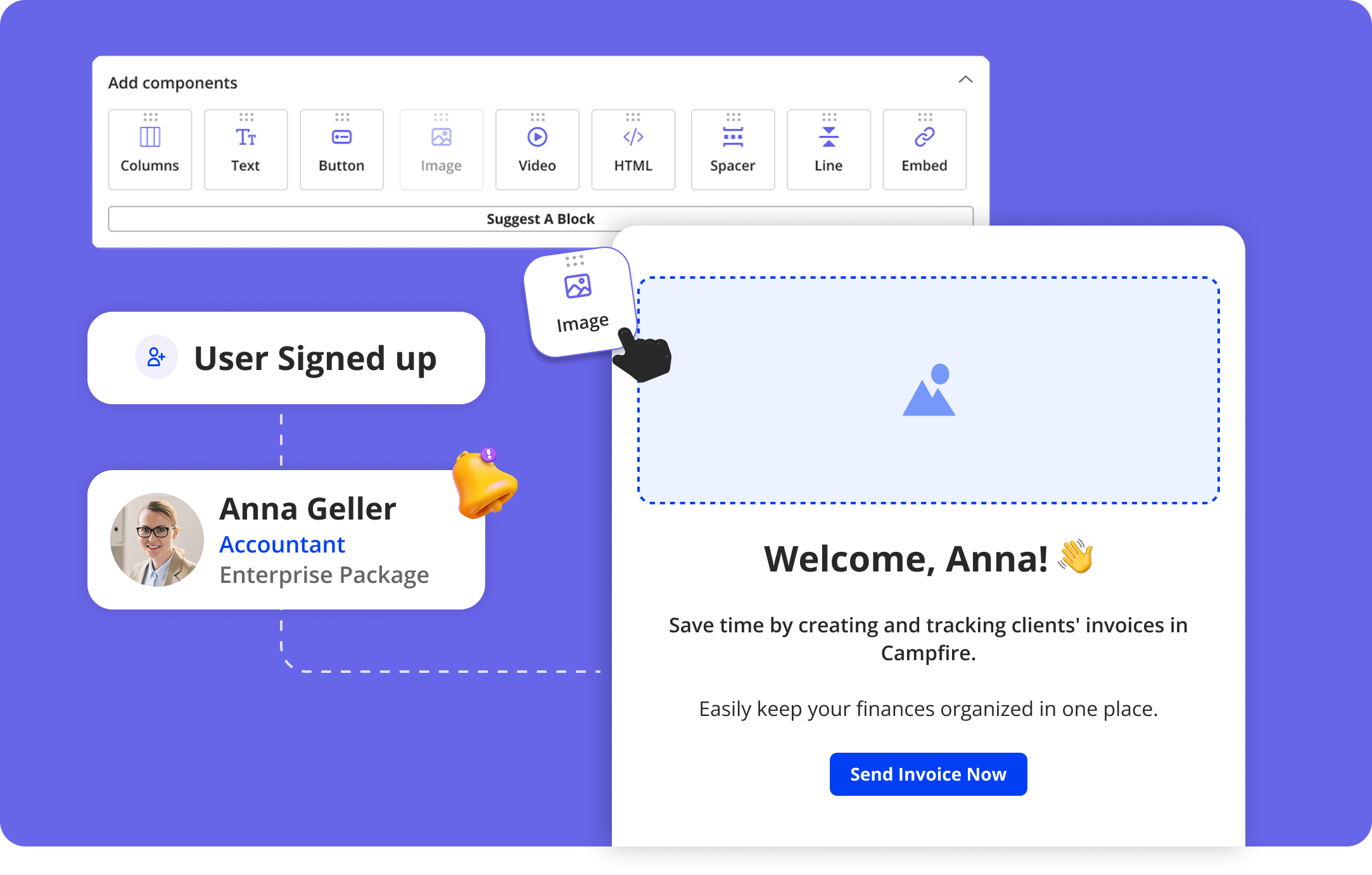
With the right tool, you can send timely, personalized emails powered by real-time in-app user behavior tracking, without waiting on devs or ops.
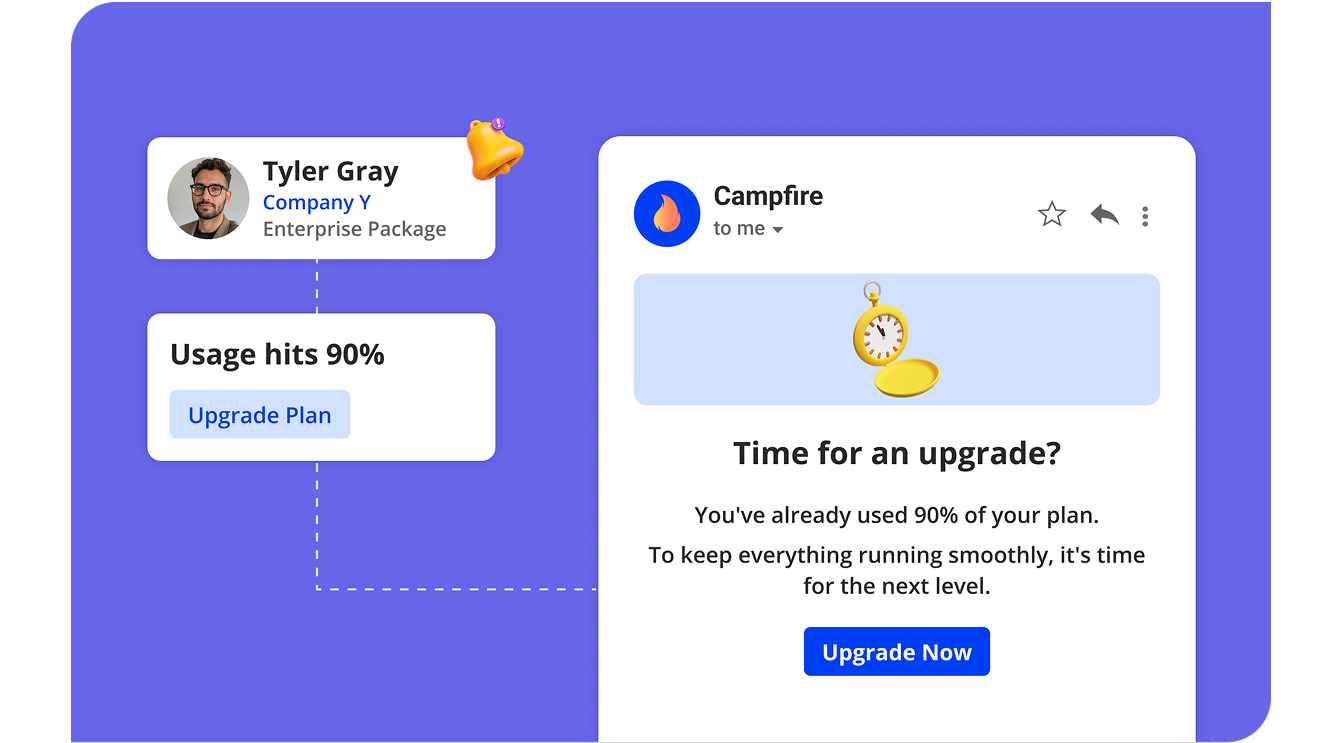
These triggers have clear applications across the lifecycle, like onboarding users who just completed account creation, educating users who activated a new feature, and re-engaging users who haven’t logged in for two weeks.
6. Perfect your subject line
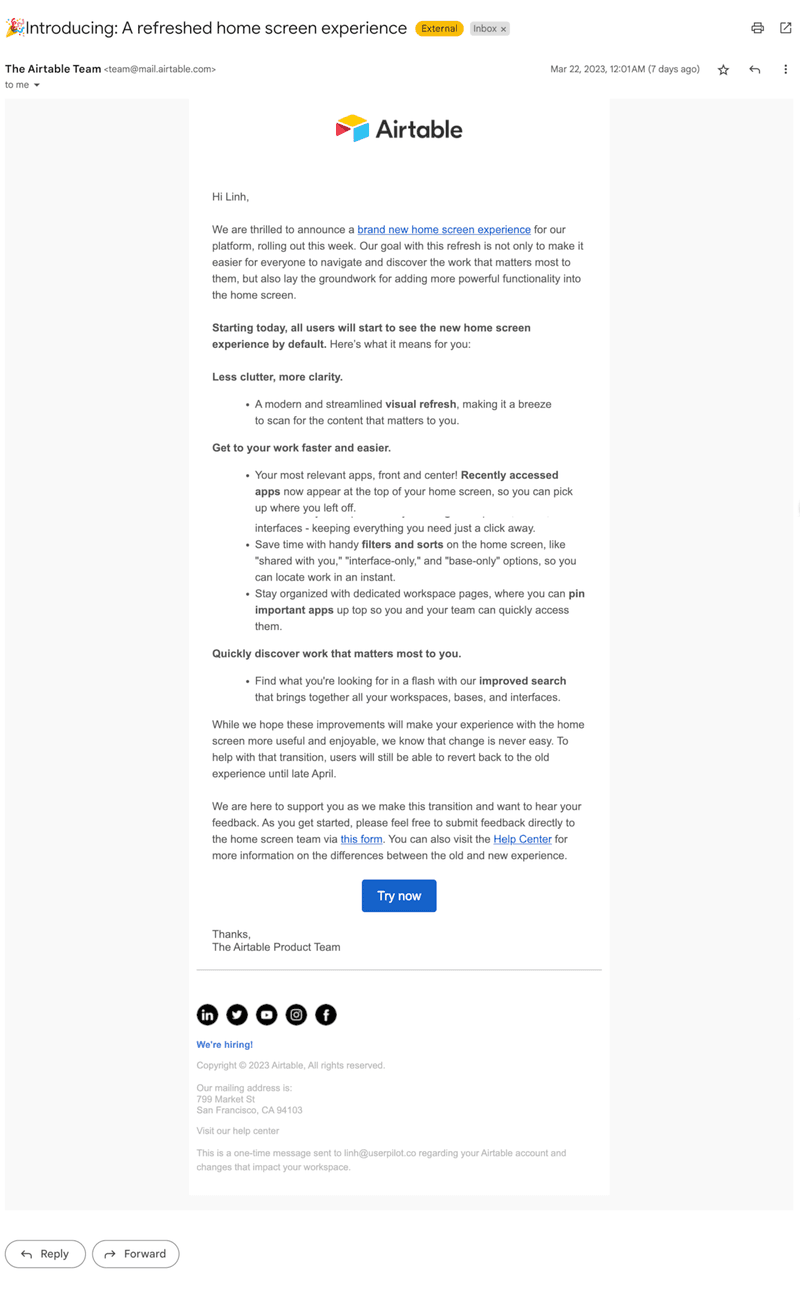
The subject line is the first thing a user sees, which gives it a disproportionate impact on whether the email gets opened at all. Subject lines in the 6 to 10-word range earn the highest open rates, with personalized subject lines outperforming generic ones. Similarly, power words outperform jargon and specific subject lines outperform vague ones. Conversely, a subject line that goes too technical loses readers who don’t immediately recognize the context (whereas one that goes too vague gives readers no clear reason to open). The goal is a subject line that grabs attention without confusing the user about what they’re getting.
Airtable applies these principles consistently in its release notes emails that are specific to the feature, short enough to avoid truncation in mobile inboxes, and with an emoji at the start that sets the tone.
7. Incorporate micro-conversions
Beyond the primary conversion you’re building toward, micro-conversions create momentum along the way with small commitments like downloading a resource, completing a first project, watching a tutorial, or attending a webinar. These milestones prime users for the larger ask at the end of the sequence. Commitment psychology dictates that users who complete a small commitment are more likely to follow through on a larger one in the same direction because human brains hate being inconsistent.
Plan micro-conversions sequentially rather than scattering them. Each small action should give users the knowledge or confidence they need to take the next step, building toward the sequence’s macro-conversion. Review the difference between micro and macro conversions when designing the sequence. Knowing which is which prevents you from treating a small commitment as the goal when it’s really just a step. Mailchimp’s onboarding email is a clean example of inviting users to try the drag-and-drop editor for just five minutes (instead of asking them to endure an hour-long product tour example or tutorial webinar).
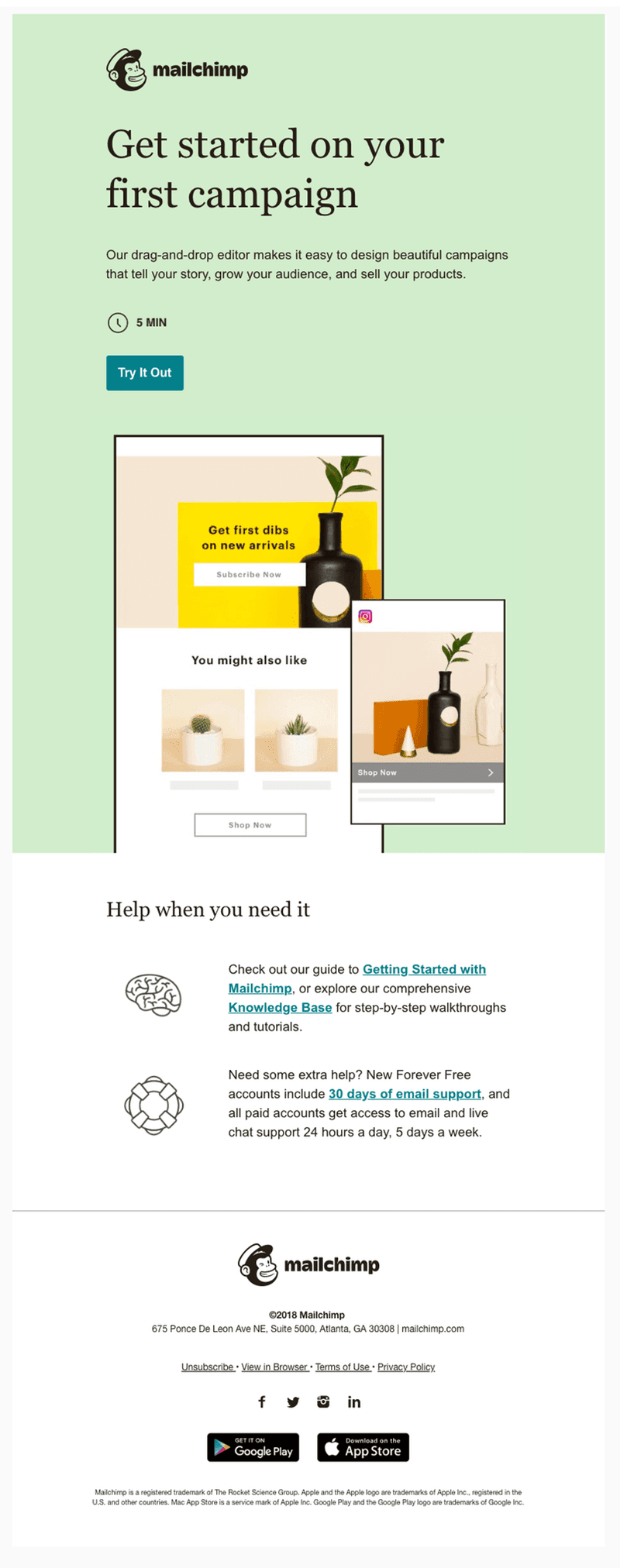
Most users won’t resist a five-minute task, and completing it moves them significantly closer to the point where the macro-conversion becomes a natural next step rather than a cold ask.
8. Align emails with your in-app messaging
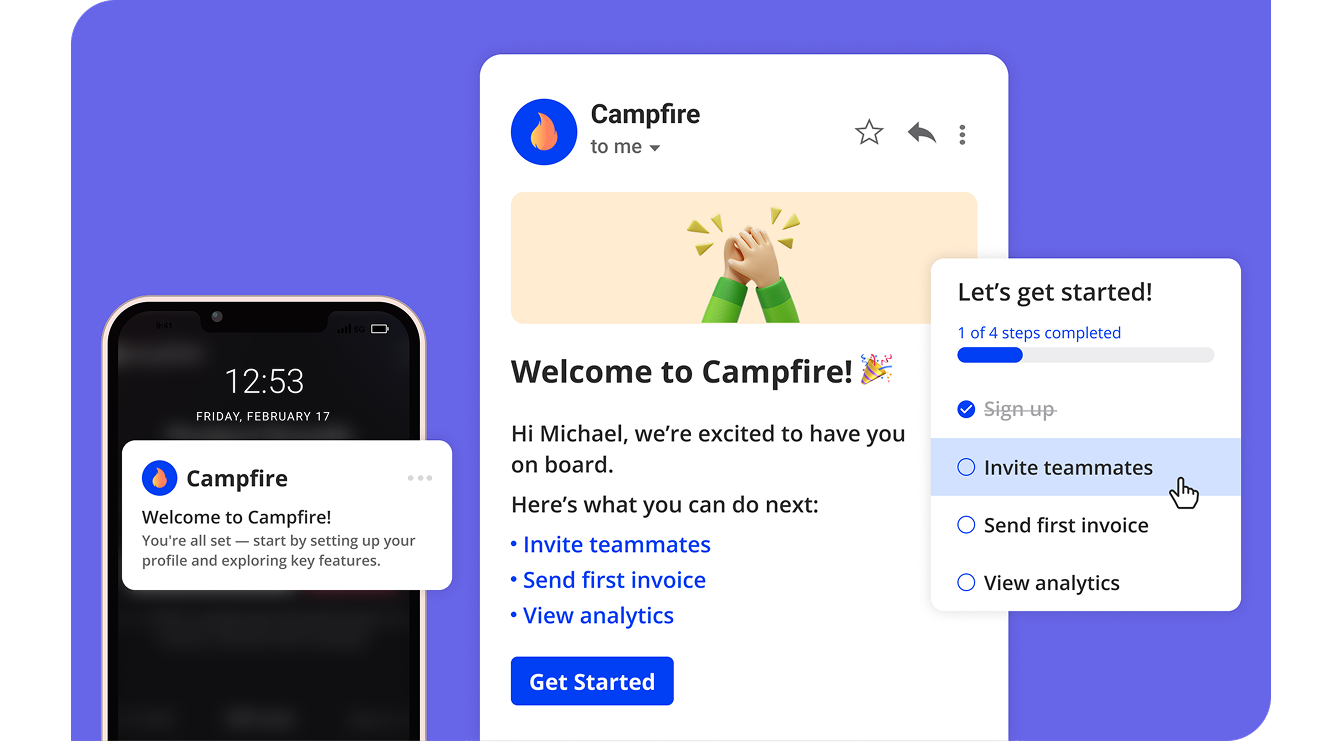
Once an email gets a user’s attention and brings them into the product, in-app messaging needs to continue that conversation. Both channels have to feel like the same brand talking to the same user about the same thing. Users are quick to pick up on disjointed brand voices if the emails and the in-app messages sound like they were written by entirely different teams. Beyond tone, handoff logic is equally important. If you just sent a product update email, the CTA should drop users into an in-app onboarding flow that picks up where the email left off and uses the UX patterns that work best for that specific feature (e.g., contextual tooltips, modals, or checklists).
The email opens the door but the in-app experience is what the user finds on the other side. For mobile users, this handoff extends to native mobile app onboarding flows. Userpilot even lets you carry the contextual experience onto user’s mobile phones so they can complete onboarding carousels and slideouts while on the go.
9. Track performance metrics that match your goals
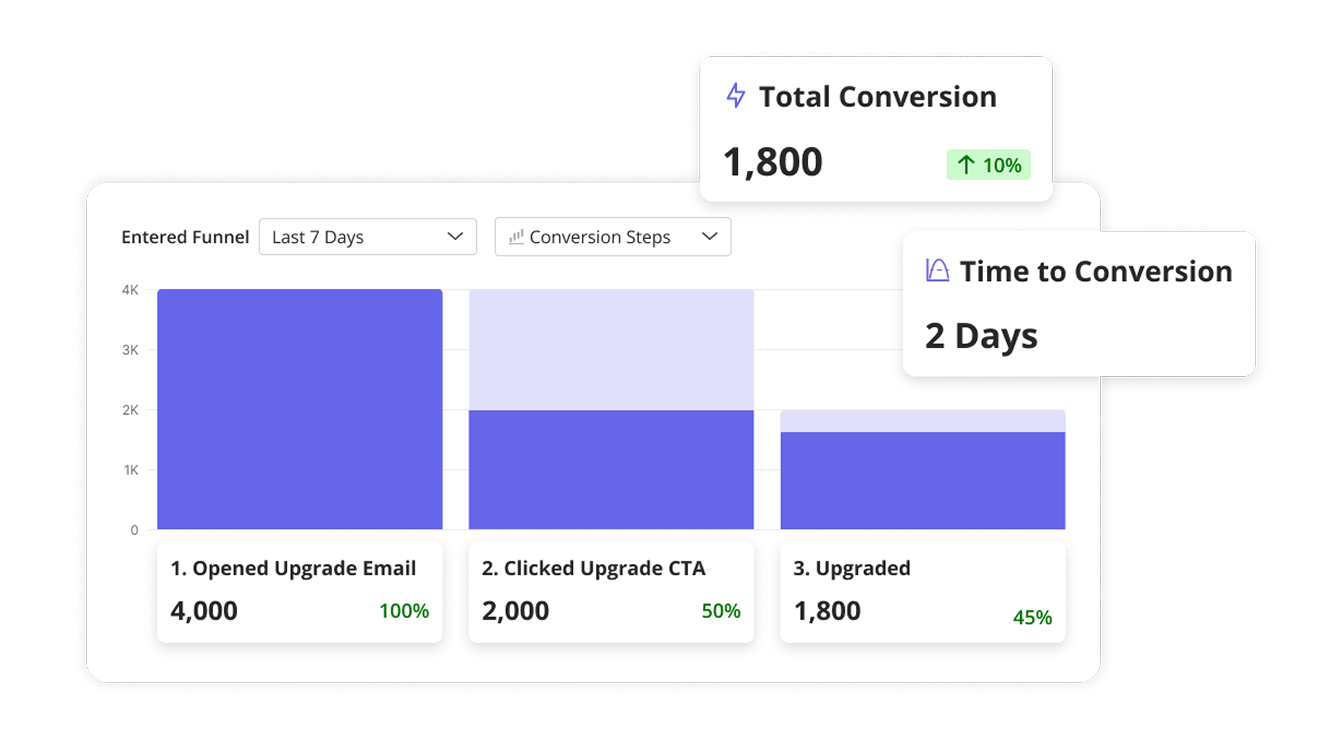
SaaS email marketing generates a lot of data, but most of it turns into noise if you’re not tracking against the original goal you set. Open rates, click-through rates, conversion rates, and unsubscribe rates each tell you something different, but which one matters most will depend on what you were trying to accomplish in the first place. Tracking everything with equal attention usually means acting on nothing. Put simply, the goal dictates what to measure and what to ignore.
Conversion campaigns live or die by click-through rate while engagement campaigns are more concerned with reply rates and retention campaigns worry about unsubscribe rates. Track what matches your objective, instead of staring at everything the dashboard surfaces and getting caught in analysis paralysis. You’ll need analytics tooling that can track email performance reliably alongside in-product behavior. Many email platforms include native dashboards, but for campaigns where email is part of a larger activation or retention play, connecting product analytics tools gives you a more complete picture of what happens after the click.
10. Close the feedback loop with NPS and CSAT surveys
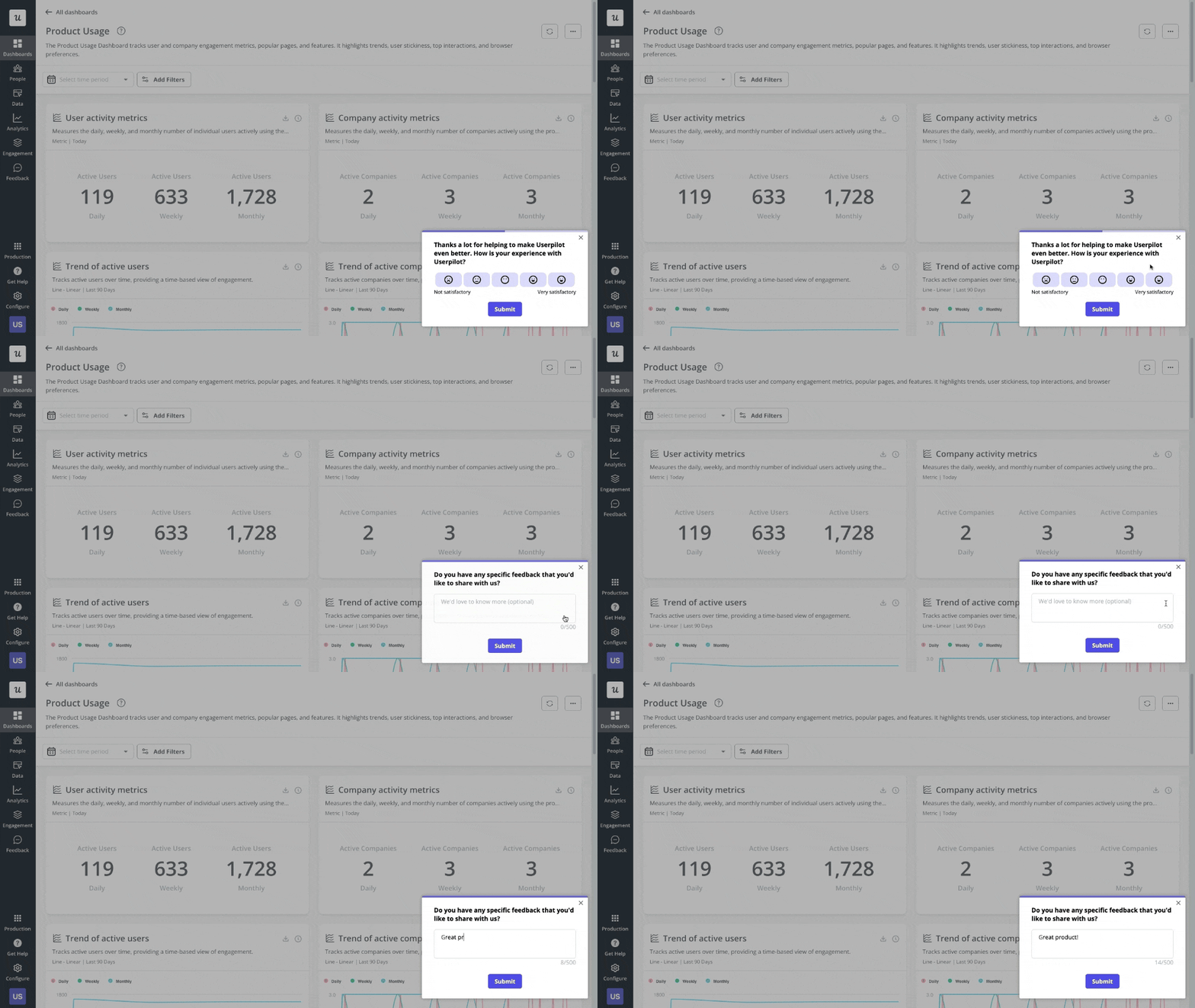
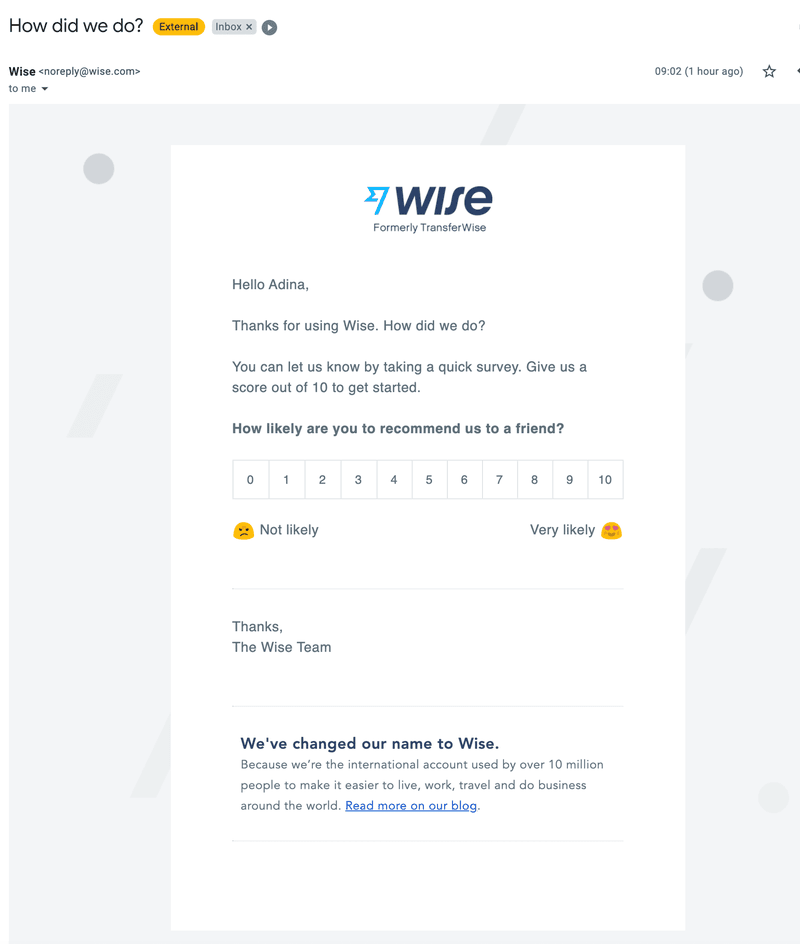
SaaS email marketing campaigns produce behavioral data like opens, clicks, and conversions without the attitudinal data that tells you why users think what they think about your product. Sending NPS and CSAT surveys via email fills that gap. When something in your quantitative data looks off, a well-timed survey sent to the right segment often explains it. The key is keeping the survey short and contextually triggered. A survey that arrives right after a specific product interaction or at a meaningful lifecycle milestone produces much higher response rates than a generic “how are we doing?” blast.
If response rates are too low on your email surveys, switch strategies to in-app surveys that often yield more responses by virtue of existing within the product your customers already use.
Segmentation pays dividends here because a survey sent to retention-stage users should ask different questions than one sent to users who have just activated. Wise’s approach to customer feedback collection via email is short, focused, and clearly tied to a specific moment in the user’s experience.
11. Continuous A/B testing
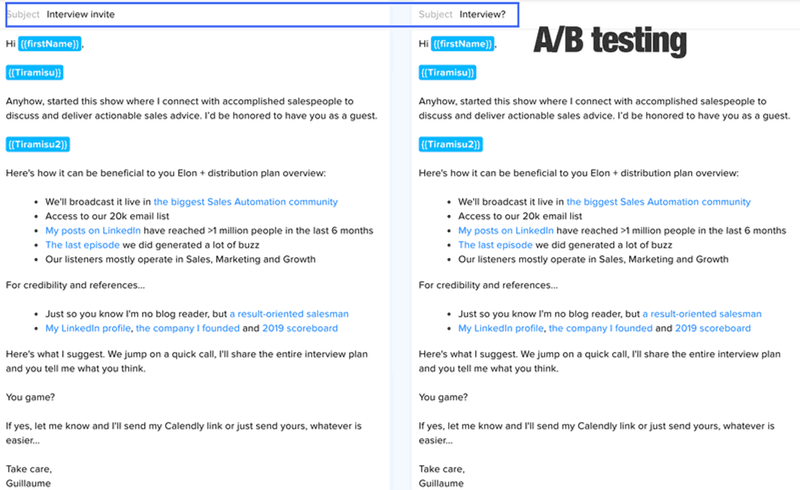
A/B testing is how SaaS email marketing campaigns improve systematically rather than by intuition. Every subject line test, CTA variant, format change, or send-time experiment produces data that makes the next campaign better. A/B testing also reduces risk by spreading leads across two variants of a sequence, which is safer than committing your full list to an approach that hasn’t been proven. Subject lines are the highest-impact starting point for message testing because they determine whether the email gets opened at all, setting the ceiling for every downstream metric. After subject lines, test CTAs, email length, content format, and personalization elements in turn.
Each test needs a specific hypothesis, a decision rule for which variant wins, and the right A/B testing metrics before it starts, to ensure these marketing experiments produce insights rather than noise. Lemlist’s split-testing methodology is structured enough to generate clear findings rather than raw variation data.
12. Re-engage inactive users
While tracking open and bounce rates, you’ll inevitably accrue a segment of inactive subscribers. These are churn risks who have drifted out of the loyalty stage of the customer lifecycle and could be on the brink of leaving permanently. A customer reactivation campaign is the last retention lever available before they churn for good, but these campaigns work best when they’re specific about the offer. Highlighting underused product features, sharing time-limited discounts, requesting honest feedback, and providing relevant retention-focused content are all approaches worth testing to rehabilitate the health of these accounts.
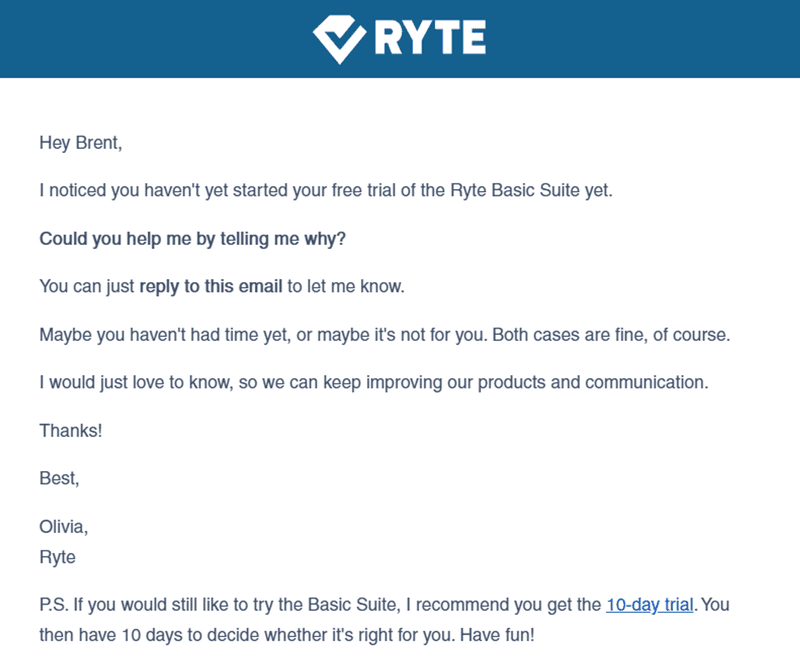
The goal is to give inactive users a reason to re-engage that’s specific to their situation, not a generic “we miss you” message that reads as automated fodder and gets deleted without being opened. Create a separate segment for these users and target them with dedicated winback sequences rather than combining re-engagement with active-user campaigns. Ryte’s approach to re-engaging inactive users is personal in tone, specific about the reason to return, and low-pressure in its urgency.
Build an email program that compounds, not one that resets
The channels that used to deliver new eyeballs to a SaaS product are quickly shifting. Organic social reach is contracting, search is evolving toward on-platform answers, and building brand visibility takes exponentially more effort than it did a few years ago. Email’s structural advantages of being direct, measurable, and owned aren’t beholden to any platform or algorithm. The 12 strategies above are the key to building an email program that improves with every send.
Treating email marketing as a long-term compounding asset rather than an unrelated series of one-off campaigns is the difference between a mailing list that grows more valuable over time and one that slowly decays. Whenever an email successfully brings a user back into your product, Userpilot closes the loop with behavioral triggers, contextual onboarding flows, and in-app messaging that pick up exactly where the email left off. This keeps re-engaged users from dropping off again just because the product experience couldn’t match what the email promised.
Get a free Userpilot demo to see how the in-app handoff secures your email-driven victories!
About the author