14 Customer Acquisition Strategies for SaaS in 2026

The average customer acquisition cost is rising across the board in SaaS. The bottom 25% of SaaS companies are now spending $2.82 to acquire every $1 of new ARR. The channels that produced efficient customer acquisition just a couple of years ago are now more expensive and competitive than ever before. Paid search CPCs are climbing, organic searches are increasingly answered by AI Overviews, and cold outbound reply rates drop as inbox saturation worsens.
Keeping CAC under control requires selecting channels more precisely, executing each tactic at a higher standard, and measuring results by channel rather than in aggregate. Poor channel-to-ICP fit, weak execution, and blended measurement are the three pitfalls that leave SaaS teams with an unsustainable LTV:CAC ratio that compounds against them. The 14 strategies below cover the full acquisition spectrum with compounding organic channels, product-led motions, paid/outbound plays, and underused assets that most teams ignore.
14 Customer acquisition strategies for SaaS
The most efficient marketing growth strategy combines organic channels that compound over time, product-led motions that turn the product into an acquisition engine, and targeted paid advertising to accelerate what’s already working. The strategies below cover that full spectrum with core tactics, real-world examples, and execution mistakes that could undercut your efforts.
1. Build compounding organic traffic with SEO and content marketing
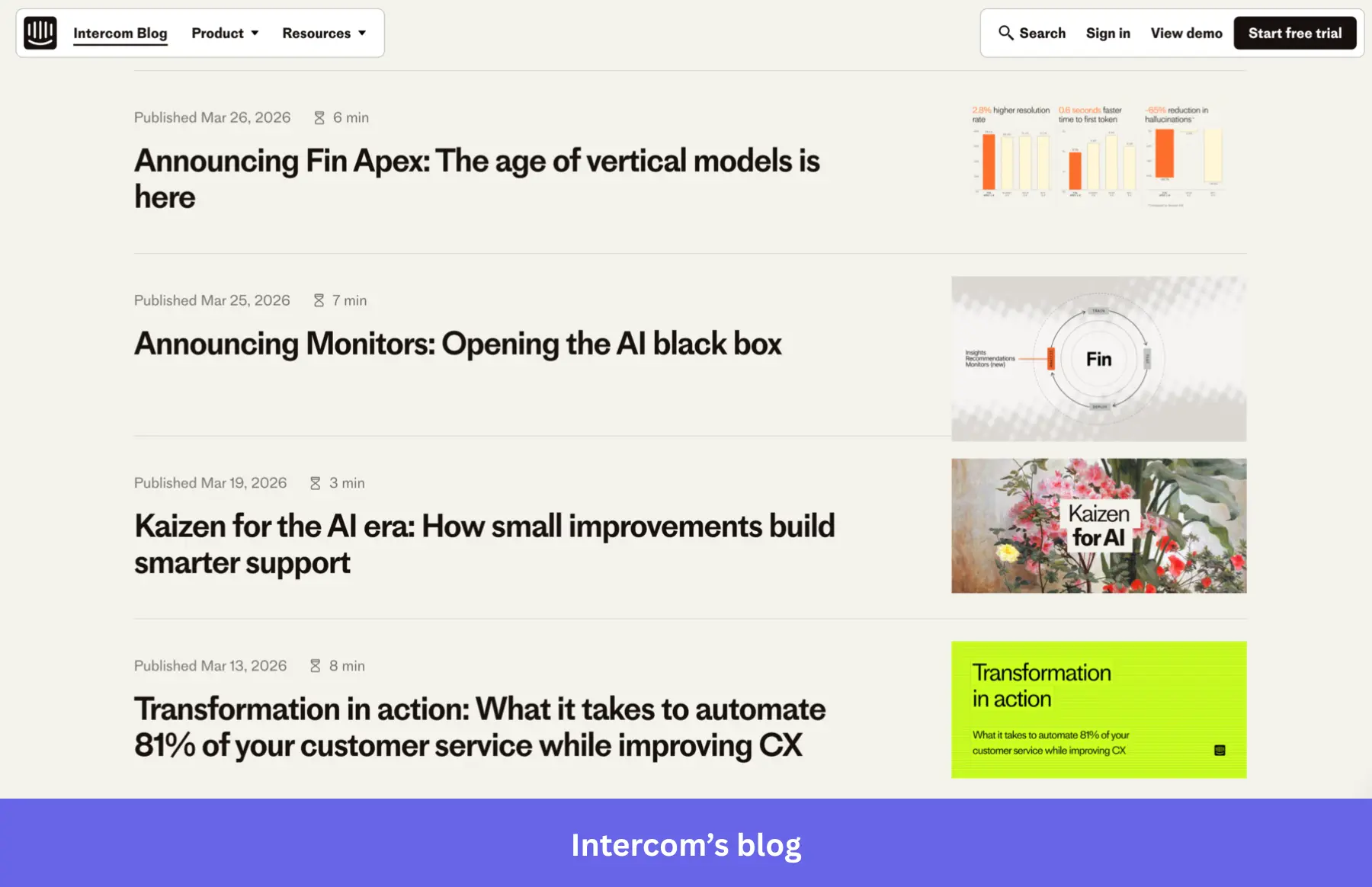
Content marketing is the most durable customer acquisition channel in SaaS because the assets compound. Unlike paid ads that stop generating pipeline the moment you cut spend, well-ranked content keeps attracting traffic, leads, and signups for years after the initial investment. Intercom built one of the most studied content engines in SaaS, with its blog earning that authority by sharing product decisions publicly and writing with genuine conviction about product strategy. This attracted exactly the kind of buyer they wanted to reach without chasing keywords.
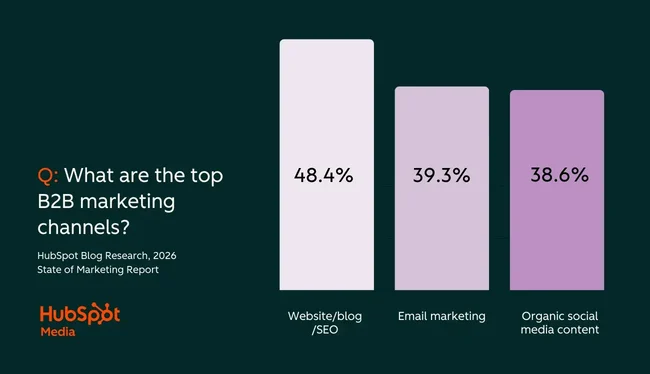
HubSpot did things differently by building free tools like Website Grader and Email Signature Generator that drove large organic traffic volumes and captured leads at scale. HubSpot’s own data shows website and blog SEO remains the top ROI-driving marketing channel for most businesses. This reinforces the fact that organic acquisition outperforms paid channels when built correctly and maintained over a long enough time horizon.
To execute this strategy well, map keyword research to buyer intent at each funnel stage, build internal linking structures that guide readers deeper into the site, and refresh older articles as the competitive landscape shifts. Continuing to invest in generic TOFU informational content is a money pit when AI Overviews already answer those queries inside the search results page. Customer acquisition content that still drives pipeline in the AI era relies on comparison pages, use-case pages, original research, and integration content that AI summaries can’t easily replicate.
2. Turn your product into an acquisition engine with PLG
Product-led growth flips the traditional customer acquisition model. Instead of marketing and sales pulling users toward the product, the product becomes the primary vehicle for attracting prospective customers through freemium tiers, free trials, viral loops, and in-product referrals. The best product-led companies deliver value fast enough that new users activate before they have a reason to leave. Dropbox’s referral-for-storage program lets users earn more space for inviting friends, turning every new user into an acquisition channel from the moment they join.
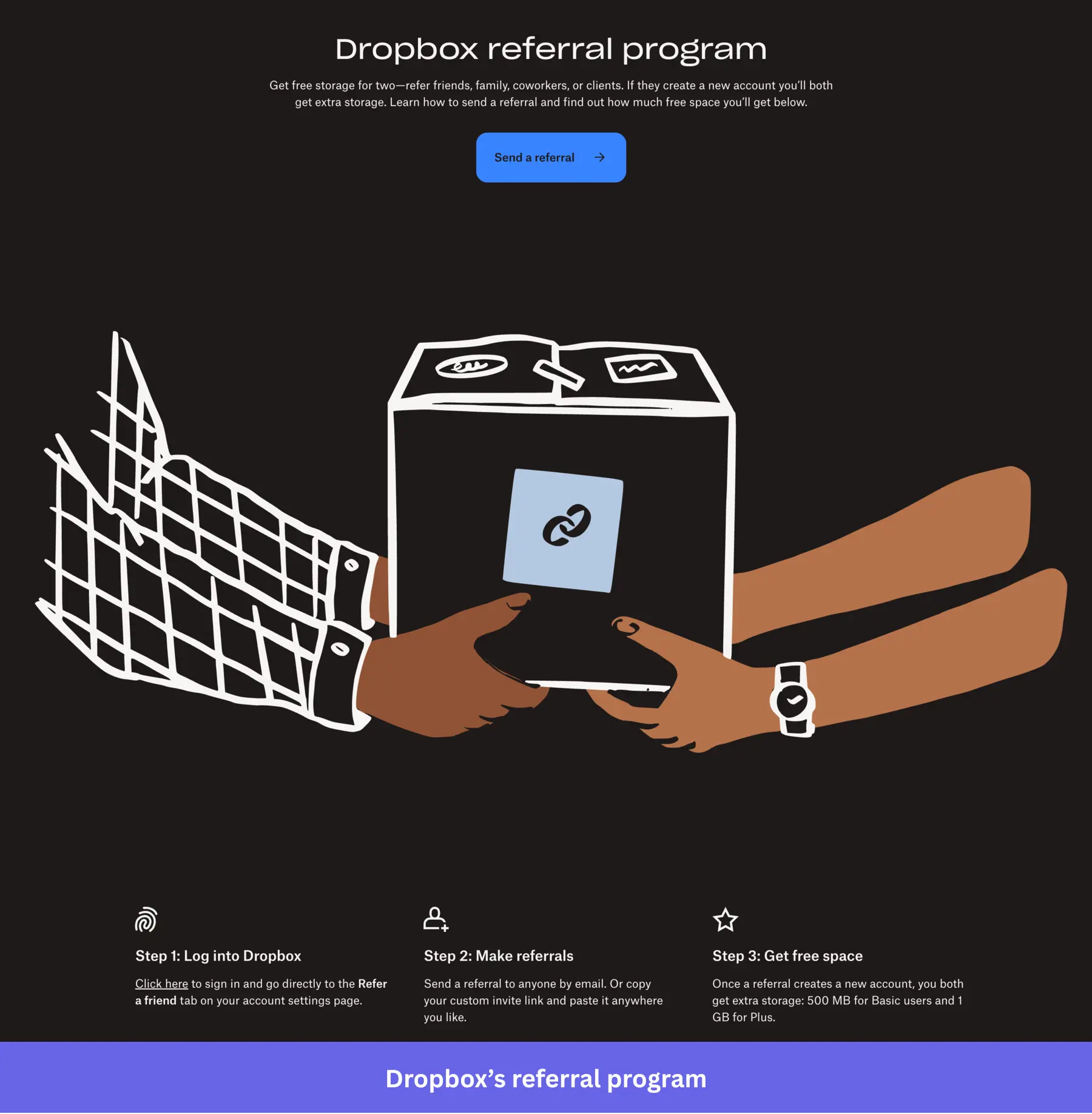
Slack spread organically through teams because the value was self-evident the moment a team started using it together. Figma grew through its shareable design, where every collaborator became a potential new user without requiring a marketing push. Time-to-value drives everything in product-led growth because the faster a new user experiences the core benefit of your product, the more likely they are to convert into a customer.
Grant Lee, co-founder and CEO of Gamma, describes the competitive advantage of product-led growth:
“Teams that understand their product’s inherent distribution mechanics outperform those relying solely on paid acquisition. This is less about forcing virality and more about recognizing your product’s natural sharing dynamics. Identify where your product naturally creates opportunities for exposure, then systematically optimize that pathway.”
However, you can’t manufacture virality where no natural sharing dynamic exists. A referral scheme on a product with no inherent sharing value attracts low-intent users who don’t stick and increases CAC instead of lowering it. The first question to ask yourself is whether the product creates genuine exposure opportunities on its own. If the answer is no, applying product-led mechanics won’t change that.
3. Convert free users into paying customers with freemium, free trials, and interactive demos
Freemium, free trials, and interactive product demos address the same underlying customer acquisition problem by letting prospects experience product value before they have to pay. The unified goal across all three is to reduce the perceived risk of evaluating your product by letting it speak before the invoice does.
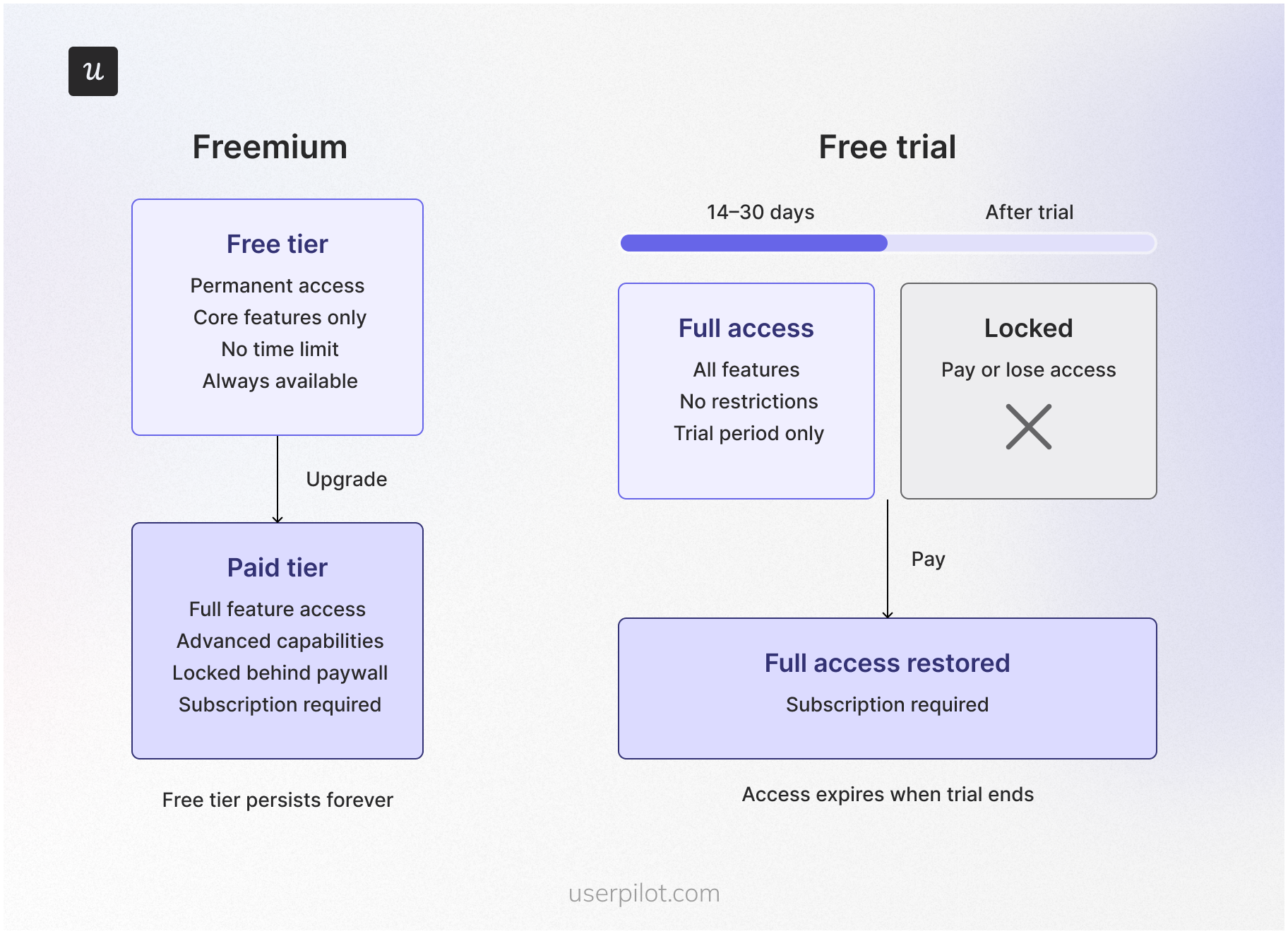
Freemium offers a permanently free tier with limited features, while the most valuable capabilities sit behind a paywall. This works best when the core product delivers standalone value at a basic level. Free trials give users full access for a fixed window, and the right free trial length for SaaS (7, 14, or 30 days) depends on how much of the feature set users need to see value. A 14-day window with complete access lets users build real workflows before the paywall appears.
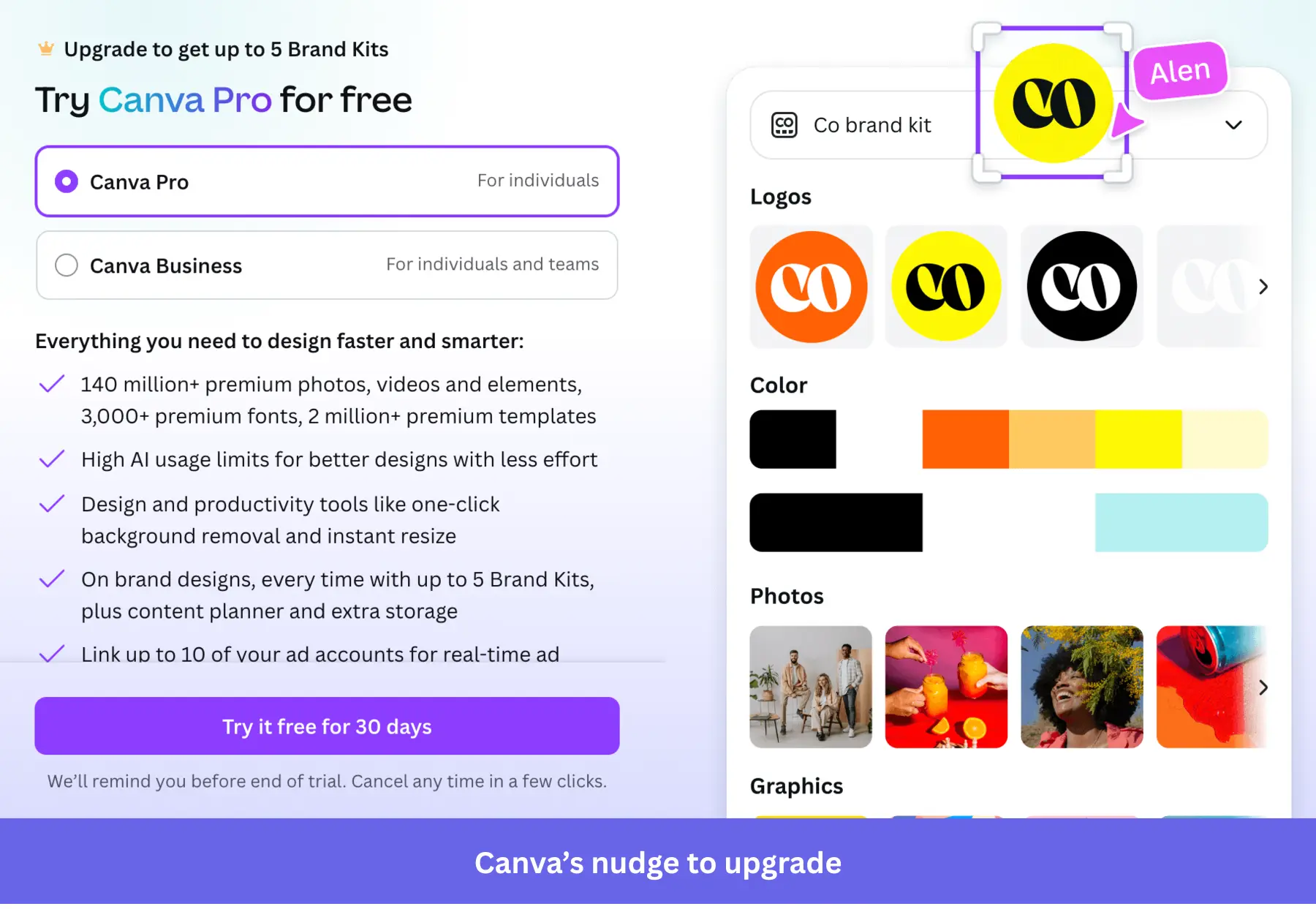
The strategic challenge with both methods is feature gating. Gating too aggressively will keep free users from turning into paid customers while not gating enough features will eliminate any incentive to upgrade to a paid plan. The sweet spot is giving away enough to let users experience the core value while reserving the features that matter most (such as advanced analytics, team collaboration, or higher usage limits) for premium subscribers, that gap is what drives the freemium to premium upgrade.
Canva strikes this balance by surfacing premium templates within the free experience and prompting users to upgrade if they try to access them.
Interactive demos extend this logic one step earlier in the funnel. An ungated interactive demo on your key conversion pages lets visitors explore core product flows before they’ve even signed up. Navattic’s State of the Interactive Product Demo report showed companies that do this see a 25% increase in website conversion rate because visitors who self-qualify through a demo arrive already understanding what they’re signing up for. DigitalOcean executes this well by placing a “Take a self-guided tour” button (an interactive product tour) directly alongside their primary call to action.
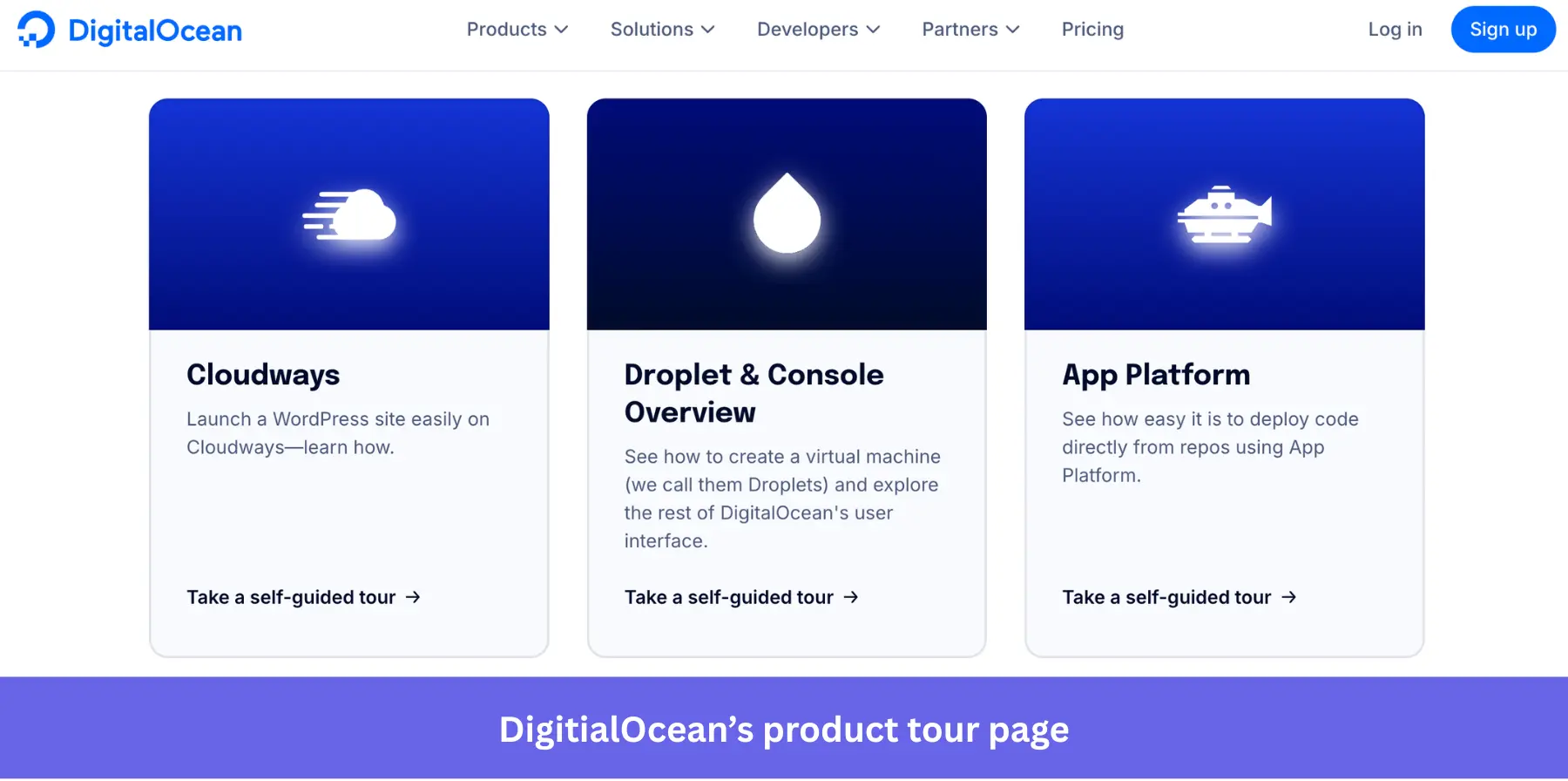
For your interactive demo, curate a 10-step experience highlighting the moments most likely to make your product’s value immediately obvious. Showing everything at once risks burying the core value proposition under features that the visitor might not care about. In-app user onboarding checklists and tooltips that surface premium features at the right moment move free users toward a paid decision more reliably because the nudge happens within the workflow where the value is most apparent.
A common mistake teams make is treating freemium, free trials, and interactive demos as independent decisions rather than a coordinated conversion system. The highest-converting free-to-paid experiences combine an interactive demo that brings in a self-qualified visitor, a free trial that gives them time to build a real workflow, and in-app guidance that accelerates once they’ve experienced enough value to pay.
4. Capture high-intent buyers with paid advertising
Paid advertising is simultaneously the fastest way to generate leads and the fastest way to burn budget if you’re not disciplined in selecting channels or measuring results.
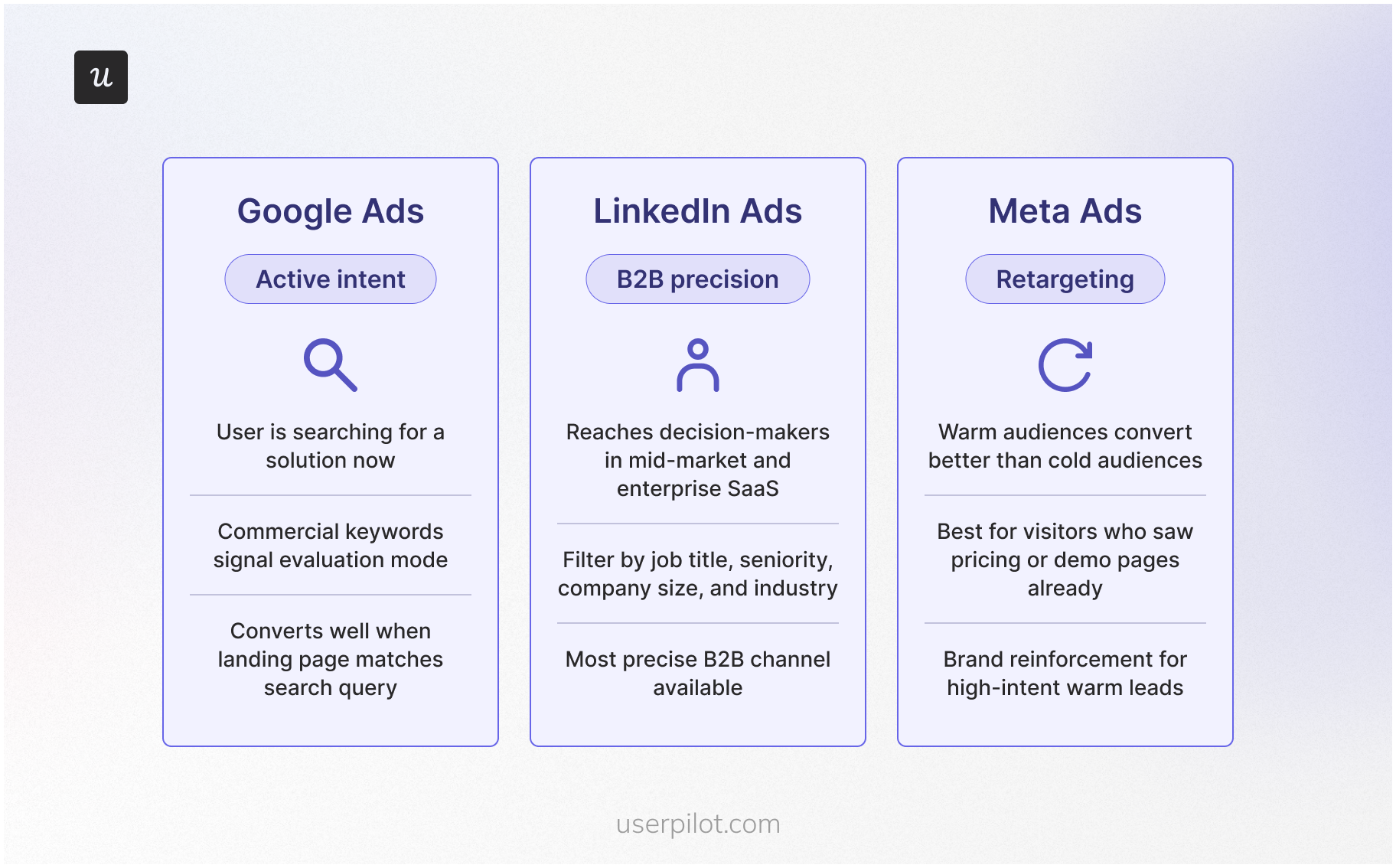
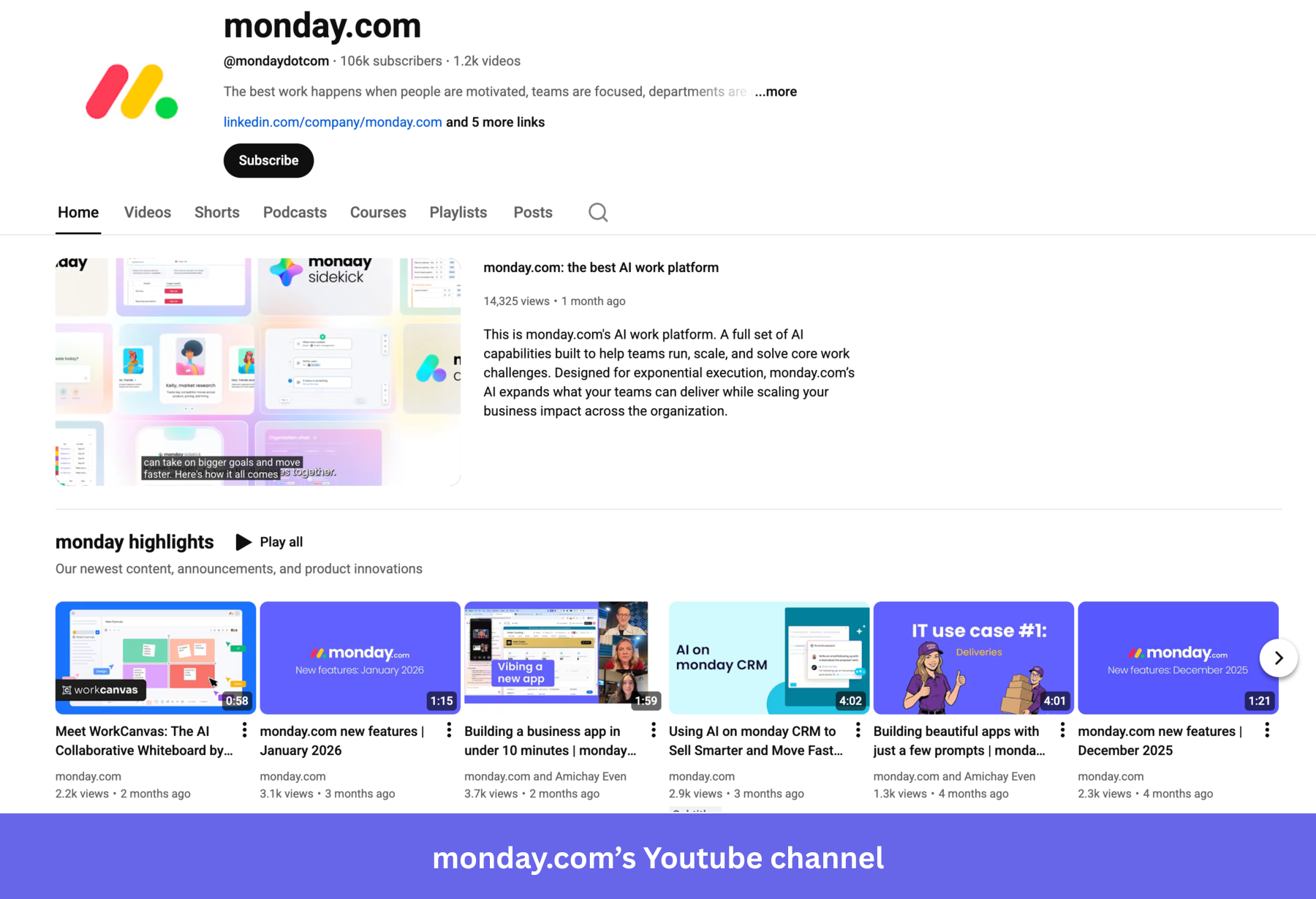
Prioritize retargeting audiences built from pricing and demo page visitors. These prospects have already signaled buying intent, so a targeted ad at this stage will convert better and cost less than reaching cold audiences. Monday.com built much of its early growth on a multi-channel paid strategy by running high-volume Google search campaigns for bottom-funnel keywords while using Facebook and YouTube to build broad awareness.
Bear in mind, you shouldn’t be measuring paid performance against blended CAC. A campaign with a $2,000 paid CAC looks efficient when blended with organic channels that bring in customers at a fraction of the cost. Tracking each channel separately reveals which paid investments are profitable and which are being subsidized by the organic performance you were already getting.
5. Lower CAC and increase LTV with referral and affiliate programs
Word-of-mouth has always been the highest-trust customer acquisition channel. A well-designed referral program systematizes it, and referred customers require less persuasion, have lower CAC, close faster, and generate higher customer lifetime value than customers acquired through paid channels. PayPal’s early referral program is the clearest (and most popular) case study. They paid $20 to both the referrer and referee, with the program helping PayPal grow from 1 million to 5 million users in 6 months.
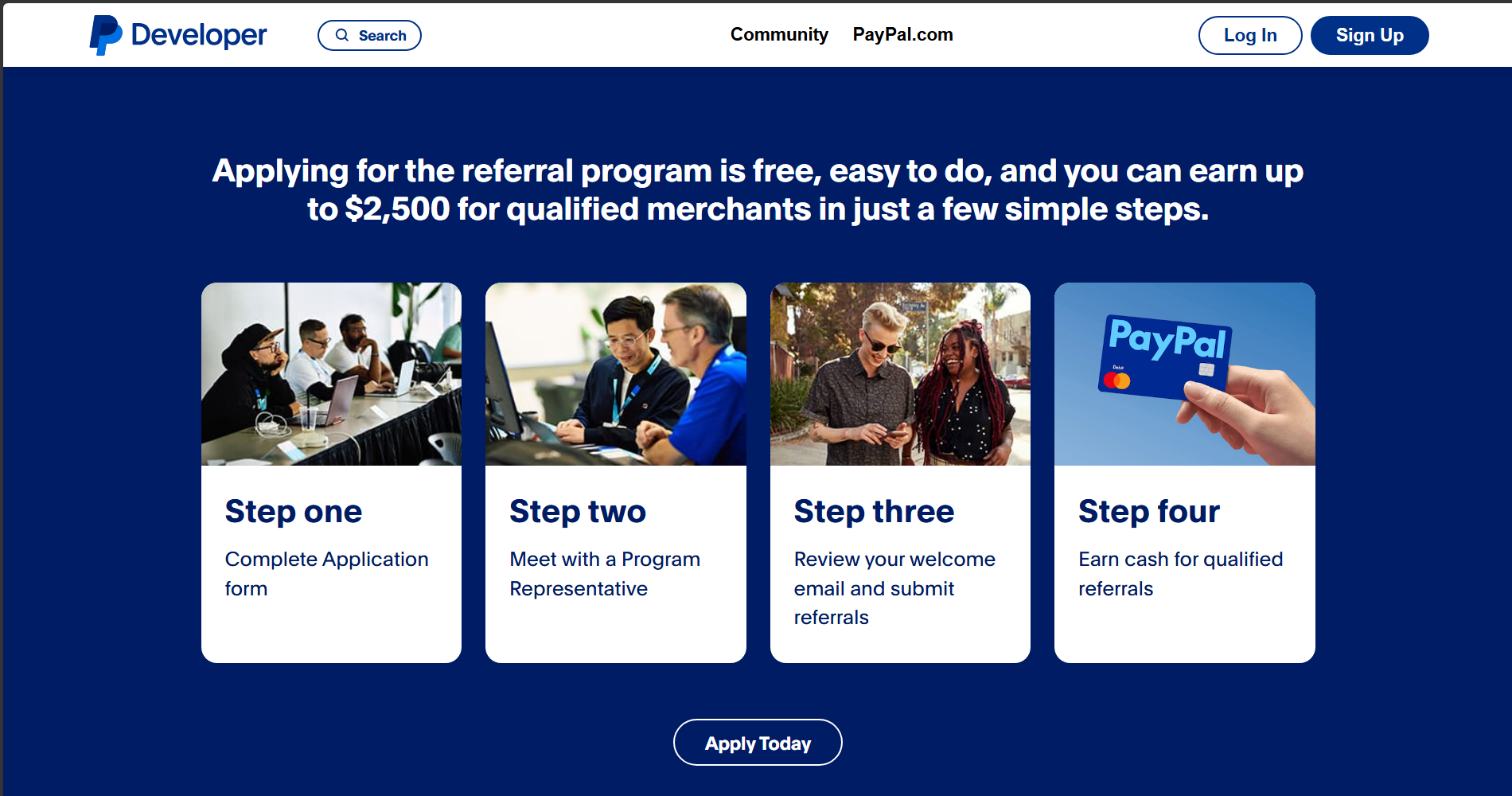
Referred customers make 31-57% more referrals than non-referred ones, meaning a strong referral program compounds due to “referral contagion”. This reduces CAC for the initial cohort and generates more customers from those customers. Affiliate programs extend this logic beyond your existing customer base. Where referral programs incentivize customers to bring in peers, affiliate programs incentivize external partners to drive new users in exchange for a revenue share.
Referrals produce high-trust peer recommendations with lower CAC, while affiliates produce higher volume with variable quality depending on how well the affiliate’s audience maps to your ICP.
Paying commission on paid conversions rather than signups filters out low-intent affiliates gaming the program for clicks. Treating referrals as an email campaign is a critical error. A one-off referral ask sent to your whole list will always produce weak results because it’s not tied to any moment of genuine enthusiasm for the product. Instead, build referral incentives into product milestones. Offer a reward when users complete onboarding, reach a usage threshold, or invite a teammate so the ask arrives at one of the customer journey touchpoints where enthusiasm is highest.
6. Nurture leads into customers with targeted email sequences
Suzanna Chaplin, CEO and founder of esbconnect, makes a clear argument for email as an acquisition channel:
“Email is often underestimated in terms of customer acquisition. Meanwhile, in the U.S., it’s a top-performing channel, with 81% of businesses using it for acquisition, with an average ROI of $36 for every $1 spent. Email makes it easy to exclude existing customers. Clean deduplication ensures you’re reaching only new potential buyers.”
The catch is that marketing automation ROI depends almost entirely on execution quality, not spend. The same list produces vastly different returns from behavioral sequences versus broadcast campaigns.
A trial user who has completed onboarding and used three core features needs a different message than a lead who signed up and never logged in. A churned customer who canceled six months ago needs a different sequence than a power user approaching their plan limit. Customer lifecycle management, segmenting by stage and triggering sequences based on what users do inside your product, is the execution shift that makes email an effective acquisition channel.
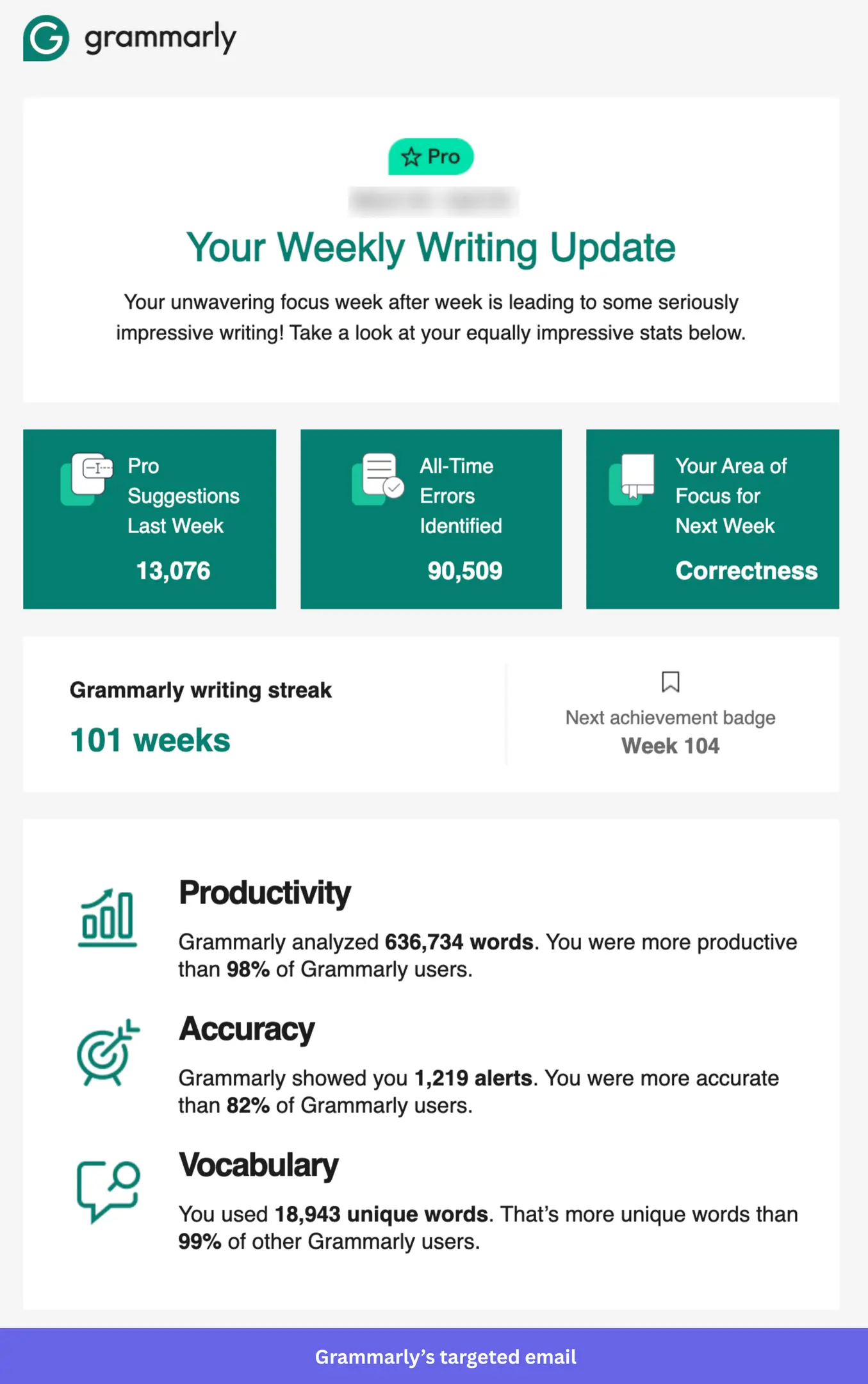
Automated emails account for just 2% of email sends but drive 30% of revenue, which means they generate 16x more revenue-per-send than scheduled campaigns. While these figures come from e-commerce data, the underlying principle holds true for SaaS email marketing. Behavioral triggers tied to product actions consistently outperform time-based broadcasts. Grammarly executes this well by triggering emails based on usage instead of sending the same sequence to every user.
Email works even better when paired with in-app messaging. As users complete a key action inside the product, that event can trigger both an in-app tooltip and a follow-up email with the next recommended step. This ensures users receive guidance whether they’re inside the product or in their inbox. Avoid sending the same sequence to all leads because high volume without segmentation is a broadcast channel, not a customer acquisition strategy.
7. Build a community that acquires customers for you
Community-driven customer acquisition is slower to build than paid channels but far more durable. A strong community helps potential customers discover your product through peer conversations, turns existing customers into advocates, and builds brand trust through user participation rather than advertising spend. For B2B SaaS, LinkedIn is consistently the strongest channel for building credibility through original perspectives on industry problems.
Twitter/X, Reddit, and Slack communities are other online venues for practitioners to talk about the tools they use, the problems they’re solving, or the vendors they trust. This makes these platforms valuable channels for growing an audience-driven acquisition engine. Notion’s community is the clearest example of community acquisition at scale. Rather than broadcasting product updates into the void, they nurtured a global network of power users who run local events and create templates.
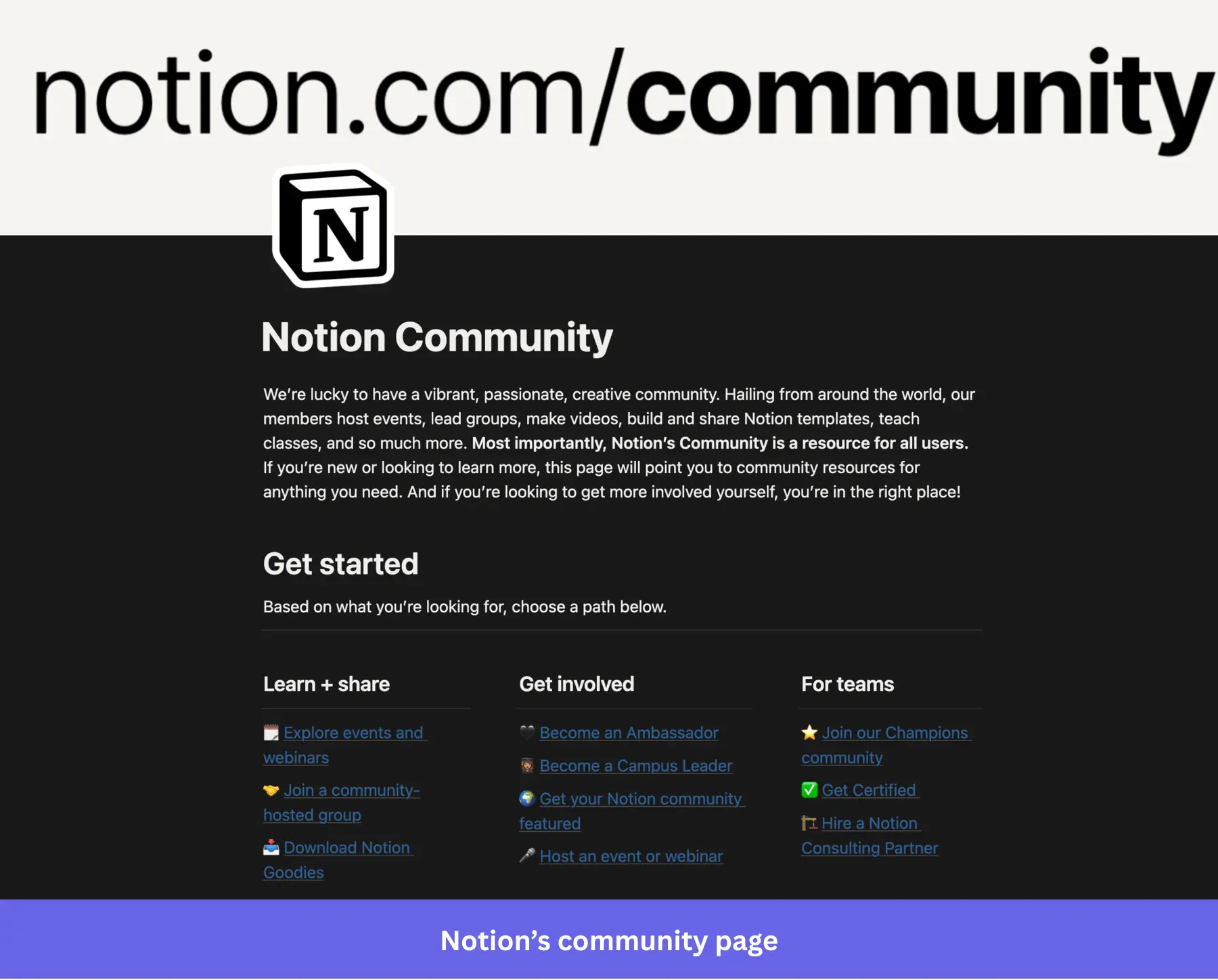
The core strategic choice is whether to build your own community or participate in existing ones. Building your own gives you a dedicated space where potential customers gather around your category, but requires sustained investment and a critical mass of members before generating acquisition at any meaningful scale. Participating in existing communities is the faster path because you’re meeting buyers where they already gather rather than asking them to come to you.
8. Convert engaged audiences with webinars and live events
Webinars fell out of favor for a few years as audiences grew tired of sales pitches packaged as educational content. They’re slowly becoming more effective again, but the format that converts has changed significantly from what worked a few years ago. The best webinars are now structured as a 30-minute problem-focused session that delivers actionable content, followed by a 10-minute product demo that shows how your tool helps implement the strategies that were just discussed.
Earn trust and demonstrate expertise first, then introduce the product as the natural solution to the problem you’ve just helped the audience understand.
Drift’s RevGrowth Summit series ran on this very principle. Rather than showcasing product features, each event was themed around an industry challenge, with Drift deliberately kept in the background. The first summit drew 9,500+ registrants across 21 partner companies, with sessions repurposed into on-demand courses through Drift Insider (a 35,000-member community that extends the ROI beyond the live event date).
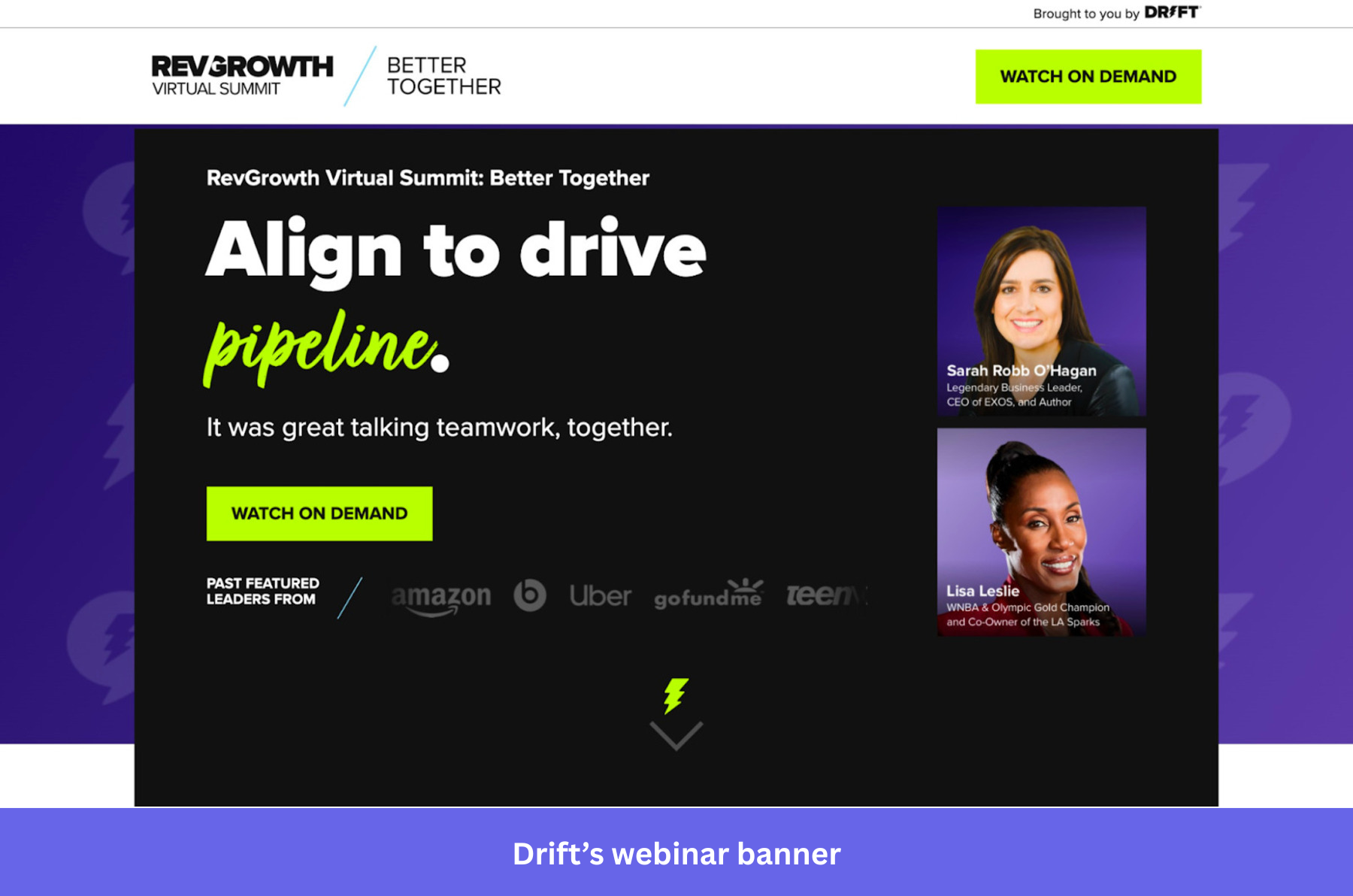
Webinars create durable content assets beyond the live event. A well-produced 45-minute session leaves valuable byproducts when repurposed into blog posts, short clips, and gated resources for lead capture. In other words, the live event captures demand in the moment while the recording continues generating pipeline for months (or even years) afterward.
9. Expand your reach through partnerships, integrations, and marketplaces
Partnerships and integrations are among the most cost-effective customer acquisition channels for SaaS teams, yet most companies still underinvest in them relative to the pipeline they produce. Co-marketing with complementary SaaS tools that serve the same buyer but solve a different problem can take the form of joint webinars, co-authored content, or shared email promotions. The key is finding partners whose existing customers would benefit from your product so both sides can promote the partnership without competing for the same customer need.
Dedicated marketplace listings take this further. Listings in product marketplaces like the Shopify App Store, Chrome Web Store, or Slack Marketplace function as always-on acquisition channels reaching buyers who are already active in those ecosystems. Marketplace SEO (such as optimizing listing titles, descriptions, or screenshots) works the same way website SEO does, but with a warmer audience because buyers are already in evaluation mode when searching a marketplace.
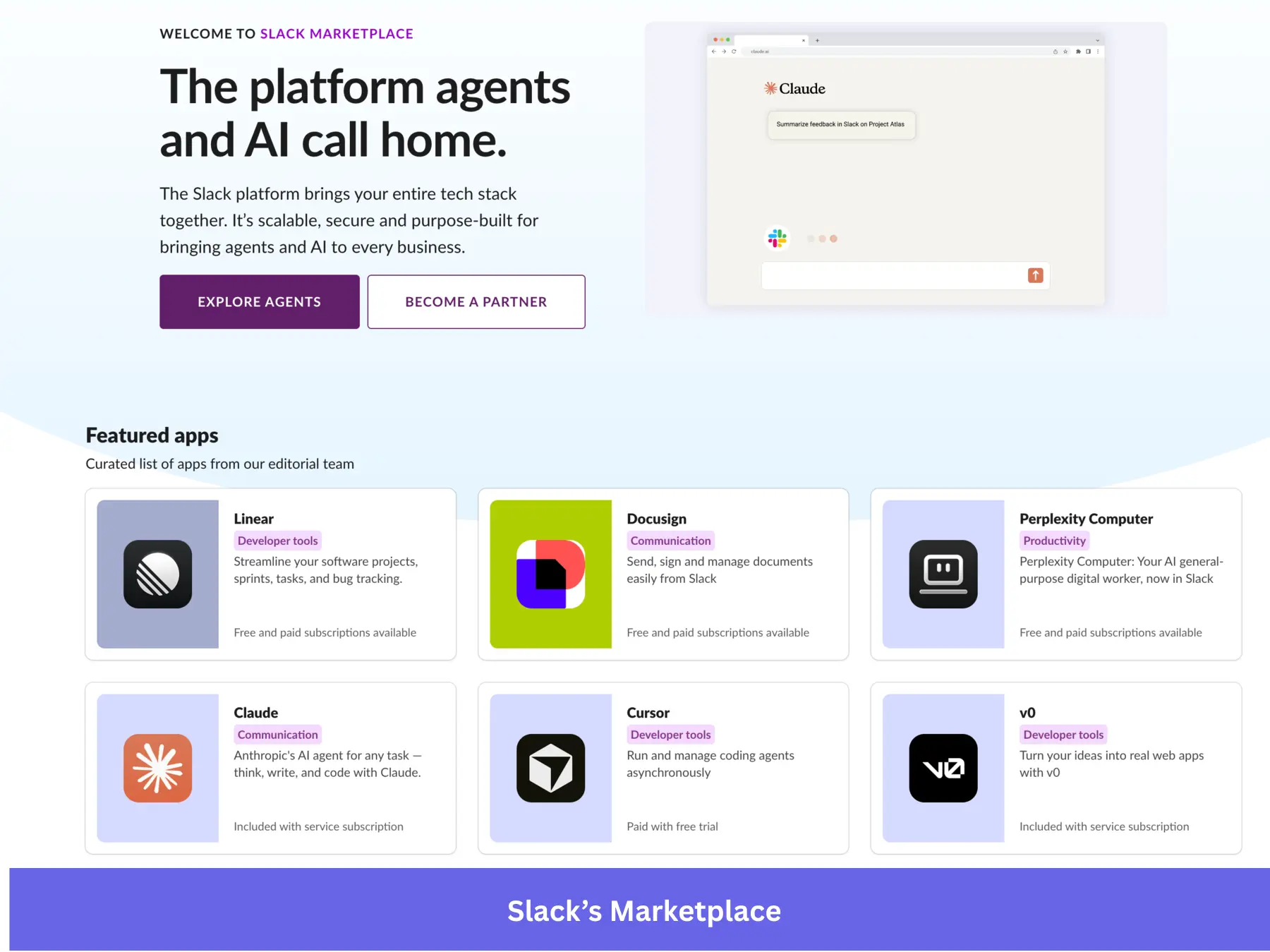
Our integrations page works on the same principle by showcasing integrations with tools like Segment, Mixpanel, Salesforce, and Intercom to attract users already invested in those ecosystems.
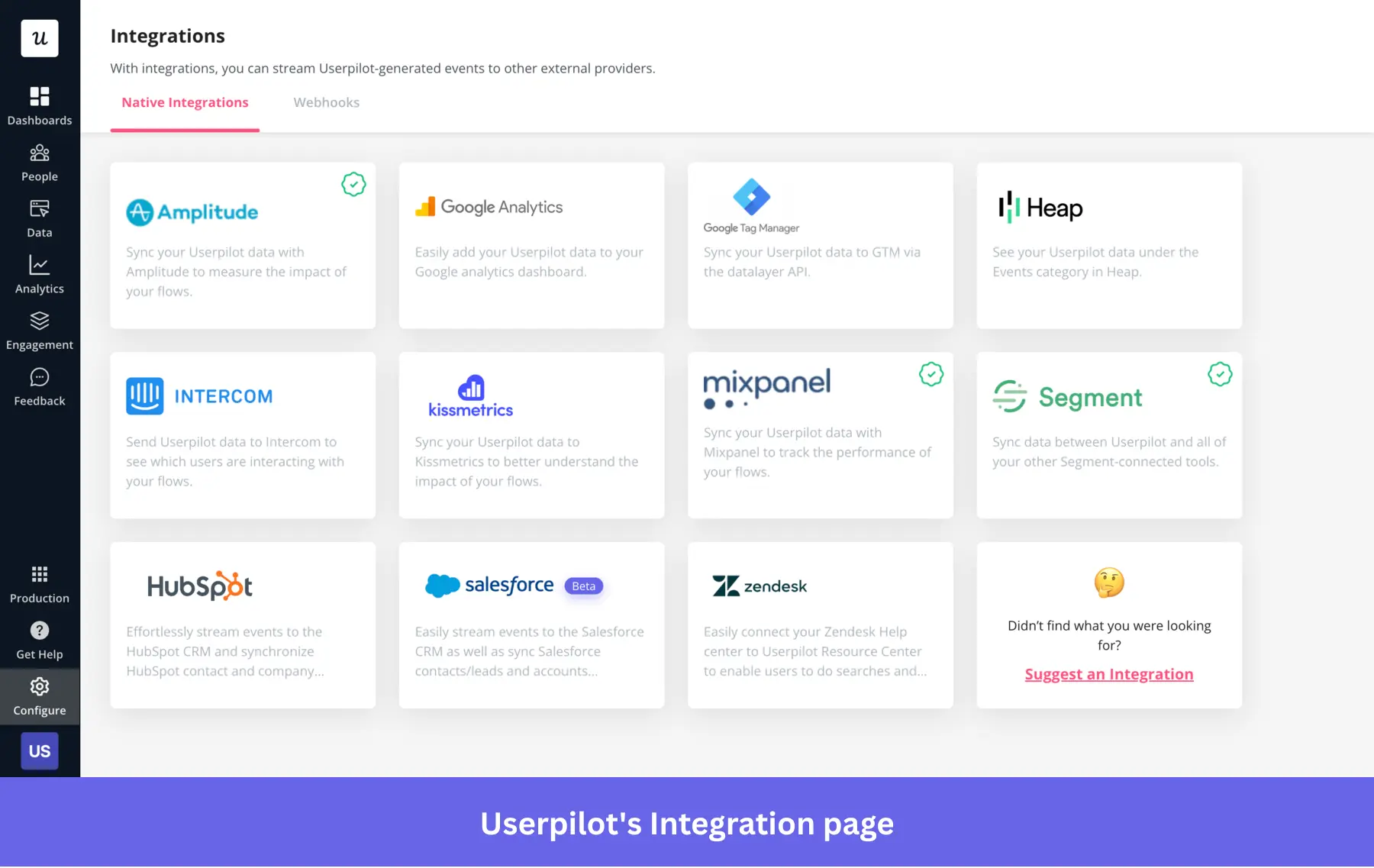
Treating a marketplace listing as a one-time setup task is a misstep that should be carefully avoided. Listings need the same ongoing investment as a conversion page with updated screenshots, growing review counts, and copy that reflects current product capabilities. Remember, a stale listing loses ground to well-maintained competitors even if the underlying product is better.
10. Win high-value accounts with account-based marketing
Account-based marketing inverts the traditional customer acquisition funnel. Instead of casting a wide net and filtering for quality, ABM starts by identifying the specific accounts you want to win and builds a personalized campaign around each one. It works best for mid-market and enterprise SaaS, where deal sizes justify the investment in highly targeted outreach. You can combine LinkedIn ads targeting decision-makers, personalized email sequences agitating their pain points, and outreach from sales reps who have done enough research to have relevant conversations.
Snowflake built much of its enterprise growth on a disciplined ABM program spanning four dedicated teams. Their approach uses Bombora intent data across thousands of account-specific campaigns, with recent AI-generated ad copy tests yielding a 54% incraese in CTR on LinkedIn. That result is only possible when the account targeting underneath the ads is precise enough to make the messaging relevant.
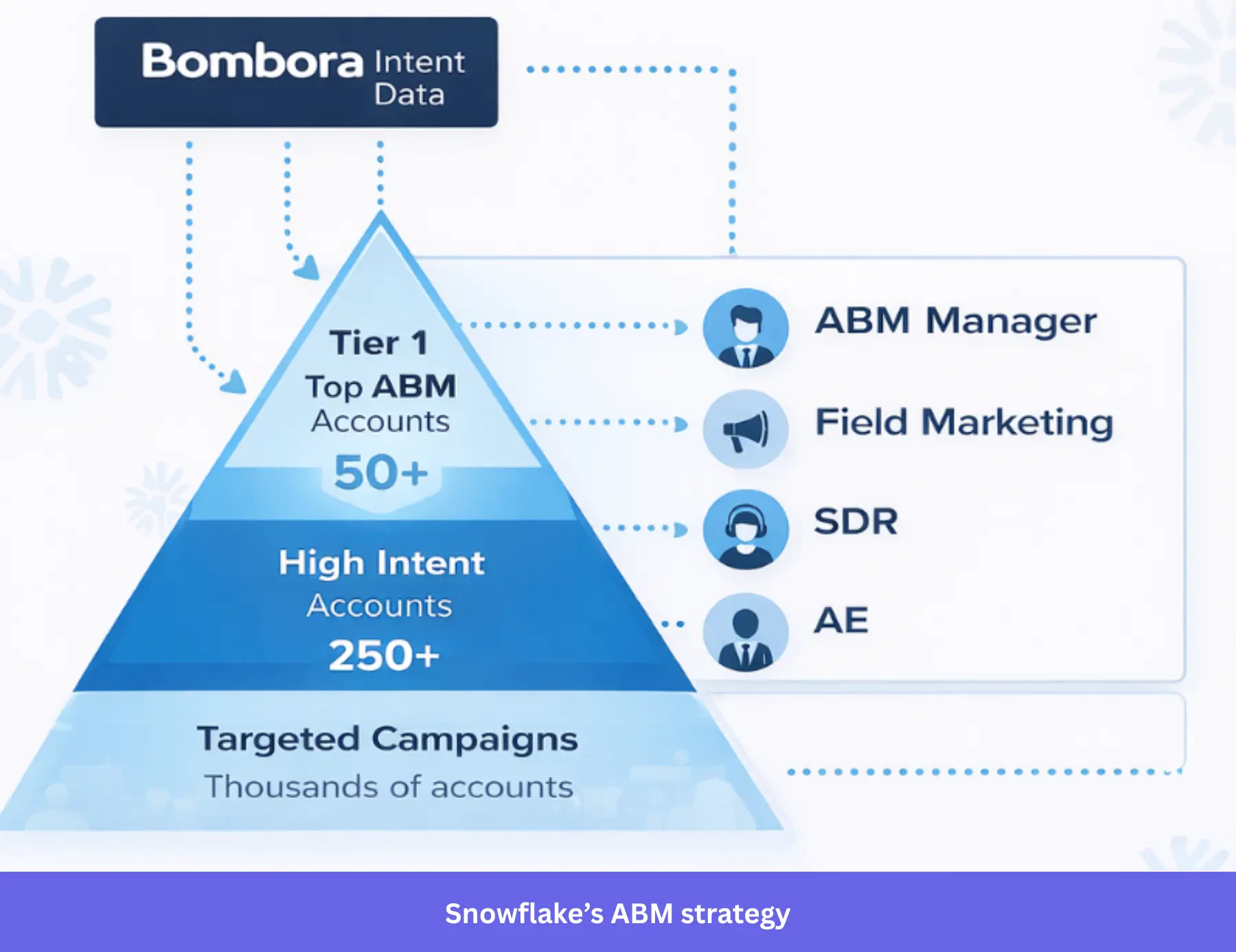
Intent data sharpens ABM targeting significantly. Platforms like 6sense, Bombora, and Demandbase provide the large data sets needed to blend automation and personalization. Signal-personalized outreach to those accounts achieves reply rates of 15-25%, compared to the 3.4% average for generic cold outreach. The critical measurement shift in ABM is from lead volume to account pipeline velocity, measuring how fast target accounts are moving through the pipeline and at what deal size.
High MQL counts are a vanity metric in an ABM motion. What matters is whether named accounts are progressing toward deals of the size you projected when you first built the target list.
11. Win at the bottom of the funnel with review sites and social proof
By the time a B2B buyer is ready to evaluate vendors, most of the decision has already been made. 79% of buyers know about the product they end up purchasing before they even begin their research, with the average shortlist containing just 2.6 vendors. Your customer acquisition strategy doesn’t matter if you’re filtered out during that shortlisting window before a sales conversation ever starts.
Buyers read peer reviews, compare ratings, and cross-reference what they see on G2 or Capterra against the claims on your website before they respond to any outreach. A strong presence on these review sites is the difference between making the shortlist and being invisible during the critical evaluation window that determines who gets the deal. Instead of waiting for reviews to accumulate organically, proactively request them from activated customers who have already completed onboarding, achieved a meaningful outcome, or given positive product NPS scores.
Targeting active users rather than your entire base produces higher-quality reviews and better average ratings because you’re reaching customers at the moment they’re most positive about the product. HubSpot treats G2 as a deliberate acquisition channel, running systematic campaigns to collect reviews from customers who’ve achieved specific outcomes like onboarding completion, first campaign launch, or CRM migration.
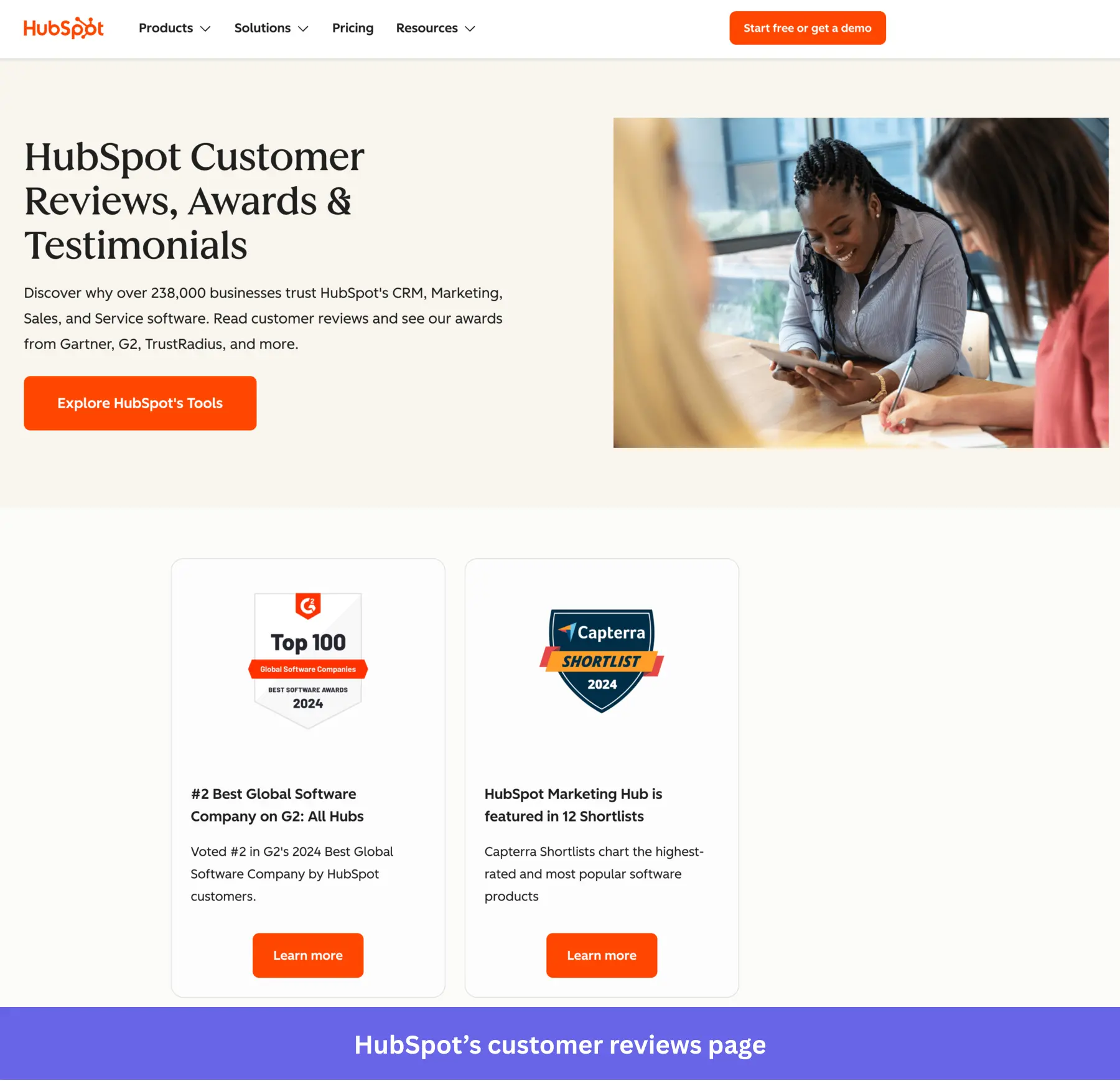
Beyond review sites, a well-constructed onboarding case study that documents a customer’s core problem, product implementation, and measurable outcome drives more conversions than feature-based marketing alone. Buyers at BOFU aren’t asking what the product does; they’re asking whether it has worked for someone in their situation. The brief window when a buyer is shortlisting products often lasts just a week or two. If your review score or case studies fall behind competitors during that window, you’ll be filtered out before a conversation even happens.
12. Build a scalable outbound sales motion
Outbound sales is the proactive process of identifying and reaching out to potential customers directly (through cold email, LinkedIn outreach, and phone) rather than waiting for inbound leads to arrive. Modern outbound is signal-driven rather than volume-driven, and the gap between teams that understand this distinction and those that don’t is widening as inbox saturation worsens. High-performing outbound teams use intent data tools like Clay, Apollo, and 6sense to identify accounts showing buying signals.
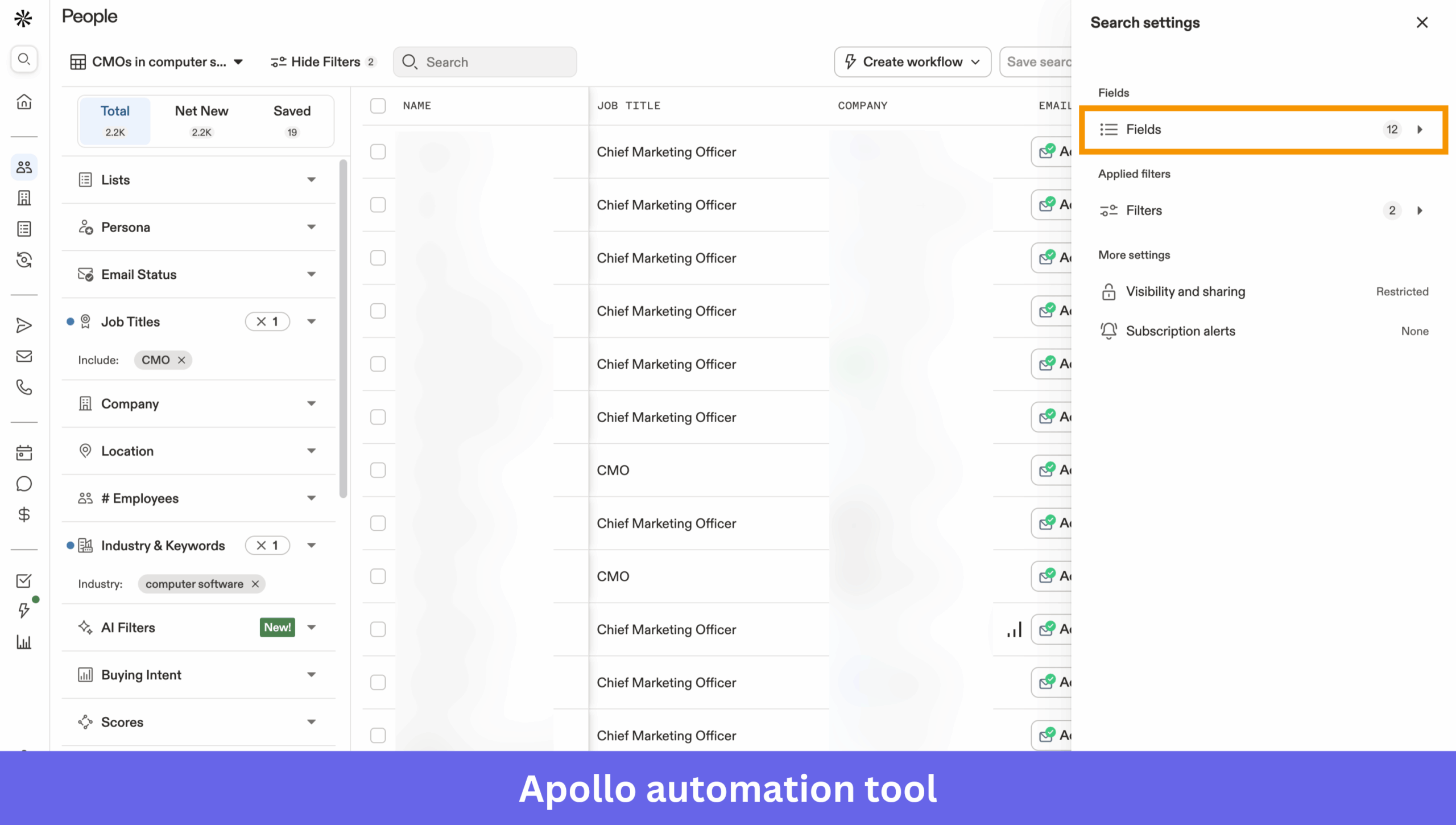
You can then personalize outreach using data from competitor research, job postings for relevant roles, and category content before reaching out. Write outreach around the prospect’s actual context rather than a generic template referencing their job title or company size. Personalization earns replies, not sequence length. Treating outbound as a volume game is the wrong mindset. Large lists, templated sequences, and high send volumes drive low reply rates while harming sender reputation and generating ill-fitted leads even when they do manage to get responses.
Personalized outreach to a smaller list of in-market accounts produces better customer acquisition results at a lower CAC than mass outbound campaigns targeting a broader list.
13. Build pipeline with founder-led content
Buyers trust people before they trust companies. Founders who build a genuine public presence on LinkedIn, X, or a personal newsletter generate warm pipeline (that no paid customer acquisition channel can fully replicate) because the trust is personal rather than institutional. The mechanism is consistent across every founder who has done it well: share expertise, product decisions, market observations, and contrarian perspectives on the domain problem you’re solving: not product features, but domain problems.
Personal posts on a personal LinkedIn profile drive 2.75x more impressions and 5x more engagement when compared to a company profile.
Those benefits compound as posts attract followers, followers become newsletter subscribers, and subscribers become trial users who convert at higher rates than cold paid traffic. Wes Bush built most of the ProductLed audience through LinkedIn before it became a formal brand. Instead of posting product announcements, the goal was always to provide expertise on a problem his audience cared about.
In contrast, founder content that is primarily promotional performs poorly because it violates the implicit social contract that the audience signed up for. The founder’s job is to teach, observe, and share perspectives on their domain. The moment the content starts reading like a marketing channel or sales pitch rather than a genuine voice, the audience stops engaging (with acquisition value collapsing soon after).
14. Generate qualified leads with benchmark reports and original research
Benchmark reports like our user activation rate benchmark report and original research are among the highest-performing B2B lead magnets in SaaS and one of the few content formats that generate direct lead capture and earned media from a single investment. Most teams underuse this channel because the upfront cost is higher than a standard blog post, but the compound return is significant when the research lands. A well-constructed benchmark report creates multiple customer acquisition assets with lead magnet PDFs, SEO-ready executive summaries, and even press coverage if the findings are newsworthy.
The report can also become a reference document cited in other content and linked to by websites in your niche, producing inbound traffic with no ongoing spend.
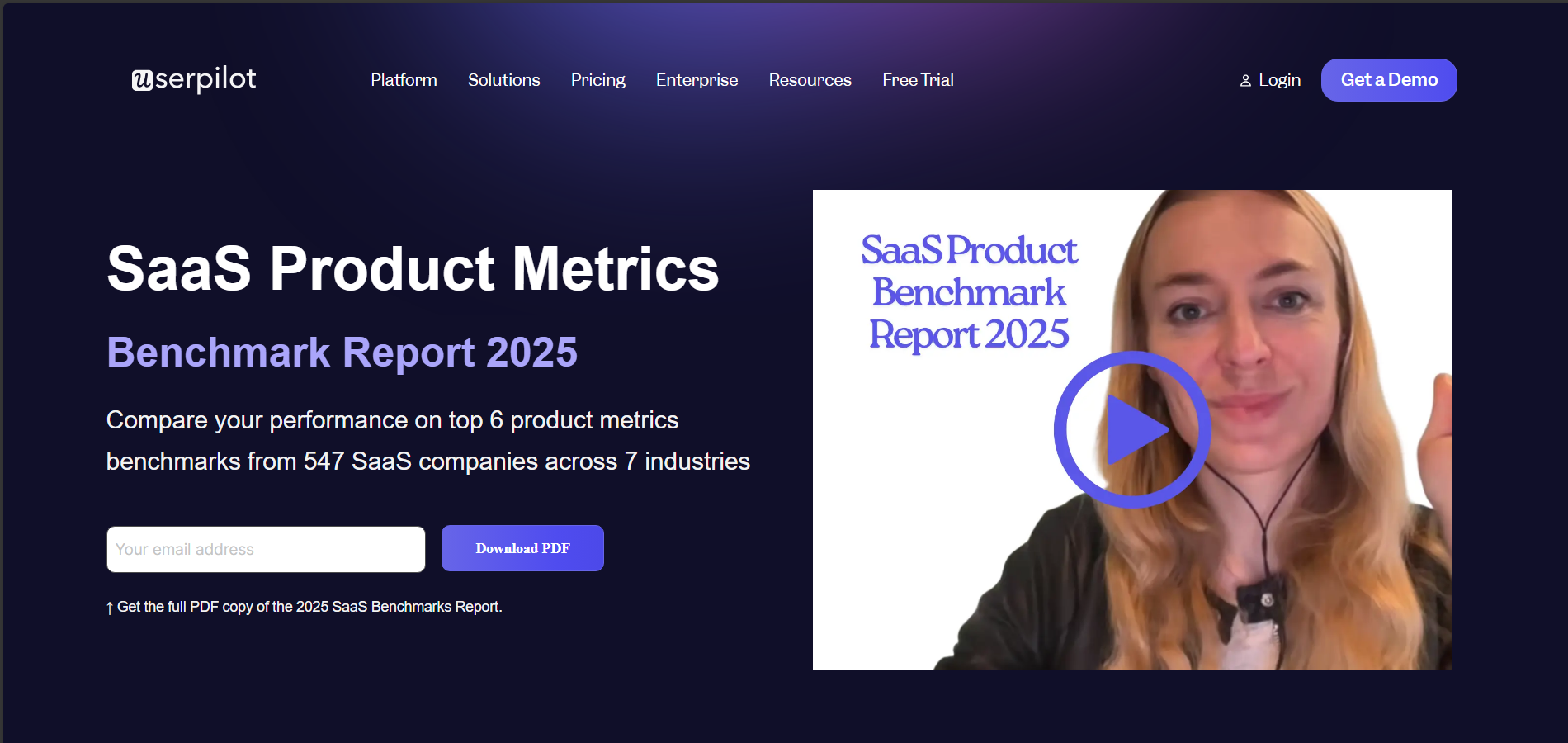
Userpilot’s product metrics benchmark report is an example of how we practice what we preach. It surveys hundreds of SaaS companies, produces benchmarks that product teams genuinely need, and then gates the full report behind an email form. This helps us capture leads from the exact prospects that the Userpilot product would be right for. The leads then convert because the report was built with our target readers’ interests at the forefront.
Building a report that exists solely to promote the vendor’s narrative is a waste of time on both ends. Vanity reports that serve the vendor’s marketing goals rather than the reader’s needs convert poorly because readers can tell the difference between genuine insights and branded content dressed up as research. The data has to be credible with sound methodology and relevant findings to be worthwhile for either party.
How to choose the right customer acquisition strategy for your SaaS business
A handful of strategies executed consistently will perform better than spreading yourself too thin trying to juggle the full dozen. Use these four criteria to identify which strategies fit your needs.
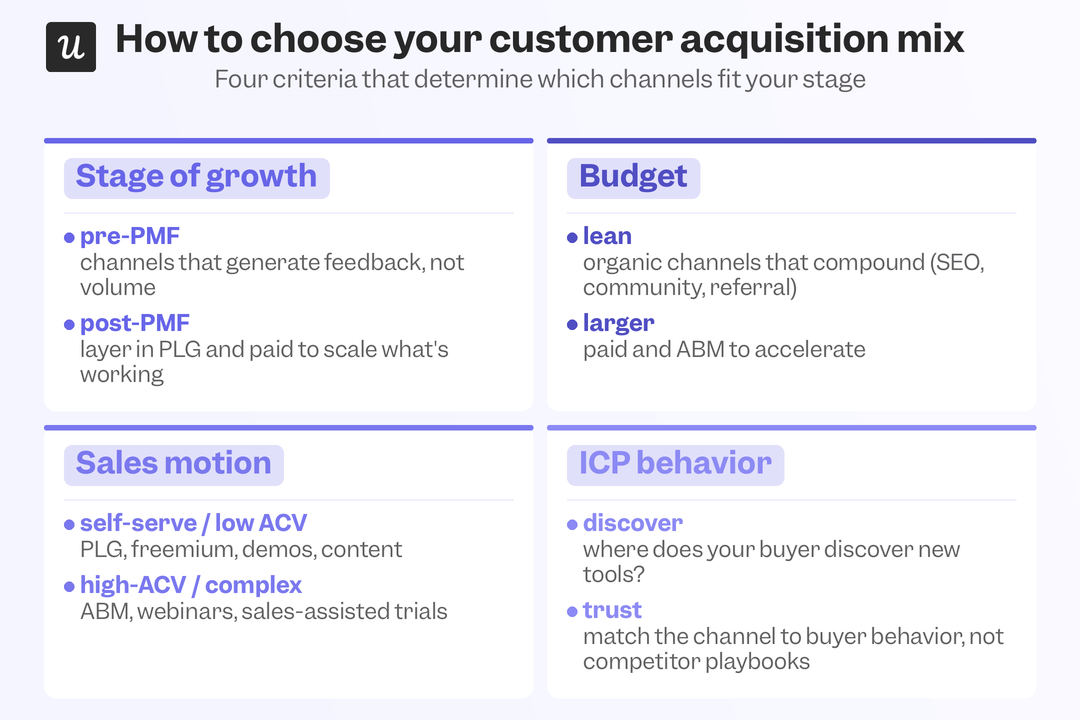
The growth stage will set your primary goal at each phase. Before achieving product-market fit, commit to a couple of channels that generate direct feedback from users, and run a PMF survey to read it. Once you’ve achieved PMF and have a repeatable conversion loop, layer in product-led growth mechanics and paid acquisition to accelerate what’s already working. Budget constraints shape which channels are viable, with a lean budget favoring organic strategies that compound over time. SEO, community building, and referral programs require time investment but relatively low upfront capital.
A larger budget can open up paid advertising and ABM, which generate leads faster but require ongoing spend to sustain.
Your sales motion shapes the acquisition mechanics, and the product led vs sales led decision sets everything downstream. Self-serve products with low annual contract values acquire customers best through product-led growth, freemium models, interactive demos, and other content that drives direct signups. High-ACV products with complex buying committees require a more consultative approach through ABM, webinars, strategic partnerships, and sales-assisted trials.
ICP behavior is what makes one channel outperform another for your specific product. Before committing to a channel, ask where your ideal customer discovers new tools and recommendations. A developer tool often performs best through channels like GitHub, Stack Overflow, technical blogs, and other communities where developers spend time. An enterprise product requires channels that reach economic buyers directly such as LinkedIn, industry events, and executive-level content.
SaaS customer acquisition metrics to track
Choosing the right strategies is only half the equation since you can’t tell what’s working or where to invest next without a precise product analytics framework.
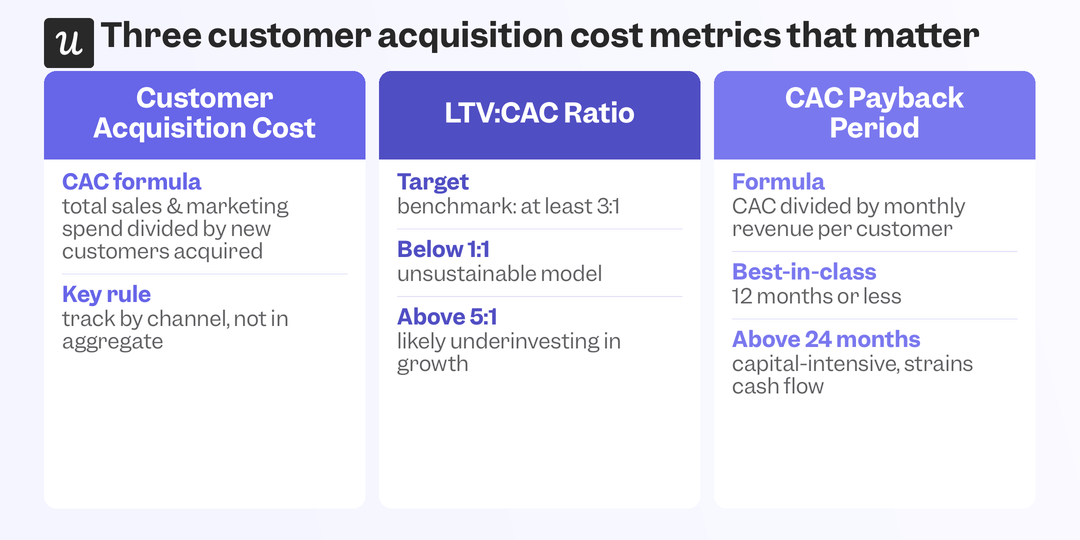
Customer acquisition cost (CAC) is the total sales and marketing spend in a given period divided by the number of new customers acquired. Track this by channel rather than in aggregate, because a blended number hides the true cost of each channel. A $1,000 CAC is excellent for an enterprise customer with a $50,000 ACV and unsustainable for an SMB paying $99/month.
The LTV:CAC ratio is the most useful summary metric for assessing customer acquisition efficiency. A 3:1 or higher ratio is the common benchmark for a healthy SaaS business: for every dollar spent acquiring a customer, generate at least three in lifetime revenue. Ratios below 1:1 indicate an unsustainable model; ratios above 5:1 often suggest underinvestment in growth.
CAC payback period tells you how long it takes to recoup the cost of acquisition through the revenue a customer generates. Calculate it by dividing CAC by average monthly revenue per customer. Best-in-class SaaS companies target 12 months or less. Payback periods above 24 months signal a capital-intensive model that strains cash flow and requires external funding to sustain.
First Page Sage gathers average CAC benchmarks across SaaS market segments:
| Market segment | Typical target customer | Average CAC range |
|---|---|---|
| SMB | Small to medium-sized businesses | $299-$1,461 |
| Mid-Market | Growing companies, 100-1,000 employees | $1,407-$5,330 |
| Enterprise | Large organizations, complex buying cycles | $2,206-$14,774 |
If your CAC is significantly above these benchmarks for your segment, the root cause is usually either poor channel-to-ICP fit, weak conversion rates at a specific funnel stage, or an activation problem that causes early churn and distorts your LTV calculations. Conversion rate by channel, measured against the SaaS average conversion rate, reveals which acquisition sources produce the highest-quality leads. A high-traffic, low-conversion channel is a signal to re-evaluate audience fit and landing page relevance before spending more.
A low activation rate is often the root cause of a high effective CAC because you’re paying to acquire users who never become customers, inflating every CAC figure across every channel. Activation metrics track the percentage of new users who reach a defined milestone, the point at which they’ve experienced enough value to be likely to continue as paying customers. It serves as a leading indicator of retention and LTV, with onboarding quality being the upstream determinant of activation rates.
Turn your acquisition strategy into compounding growth
While it’s true that the bottom 25% of SaaS companies are spending $2.82 to acquire every $1 of ARR, they aren’t all running bad campaigns. Most are running decent campaigns in the wrong channels, measuring blended performance that hides problems, and treating SaaS activation as a separate workstream from acquisition (when it could actually be the bottleneck keeping advertising dollars from producing an ROI).
The strategies above span the entire customer acquisition spectrum, so pick a couple of strategies using the selection criteria then use relevant product marketing KPIs to track whether they’re working.
Userpilot supports several of these strategies directly. In-app onboarding flows improve trial conversion rates by guiding new users to value faster, tooltips drive feature discovery for trial users, and NPS surveys identify promoters you can direct toward review sites. Furthermore, in-app messaging extends email sequences into the product itself for users who are already logged in while product analytics give you the activation data to measure whether acquisition spend is yielding long-term customers.
Every customer acquisition channel becomes more efficient when the product experience that follows converts leads and retains users. Get a demo to see how Userpilot helps you close that loop!
FAQ
What is a good CAC for a SaaS company?
A “good” CAC depends on your market segment and average contract value, but the most useful benchmark for your business model is the LTV:CAC ratio. A 3:1 or higher ratio is a common benchmark for a healthy SaaS business.
SMB products typically see CAC between $299 and $1,461, mid-market between $1,407 and $5,330, and enterprise between $2,206 and $14,774. A $2,000 CAC is unsustainable for a $99/month product but entirely reasonable for a $50,000 ACV deal. Always evaluate CAC in the context of the revenue that the customer is expected to generate.
What's the difference between customer acquisition and customer growth?
Customer acquisition and customer growth are related but not the same thing: acquisition is the process of winning new paying customers, while growth encompasses everything that happens to your customer base before, during, and after that first transaction.
When should a SaaS company invest in paid acquisition vs. organic channels?
Paid acquisition amplifies an already-functioning funnel. Without strong conversion rates, solid activation, and product-market fit, paid spend accelerates losses rather than growth.
Build on organic first. SEO, community, and referrals compound over time and produce lower CAC at scale. Layer in paid once you have a clear ICP, a landing page that converts, and enough data to optimize toward a profitable CAC. Before PMF, spend on channels that generate customer feedback, not volume.
What's the difference between CAC and CPA?
CAC (Customer Acquisition Cost) measures the total cost of acquiring a new paying user, including all sales and marketing spend, divided by the number of customers won. CPA (Cost Per Acquisition) is broader and refers to the cost of a specific action, such as a form fill, trial signup, or demo request.
About the author