Why Freemium-to-Premium Conversions Are Flopping: What the Benchmarks Are Teaching Us

The freemium to premium conversion rate is one of the most impactful metrics in SaaS growth, yet it’s also very misunderstood.
A 2026 survey of 200 B2B software products by Kyle Poyar, ChartMogul, and ProductLed found that one-in-four freemium products convert less than 2.5% of free users to paying customers within six months, while another quarter manages 10-15%. The median sits at 8%, but almost no company has that rate.
Freemium products are not meant to convert like a free trial. They need good conversion rates, but it also needs to scale adoption on top of it.
I have spent several years watching how freemium products behave: which ones grow, which ones pivot to paid-only, and which ones fail. This post is what that experience taught me, including what the benchmarks actually reveal, the six strategies that make freemium work in 2026, and an honest look at when the model probably is not the right choice at all.
What the benchmarks say about freemium conversion rates
The 2026 freemium conversion data tells an inconsistent story. The ChartMogul, Growth Unhinged, and ProductLed Conversion Report found that the median freemium conversion rate across 200 software products is 8%, but the distribution underneath that number is almost bimodal: about 25% of freemium products convert below 2.5%, another 29% land between 2.5% and 7.5%, and roughly 25% achieve 10-15%.
A 10x gap separates the top and bottom quartiles. That spread means the median tells you almost nothing useful about where your product should be.
Other data sources reinforce the same picture. First Page Sage, drawing on 80+ SaaS clients between 2021 and 2025, found an average freemium-to-paid conversion rate of 3.7% for traditional freemium, with industry variation running from 2.6% in EdTech to 5.8% in RegTech. Lenny Rachitsky’s research across 1,000+ products found that self-serve freemium models convert at 6-8%, while sales-assisted freemium reaches 10-15%.
ProductLed’s benchmark data adds another reference point: when companies first make the move to product-led growth, about 9% of free accounts convert to paid overall.
In the end, these benchmarks don’t tell you what matters most: how to deliver the best experience to your users. Wes Bush, CEO and Founder of ProductLed, makes the right framing explicit. Rather than benchmarking against the market, the question worth answering is whether your model is set up to serve your specific users:
“There is no single correct model. Instead of debating whether you should have a free trial vs. freemium model, focus on your user’s desired outcome and their challenges, then arm them with everything they need to succeed. Align your model with those solutions.”
— Wes Bush, CEO and Founder at ProductLed
The teams that consistently improve their freemium-to-premium conversion are the ones that benchmark against themselves and focus on satisfying users. If your freemium conversion was 4% last year, anything you do to move it upward is measurable progress, regardless of what the median number is.
What matters in freemium is the scale of adoption
Another problem with benchmarks is that they compare freemium to free trials without accounting for signup volume. Kyle Poyar’s 2026 report found that for every 1,000 website visitors, freemium products generate 90 signups while free trial products generate only 45. Once you factor in those different signup rates, freemium products actually produce more paying customers per 1,000 visitors than free trials do, despite carrying a lower raw conversion percentage.
The number that matters for freemium is not conversion rate in isolation. It’s the combination of signup volume and conversion rates.
It explains why freemium products with strong virality or network effects consistently outperform niche B2B tools. Slack, Notion, Canva, Figma, and Zoom share the same structural advantage: strong viral or network effects that bring new users in at low marginal cost.
For these products, the free tier functions as the primary acquisition channel, not just a trial mechanism. Their cost of acquiring a free user is so low that the expected lifetime value of the converted users is high enough to sustain it.
However, this math only works at scale, which is why it’s difficult to find a successful freemium product with a niche use case, and which is why this model is rarely recommended for B2B SaaS products.
What makes freemium products grow in 2026
The freemium model benefits most from growth loops: free users adopt the product, derive value from it, share it with others (or demonstrate it by using it in front of colleagues), and eventually, they bring in more people who do.
The seven strategies below all support that loop. Some accelerate adoption, some reduce the cost of maintaining it, and some make the upgrade moment feel inevitable rather than forced.
1. Make value realization as fast as possible
The shorter the time-to-value, the more likely a free user is to form a habit around your product.
For many products, the fastest path to value is via an ungated experience, letting users interact with the product before creating an account (the way Lovable, ChatGPT, and Perplexity do). Kyle Poyar’s 2026 report found that ungated freemium experiences see as much as a 3x increase in the number of website visitors who start using the product, even if slightly fewer of them create an account.
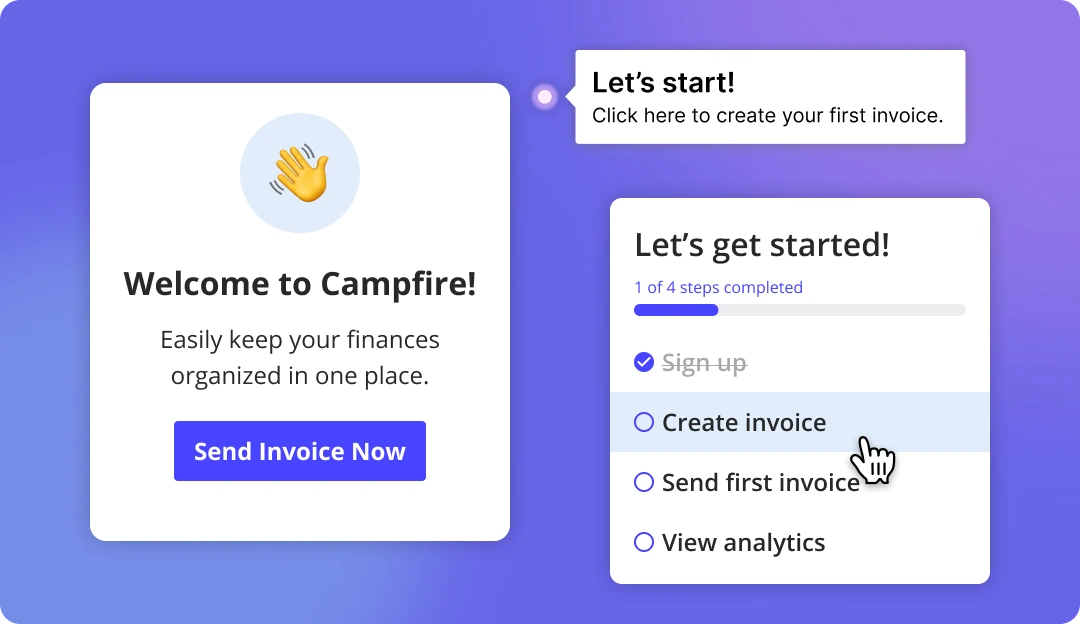
As for products where ungating is not feasible, personalized onboarding flows are another key focus. The goal is to get users to an “Aha!” moment as quickly as possible (ideally within their first session) using contextual tooltips, onboarding checklists, and in-product modals without overwhelming. For example, Attention Insight achieved a 47% increase in activation rate by building a structured interactive onboarding through Userpilot, replacing a generic welcome experience with a guided first-use sequence tailored to what each user was trying to accomplish.
2. Implement reverse trials
A reverse trial gives new users temporary access to all premium features from the moment they sign up, then downgrades them to the free plan when the trial period ends.
It solves the core problem with standard freemium: free users often do not understand what they are missing, which makes it hard to demonstrate the value of an upgrade through feature gates or upgrade banners alone.
Elena Verna (who has led growth at Lovable, SurveyMonkey, Amplitude, and Miro) has written extensively about how reverse trials compound the freemium advantage. Users who adopt premium features during a reverse trial are far more likely to convert. Data from the 2026 ChartMogul report supports this view, reverse trials convert at a “good” rate of 4-6% and a “great” rate of 8-12%, broadly comparable to standard free trials but with the higher signup volume that freemium generates.
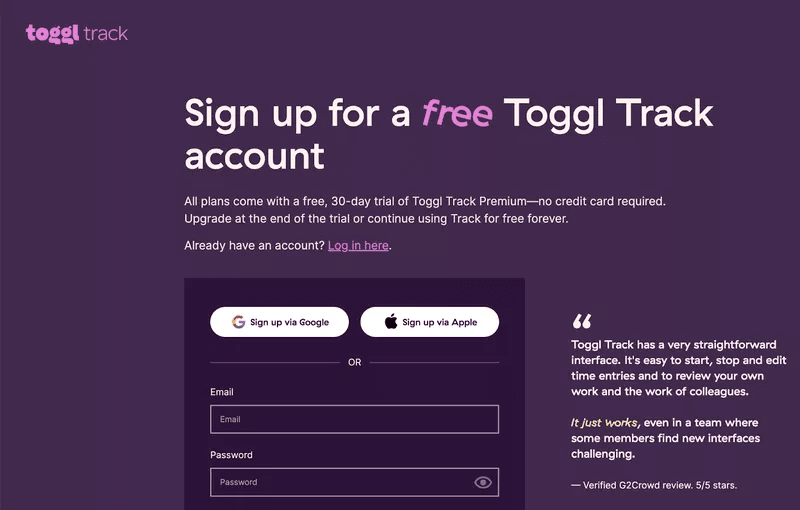
That said, a reverse trial works best when it’s long enough for users to actually adopt a premium feature into their workflow (14-21 days). Also, when the downgrade moment is communicated clearly in advance, the urgency feels real rather than arbitrary. An example is how Toggl has used the reverse trial model effectively, giving new users immediate access to all premium features before transitioning them to a free plan with usage limits at the end of the trial period.
3. Combine with free trials
Speaking of reverse trials, freemium and free trials are not mutually exclusive. For example, you can offer a time-limited premium trial to freemium users who are active, or offer trial extensions to those demonstrated a certain activity level during a reverse trial, like Canva.
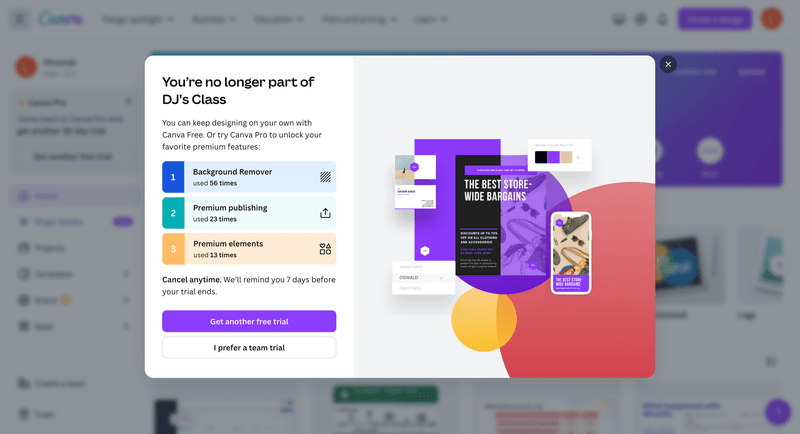
For AI-powered features specifically, the hybrid approach is increasingly the norm. Many products now offer a limited number of AI credits or executions on the free plan, enough for users to experience the value of the feature but not enough to make it a permanent substitute for paying. When a user runs through those credits, the upgrade prompt has an immediate, concrete hook tied to what they were just doing (rather than a generic banner). That specificity converts far better because the user already knows what they are getting.
In short, these offers work best when they’re targeting users who are already active and seeing value from the product, not users who have not logged in for two weeks.
4. Make the free plan economically scalable
The biggest risk in a freemium model is not a low conversion rate: it’s high support and infrastructure costs from users who never pay. Scaling a free product means designing the free tier so that it delivers value, while keeping the cost as low as possible.
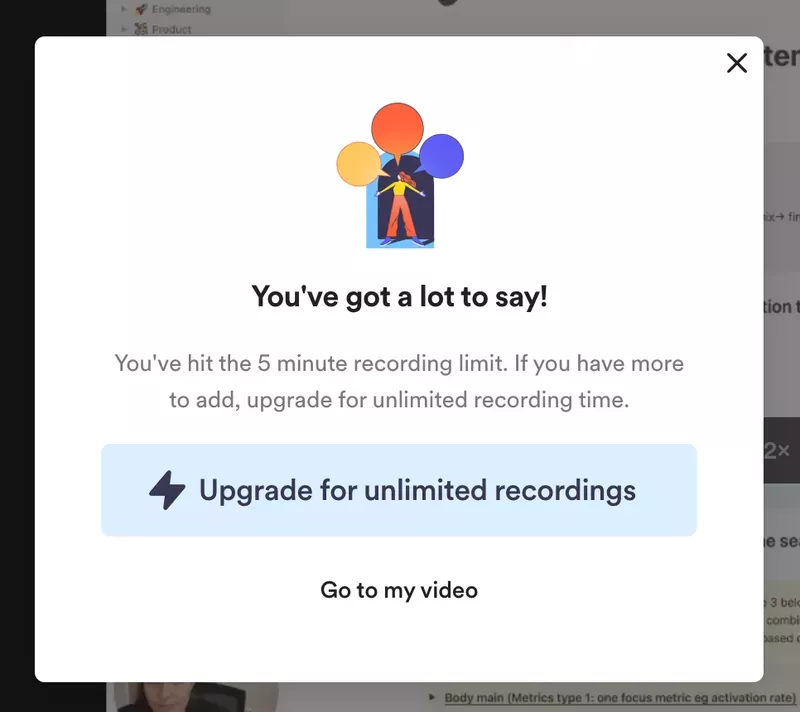
Feature usage limits are a good example of this. Instead of simply hiding premium features, usage caps let free users experience a feature, understand its value, and then hit a limit that could lead to an upgrade decision. Loom, for example, shows an upsell prompt when users hit a usage cap.
5. Design a loyalty system to feed the growth loop
Not every free user who is deeply engaged with your product needs to be on a paid plan to be valuable. Power users on the free plan can still drive acquisition through referrals, reviews, and social proof.
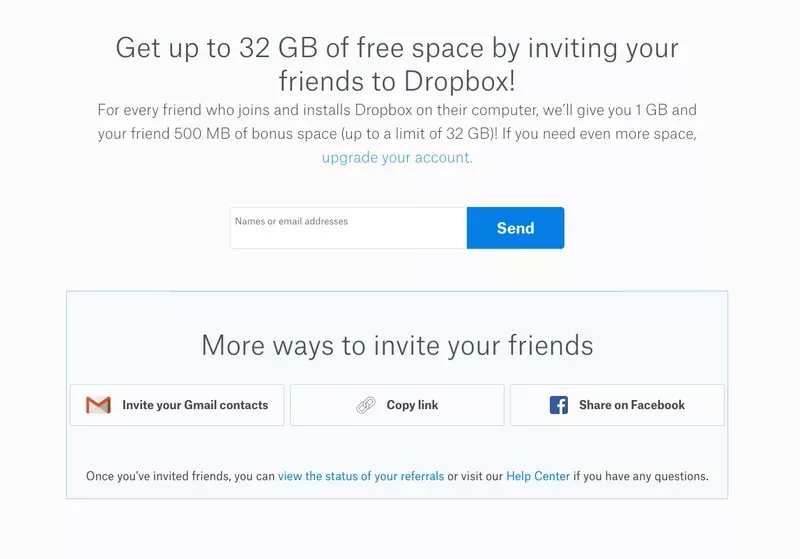
That’s why loyalty systems are popular. They reward free users for promoting you, creating a growth loop that runs independently of your upgrade funnel.
The simplest version is a referral program with meaningful rewards (e.g., a free month for every new user). Dropbox, for example, built its early growth almost entirely on this mechanic, with free users earning additional storage for every referral. The same principle applies to G2 reviews and social shares: a paid incentive for leaving a review or posting on their socials can contribute to acquisition without requiring users to pay first.
Community platforms, when applicable, can also feed this loop. When free users participate in a product community (answering questions, sharing use cases, building public templates, etc), they deepen their own engagement with the product while generating social proof that attracts new signups. Users who become embedded through community participation are also more likely to convert, because they’re using the product at a level where the advanced features start to matter.
6. Make freemium valuable by itself, but with clear incentives to upgrade
The freemium experience should be balanced. Generous enough that users build real habits around the free plan, but structured so that there’s a clear sign to upgrade. Setting the free tier too limited means users leave before they have experienced enough value to want more. Giving too much, and users get everything they need from the free tier without ever having a reason to upgrade.
The freemium tier works best when it gives users around 80% of the solution to their core need, with the remaining 20% reserved for premium features that become relevant as usage scales. Calendly is a useful example; its individual scheduling is fully free (including unlimited one-on-one meetings and a customizable booking page) while team scheduling, multi-calendar integration, and automated workflows all require a paid plan.
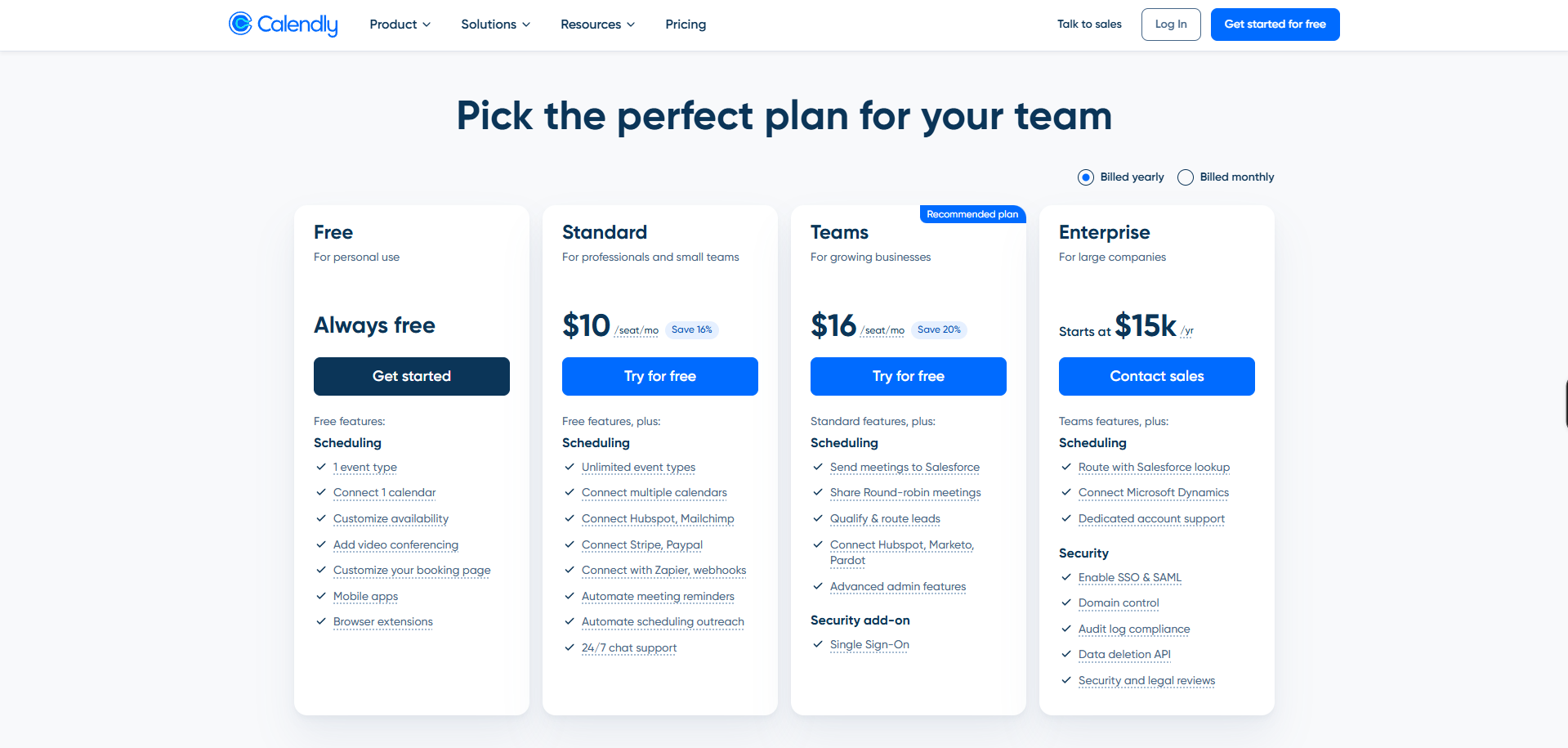
The upgrade trigger is linked to a more advanced use case: the moment a user wants to involve a colleague, scale their usage, or get access to more professional features, the reason to pay becomes obvious without any additional convincing required.
Designing your free tier around that dynamic gives you a conversion trigger that scales with your users’ success (the more they achieve with it, the higher the expansion revenue ), rather than depending on a timer or a nudge campaign to manufacture urgency.
The caveats of a freemium plan
Freemium works for a relatively narrow set of products, and most B2B SaaS companies are not a fit. Successful freemium products use the free tier as an acquisition channel, meaning new users arrive through word-of-mouth, product sharing, or network effects rather than paid ads.
And with AI-driven products, those costs compound faster still. According to Kyle Poyar’s research, AI margins run at about 50%, compared to 70-80% for traditional SaaS.
Several specific conditions also need to be in place. The free plan must be cheap to serve at scale, and simultaneously, the free experience has to be useful enough to retain people past their first week.
In short:
- Freemium makes sense when: Your product has organic growth effects, the cost of serving a free user is low (no heavy onboarding, minimal support), and the free tier is valuable enough to get adopted while making the value of the premium plan evident (via reverse trials, usage trials, etc).
- It makes less sense when: Your primary acquisition channel is paid ads, your product requires complex implementation, or your core value proposition requires advanced features that can’t be free.
Rethinking what freemium to premium conversion actually means
Freemium-to-premium conversions matter a lot, but it’s not enough. A freemium model needs to build a distribution channel that fills the top of the funnel at low cost, then move a portion of those users into a paid tier where the unit economics make sense.
Userpilot helps growth teams understand what free users are actually doing. Where they are getting stuck, which features they keep reaching for, which usage patterns predict eventual conversion, etc. So if you want to see how Userpilot can help you elevate the freemium experience (i.e., personalized onboarding flows, behavioral upgrade triggers, product analytics, and agents), book a demo, and we can show you how to optimize your freemium product.
About the author