Usermaven Pricing: What Each Plan Offers and Whether It’s Worth It



Usermaven promises robust, privacy-first analytics without the complexity of traditional tools like Google Analytics and Mixpanel. But is Usermaven pricing worth the ROI?
To help you answer that question, I’ll break down the platform’s pricing structure, examine where the real value lies, and when other tools might be more suitable for product growth.
An overview of Usermaven’s core functionalities
Usermaven is an all-in-one marketing attribution and analytics platform designed to give teams a complete view of the customer journey, from the very first website visit to conversion to product usage.
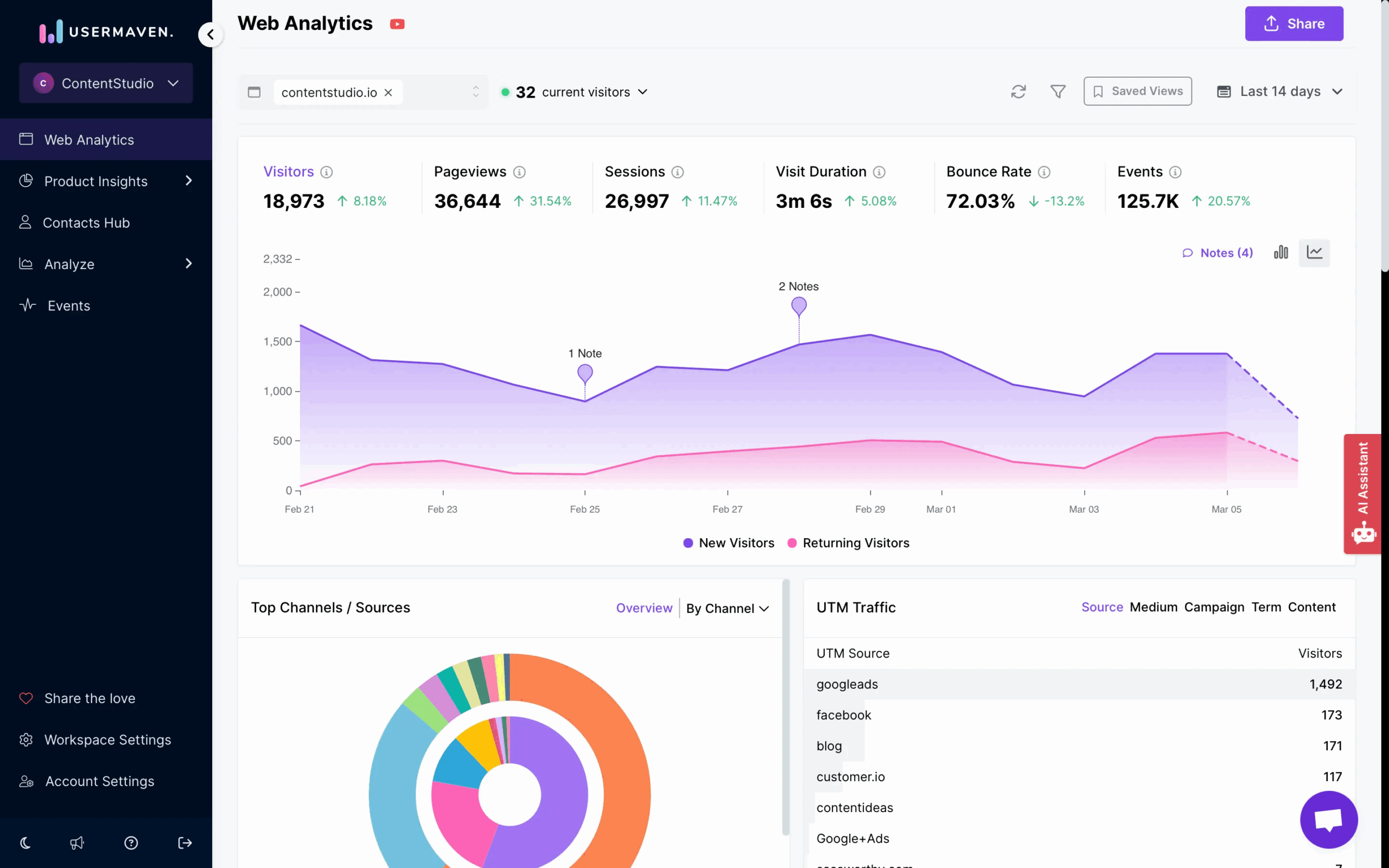
Here’s what you can do with Usermaven:
- Unified web and product analytics: Usermaven combines web analytics (traffic, page views, sources) and product analytics (feature usage, sessions, engagement) into one place so you can analyze customer behavior without juggling multiple tools.
- Multi-touch attribution: See which channels, touchpoints, and campaigns truly influence conversions and revenue (including paid ads integration).
- User and account profiles: Track individual users, from anonymous visitor to identified customer, and build detailed profiles that stitch activity together across sessions.
- Real-time data dashboards: Track key metrics at a glance with customizable dashboards, plus templates tailored for SaaS, e-commerce, and marketing agency use cases.
- Funnels, journeys, and retention analysis: Visualize how users move through critical flows, pinpoint drop-off points to improve user engagement.
How much does Usermaven cost? Exploring Usermaven pricing
Usermaven combines tiered plans with usage-based pricing, where each plan includes a fixed feature set and the final cost scales with event volume. Usermaven has three pricing plans:
- Growth
- Scale
- Enterprise
Typically, you get a 14-day free trial so you can test features before subscribing(no credit card required!).
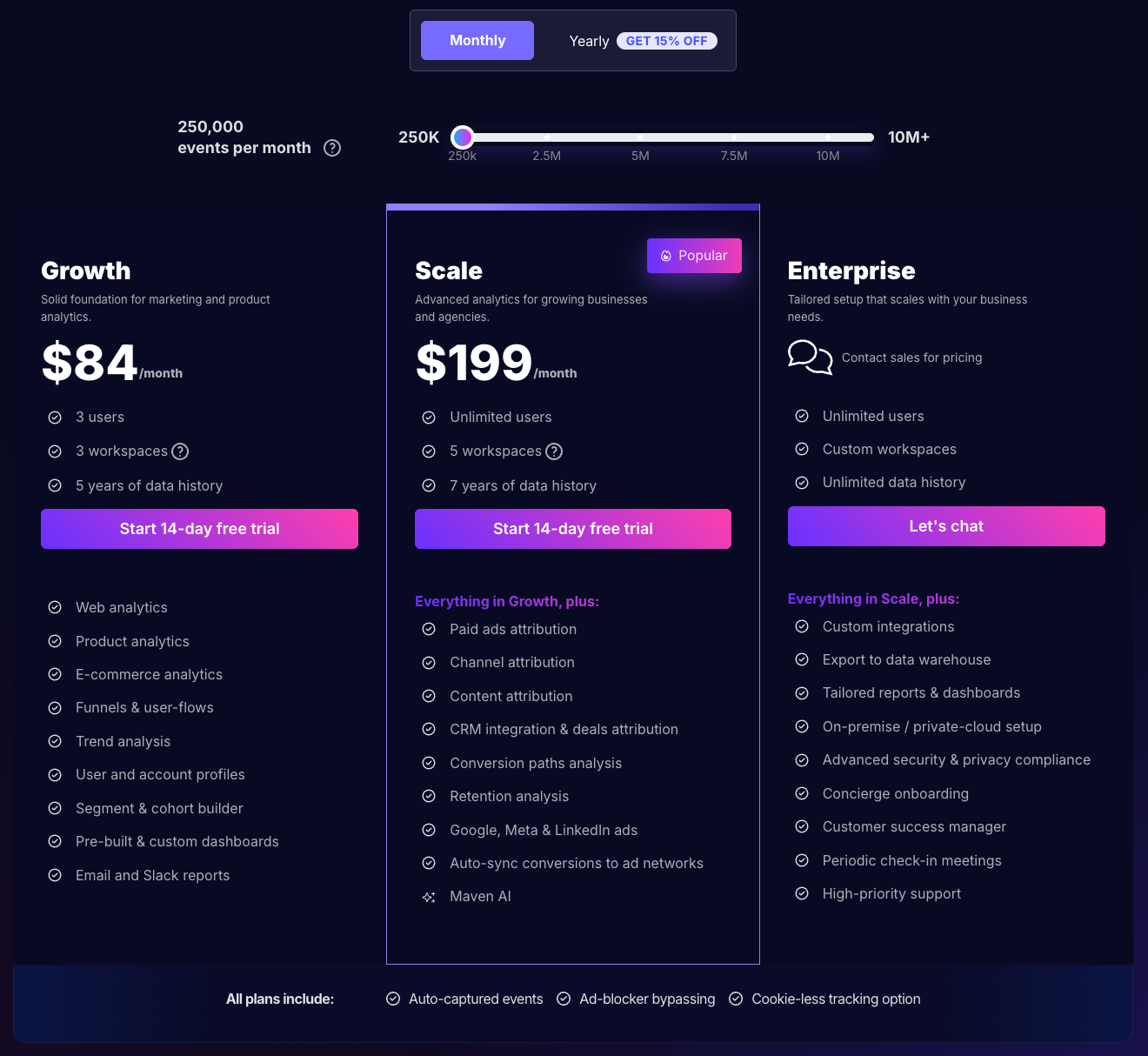
Let’s go over in more detail what each plan offers:
Growth plan
Starts at: $84 / month, $71 if billed annually
Best for: Small teams in need of a user-friendly and cost-effective tool for web/product analytics.
- Gives access to 3 users, 3 workspaces, and 5 years of data retention.
- Covers web, product, and e-commerce analytics.
- Includes foundational analytics features like auto-captured events and data visualization.
- Enables building segments, cohorts, users, and account profiles.
- Includes email and Slack reports of account activity.
Scale plan
Starts at: $199/ month, $169/month if billed annually
Best for: Growing companies that need deeper insight into acquisition, conversion, and revenue-driving channels.
- Access to unlimited users, 5 workspaces, and 7 years of data history.
- Adds advanced attribution across channels, content, and paid advertising.
- Comes with CRM integration and deals attribution.
- Introduces advanced conversion paths, retention analysis, and AI-powered insights to support faster decision-making.
- Provided native integrations with platforms like Google, Meta, and LinkedIn allow conversion data to be synced directly back to ad networks.
Enterprise plan
Starts at: Custom based on specific needs
Best for: Organizations with complex analytics, security, and compliance requirements.
- Access to unlimited data history, custom workspaces.
- Export analytics data directly to their data warehouse.
- The plan supports private cloud or on-premise deployments for teams with strict data governance needs.
- Enterprise customers receive white-glove onboarding, a dedicated customer success manager, and priority support.
Add-on: Guided setup and tracking plan
If you don’t want to figure out your analytics setup alone, this one-time $499 add-on gives you expert guidance to implement Usermaven correctly from the start. You’ll get structured Q&A sessions, a customized tracking plan, preconfigured dashboards, plus clear recommendations for maintenance.

Is Usermaven worth the investment?
I reviewed Usermaven’s official documentation and analyzed third-party reviews on platforms like G2 to form a balanced, hands-on opinion. Below is a detailed breakdown of where Usermaven shines and where it may fall short, depending on your growth model.
Usermaven strengths
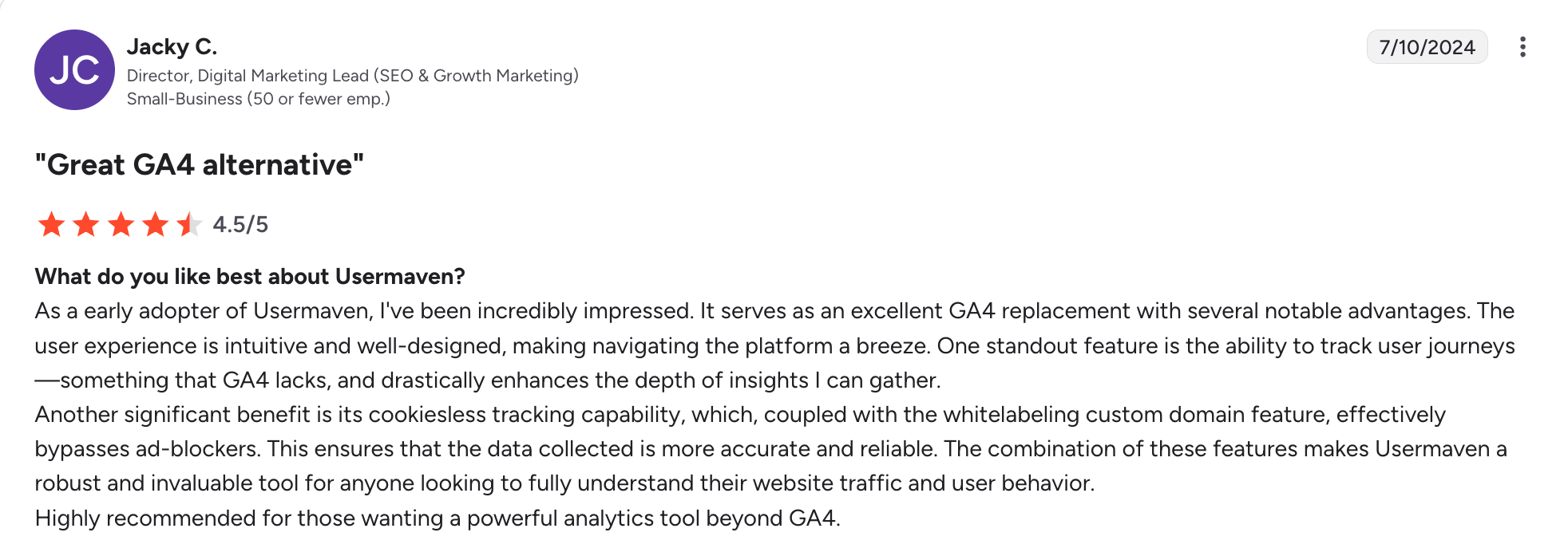
✅ Fast setup and easy to use: Many reviewers remark that installation is simple; you just need to insert a code snippet and start tracking data right away with autocapture, without relying on engineers for tagging. The dashboard is intuitive, and even users without technical expertise can easily navigate it.
✅ Marketing attribution and product analytics in one place: With Usermaven, you can see how acquisition channels connect directly to in-product behavior, allowing you to answer critical questions like ”Which acquisition channels bring in power users?” “Which marketing campaigns drive feature adoption?”, without juggling integrations, exports, and spreadsheets.
✅ User privacy-first analytics: Due to GDPR/CCPA regulations and the rise of ad-blockers, client-side tracking frequently loses 20-30% of user data. To bypass these limitations, Usermaven offers cookie-less tracking and white-labeling. You can serve the tracking script from your own sub-domain (e.g., stats.yourdomain.com), making it invisible to most blockers and capturing more data.
Usermaven weaknesses
❌ Non-scalable pricing: Because you pay per session, a high-usage product becomes a financial liability. If you manage to drive stickiness and get existing users to deepen engagement, you pay more, even if you didn’t necessarily acquire new customers or grow your revenue.
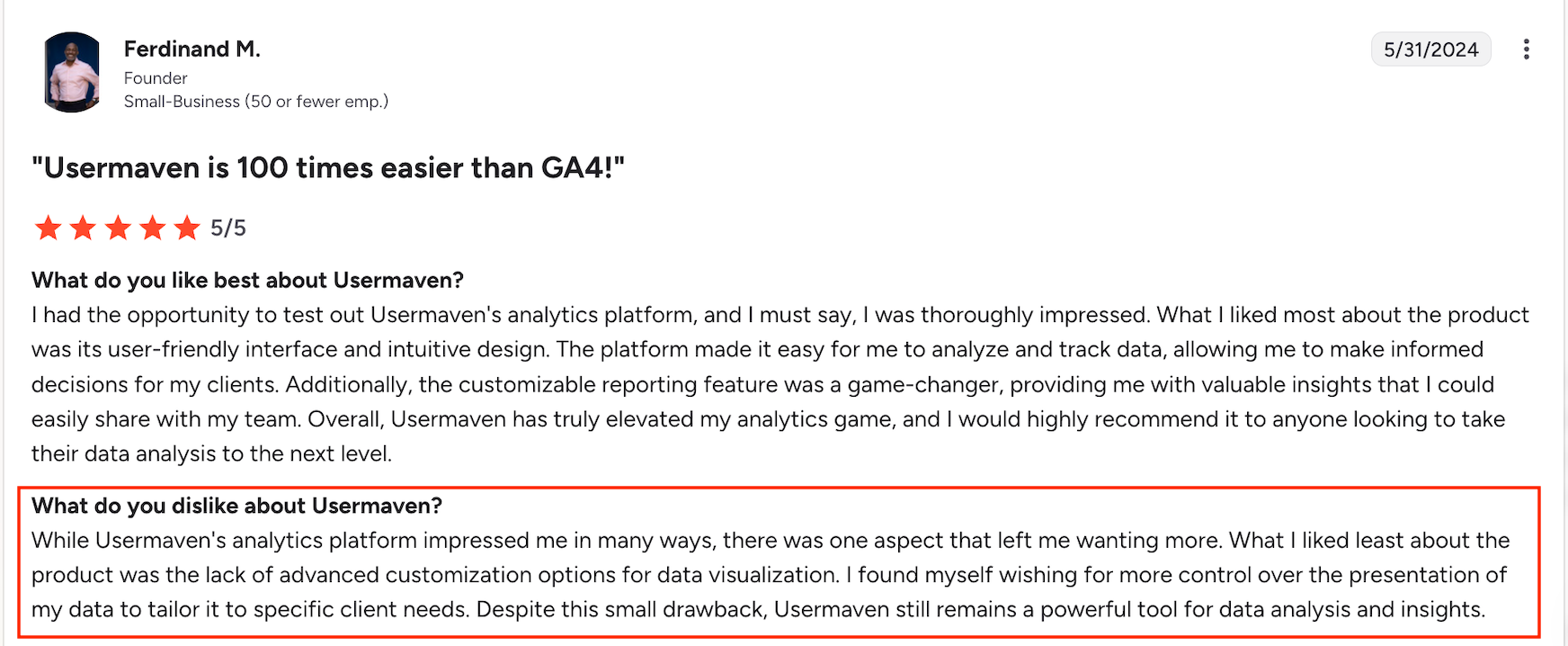
❌ Limited reporting customization: While basic dashboards are solid, many reviewers note that deep customization is restricted; you can’t tailor reports or visualizations as freely as in some enterprise analytics tools.
❌ Lack of actionability: Usermaven focuses purely on quantitative data. There are no qualitative analytics tools like session replays, heatmaps, or surveys to explain the why behind numbers, making your data less actionable. You also can’t use these insights to improve key metrics, as Usermaven provides no native tools for engagement.
Userpilot: A better alternative for product-led SaaS teams
If your goal is to increase product adoption, then a unified solution like Userpilot offers better ROI by bundling analytics with engagement tools. This allows you to close the loop between getting powerful insights and acting on them.
Here’s how it differs from Usermaven’s current offerings:
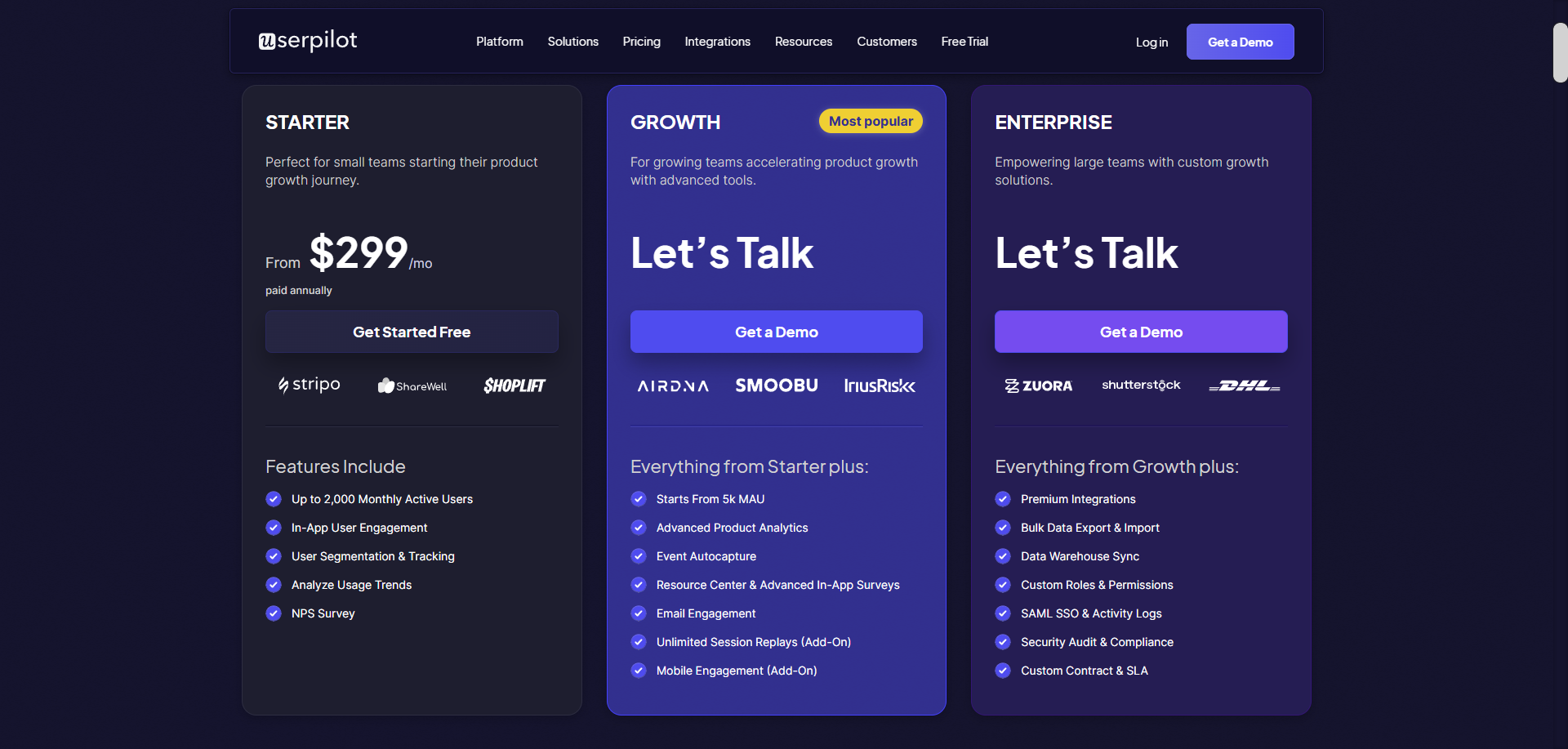
- Scalable MAU-based pricing: You’re not penalized for high engagement, whether users log in once or multiple times a day; costs remain stable and predictable. As your product grows, pricing scales in line with the number of active users receiving value, making budgeting simpler and more transparent.
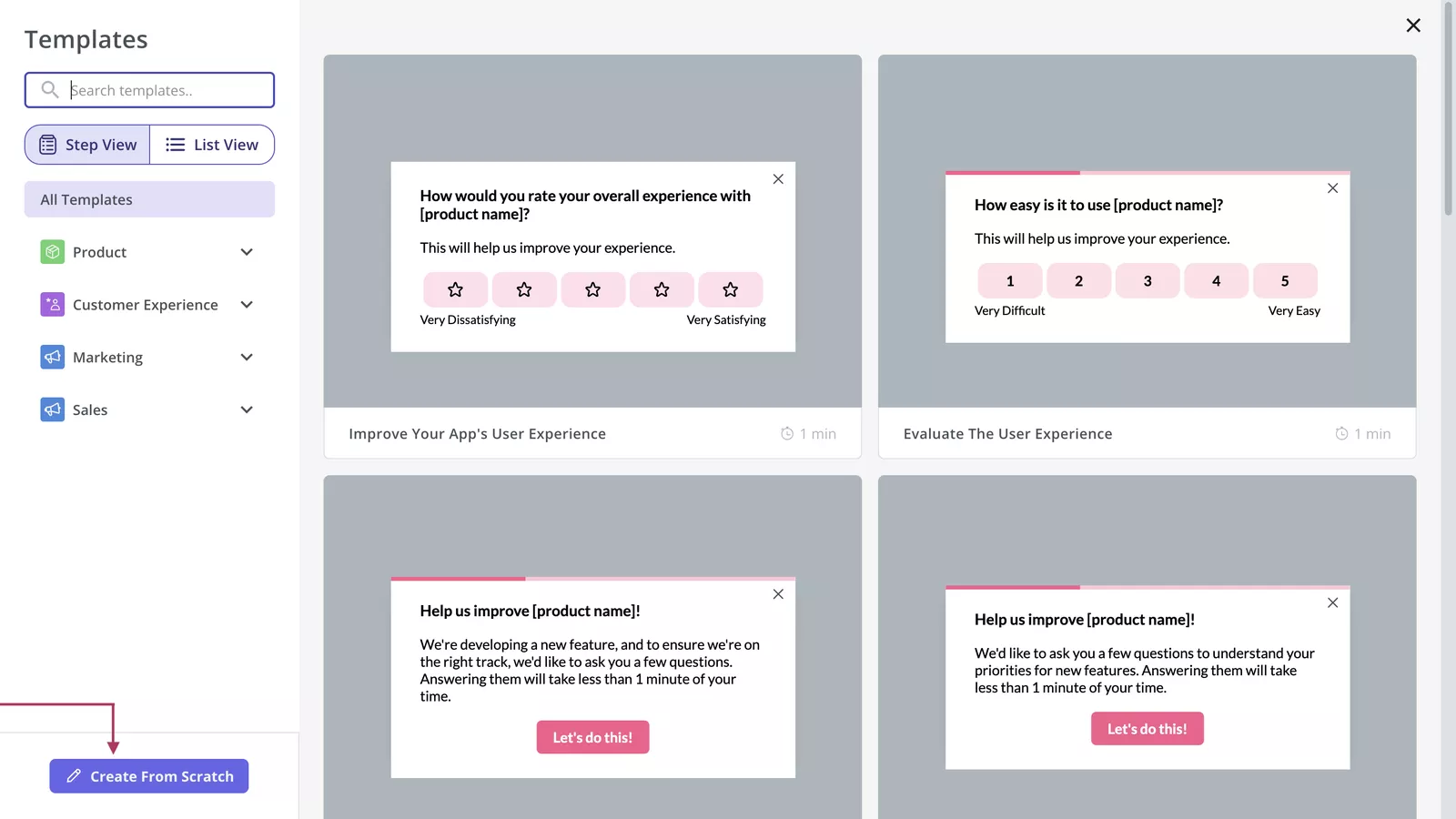
- In-app user surveys: Userpilot allows you to trigger microsurveys (like CSAT or NPS survey) at specific user journey touchpoints to collect contextual feedback. This qualitative data helps you fill the gaps, understand user intentions, and get a more complete picture.
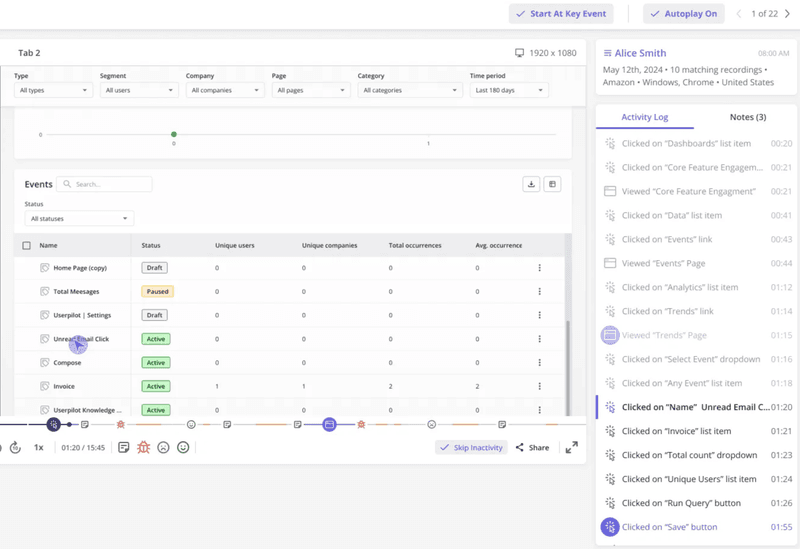
- Actionable insights: Alongside core analytics features like autocapture, dashboards, and funnels, Userpilot includes session replays to provide deeper behavioral context. For example, you can spot drop-off points in funnel reports, then click through directly into the session replays to understand the reason.
- Multichannel engagement tools: Userpilot doesn’t stop at tracking user behavior; it enables you to proactively influence it and optimize conversions. When users fail to complete key actions or get stuck, you can trigger in-app interactive walkthroughs, tooltips, or modals to guide them. You can also send push notifications and personalized emails to re-engage dormant users. All managed from a single, code-free dashboard!

Choose what truly serves your growth!
If your primary need is marketing attribution with some product analytics on the side, Usermaven is a decent choice. It’s especially well-suited for agencies that require white-label analytics.
However, for product teams that want to act on data in real time, Userpilot is the more practical choice. It blends mobile app analytics features with in-app engagement and feedback into a single no-code platform, allowing you to create personalized user experiences and drive adoption without technical overhead.
Book a demo with the Userpilot team to see how you can turn user behavior insights into action.
About the author