AI in SaaS in 2026: Why AI-Native Companies Are Pulling Away

AI in SaaS isn’t just a layer that you can bolt on top of existing products for the sake of using in marketing material. The gap between SaaS platforms with AI agents and analytics that are baked in as native functionality versus those that just tack it on is growing larger by the day. Emergence Capital’s Beyond Benchmarks Report found that AI-native SaaS companies have 4x faster growth and 21% higher retention.
Adding a generic writing assistant is no longer enough when the products pulling ahead are those that use AI to analyze what a user just did, adapt the experience accordingly, and fix problems before a support ticket is ever opened. Gartner predicts that 40% of enterprise apps will feature task-specific AI agents by 2026, with Deloitte predicting an even higher 75% of companies investing in agentic AI. This means your SaaS product will either keep up with the AI expectations of your end users or get left behind by tech-forward competitors.
This guide will show you the difference between bolt-on versus built-in AI, how to embed AI in your SaaS product, and which questions to ask before adding AI!
Why AI-native companies are pulling away
Emergence Capital’s benchmarks used data from 500+ B2B SaaS companies. AI-native products operate on an entirely different architecture from the rest of the market, allowing them to not only quadruple growth rates but also defend those gains with better user retention. This creates a moat that increases defensibility for both early-stage startups trying to take market share and mid-size SaaS companies nurturing their existing customer base.
The same study found that expansion revenue accounts for 58% of growth beyond the $50M ARR point, climbing further to 67% after passing $100M ARR. But with 74% of software now being sold virtually and 50% of purchases involving AI evaluation, keeping up with the cutting edge is paramount to whether you’ll benefit from these emerging trends or get disrupted by new players in the industry.
Researchers behind the report noted that the defensible moat compounds with customer interaction volume, so long as AI SaaS companies are willing to make the necessary investments:
“This isn’t just better retention, it’s a new form of defensibility. Every customer interaction strengthens the moat, making AI-native companies increasingly difficult to displace. AI excellence requires sustained, significant investment. Companies treating AI as a feature rather than a core competency will be out-invested and out-innovated”
The distinction between AI that’s bolted-on vs. built-in
To get the most out of AI in SaaS products, it needs to be native and autonomous rather than an afterthought.
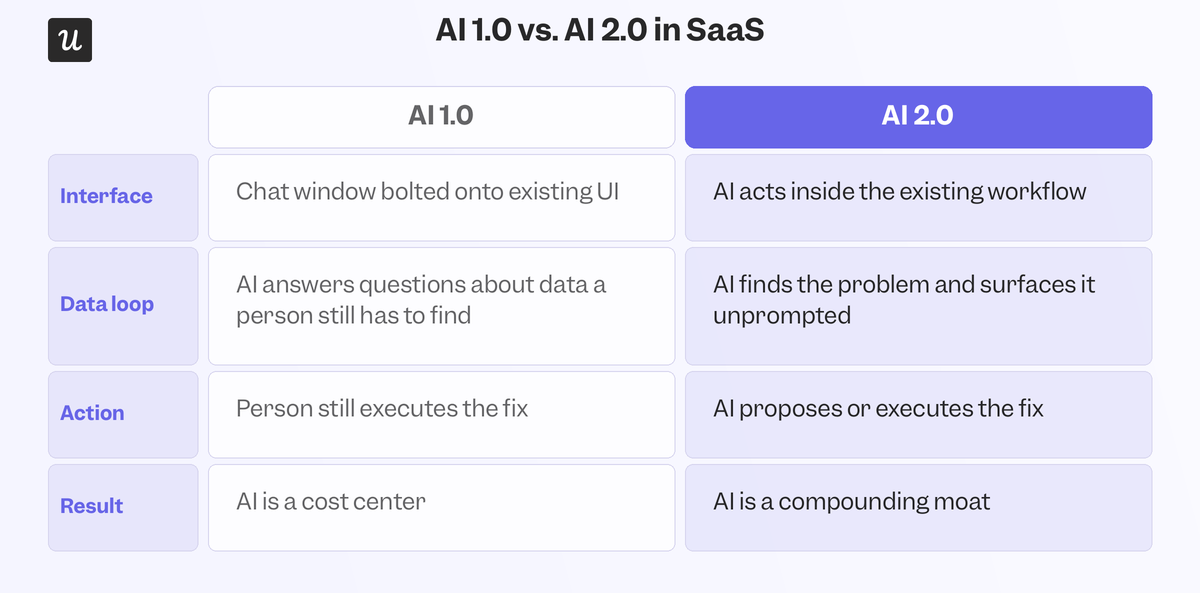
Where AI 1.0 would answer questions when users ran into a problem, AI 2.0 would proactively find the problem itself and then resolve the issue on its own before humans ever need to get involved. That autonomous infrastructure means humans can go from prompting agents to evaluating the work it’s already done, freeing them up for more complex workflows that actually require the human element to get the best results.
Bhanu Chopra, founder of RateGain, compared AI’s relationship to SaaS with the cloud computing panic a decade ago.
“AI is a utility, infrastructure service. This is how we need to view it. AI replacing vertical SaaS is like saying electricity will directly run hotels, airlines, or factories. Infrastructure enables value — it doesn’t deliver it. About 10–15 years ago, there was a similar belief cloud infrastructure would take over end applications. The thinking was simple (and wrong): If AWS, Azure, and GCP provide compute, storage, and data, why wouldn’t they just move up the stack and replace enterprise software? What actually happened [was] Cloud became foundational infrastructure, [and] SaaS exploded on top of it.”
How I’d actually embed AI in a SaaS product this year
While the exact implementations will vary depending on which problems your product is meant to solve, there are six examples of how you can already embed AI in SaaS for surefire gains.
1. Personalized onboarding and activation
AI can predict which onboarding path offers the shortest time to value for a given user segment and then route each user dynamically, instead of forcing everyone through the same linear product tour. That means user onboarding that adapts to what a user actually does rather than what product teams assumed users would do when they built the flow.

2. Predictive analytics for churn and expansion
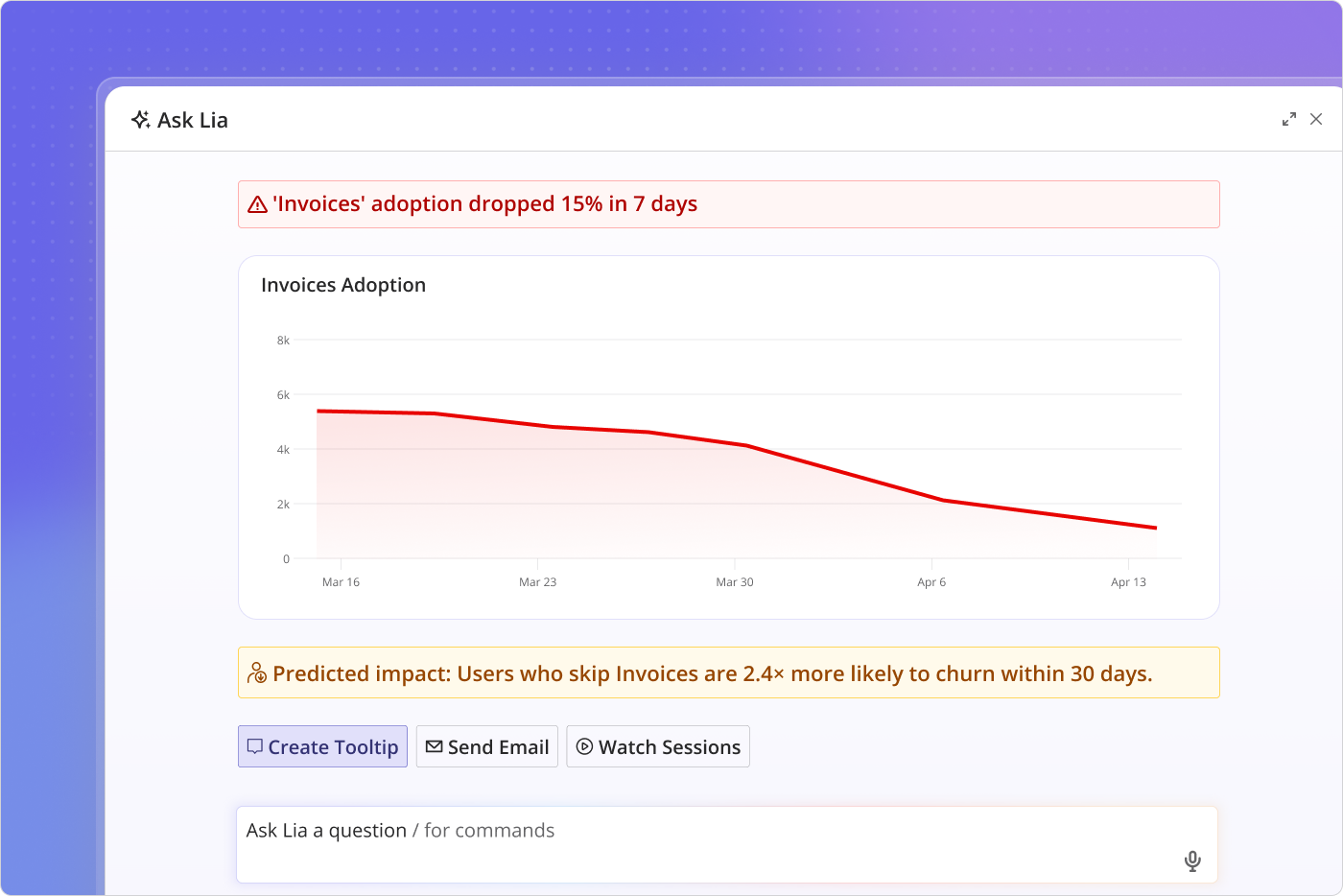
AI can spot at-risk users weeks before they show more obvious signs of churn, as well as which users are most likely to be upsold based on their current usage. That makes analysis possible at a scale and cadence that wouldn’t be viable for product analytics teams doing everything by hand. Our own AI agent, Lia, uses product usage analytics to inform churn prediction.
3. Sentiment analysis on customer feedback
Natural language processing can read survey responses, support tickets, and other types of user feedback much faster than if each data point had to wait for manual reviews. The speed matters because catching a friction point in week one will help you proactively prevent churn instead of trying to win users back the next quarter.
4. AI-powered chatbots that get smarter over time
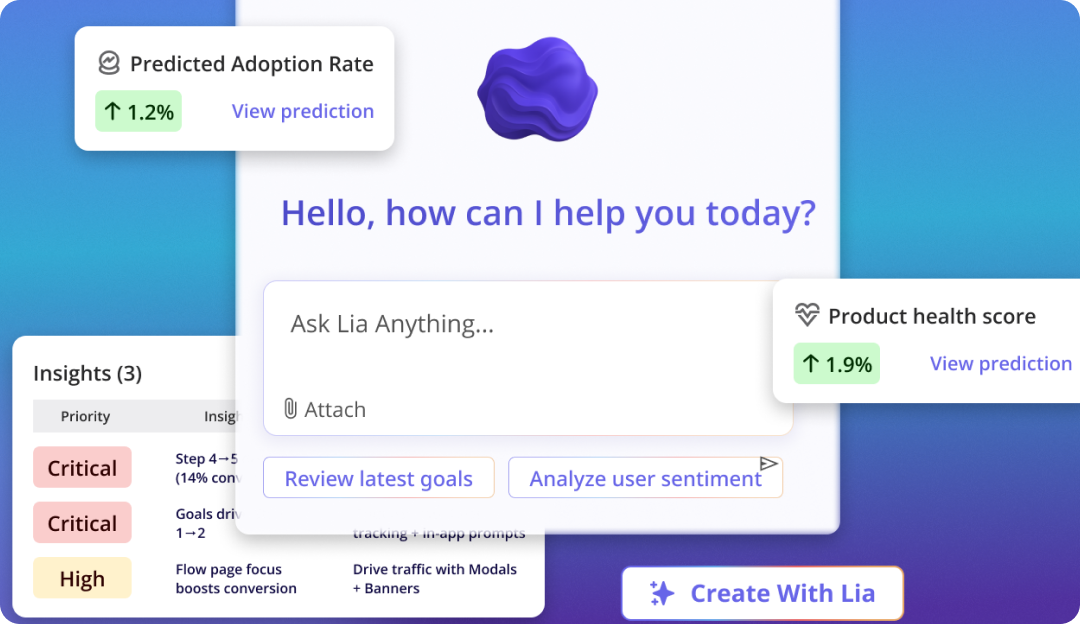
The days of chatbots being nothing more than a glorified FAQ dropdown with extra steps are long gone. Integrating AI into your chatbots allows them to learn from each interaction, surface key data, and respond to a variety of queries without needing a pre-written answer script. This is how Lia is able to answer complex product analytics questions in a matter of seconds.
5. Agentic workflows
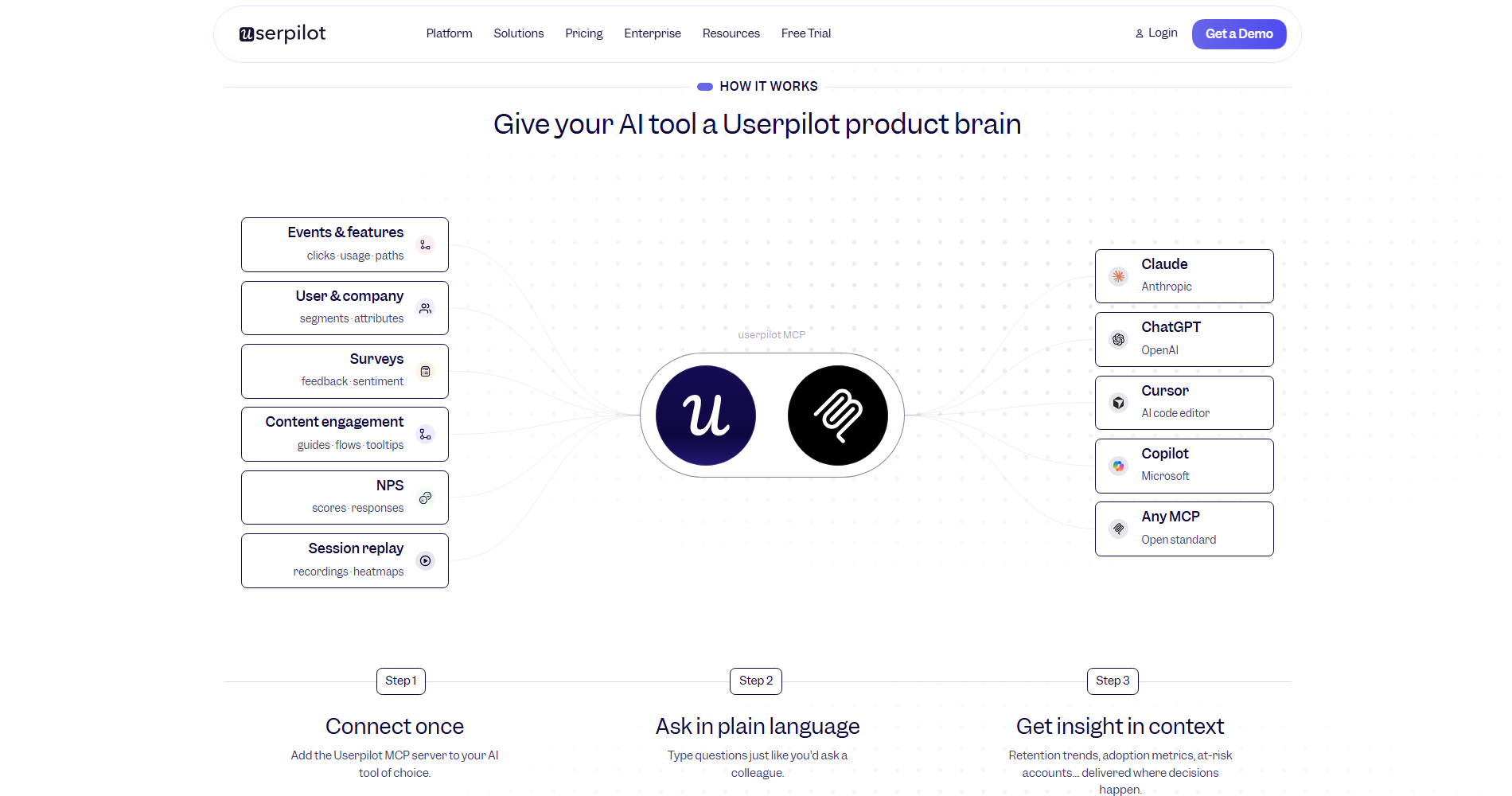
AI agents that complete tasks autonomously (instead of just answering questions about them) offer untold structural benefits and time savings. Userpilot’s MCP server was built to let users pull session replays, survey responses, and product data into a single answer without having to open a handful of different tools just to stitch a report together.
6. Content generation and localization
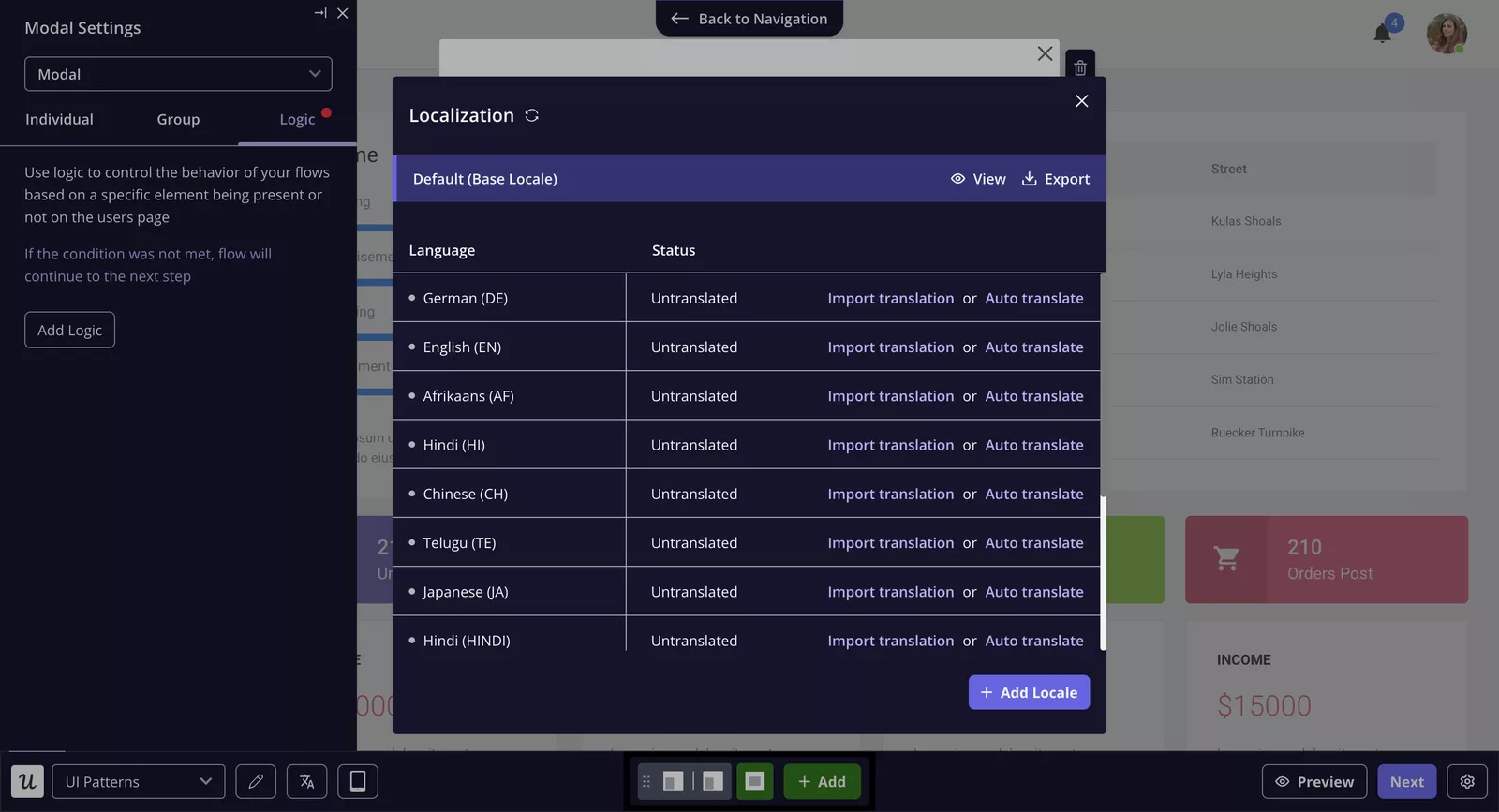
Most marketers already use AI to draft content, so it’s only natural that product teams would extend that use to in-app microcopy, survey questions, and in-app guidance. Automated localization removes the cost barrier to supporting new languages in existing products.
Getting AI strategy right before you build anything
While there are certainly benefits to reap by adding AI in SaaS platforms, it’s important to ask yourself a few questions before doing so.
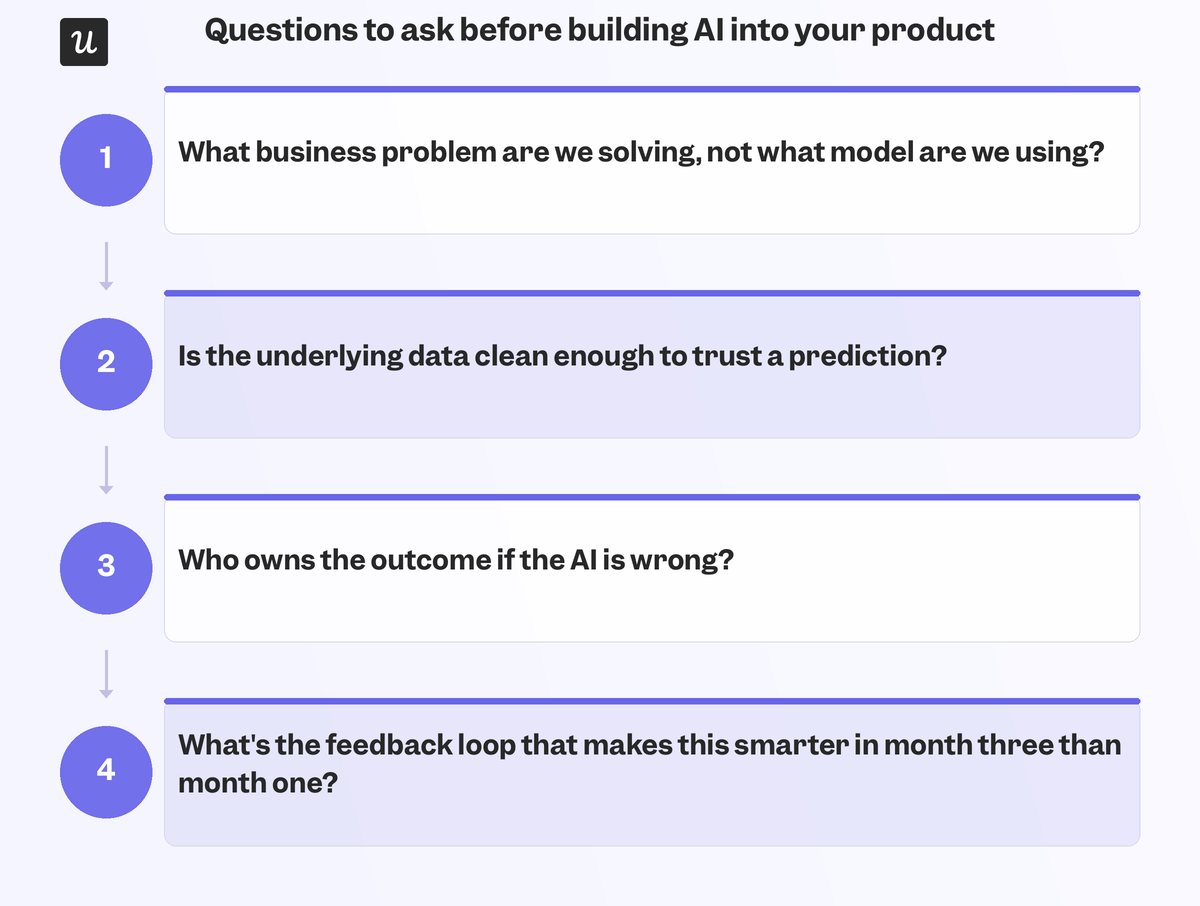
Asking yourself these four questions before you build AI into your product will help you be more intentional in how you incorporate the new technology:
- Core problem: What business problem are we trying to solve?
- Data confidence: Is the data clean enough to power predictions?
- Accountability: Who owns outcomes when AI gets things wrong?
- Feedback loop: Which feedback loop will help our AI get smarter?
A study by Airfocus found that 92% of PMs believe AI will have a lasting impact, but 21% said lack of knowledge and skills are hindering AI adoption. The respondents also raised real concerns about lasting reliability, integration risk, and poor governance that could compromise the proposed benefits of incorporating AI into SaaS products. Data privacy adds another hurdle as plenty of companies still rely on on-premise solutions due to data confidentiality requirements, narrowing the field of tools they can actually use.
While there are still many unanswered questions as to who can use AI and how to deploy it responsibly, it’s clear that these tools are worth adopting sooner rather than later.
AI-powered SaaS tools actually worth using
AI has already transformed the SaaS landscape despite the widespread adoption still being in its infancy on a relative timescale. The four SaaS AI tools below have embraced AI and used its novel capabilities to enhance existing product workflows rather than merely making them more marketable by adding a superficial automation layer.
Userpilot
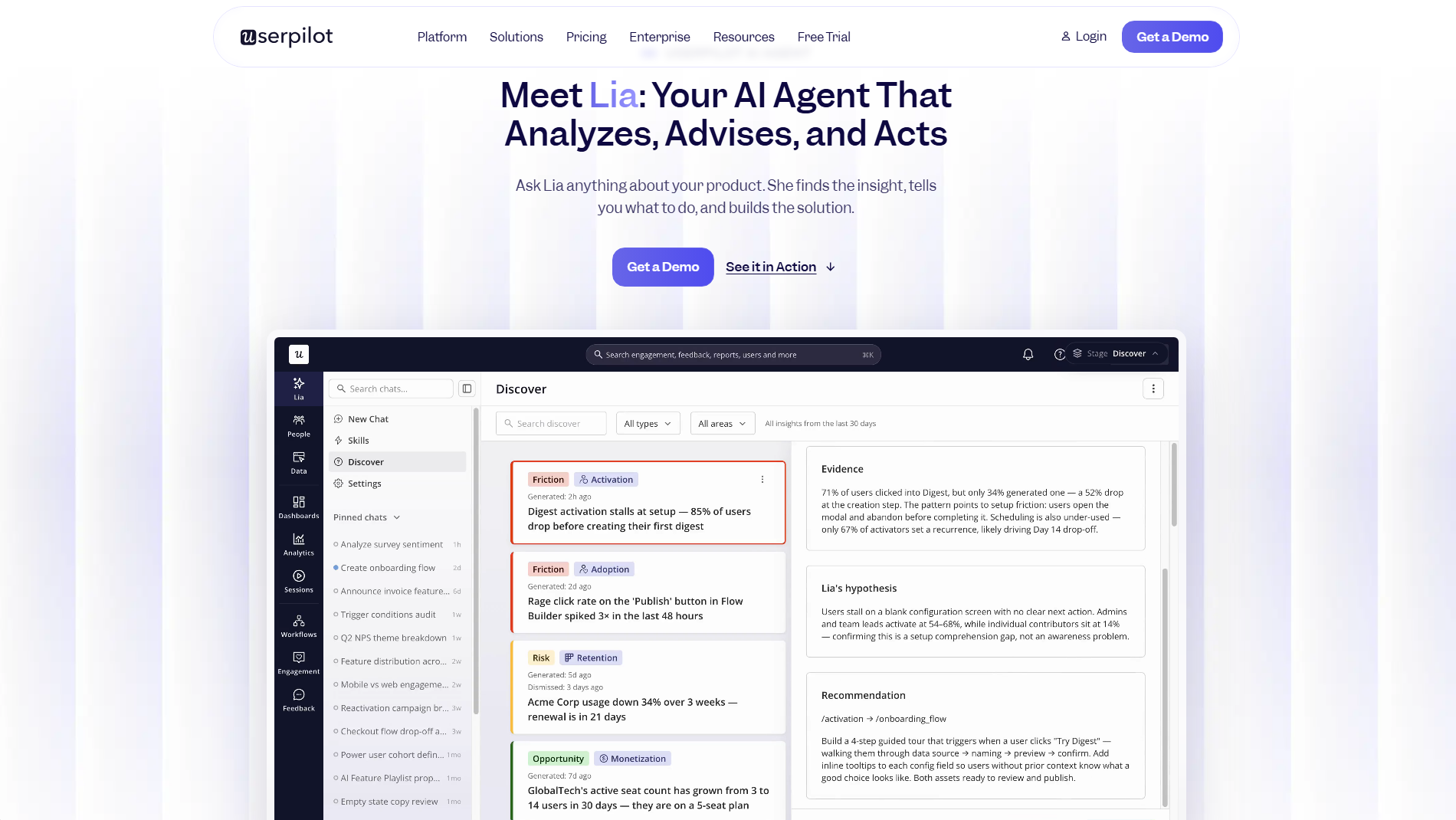
Userpilot’s AI writing assistant and localization tools make content easier for product teams to scale while improving accessibility for users. Lia analyzes user behavioral data, surfaces friction patterns, and triggers in-app experiences based on what users actually do.
Hotjar
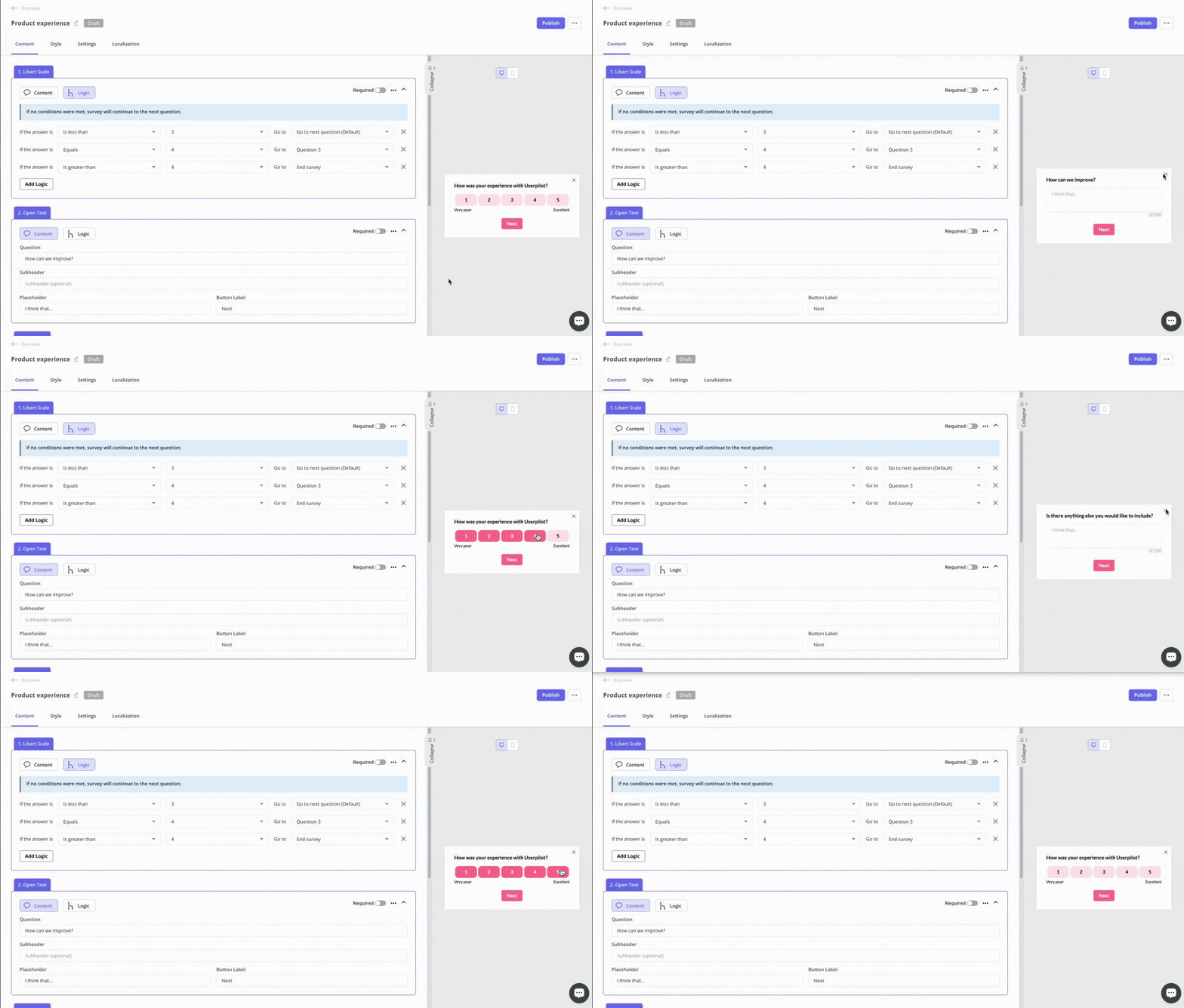
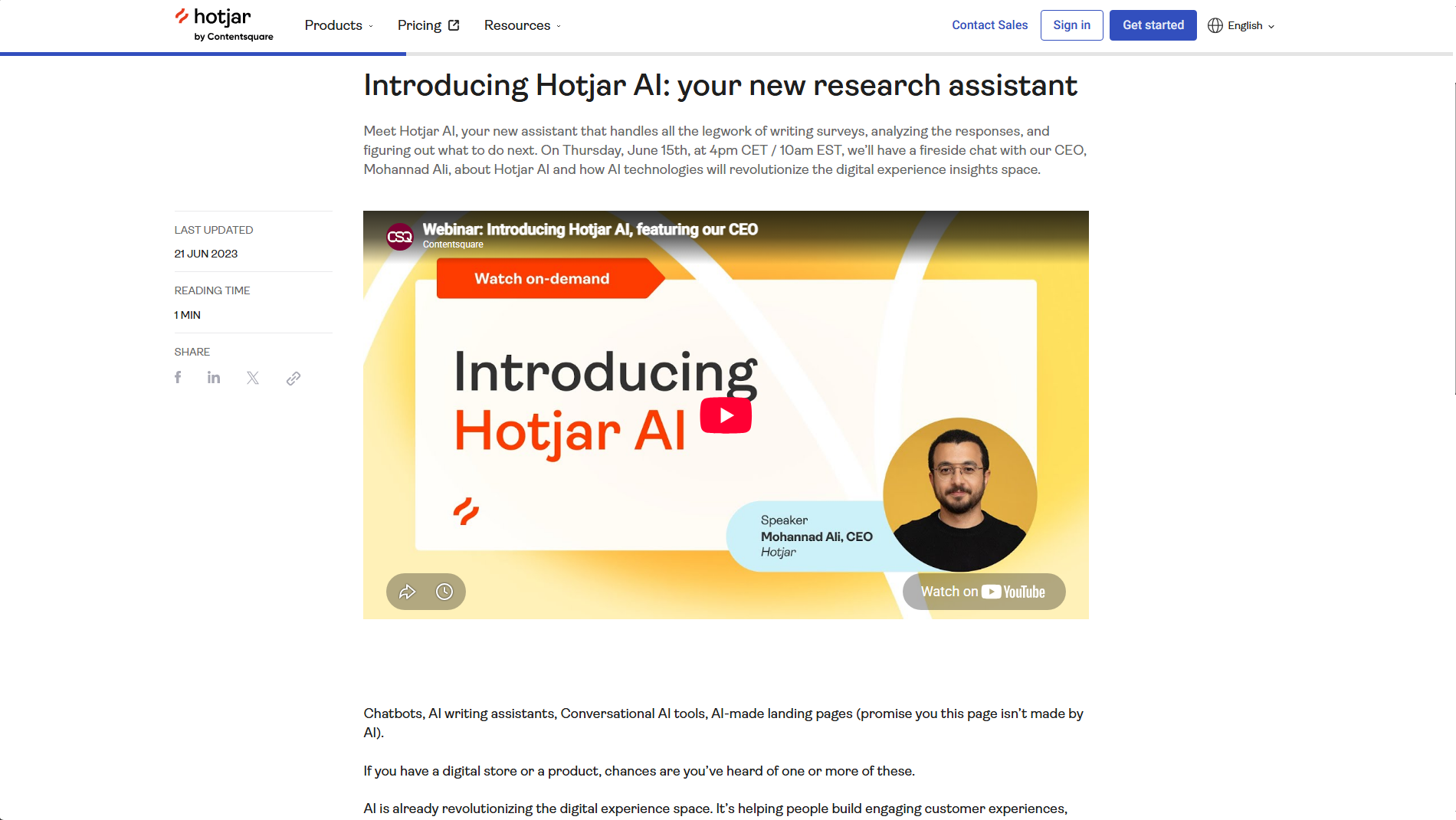
Hotjar uses AI to generate customer surveys from a plain-language goal (e.g., finding pain points in a checkout flow) and then analyzes the responses to draft a report automatically. The summary is actionable because it recommends what to act on next, ensuring that more feedback actually translates to better outcomes.
Mixpanel
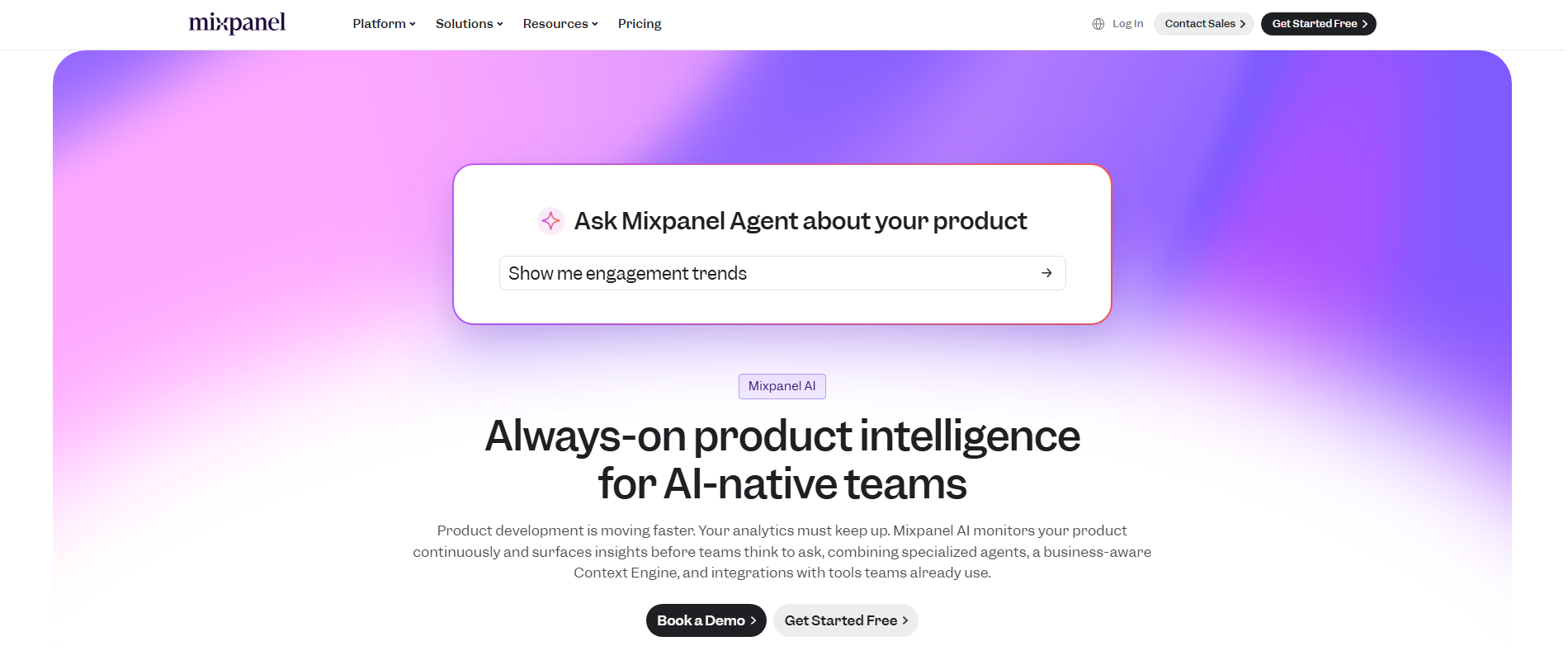
Mixpanel Agent uses a chat-based reporting method so that SaaS team members without the technical skills to write their own queries can ask plain-language questions and get a report back (without having to depend on someone else or make guesses based on their gut).
Zendesk
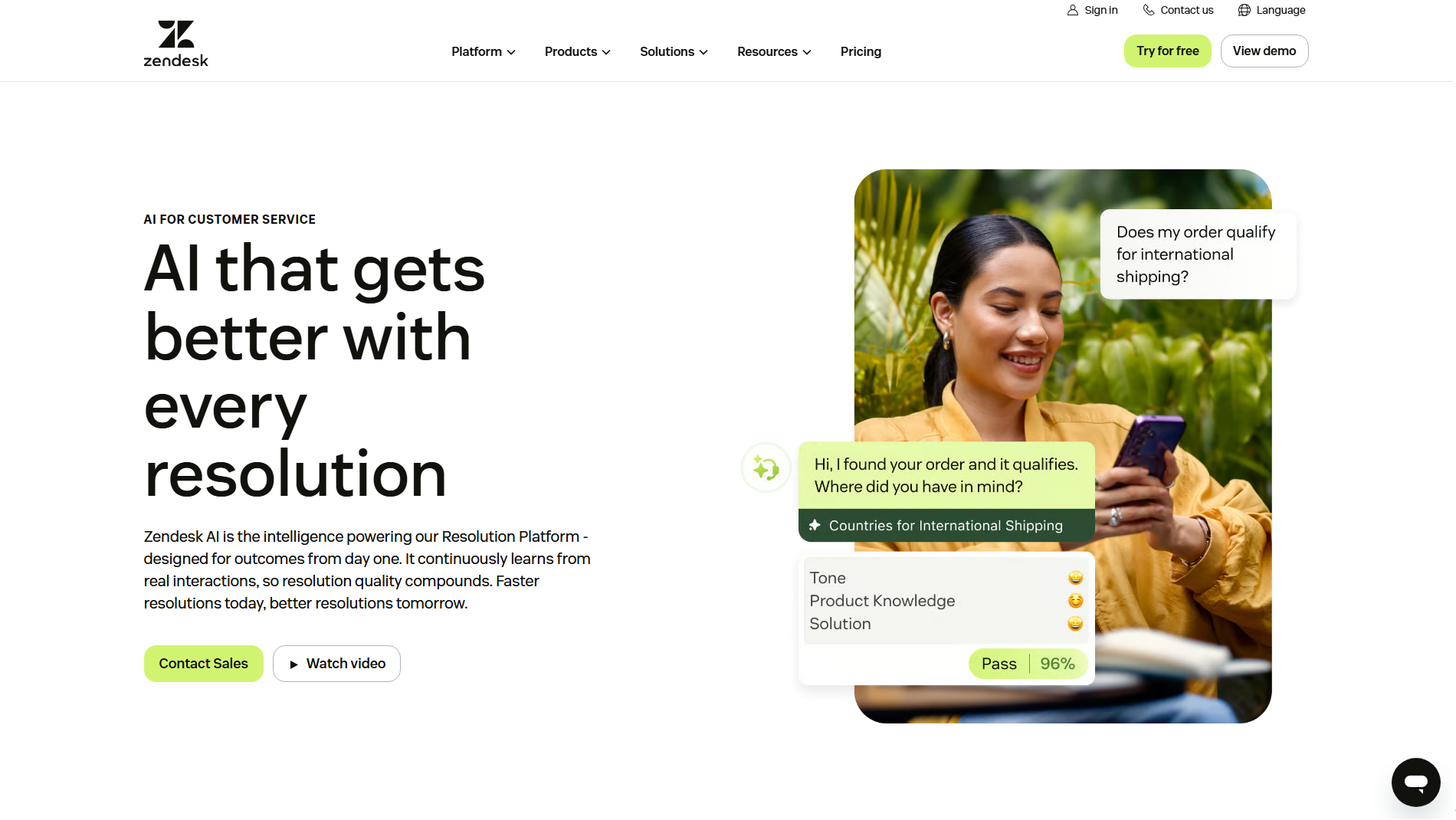
Zendesk’s AI chatbots are trained on past customer conversations and their most common problems, with the platform organizing and prioritizing incoming requests so support agents don’t have to triage manually. It can also identify gaps in a resource center‘s content library and draft comprehensive help articles from a basic outline.
Turn AI in SaaS into a compounding advantage
The SaaS products widening the gap aren’t the ones that shipped the most AI features this year. They’re the ones who identified the core problem they’re solving for users, built AI with that same goal in mind, and incorporated the technology as a native part of their product rather than just another feature. Userpilot did the same by using AI to power our real-time analytics, behavioral segmentation, and in-app guidance flows that help onboard users until they reach their activation point.
Book a demo so we can show you how Userpilot has been leveraging AI to increase product adoption, user retention, and account expansion!
About the author