My Honest Take on Most-Talked-About Mixpanel Alternatives



Working in SaaS, I’ve been part of enough product and growth conversations to notice a pattern. Whenever someone brings up Mixpanel, the same set of “alternatives” keeps coming up.
But there’s no such thing as a single “best” Mixpanel alternative.
What I’ve seen (and what a lot of teams eventually realize) is that these product analytics tools aren’t interchangeable. They solve slightly different problems depending on your setup, your data maturity, and what you’re trying to achieve.
So rather than saying “this is the best alternative,” I’ll break these options down by use case.
When should you consider an alternative to Mixpanel?
Mixpanel is widely used and has a good rating (4.6/5 across 1,200+ G2 reviews). However, it doesn’t fit every team or workflow. These are the most common scenarios when an alternative makes sense:
- You want to analyze insights, and more importantly, act on them: Mixpanel helps you understand behavior, but acting on it often requires other tools. If you want to trigger in-app messages, surveys, or onboarding flows based on user actions, you’ll need a more integrated platform, like Userpilot.
- You want built-in experimentation: Mixpanel supports experimentation, but it doesn’t offer a full native experimentation platform. If A/B testing and feature experimentation are core to your workflow, tools like Amplitude are a better fit.
- You’re consolidating your tech stack: When juggling analytics, engagement, and feedback tools, costs add up fast. This led many product teams to switch to reduce tool sprawl.
- You need a deeper behavioral context: Mixpanel shows what users do through events, funnels, and cohorts. And even though they have session replays, that’s not their core strength. It lacks features like heatmaps, built-in user feedback (surveys, polls), and visual behavior analysis. If you need such capabilities, tools like Hotjar or FullStory are a better fit.
- You’re optimizing for cost or flexibility: Event-based pricing adds up fast; for example, a user accessing five sites/apps equals five MTUs. Imagine what the figure would be once your usage scales. This is why teams revert to tools (like PostHog or Matomo) that offer more flexible (and sometimes cheaper) options, with trade-offs in ease of use.
What are the best Mixpanel alternatives and competitors?
Instead of comparing based on just features, I grouped the alternatives by why teams switch from Mixpanel.
- Need similar depth in analytics? Go with Amplitude or Heap.
- Focusing on behavioral/UX insights? FullStory, Hotjar, Smartlook.
- Prefer open-source and cost control? PostHog, Matomo.
- You want insight and action in one tool? Userpilot.
Here’s a more detailed, side-by-side comparison:
TL;DR: Mixpanel alternatives at a glance
| Tool | Best use case | Where it beats Mixpanel | Pricing range |
|---|---|---|---|
| Amplitude | Deep product analytics at scale | Built-in experimentation, predictive analytics, and stronger CDP | $49/mo starting; $64K ACV/year |
| Heap | Flexible analytics without manual tracking | True autocapture and retroactive analysis across all events | $39K ACV/year |
| FullStory | Visual UX debugging and friction analysis | High-fidelity session replay and frustration signals | $27K ACV/year |
| Hotjar | Quick UX insights for websites | Simple heatmaps and a lightweight setup | $39/month starting; $20K ACV/year |
| Userpilot | Act on insights inside the product | In-app engagement, surveys, and no-code targeting | $299/month starting; $15.5K ACV/year |
| Smartlook | Affordable session replay and funnels | Lower-cost alternative to track user behavior but the platform will be decommissioned on 30 September 2027 | $55/mo starting |
| PostHog | Open-source, dev-friendly analytics | Self-hosting, feature flags, and experimentation | $54K ACV/year |
| Matomo | Privacy-first analytics (GDPR-focused) | Full data ownership and on-prem deployment | ~$25 (or 22EUR)/mo starting |
#1 Amplitude: Closest Mixpanel alternative with native experimentation
If you need a like-for-like replacement for Mixpanel but with more advanced analytics, long-term data structure, and built-in experimentation, Amplitude is a good fit. Their features (event model, funnels, and cohorts) work almost the same, so the transition is smooth.
Where Amplitude really stands out in comparison to Mixpanel is in experimentation and data governance. You can analyze behavior and run A/B tests in the same platform, while its data controls help prevent messy tracking setups over time.
Key features
- Event-based analytics: Track user actions and build funnels, retention charts, and cohorts (similar to Mixpanel, but more efficient at scale).
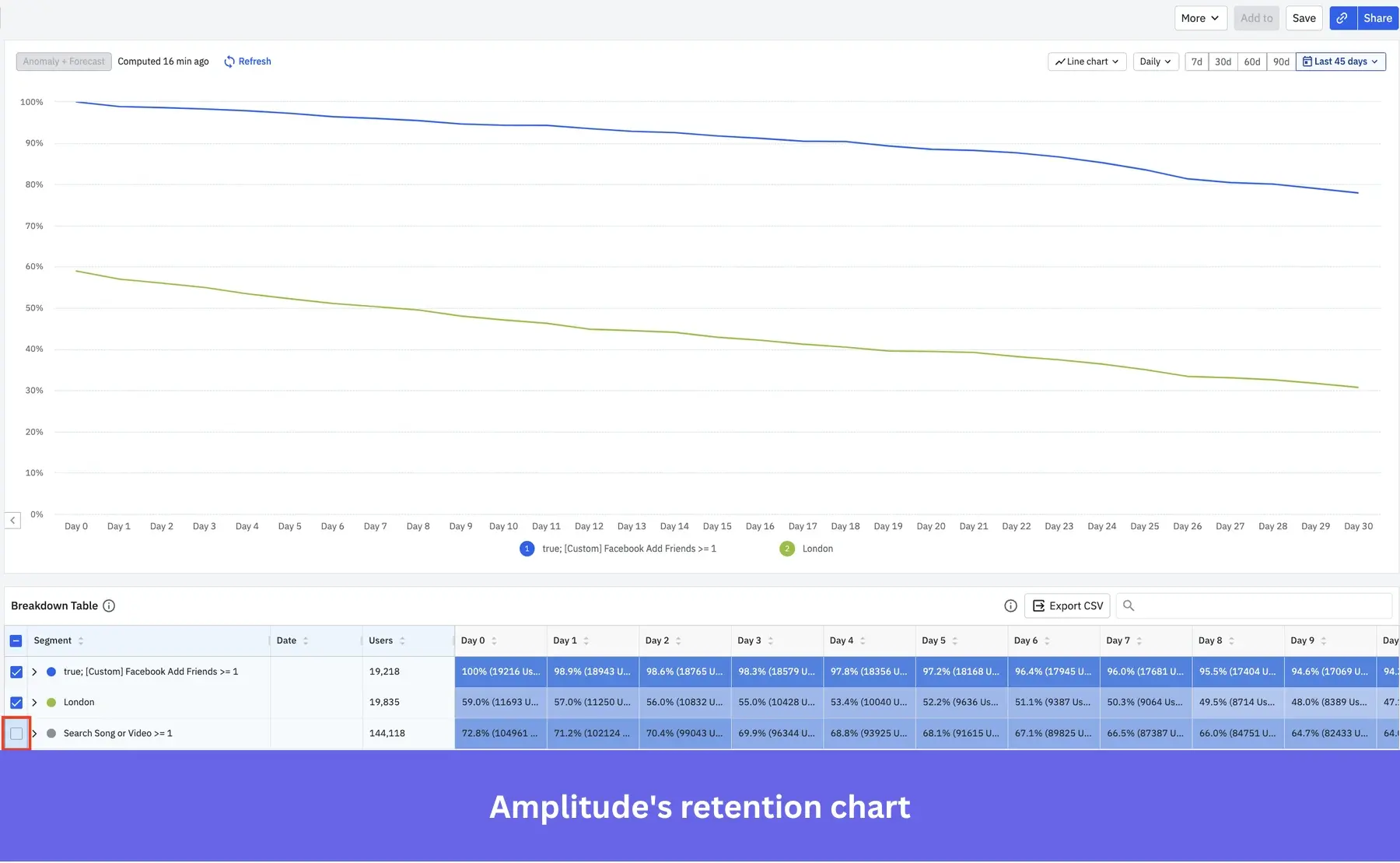
- Pathfinder (customer journey analysis): Visualize the entire user journey to identify drop-offs and high-impact paths.
- Built-in experimentation: Run A/B tests on features without needing a separate tool.
- Data governance: Prevent event sprawl and maintain clean tracking over time.
- Predictive insights: Identify churn risks or high-value behaviors using AI models.
Regarding pricing, Amplitude paid plans start from $49/month.
However, based on Vendr data, the ACV is $64K/year. Overall, I’d recommend Amplitude for quick transition and because its analytics are more reliable and trackable. However, “the dashboard may become a bit daunting after some time,” meaning that finding specific sessions or data can be difficult.
#2 Heap: Closest Mixpanel alternative if you want autocapture (web + mobile)
I’d pick Heap over Mixpanel when:
- You don’t yet know which events or what event data will matter.
- You need to analyze behavior you didn’t think to track upfront.
- Or your team doesn’t have engineering cycles to maintain a clean taxonomy.
I know Mixpanel has added autocapture now, but Heap has been built around post-capture event definition for years, so PMs can define events themselves without looping in engineering.
With Heap, you don’t define events up front. It auto-captures every interaction (clicks, taps, swipes, and page views). This means you can go back later, define what you need, and analyze it retroactively. Its autocapture extends to web and mobile, making it one of the few tools that offer this consistently.
Key features
- Autocapture (web + mobile): Tracks all user interactions automatically, and it’s no-code.
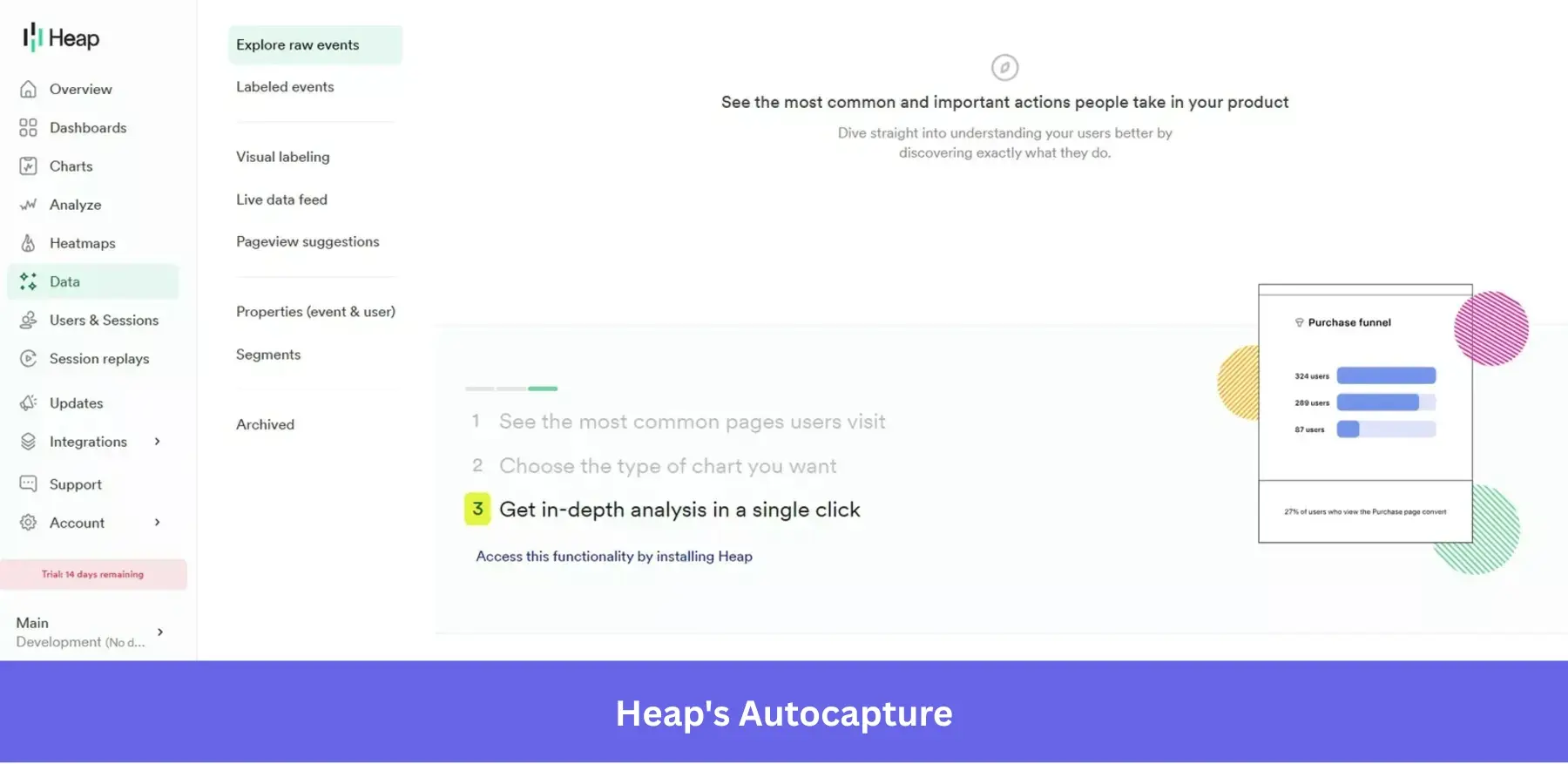
- Retroactive analysis: Define events anytime and analyze past customer data instantly.
- Behavioral analytics: Funnels, retention, and journey analysis to understand user flows.
- Segmentation: Group users by behavior or attributes to compare cohorts.
- Session replay and heatmaps: Add visual context to understand user actions.
Heap doesn’t publish pricing publicly, but according to Vendr, the median contract value is $39K/year. In summary, Heap is easy to use and a huge time-saver, especially for manual event tracking. However, the data can be unreliable sometimes: “web sessions and users are very different than what we see in Google Analytics.”
#3 FullStory: Behavioral analytics platform with session replay focus
Honestly, Fullstory and Mixpanel solve different problems. While it’s often mentioned in discussions for Mixpanel alternatives, it’s not really a like-for-like replacement.
I’d go for Fullstory when I actually need to watch what happened. Think support pulling up the replay behind a customer complaint, or a designer trying to figure out why users bail on a flow when the funnel data alone isn’t telling them anything.
It’s also the one I’d trust to catch the weird stuff Mixpanel won’t, like a user clicking “add to cart,” the request silently 500s, nothing shows on screen, and they just leave.
Key features
- Session replay: Watch user sessions to see exactly how users navigate and where they struggle.
- Frustration signals: Automatically detect rage clicks, dead clicks, and errors.
- Autocapture: Track all interactions without manual event setup.
- Customer journey mapping: Visualize user paths and drop-offs across key flows.
- Heatmaps: Identify where users click, scroll, or ignore elements.
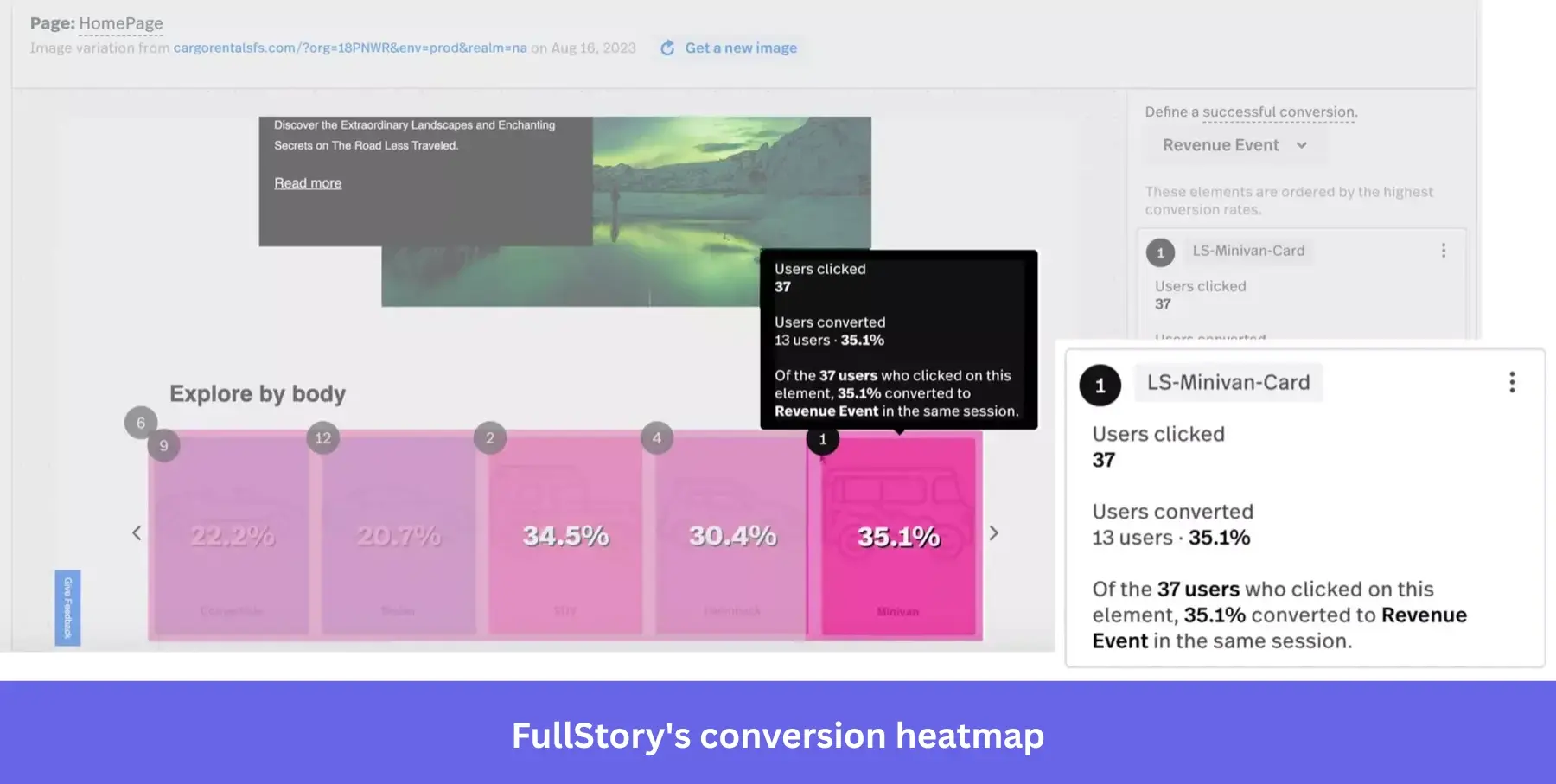
For pricing, FullStory uses custom, quote-based pricing. And the ACV for that is $27K/year, according to Vendr.
In all, I’d recommend it if you want to see how users interact with your products in production. However, the pricing is a bit too much, especially if you don’t use the full feature set. Besides, it sometimes shows duplicate metrics once you scale to about 100 active users.
#4 Hotjar: Behavioral analytics solution with heatmaps and recordings
Hotjar is the one I’d point a CRO or marketing team toward when Mixpanel feels like overkill.
It has features for quick UX and conversion insights. This way, you can visualize engagement, replay user journeys, and collect feedback in context. These make identifying friction points and improving key flows simple.
It’s suitable for a handful of situations:
- A growth marketer trying to figure out why a checkout flow or lead form isn’t converting.
- Teams that want heatmaps and session recordings without engineering setting up event tracking.
- CRO work where on-page surveys and feedback widgets matter as much as the behavior data itself.
- Early-stage UX diagnosis before you commit to a heavier analytics setup.
Fair warning, though: Hotjar isn’t really a Mixpanel replacement. It’s a CRO and UX layer, not a full product analytics platform, which is why a lot of teams end up running both.
Key features
- Heatmaps: See where users click, move, and scroll to identify ignored sections or friction points.
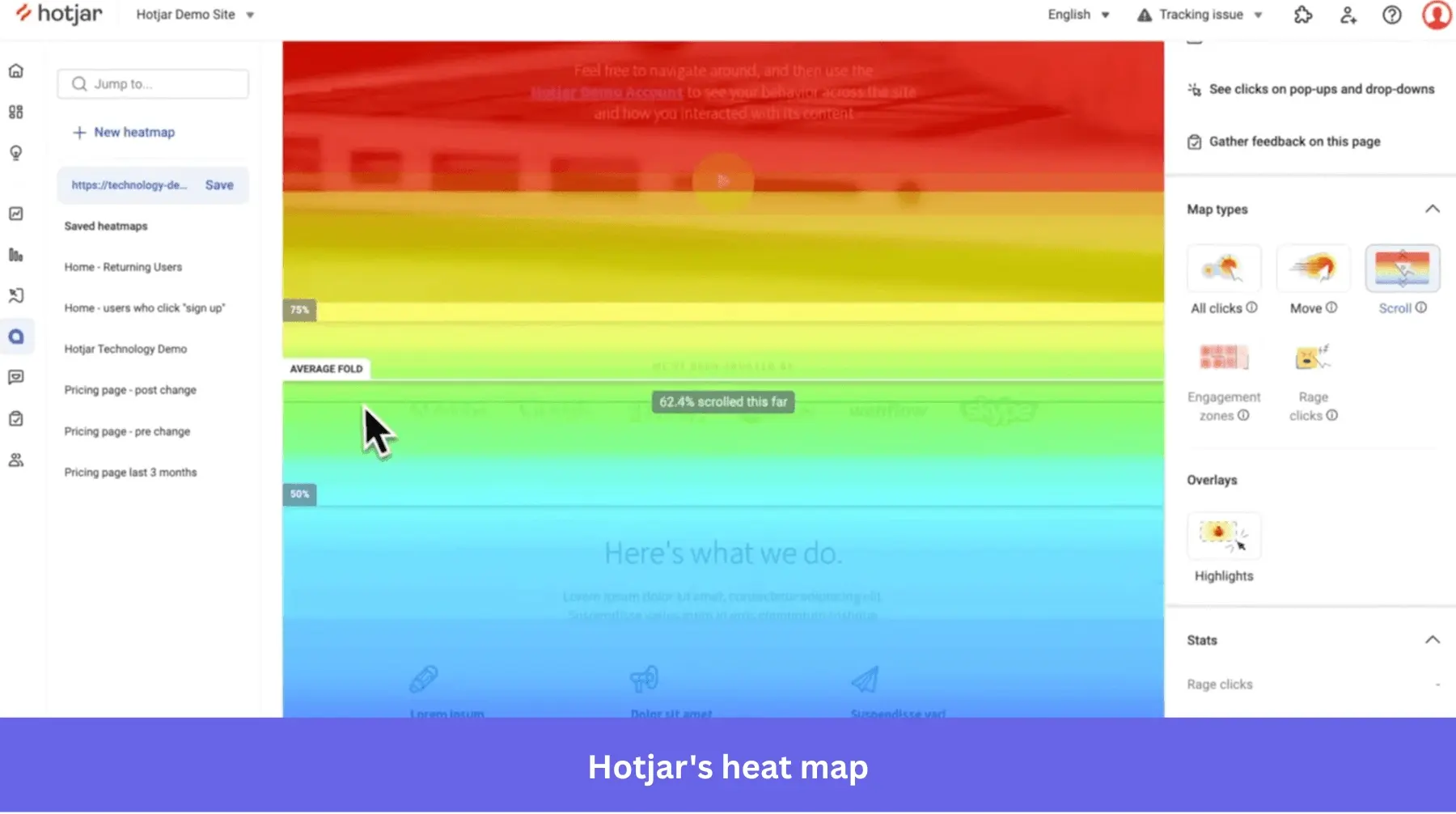
- Session recordings: Replay user sessions to uncover confusion, bugs, or drop-offs.
- On-site surveys: Ask targeted questions to understand user intent or objections.
- Feedback widgets: Collect user feedback/sentiment directly on your pages.
- Funnels (basic): Track where users abandon key journeys.
Hotjar offers a free plan with limited usage, but you must book a demo for more pricing plans. Vendr’s data shows the average pricing at $20K/year.
Overall, Hotjar is fast and provides clear UX insights that help improve conversion. However, its “data depth is limited at scale,” which can slow down your analysis.
#5 Smartlook: Cross-platform behavioral analytics software for performance monitoring
Honestly, I’d hesitate to recommend Smartlook right now. It’s a capable session replay and heatmap tool with solid mobile analytics and a crash reports feature that stood out in the category, but it’s being wound down.
Smartlook stops selling new subscriptions on 31 May 2026, renewals end on 31 August 2026, and the platform is fully decommissioned on 30 September 2027. The features are being folded into Splunk’s Digital Experience Analytics, though historical data won’t migrate over.
So if you’re evaluating today, I’d only consider Smartlook in a narrow window:
- You’re already a Smartlook customer and want to ride out the existing plan rather than switch mid-cycle or try multiple tools at once.
- You’re also a Splunk Observability Cloud user, and the bundled Digital Experience Analytics path makes sense for your stack.
For everyone else, Fullstory or Hotjar will do most of what Smartlook was good at without the migration pain on the horizon.
Key features
- Session recordings (web & mobile): Watch user sessions across platforms to monitor their journey.
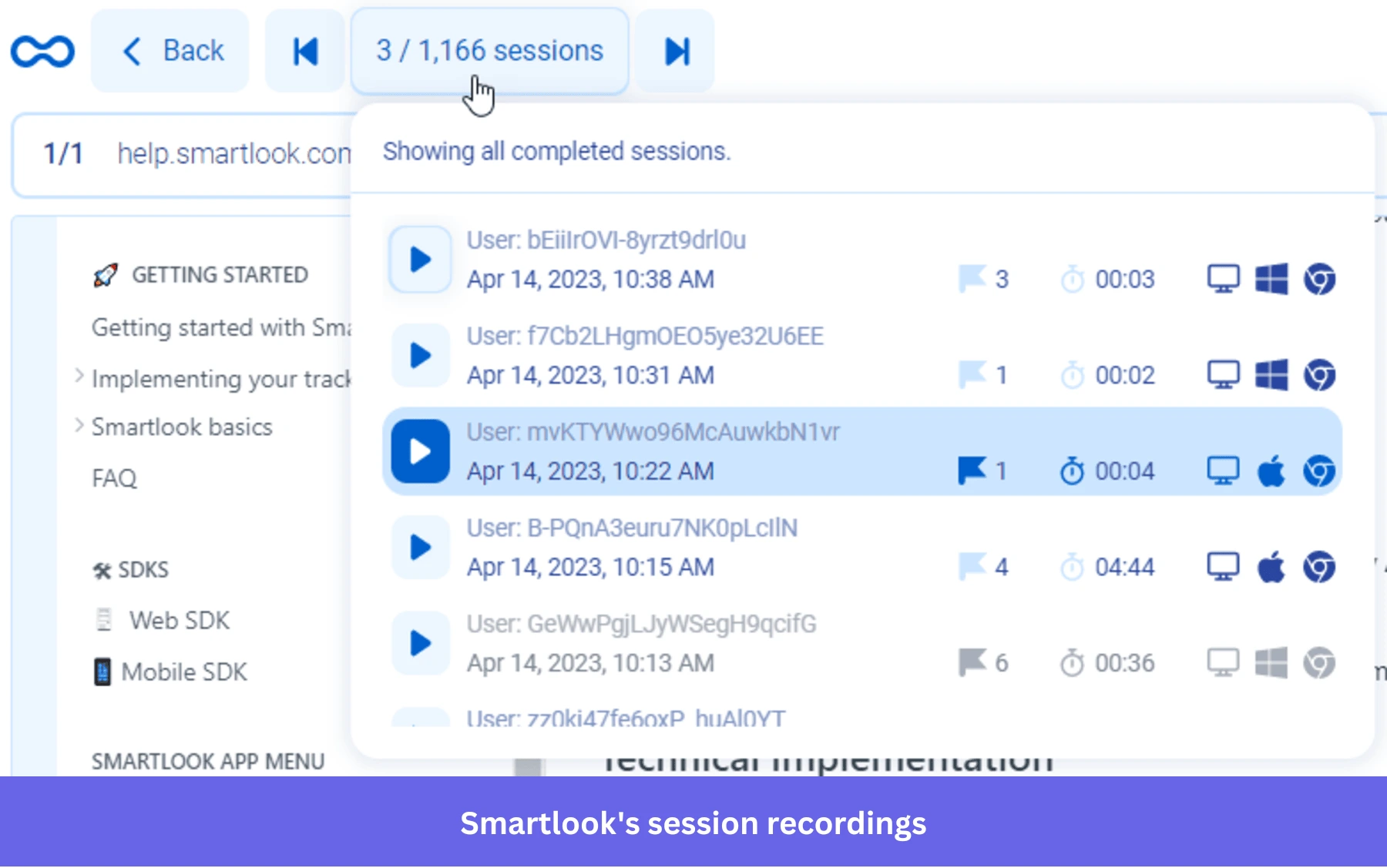
- Event tracking (auto & custom): Capture user interactions automatically without heavy setup.
- Funnels: Track step-by-step journeys and see exactly where users exit.
- Heatmaps: Visualize clicks, taps, and scroll behavior across pages and screens.
- Cross-platform analytics: Analyze user behavior across websites and mobile apps in one dashboard.
#6 Userpilot: All-in-one product growth platform with no-code analytics features
We’re an AI-powered platform that serves as a direct Mixpanel alternative by natively connecting deep user insights directly to in-app action, entirely bypassing the need for disjointed third-party integrations.
With Mixpanel, you’ll eventually add tools for onboarding or surveys. This creates fragmented workflows and, worse, security risks. The latter happened in November 2025; the affected users even mentioned deleting their accounts. Userpilot prevents such incidents by combining analytics and in-app engagement.
Userpilot uses MAU-based pricing, starting at $299/month (~ $3.6K/year) for smaller teams. Even at scale, typical costs ($15.5K ACV) remain significantly lower than tools like Mixpanel or Amplitude. In terms of capabilities, Userpilot gets surprisingly close to Mixpanel on core analytics needs.
Key features
- Dashboards and trend reports: Track activation, retention, and feature adoption/usage patterns in real time. For example, you can monitor how a new onboarding flow impacts activation week over week.
- Funnels and path analysis: See where users drop off and what paths lead to conversion. If users abandon a key step, you can identify the exact point of friction and fix it quickly.
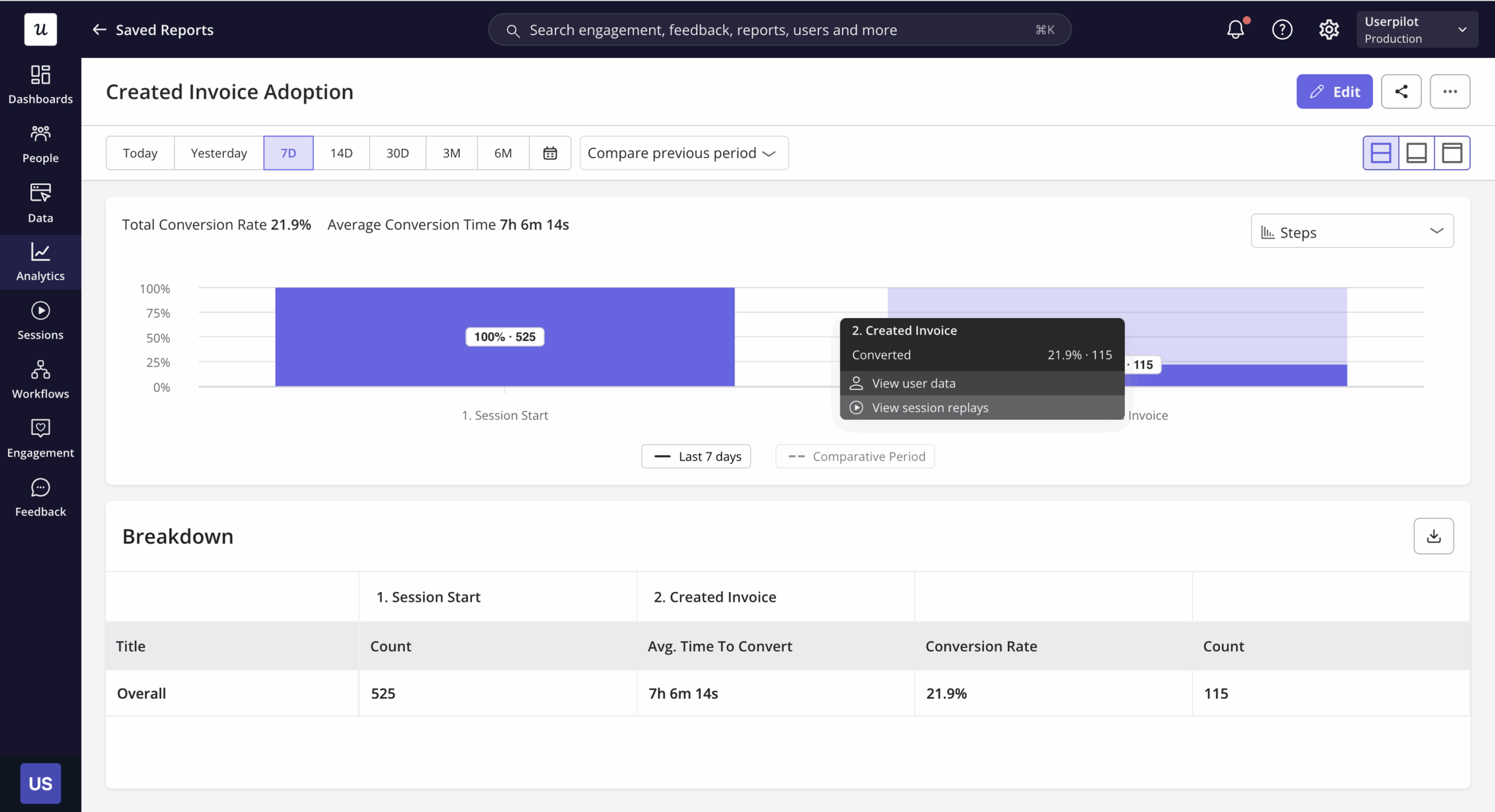
- Feature and custom event tracking (with autocapture): Track clicks, feature usage, and custom events without engineering help. You can retroactively define events and start analyzing them immediately.
- Session replay for qualitative insights: Watch real user sessions to understand confusion, rage clicks, or unexpected customer behavior that numbers alone won’t explain.
- Segmentation and cohort analysis: Group users by behavior, lifecycle stage, or plan. For instance, you can isolate “power users” vs. “at-risk users” and tailor experiences for each group.
What sets Userpilot apart is how we build the platform to deliver instant and actionable insight.
If Mixpanel is built as a highly flexible, data-first analytics tool (often requiring instrumentation, schema planning, and ongoing maintenance), Userpilot takes a no-code, product-led approach. You can track events, build funnels, analyze paths, and launch surveys or in-app experiences without engineering support. This makes it much easier for growth, CS, product, and marketing teams to move fast.
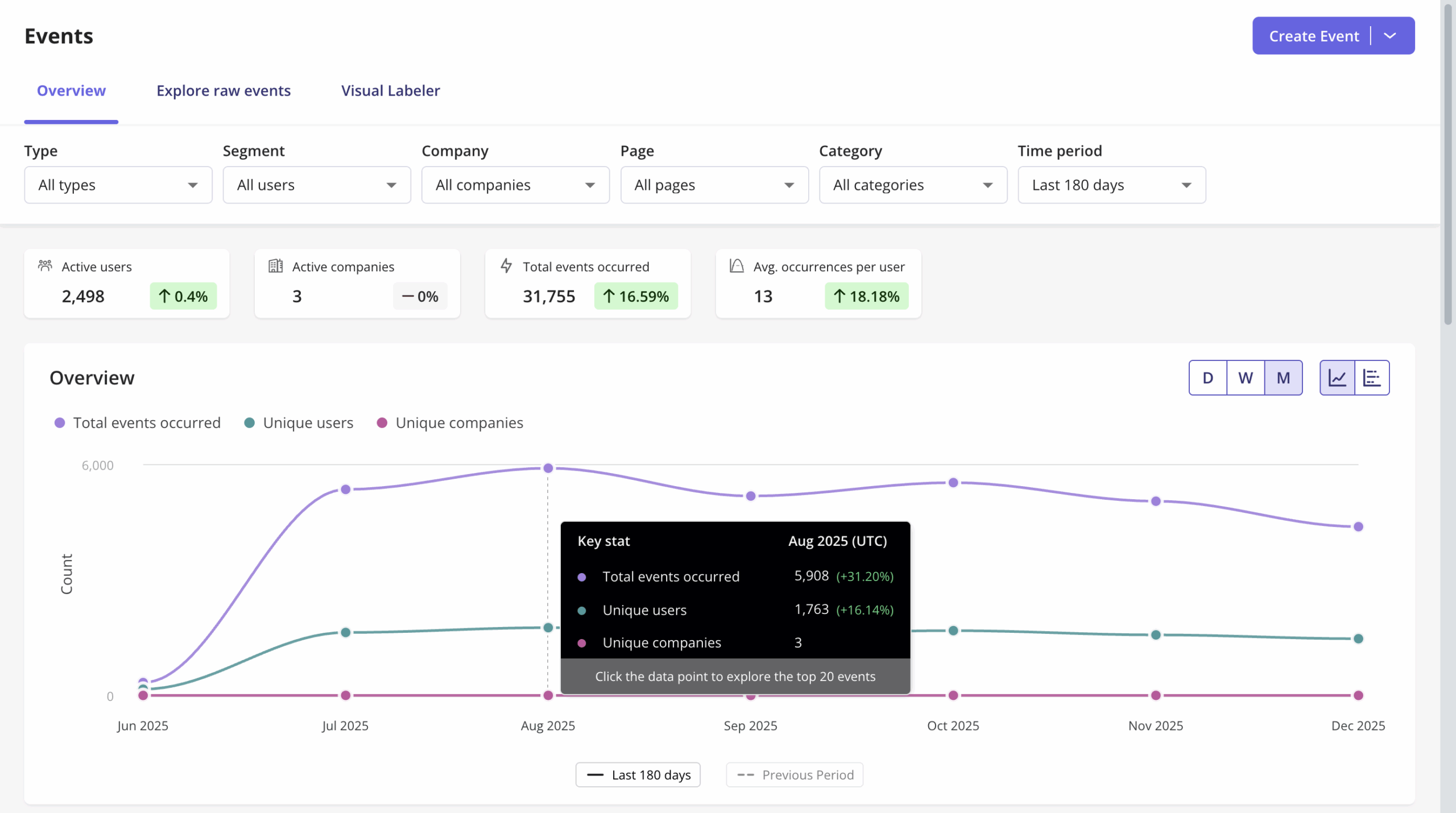
In summary, the key difference between the tools is that the insights in Userpilot are immediately actionable. Instead of exporting data or syncing with other tools, you can trigger tooltips, modals, checklists, or emails directly based on user behavior, even as a non-technical user. All in the same platform.
Nevertheless, the tradeoff comes from that same simplicity. Because Userpilot is no-code and opinionated, it’s less flexible and less granular than Mixpanel in a few areas:
- Less flexibility in event modeling: Limitations around modifying custom events and composing them.
- No SQL-level or advanced querying layer supported.
- Less emphasis on advanced statistical analysis (with only A/B testing for in-app experiences).
#7 Posthog: Developer analytics platform with open-source options
PostHog is a mix of both Mixpanel and Hotjar. In other words, it does more than event tracking, feature flags, and debugging, and offers full control over data (self-hosted/cloud), while removing the need to rely on several tools.
PostHog’s core strength is consolidation. It combines analytics, session replay, feature flags, and surveys into one platform. This makes it easy to analyze behavior, test & ship features, and measure impact in one workflow.
Key features
- Product analytics (event-based): Track funnels, retention, and user behavior with flexible event capture
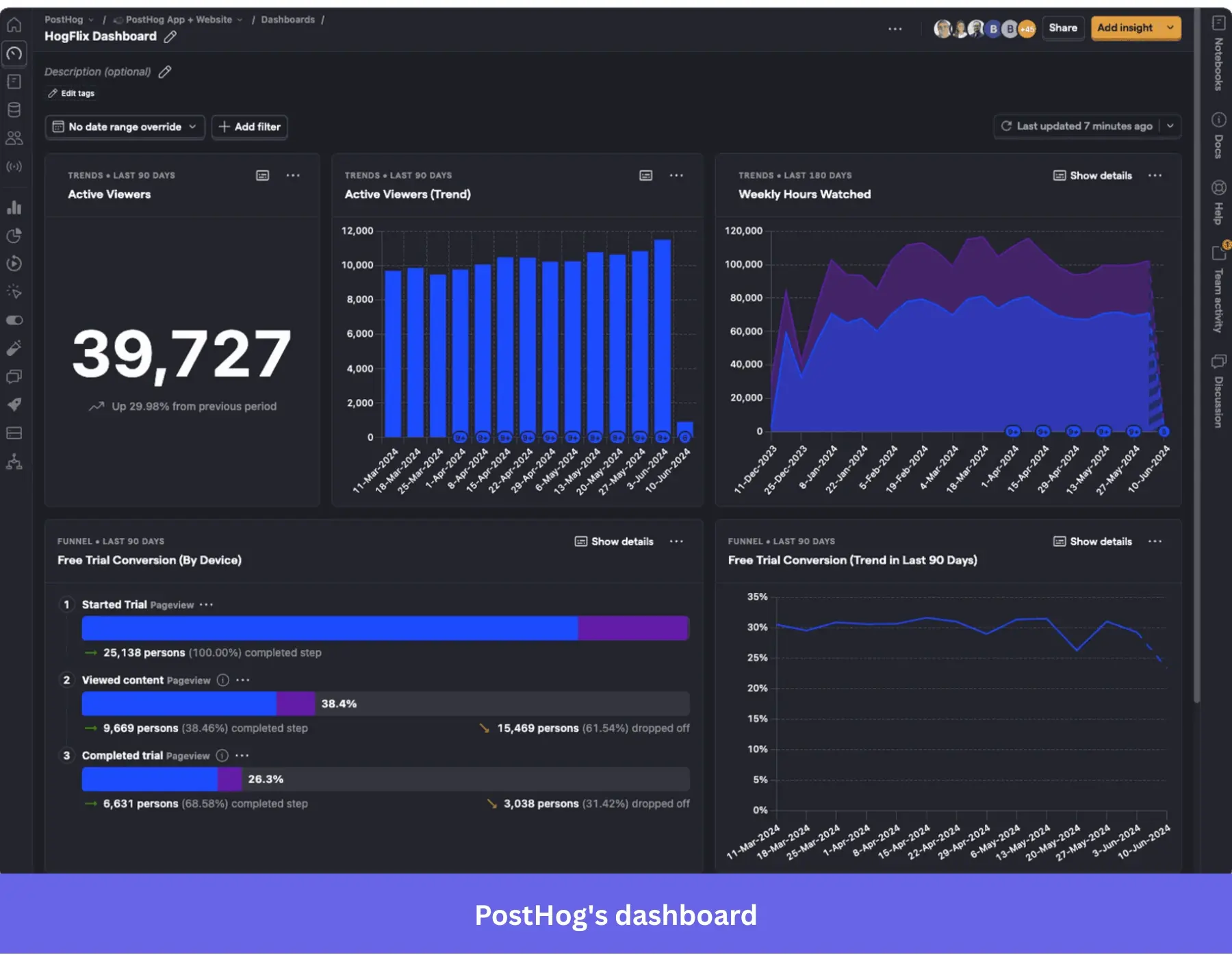
- Session replay: Watch user sessions to debug issues and understand behavior.
- Feature flags & experimentation: Roll out features and run A/B tests without separate tools.
- SQL querying & data pipelines: Analyze and visualize data deeply using SQL-like queries and integrate with your data stack.
- Open-source & self-hosting: Deploy on your own infrastructure for full data control.
PostHog offers a generous free tier (e.g., up to 1M events/month). Then, a usage-based pricing (pay-as-you-go) is available if you choose to upgrade. However, based on Vendr data, the ACV is about $54K/year.
Bottomline: PostHog is ideal for “flexible event tracking and cost-effective analytics.” But its downside is that it may be difficult to understand or master for quantitative and qualitative data without a technical team.
#8 Matomo: Privacy-first analytics solution with self-hosted tracking
Unlike other analytics tools on this list, Matoma’s strength is ownership and privacy. With it, you have full control over your analytics data while complying with GDPR. As a result, your data stays on your servers rather than third-party platforms when you self-host. And you’ll still get core analytics (traffic, behavior, and conversions).
Key features
- Self-hosted analytics: Store and manage all data on your infrastructure for full ownership.
- Event tracking & goals: Track how users interact and measure conversions across journeys.

- Heatmaps & session recordings: Understand user behavior with visual insights.
- Custom reports & dashboards: Build tailored views for specific KPIs and marketing teams.
- No data sampling: Get precise, complete data instead of estimates, regardless of the event volume.
You can try Matomo for free, but their paid plans start at 22EUR/month, depending on traffic and features.
I recommend Matomo if you are looking for a Google Analytics look-alike tool for web analytics (but with advanced features) that “allows you to analyze your site while respecting users’ privacy.” However, the configuration is not as intuitive as GA.
Looking to migrate from Mixpanel?
If Mixpanel’s complexity or pricing isn’t working out for you, it’s time to move on. Consider Heap for in-depth user research, Hotjar or Matomo for marketing analytics, or PostHog for a more affordable, self-hosted option.
For a more complete solution with no-code analytics and autocapture for your data team, Userpilot might be the right choice. If you’re ready to migrate, Userpilot makes it easy with bulk import API. It connects with your data warehouse and lets you transfer data from any customer analytics tool, including Mixpanel, and get up and running quickly without losing valuable insights.
Schedule a Userpilot demo to see how it can support your product goals.
FAQ
What are the main competitors of Mixpanel?
The primary competitors to Mixpanel in the evolving product analytics space include Userpilot, Heap, Amplitude, Google Analytics (GA4), Hotjar, Pendo, and Fullstory. Each of these platforms offers a distinct blend of analytics capabilities, user experience insights, and in-app engagement features, catering to diverse organizational needs and serving as strong Mixpanel alternatives. The best choice depends on your specific focus, whether it’s deep behavioral analytics, qualitative insights, or integrated product experience orchestration.
Is Userpilot better than Mixpanel for product-led growth?
From my professional experience as a PLG marketer, Userpilot offers a demonstrably more comprehensive and integrated solution for modern product-led SaaS companies, making it a superior choice for driving growth. It uniquely combines automatic event tracking (Autocapture), session replay, integrated in-app surveys (including robust NPS), and powerful in-app guidance (like intuitive product tours and actionable checklists) into one seamless, no-code platform. This empowers product, marketing, and customer success teams not only to deeply understand user behavior but also to proactively improve it without heavy reliance on developers. Userpilot excels at providing actionable insights that directly drive product adoption, activation, and retention, effectively addressing key limitations found in Mixpanel for PLG use cases and making it a top contender when considering switching off Mixpanel.
Can I use Userpilot and Mixpanel together?
Absolutely, you can! Userpilot offers a direct and robust Mixpanel integration. This valuable feature allows you to effortlessly send all Userpilot event data, such as flow completions, survey submissions, and specific button clicks, directly to your Mixpanel account. This capability significantly enriches your existing Mixpanel data with nuanced insights derived from Userpilot’s in-app experiences, helping you construct a much more complete and actionable picture of overall user engagement and product interaction. So, even if you’re not fully switching off Mixpanel immediately, Userpilot can enhance your current analytics stack.
About the author