Product Marketing for 2026 PLG: How to Get AI-Fluent and Build a User Lifecycle Strategy

Product marketers have always treaded the line between marketing and product teams. Now the line seems to have vanished. With PLG thriving in SaaS and AI fluency being in every job description, responsibilities and roles are blurring.
It’s easy to feel lost. After all, how to be a good product marketing manager when feature shipping velocity keeps accelerating, and buyers expect an increasingly easier and more delightful experience? Or, worse yet, they claim they can vibe-code the exact copy of a product for which you spent hours planning a go-to-market strategy faster than you get your supervisors to accept your launch plan. And sometimes, they’re not even that far off.
As always these days, the changes are driven by AI transformation. Gartner’s 2026 Priorities for Product Marketing Leaders report calls AI “the defining force” reshaping team structure and GTM strategy. The demand to keep gathering new skills keeps ramping up, and with new skills come new expectations and responsibilities.
PMMs now have more in common with PMs than ever, and fast adaptability becomes a make-or-break quality. That, of course, means that staying up to date with trends and technology becomes essential, and guides like this one may become obsolete in a week when the new shiny trend everyone latches onto comes along.
Still, I gave my best shot to create a source of knowledge for anyone looking for a summary of the current state of product marketing in 2026, with a focus on SaaS companies operating within the PLG model. We’ll look at the current PM framework and how it’s being rewritten, how AI is shaping the classic PMM-vs-PM debate, how to tackle modern product-led growth, and how to perform lifecycle marketing to operate across product, in-product, and out-of-product channels in coordination.
Has the product marketing definition and PMMs’ scope of work changed in 2026?
Broadly speaking, product marketing focuses on how a product reaches its market and ensures its ongoing adoption. It functions at an intersection of product, sales, and marketing, but focuses on demand, adoption, and retention rather than raw lead generation.
According to the State of Product Marketing 2025 report, Product Marketing Managers take care of the following set of responsibilities:
- Product positioning and messaging: owned by 91% of PMMs
- Managing product launches: 80.9%
- Sales enablement: 78.7% (up from 64.3% in 2024)
- Sales collateral and internal docs: 80.9%
- Customer and market research: 69.7%
- Competitive intelligence: 65.2
- Website and customer-facing docs: 65.2%
- Customer onboarding: 37.5%
- Product roadmap planning: 28.1% (steadily climbing for the past three years)
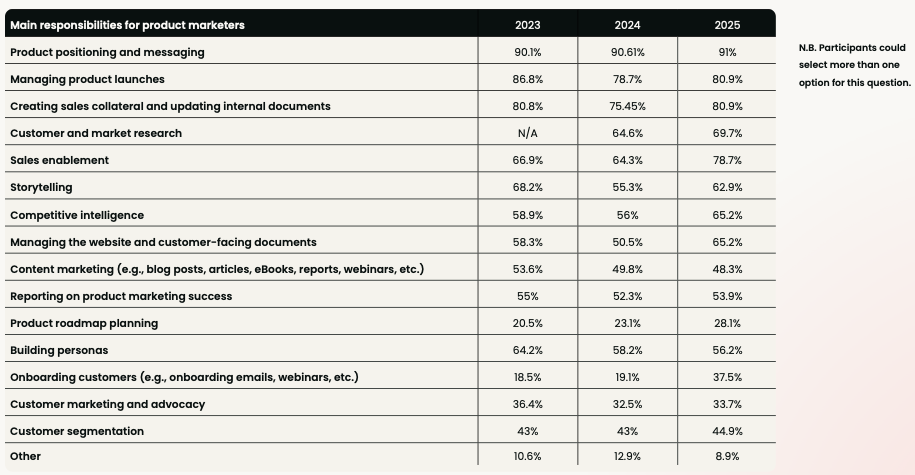
The popularization of AI hasn’t changed the list as much as it has changed the weight of each responsibility and its execution. With accelerated execution speed, more velocity is expected, so PPMs found themselves with their plates full and still expected to get a second serving. In the cited report, out of 15 responsibilities, only 2 (content marketing and building personas) showed drops compared to last year, while the popularity of the other 12 accelerated. Sometimes, very much so: customer onboarding saw a jump from 19.1% in 2024 to a whopping 37.5% in 2025. Another big spike is sales enablement, going from 64.3% to 78.7%.
This is what the data looks like in general, but does it fit SaaS PMMs? Once again, there are differences in the set of responsibilities and most desired skillsets depending on whether the company operates in an SLG (sales-led-growth, where the sales team is the primary driver of acquisition, customer retention, and expansion) and PLG (product-led growth, where it’s the product itself that drives these factors).
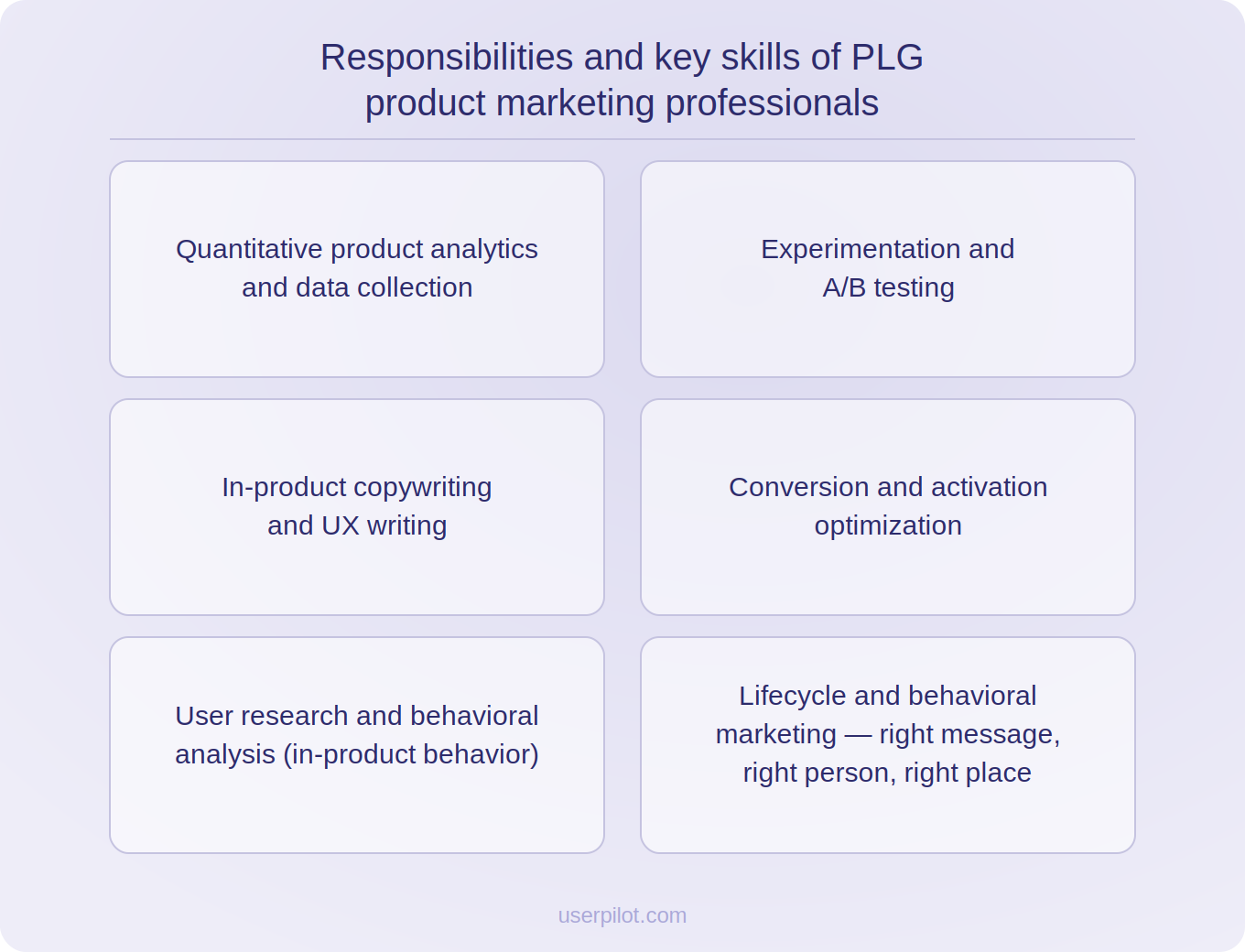
The PLG model makes product marketers participate in or even own more stages of the growth cycle. From my own experience and based on my conversations with other product marketers, here is a common list of responsibilities and key skills desired from PLG product marketing professionals:
- Quantitative product analytics and data collection (via a no-code analytics platform like Userpilot, Mixpanel, Amplitude)
- Experimentation and A/B testing
- In-product copywriting and UX writing
- Conversion and activation optimization
- User research and behavioral analysis (more focused on in-product behavior)
- Lifecycle and behavioral marketing (owning in-product and other communication channels), delivering the right message to the right person and the right place
Positioning, messaging, and ICP remain fundamental no matter the business model. However, PLG product marketers need a different toolkit layered on top, one based on an analytical growth mindset. They need to be fluent in product analytics, run experiments, and orchestrate product funnels. They must be capable of mapping the full user journey, designing behavior-triggered touchpoints, and making sure every stage from first login to power user is deliberate.
The cross-team collaboration model flips, too. PLG PMMs are involved with product, UX, and engineering teams, co-designing onboarding, writing in-product copy, and instrumenting the events that prove a user hit their Aha! moment.
To sum up: a PLG PMM is inherently intersectional, moving fluidly between data, copy, and user experience to turn the product itself into the go-to-market engine.
If you’re now thinking, “This sounds more like a product manager to me, not a product marketer!”, you’re not entirely wrong. I’d argue that in 2026, the two roles will, and should, blend more and more.
Product marketer vs product manager: Should we replace the “vs” with “=”?
According to the traditional definition, a product manager is responsible for the product’s development, deciding what to build based on user needs and technical feasibility. A product marketing manager is responsible for the market’s response, deciding who the product is for, how to position its value, and how to drive adoption.
However, with the current pace of shipping and crowded markets, this old model proves to be too disconnected. If PMs and PMMs operate in silos, then product marketing teams remain executioners servicing the product teams without much insight into the “backstage” of product development, and product managers lack marketing data when performing business research and making the case for the product.
So, while the full scope of responsibilities of PMs and PMMs cannot fall onto one person, both roles should be more involved in the areas traditionally assigned to the other. However, even if we’re not removing the equal sign, the “vs” one is not fair, either.
Leah Tharin frames the broader org shift well: every function has been forced to be cross-functional. The best idea for a continuous product’s success is to make PMs and PMMs collaborate more closely, in a joint growth function that has to bridge the gap between marketing’s promises and the product’s experience.
As Andrea Saez wonderfully put it:
“Before any PMs or PMMs out there start to panic, that does not mean we’re now doing PM work. But we do need to think with a product mindset. The best product marketers operate like strategic partners. They write the story based on insight, empathy, and evidence.”
In that environment, the PMM becomes the person who owns the connective tissue between what the product does, what the target market wants, and what the company can credibly sell.
Product marketing trends: Keeping up with AI-fluent users while chasing own AI fluency
Now that we know how the role of product marketers has been changing, let’s move to trends and challenges beyond the scope of responsibilities. I’ll start by discussing Gartner’s 2026 report, which identifies three industry trends:
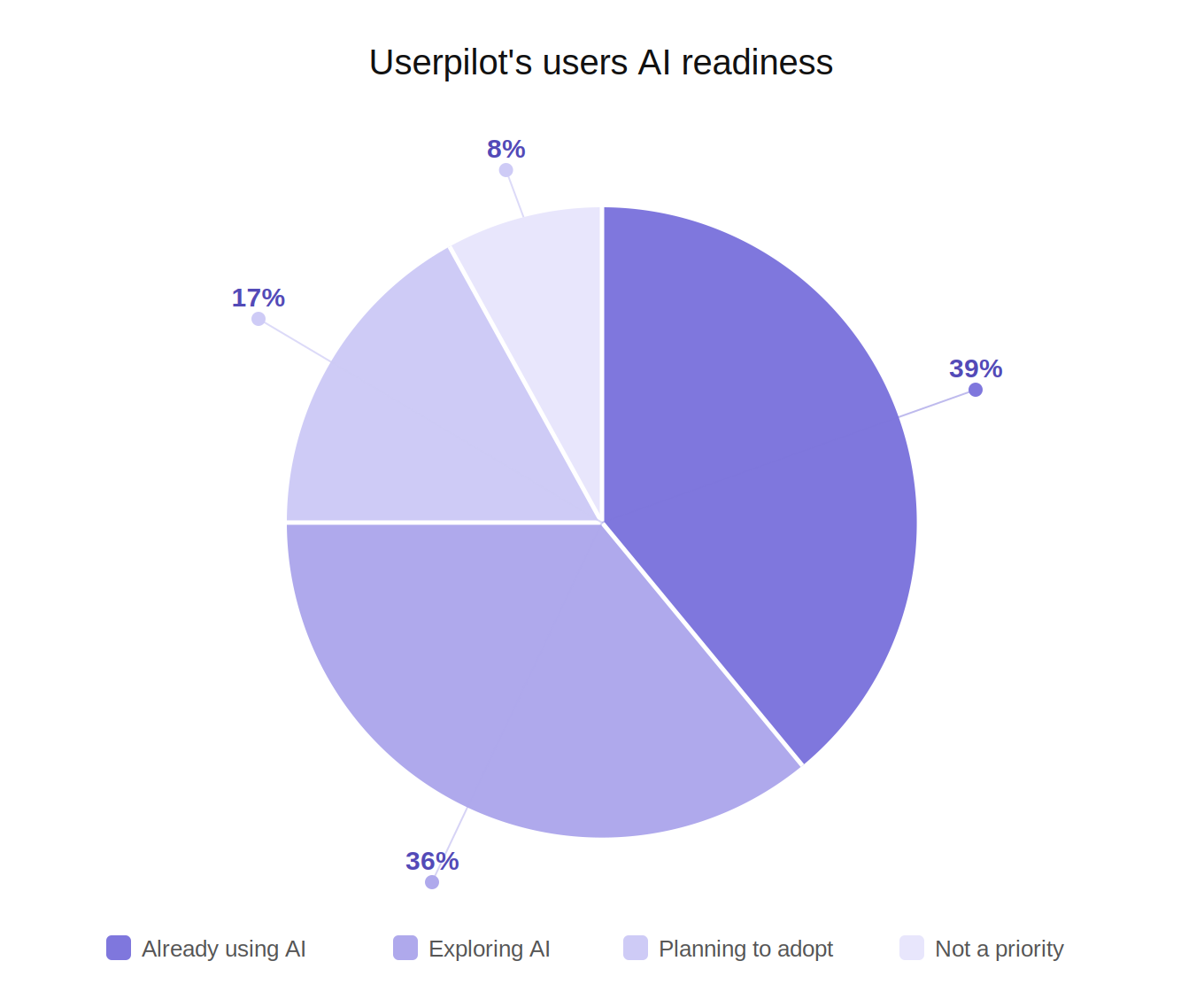
1. AI fluency is the single most important investment. Skill gaps are now the #1 obstacle to AI adoption in product marketing, per Gartner’s own data. The data from our State of Product Analytics Report from November 2025 backs this up. On average, only 39% of our respondents declared that they were already using AI capabilities. 36% claimed they were exploring, but hadn’t implemented yet. At the same time, only a small minority, 8%, said AI wasn’t their current priority. These responses indicate strong readiness and appetite for AI-driven analytics.
To mitigate this, marketers should become AI- and data-fluent to enable them to work independently from developers. Gartner recommends introducing an “AI charter for product marketing” to upskill product marketing teams and properly implement AI into daily work.
2. Product marketing is becoming strategic GTM orchestration. PMMs own GTM in all the stages, from strategizing to execution. That means that laser-focused, data-backed decisions are more important than ever, or else we spread our resources too thin. PMMs need to not only accelerate execution but also get well-acquainted with analyzing real-time data from different sources, both internal and external, constantly tweaking and optimizing, to ensure their strategy keeps up with changes. Using no-code tools can help deal with analyzing data, even for product marketers without technical skills.
3. Adaptability is the only path to measurable impact. Products grow faster, categories blur, and stakeholder demands rise, while teams often remain within the same size and budget. Apart from fostering a wide range of skills and diverse portfolios, the adaptable teams should focus on measurability, tying each action to clear KPIs aligning with product strategy. In 2026, reports should be your best friends, so consider automating their creation.
PLG is splitting into three generations at once
Now, let’s zoom in on the PLG model. Some voices claim PLG is yet another concept to soon be buried with the rise of the headless trend and agentic everything. However, that’s a drastic scenario still unlikely to happen, as the SaaS business model is not going anywhere. Garnter predicts an increase in investment in SaaS and claims that 75% of SaaS providers will have implemented product-led growth techniques by 2025. Menlo Ventures‘ 2025 State of AI report found that 27% of all AI application spend comes through PLG, which is four times more than traditional SaaS. The Product Marketing Alliance’s State of Product Marketing 2025 confirms that 41% of companies now describe their culture as “product first” (up from 31.2%).
Still, like everything else, PLG will need to adapt.
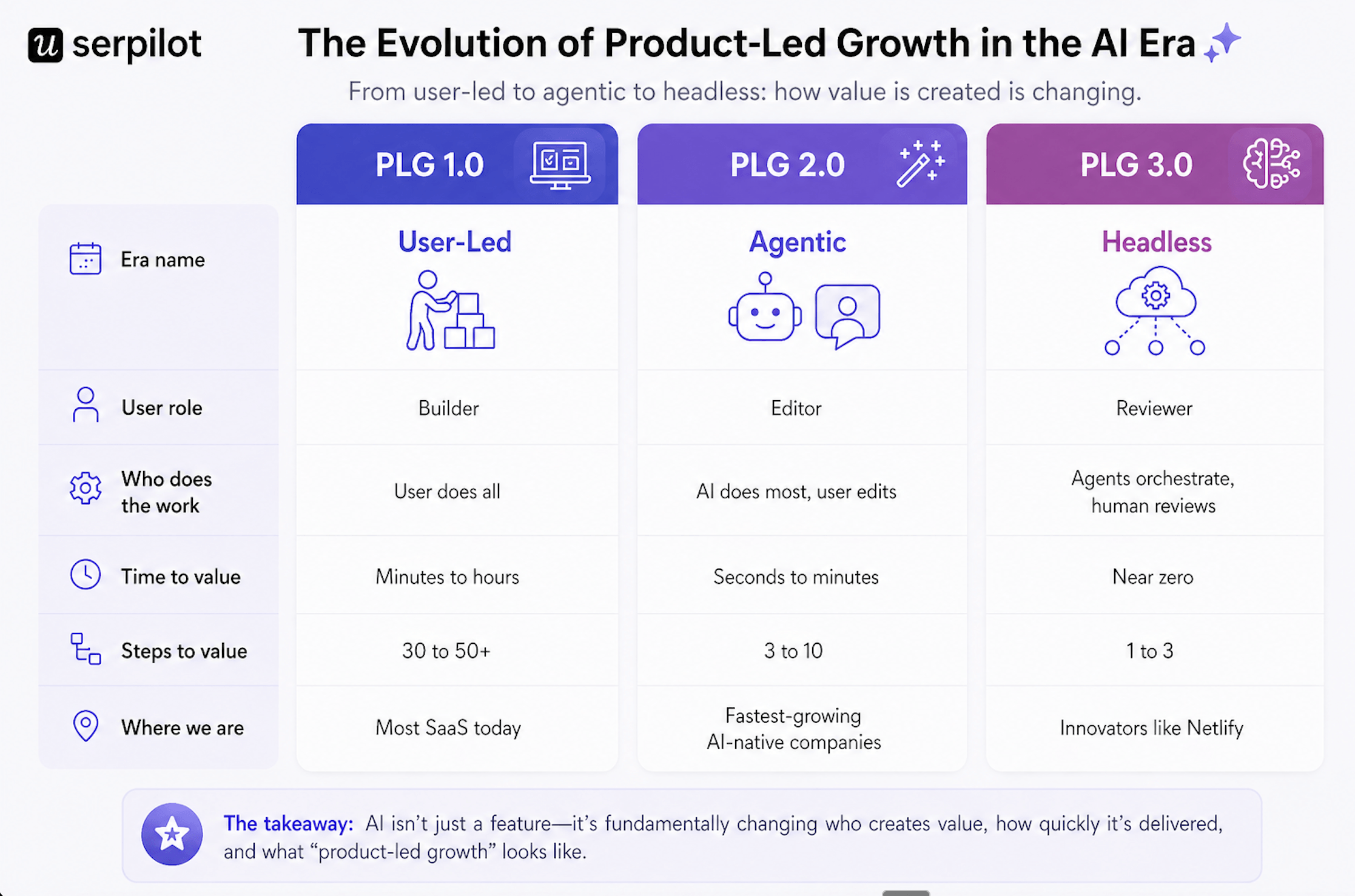
Wes Bush’s Evolution of Product-Led Growth: PLG x AI reframe is the cleanest model I’ve seen for what’s happening this year, and any PMM working on a self-serve product needs to know which version they’re operating in.
- PLG 1.0: Products built for users. In this model, the user does all the work. Time-to-value is minutes to hours, and there are 30+ steps from signup to first real output. This classic approach is slowly fading away, as traditional, checklist-based onboarding flows don’t go in line with AI-powered tools.
- PLG 2.0: Products built for users, powered by AI. AI generates the first useful output, and the user refines and verifies. This shortens the time to value to seconds. As Bush puts it, you can start getting value before you’ve created an account, as some tools already allow you to complete the first steps on their homepage.
- PLG 3.0: products built for AI agents. The user states an intent, an agent orchestrates the work across multiple tools and hands back a result for approval, making time-to-value immediate. Bush highlights Netlify here: the majority of new signups on their development platform are now AI agents, not humans.
Here’s what it means for product marketers:
- In PLG 1.0, your messaging sells the journey: signups, free trials, “easy onboarding.”
- In PLG 2.0, your messaging sells the outcome: describe what you want, get a finished thing. The headline is the demo.
- In PLG 3.0, your messaging has to convince both a human evaluator and an AI agent that your product is the right tool for a job, which is a discipline almost no PMM has formal practice in yet.
Wes Bush’s “Halving Principle” sums it up well: for any digital task, the time from intent to outcome halves every few years. Your users aren’t comparing your onboarding flow to your direct competitor’s; they’re comparing it to whichever AI-native product they touched last weekend. The gap between what felt acceptable in 2023 and what feels acceptable in 2026 is enormous, and it’s growing every month.
Product marketing in PLG should adopt omnichannel lifecycle marketing
Every product marketer I spoke with agrees that the only way to build a product marketing strategy that keeps pace with the current PLG model is to lean into lifecycle marketing. That’s how you can ensure continuous communication with the users tightly connected to the product, walking them through all the stages and turning them into your advocates. Let’s take a closer look at that model and how it can be applied to SaaS companies.
The lifecycle marketing flywheel
The product loop is still the right operating concept, since it assumes the product itself is both the acquisition engine and the retention engine. AI, however, increased the rate at which the loop has to spin. The reasons are faster shipping velocity, AI-driven personalization in onboarding, and agentic features that compound usage.
The Product-Led Growth flywheel maps five user segments: Stranger, Explorer, Beginner, Regular, Champion; and the five actions that move them between segments: Evaluate, Activate, Adopt, Expand, Advocate.
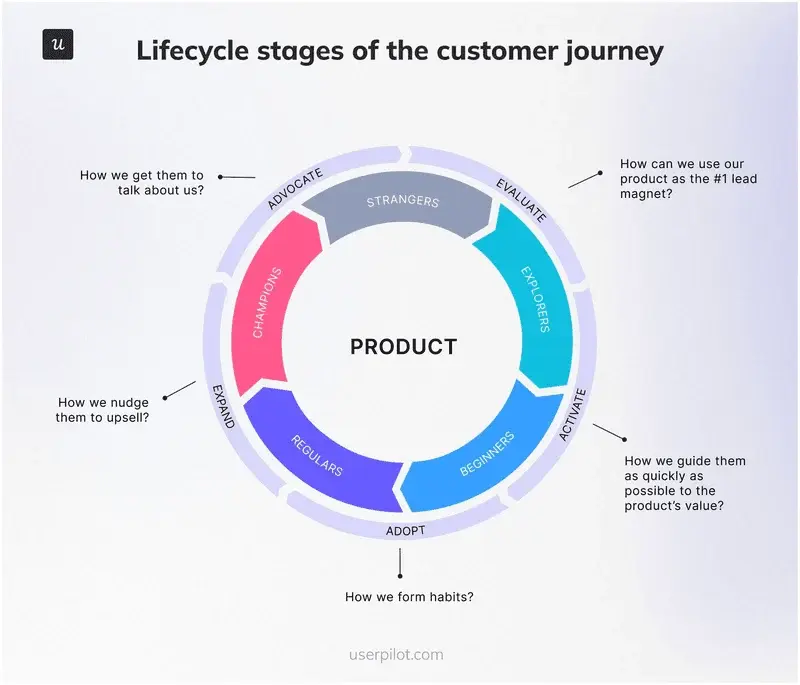
The PMM’s job, in this model, is to design the messaging, the digital marketing channels, and the in-product experiences that move users between stages. The process needs to be hyperpersonalized, timed precisely right, and highly automated.
Here’s how to think about the stages:
Evaluate: Strangers → Explorers. A Stranger doesn’t know you exist. The PMM’s job here is to do the groundwork to become findable by the right people. Market research interviews, customer-facing team debriefs, focus groups, and in-app surveys that surface real Jobs To Be Done will let you build content around those JTBDs and highly targeted ads to the segments that match.
Activate: Explorers → Beginners. The Explorer signed up, and you need to convince them to activate. You should set up a welcome email anchored to the user’s specific JTBD (not a generic “welcome to [Product]”), and a personalized in-app onboarding flow segmented by use case. Lead them straight to the Aha-moment. (If you’re building a PLG 2.0 product, the bar is harder still: the first useful output should hit before they’ve even decided whether to keep the tab open.)
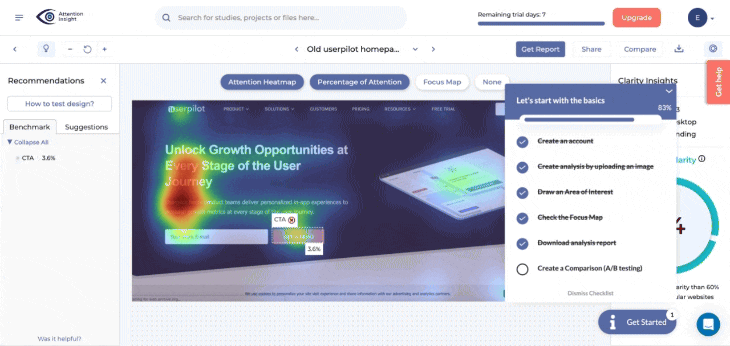
Adopt: Beginners → Regulars. The Beginner has hit one moment of value, but now you need to convince them to fully adopt the product. This is where secondary onboarding comes in, helping the user spotlight underused features that match the user’s segment, inviting them to a webinar tied to their use case, or surfacing a tooltip when they land on a feature they’ve never opened. Use email and in-app in coordination, never as separate marketing campaigns.
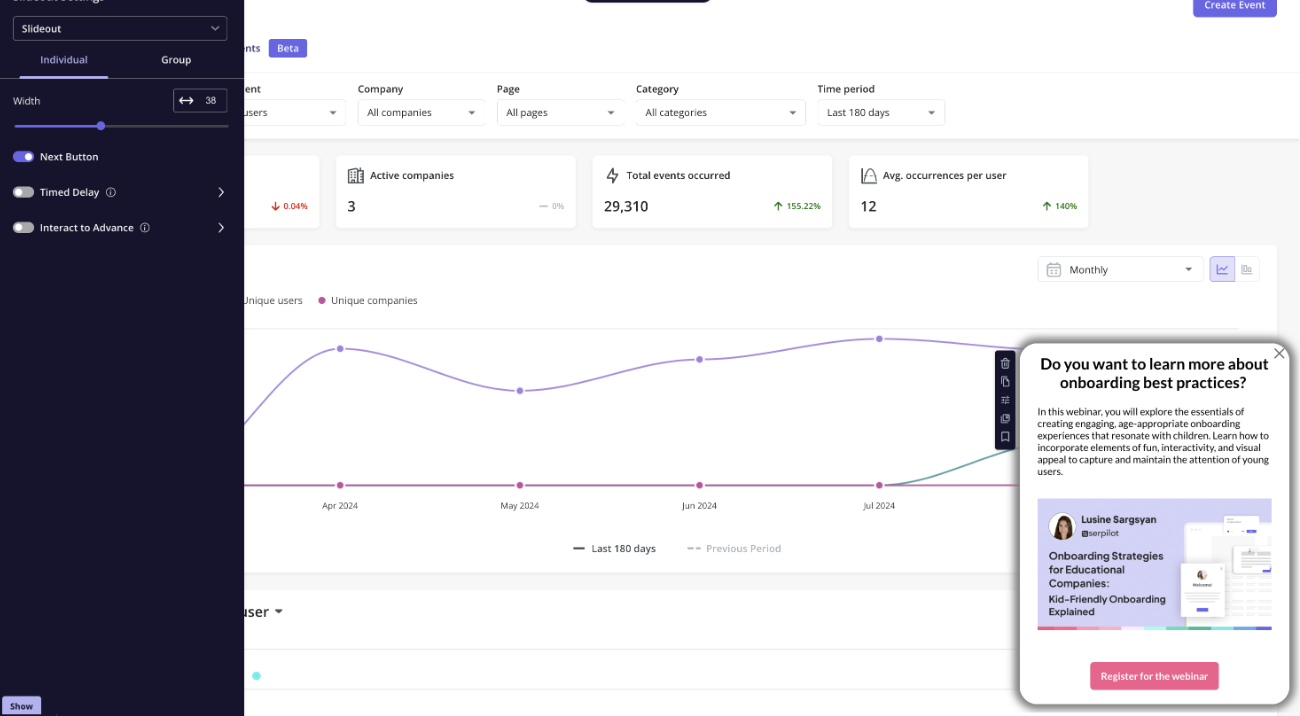
Expand: Regulars → Champions. A Regular made your product a part of their workflow. A Champion advocates for it. The shift here is from transactional education to strategic education: webinars, case studies, in-person training sessions, and in-depth guides that teach users how to be better at their job using your product. That’s also a good place to double-up on personalization and even build in-person relationships with your accounts.
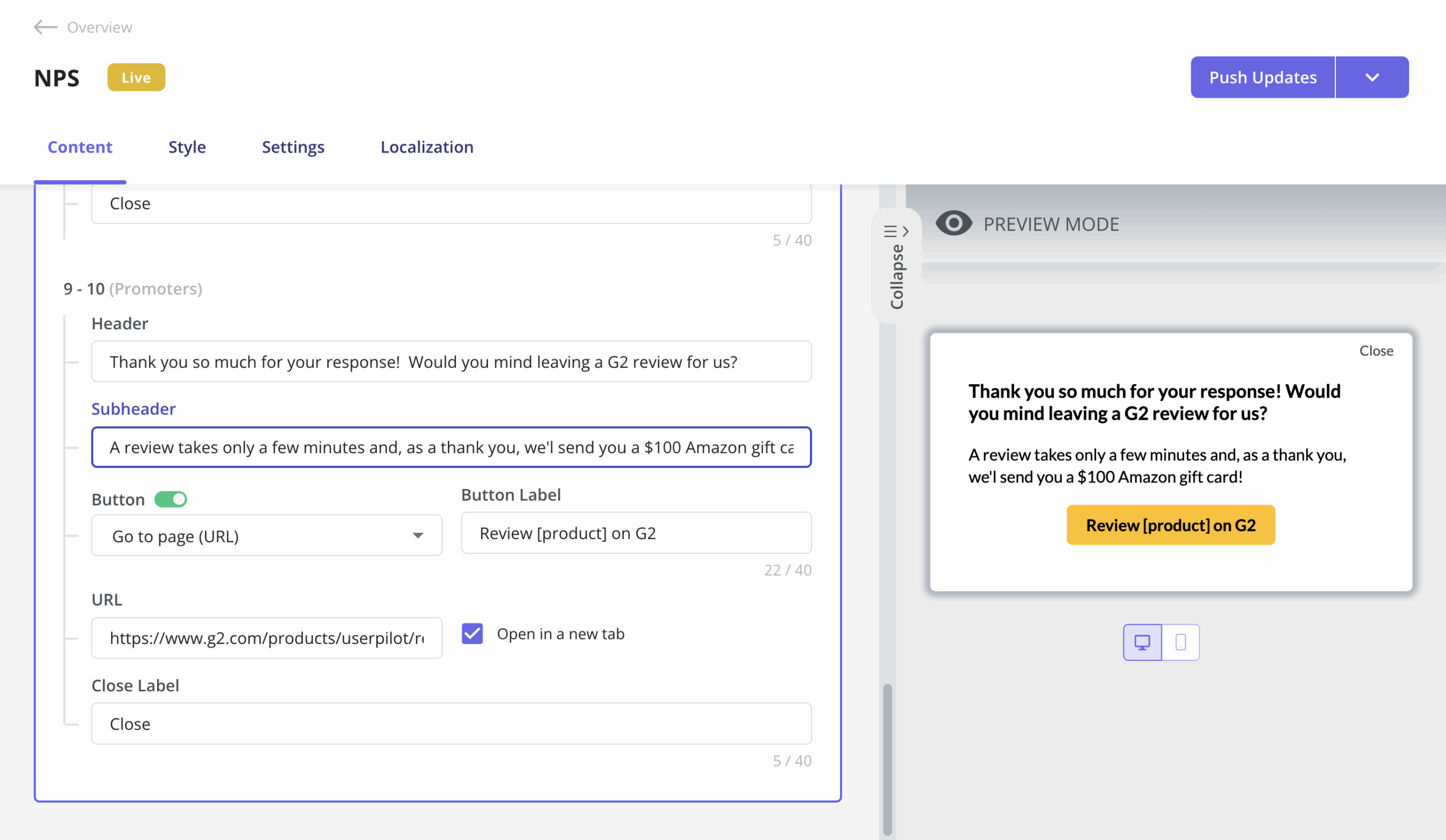
Advocate: empowering Champions to grow your business. This is the stage most marketing teams underinvest in, and it’s the one with the highest ROI in PLG. Champions get incentives such as swag, advanced guidance, power-user features, and beta access. In return, you ask them to do things only Champions will say yes to: leave a review, complete a survey, co-author a case study, share with a colleague, and join a customer advisory board. The PMM’s role is to industrialize this: targeted in-app surveys when usage thresholds are hit, email nudges when NPS scores come in high, and a repeatable program for case study production.
The three components that make or break your PLG
Now we know what the stages of the flywheel look like. But how to ensure this sort of strategy is possible to execute? For product-led growth, the flywheel only spins if the experience is coherent across product, in-product communication, and out-of-product communication.
Here are three components that need to work together to get this right:
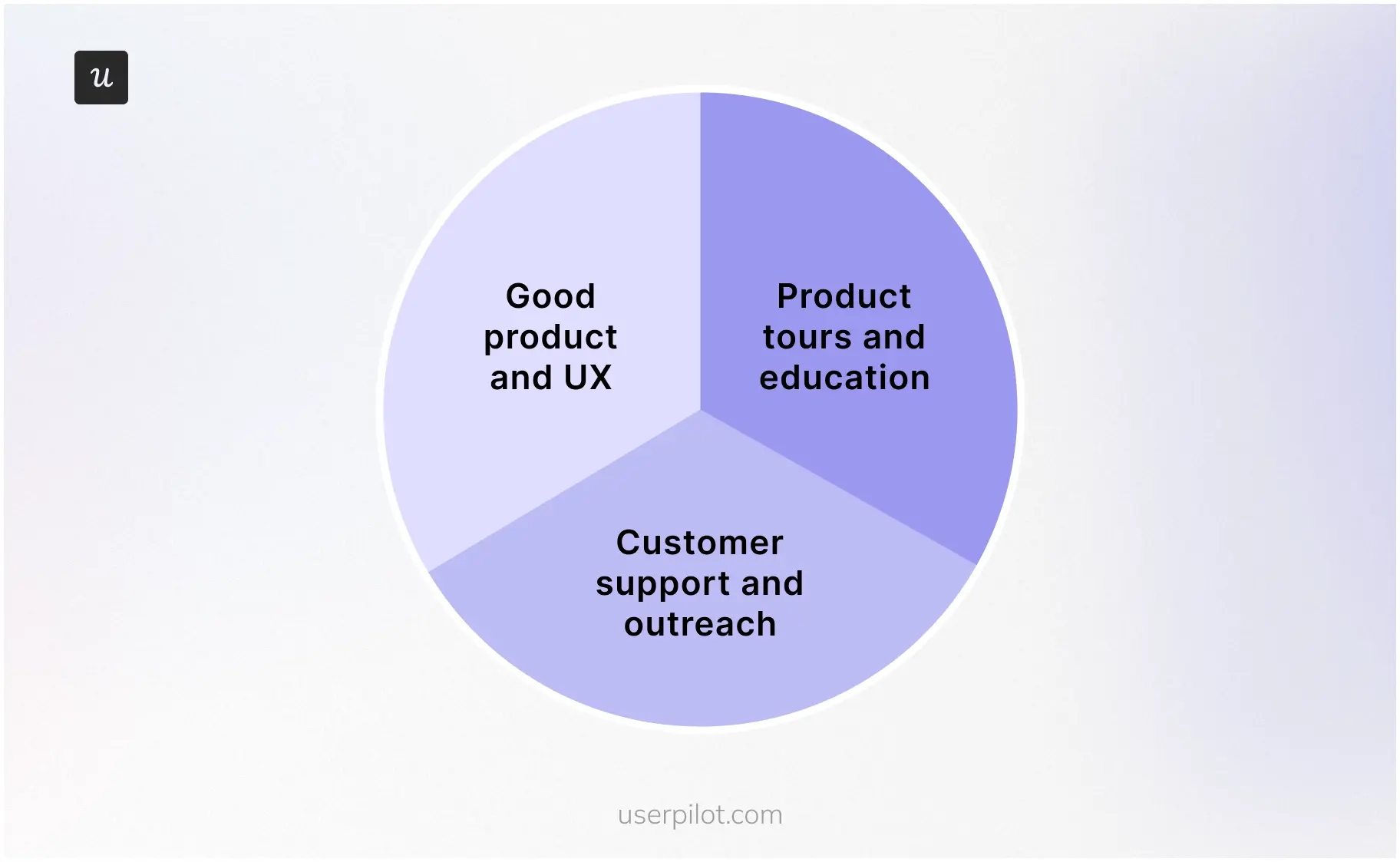
The product and its UX
If your product is confusing, no amount of in-app messaging will save you. A PLG product needs product-market fit, real JTBD alignment, and behaviour that matches user expectations. PMMs don’t usually own this, but they should be loud advocates inside the organization when the product fails its own users, especially with the aforementioned blending of roles in product teams and more pressure to also own the strategic layer.
In-product education and communication
Even great products need explanation. Different users have different learning preferences. The PMM-influenced layer here includes in-app onboarding for first-time users, product tours for new feature launches and secondary onboarding, a resource center always one click away, and self-paced education through docs, knowledge bases, and webinars. You need to show the right content, at the right place, at the right time.
Customer support and proactive outreach
Make support easy to find: chatbox, in-app help widget, resource center button. For premium accounts, customer success teams should be in regular contact, especially around product changes. Run continuous customer feedback collection (NPS, satisfaction surveys, in-product feedback prompts) so the voice of the customer reaches the rest of the organization.
The honest answer to “how do you actually run all three channels in coordination” is that you cannot do it well from a stack of disconnected tools, especially without dedicated engineering talent that can ensure everything remains up to date at all times. The teams that get this right consolidate user data, product data, in-app messaging, email, mobile, and analytics in a single no-code platform, so segments stay consistent across channels and attribution actually works.
How to execute a successful product marketing strategy? Tactical guides for go-to-market execution
Now that you have all the basic theory, you need to actually get your omnichannel lifecycle strategy in place.
This space will be gradually updated with more guides outlining detailed tactics and product marketing plays you can apply directly to your strategy, so keep monitoring it!
Lifecycle user engagement: Building a unified customer journey
An effective omnichannel lifecycle strategy requires three components. You need:
- Analytics tool
- Ways to act on data use
- A deep understanding of how customers move across channels.
Below is the practical framework I use with Userpilot to set up my omnichannel lifecycle campaigns:
Step 1: Centralize your data
Omnichannel only works when all your customer data stays in one place. If the product usage, lifecycle data, and customer engagement signals are all over different tools, you’ll end up delivering fragmented experiences.
So, the first step is to create a single source of truth using a Customer Data Platform (CDP) or a product growth platform.
Userpilot also tracks in-app events, such as button clicks, feature usage, completed flows, and page views. You can use autocapture features to grab raw event data without needing a developer to code every single interaction.
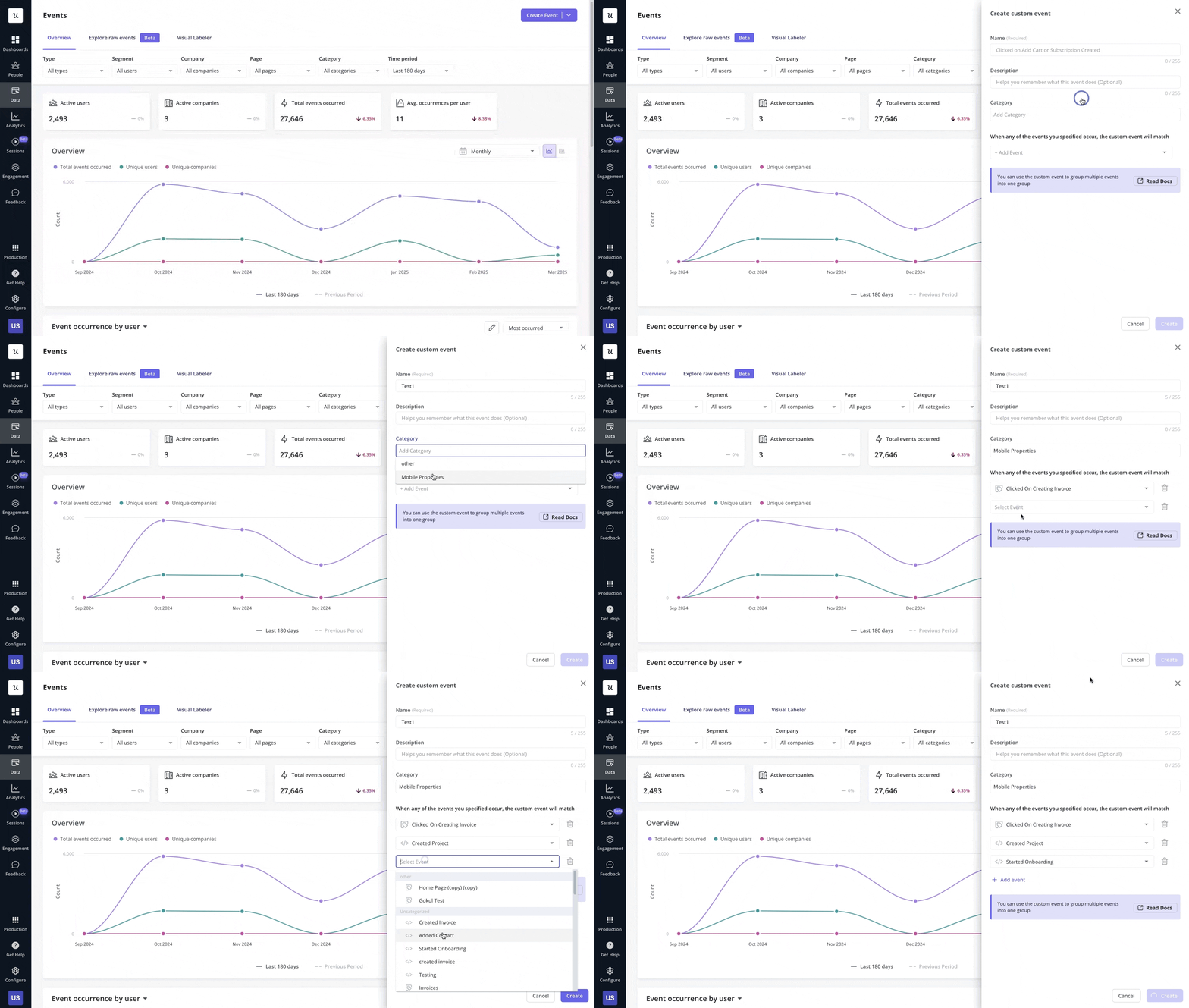
Now, your data is centralized. You can see what users are doing, when they’re doing it, and where they’re getting stuck.
Step 2: Map the entire customer journey
Before sending a single marketing message, get a clear picture of how users navigate your product. Map the key steps from first touch to activation and beyond, noting where users hesitate, loop back, or drop off.
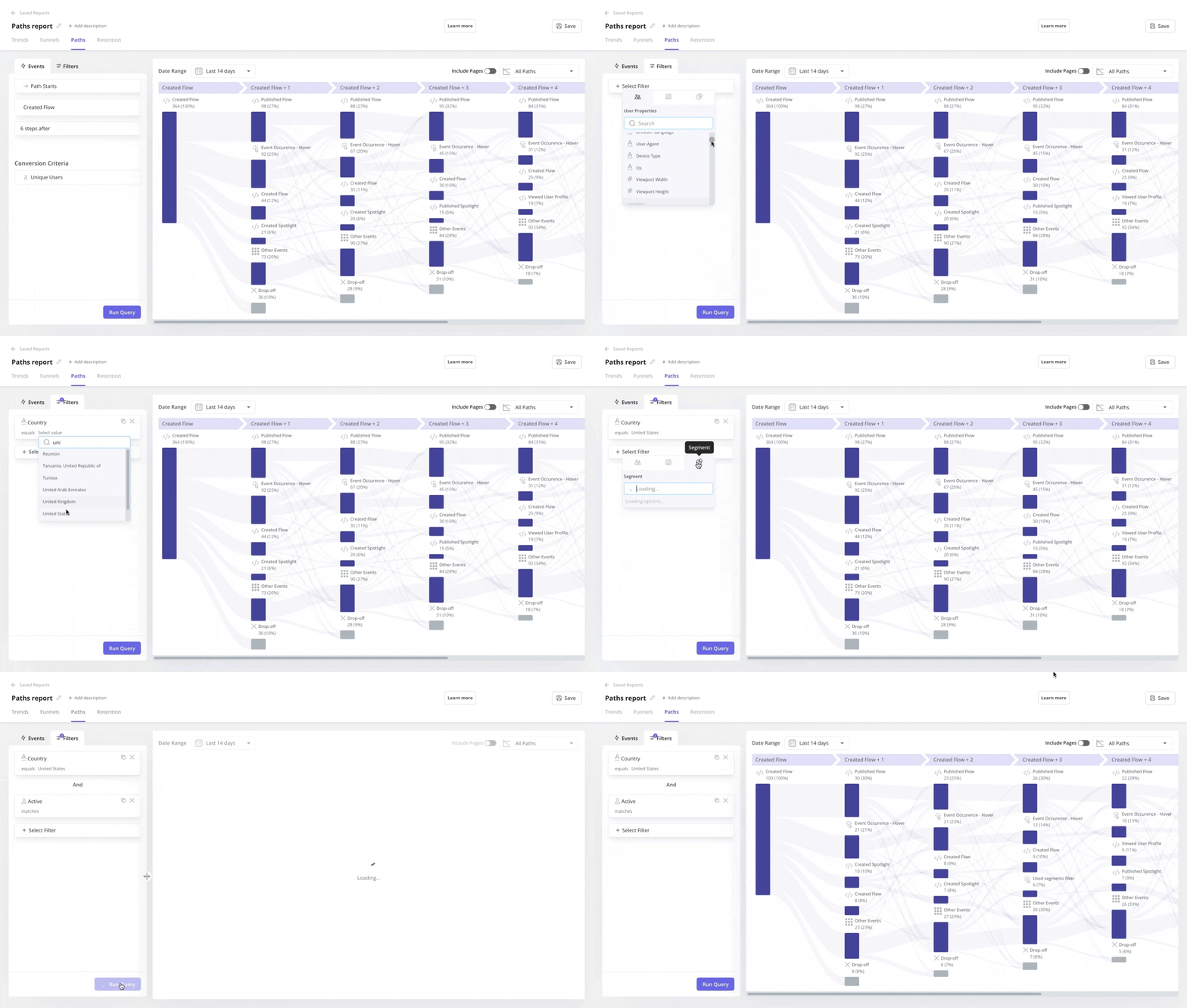
Path analysis reports are helpful here. They show actual behavior, not assumed flows, revealing which actions lead forward and which create friction.
For example, say a user signs up on mobile but abandons the experience shortly after. That gap signals a broken handoff that your omnichannel strategy needs to fix. The report will guide you on which step causes the friction.
Step 3: Segment your target audience
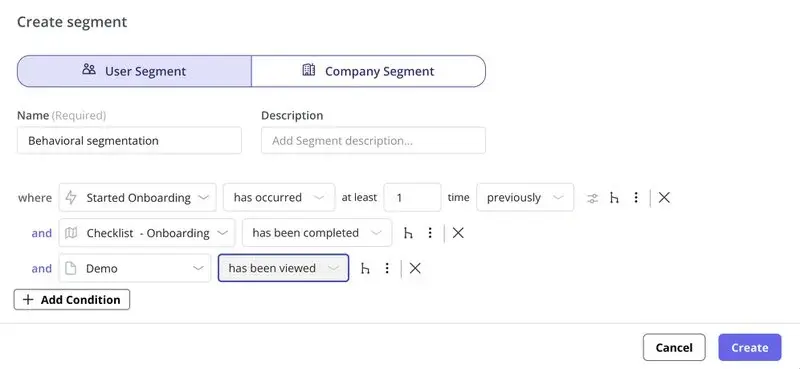
For an effective omnichannel strategy, group users by what they do and who they are. This behavioral and attribute-based segmentation guides you to respond to real intent.
In Userpilot, create a segment for new users who haven’t invited a teammate, for example. I can then target this specific group with a coordinated activation campaign across email and in-app messages.
You can also apply customer loyalty segmentation to reward power users, while giving at-risk users extra support without mixing the two.
Step 4: Create consistent content across channels
At this stage, plan content so every channel works together. The message shouldn’t be identical everywhere, but it should feel connected.
Here’s how to do that:
- In-app experiences: Since your product is the strongest channel, use contextual flows (like welcome modals) for new users. And slideouts can be for when someone explores a feature, but stick to the context.
- Mobile and web consistency: Using mobile content features, create carousels or push notifications that match what users see on their desktops. If a user dismisses a tour on desktop, don’t repeat it on mobile. Keep the experience continuous.
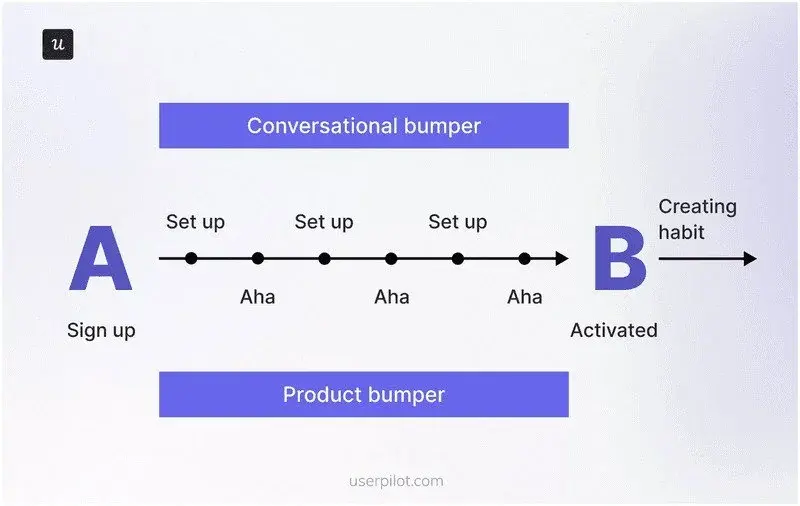
- Email and external product messaging: Sync your product data with a marketing automation tool. This way, once onboarding is complete, the message shifts from “setup reminders” to “advanced tips.”
At its best, product-led marketing communication aligns every customer touchpoint. It delivers the right message to the right user, at the right moment, from signup to activation to retention.
Step 5: Connect your tech stack
Your tools should work as one system. If you’re using HubSpot for email and Salesforce for CRM, both need visibility into what users are doing inside your product.
This is where integrations matter. By syncing Userpilot data with HubSpot, you can trigger email workflows based on in-app behavior, like whether a user has interacted with a specific feature. The result is messaging that reflects actual usage, and every email feels timely and relevant to the user’s journey.
Step 6: Measure success
To confirm the success of your omnichannel marketing strategy, follow customer behavior. Here’s how:
- Start with funnels: Track conversion between key steps, and watch what happens when you introduce an omnichannel touch (for example, an email paired with an in-app guide). If the step converts better, it’s working.
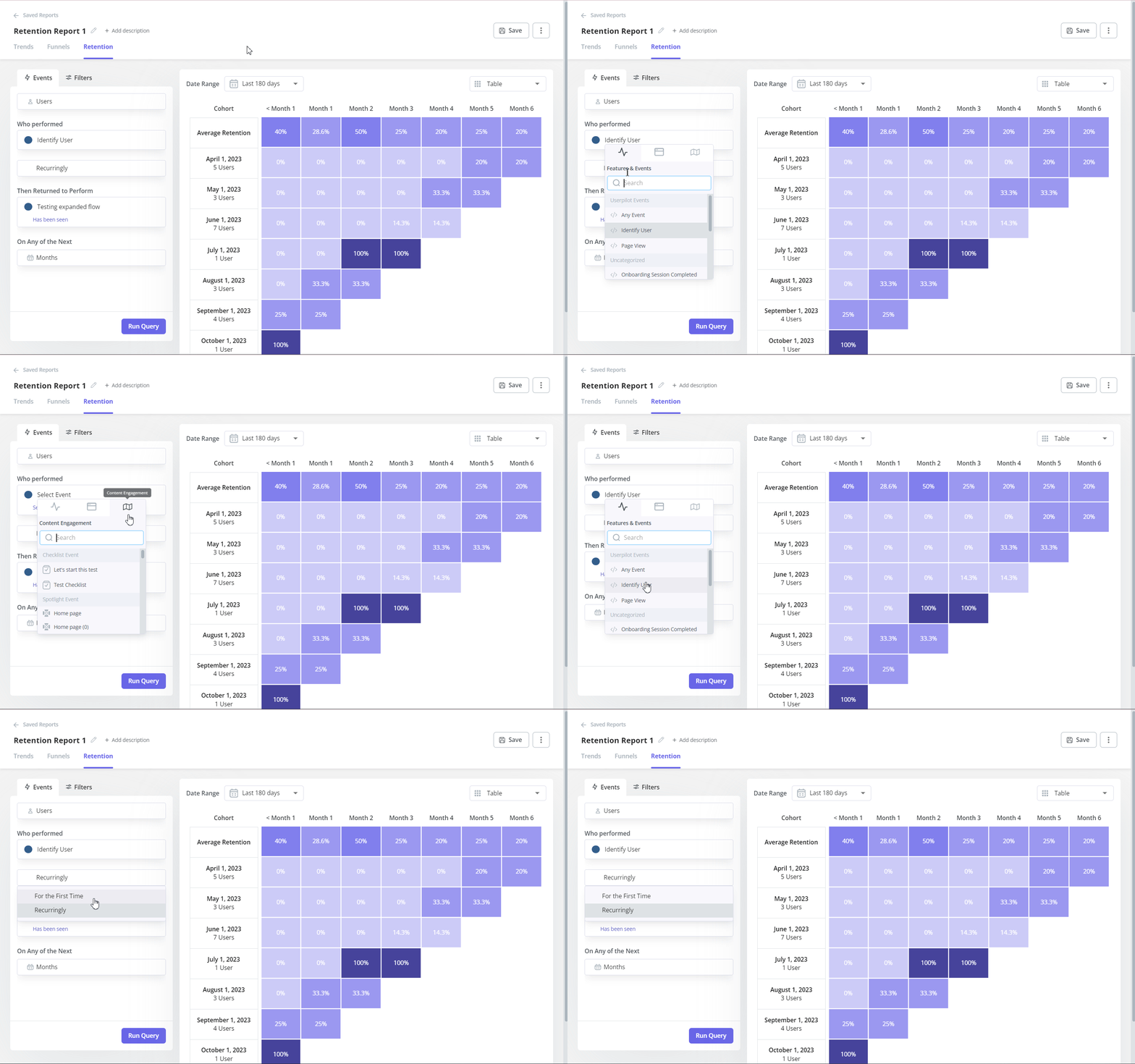
- Next, monitor retention by cohort: Do users exposed to connected campaigns stay active longer than those who aren’t? That’s your signal.
How to build an email strategy for lifecycle marketing?
For a successful email marketing strategy, each email needs to be timely and relevant, and it needs to work in line with other communication channels, not as a separate campaign. To achieve that, you should use workflows that connect all communication channels and relevant user segments.
Here are a few examples of emails relevant to each stage:
1. Explorers: Send getting-started videos, infographics, checklists/simple setup wizards, or feature introductions as part of your welcome email series.
2. Beginners: Send core feature spotlight emails, “tips & tricks” for basic usage, short video tutorials, invitation to webinars, and user support resources for common issues.
3. Regulars: Send advanced feature spotlight emails, use-case-specific guides, invitations to advanced webinars, case studies demonstrating the use of complex features, upgrade offers, feature recommendations based on their usage patterns, etc.
4. Champions: Send testimonial or case study requests, referral program invitations, beta testing opportunities, user interviews/survey participation requests, or offer exclusive access to content, forums, or user groups.
💡 Read more in our PLG Lifecycle Email Marketing Guide
Ready your product marketing manager career for 2026
Product marketing in 2026 demands more output than traditional marketing with the same amount (or even fewer) resources and taking on more responsibilities, often overlapping with product management responsibilities. This may sound stressful, but, as usual, it’s also a great product marketing career development opportunity for those who don’t mind putting on a couple of extra hats and becoming AI-fluent.
Good product marketers can orchestrate the entire commercial relationship between your product and your market. To achieve this, you need to keep a solid data-driven strategy in place, confidently own the process by making data-backed decisions and solidly measuring against KPIs, and get well-versed in omnichannel lifecycle marketing.
If you’re ready to get your product marketing flywheel spinning faster and more effectively, try Userpilot. It will help you easily analyze data, set up in-app and email communications as unified workflows, and monitor the effectiveness of your communication channel. And you can achieve all of that without any developer dependency. Book the demo now!
About the author