![10 Free Product Roadmap Templates You Need in 2026 [+Free Download] cover](https://blog-static.userpilot.com/blog/wp-content/uploads/2026/01/10-product-roadmap-templates-you-need-in-2026-free-download_d8269f0b0b9749f6ad7b519ab7ac1833_2000-450x295.png)
10 Free Product Roadmap Templates You Need in 2026 [+Free Download]

According to PMA’s 2023 State of Go-to-Market Report, 69% of professionals say they lack a defined launch process.
This “undefined” launch process usually stems from unclear product roadmaps and misaligned priorities. The same report shows that product management teams with a clear roadmap and a defined launch process achieve a 10 times higher launch success rate, along with three times revenue growth.
That’s what product roadmap templates help you score.
In this blog, I share 10 free product roadmap templates, each designed for a specific use case, team structure, and business objective.
But first, let’s understand what a product roadmap template is.
What is a product roadmap template?
A product roadmap is a forward-looking, time-aware view of why the product is being built and where it is headed. It connects to your product strategy by showing what you’re prioritizing, why you’re making those choices, and how they support business goals.
A product roadmap template gives this approach a reusable visual framework that captures the product vision, strategic initiatives, timelines, goals, and sets direction over a defined period.
Other core components of the template include:
- Features and epics
- Dependencies
- Ownership
- Milestones
- Metrics/KPIs
But don’t mistake it for a backlog, project plan, or release plan.
- A project plan focuses on execution. It breaks work into specific tasks, assigns owners, and sets timelines.
- The backlog holds user stories, bugs, and technical tasks, ordered for delivery.
- Release plans are tactical. They lock in dates and version numbers.
Consider product roadmap templates like the backstage work of a major concert. It coordinates the team, sets priorities, and ensures every initiative meets stakeholder expectations.
How do product roadmap templates work?
Product roadmap templates work by turning customer input and product data into actionable roadmap priorities.
Customer feedback reveals real user pain points through support tickets, interviews, and in-app responses. Product usage analytics adds context by showing how users interact with the product and where drop-offs occur.
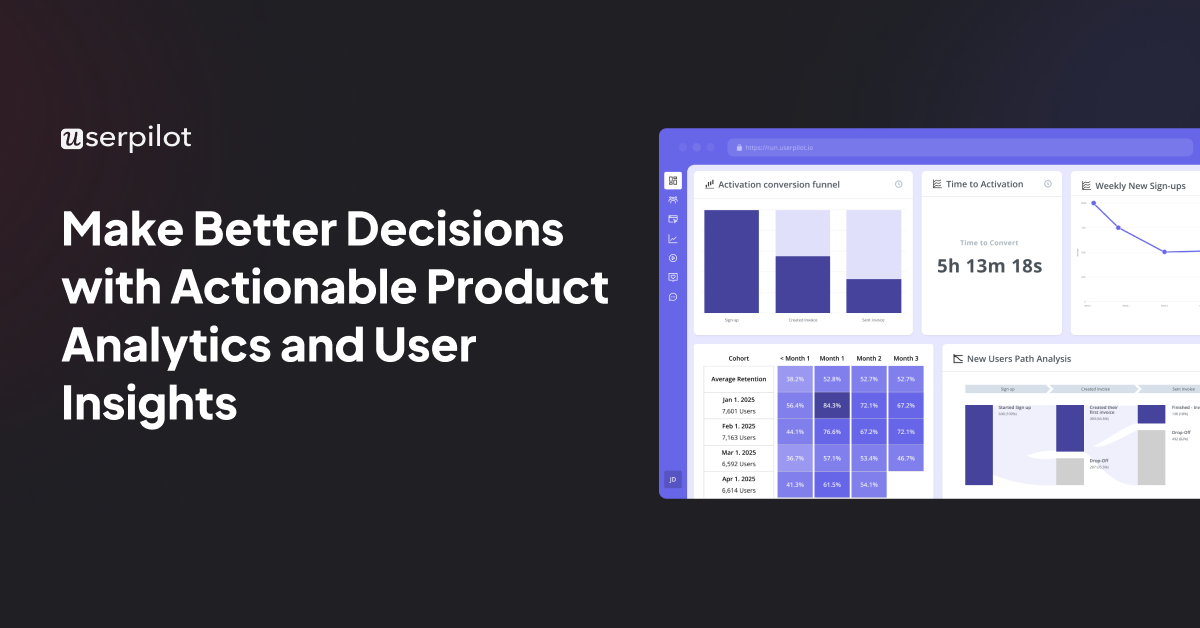
For instance, Userpilot’s Product Analytics lets you visualize user journeys, spot friction points, and track feature adoption, turning retention signals into inputs for roadmap prioritization.
Once inputs are visible, teams need a way to make trade-offs.
To reduce bias, PMs use a weighted scoring model with frameworks like RICE to rank initiatives by reach, impact, confidence, and effort.
Those initiatives are then tested using lightweight validation. Fake door testing gauges demand, while microsurveys reveal user intent before teams start building features.
As real signals come in, mature teams actively deprioritize items that no longer make sense. This keeps roadmaps focused, avoids the feature factory trap, and ensures teams spend time on strategy and resource allocation instead of formatting.

Scale Growth Through Product Roadmap Templates and Userpilot
The 10 most common types of product roadmaps + templates
The effectiveness of a product roadmap depends on what you need to visualize. Some product roadmap templates show timelines, others highlight themes, and each serves a different purpose.
Here are the 10 most commonly used product roadmaps (with free templates):
1. Timeline roadmap
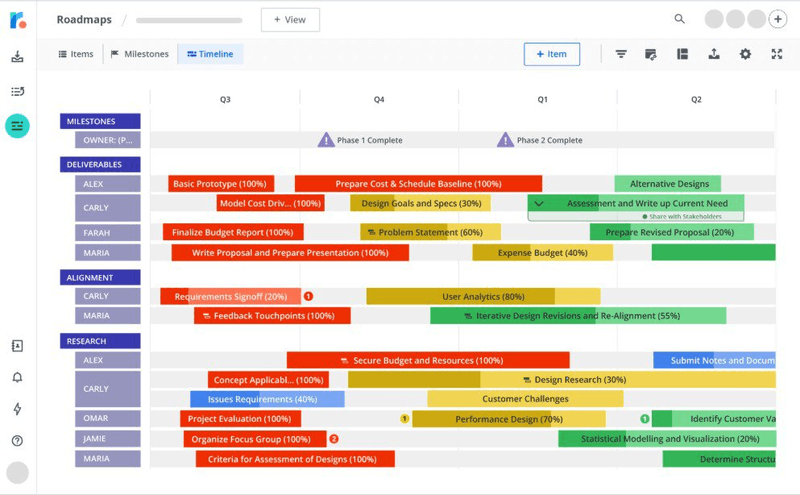
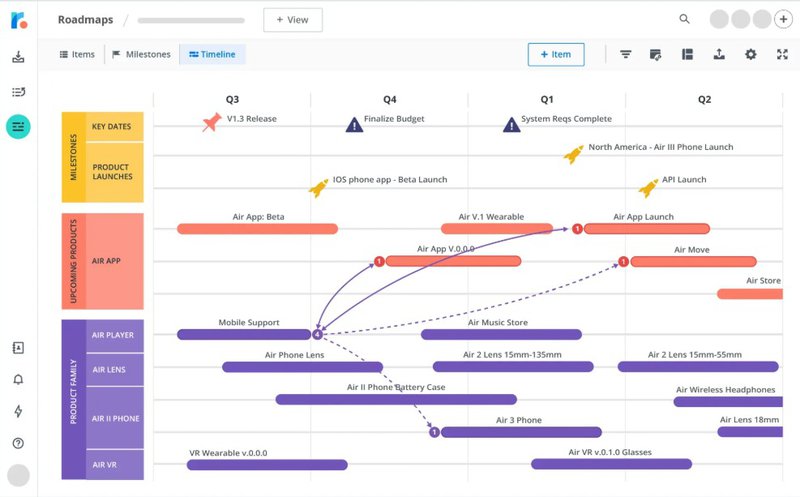
A timeline roadmap lays initiatives along a time axis to provide visibility into when things will happen. Projects are sequenced based on their priority level to align teams with what truly matters.
The roadmap shows initiatives as Gantt-style bars with durations and dependencies. Teams visualize work on a shared timeline and track key milestones. Product-led strategies then guide decisions based on real user signals, while flexible time buckets reduce the risk of delays.
For example, a SaaS team launching a new feature can map engineering, design, QA, and marketing tasks on a timeline roadmap. If one task is delayed, the team checks which dependencies are affected and acts accordingly.
Best for:
- Initiatives with firm deadlines, like regulatory launches, hardware releases, or contractual commitments.
- Projects involving multiple teams that need a shared view of what happens when.
- Stakeholders who need to see timelines clearly to plan and coordinate work.
👉 Timeline roadmap template:
2. Now–next–later roadmap
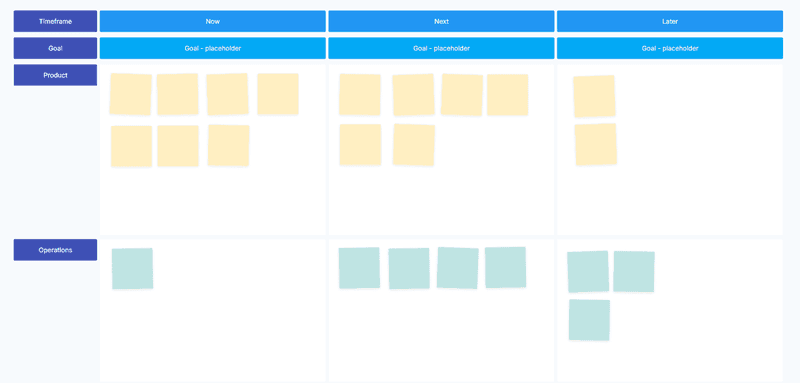
The Now–Next–Later roadmap helps teams share progress without committing to rigid timelines.
It separates different projects into three categories: what’s in motion, what’s coming next, and what’s still a hypothesis.
Now: High-certainty initiatives currently in execution, with finalized scope, designs, and a strong likelihood of near-term delivery.
Next: Medium-certainty initiatives with a clear problem and ongoing product discovery, while the solution stays flexible.
Later: Low-certainty ideas align with the long-term product vision, remain intentionally unscoped, and are treated as hypotheses.
For example, a product team uses a Now–Next–Later roadmap to separate validated work from ideas still in discovery, making it clear what’s a commitment and what isn’t.
Best for:
- Teams working in an agile environment where priorities change frequently.
- Showing progress and setting expectations of stakeholders without committing to fixed delivery dates.
- Balancing short-term execution with long-term strategic goals.
👉 Now-next-later roadmap template:
3. Theme-based roadmap
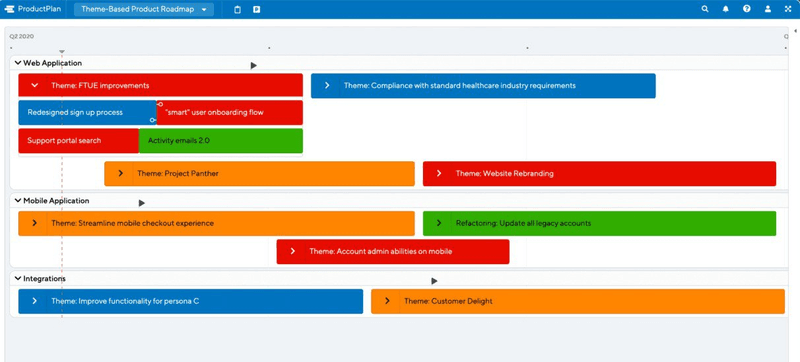
A theme-based roadmap groups initiatives under strategic themes and desired outcomes instead of individual features or strict timelines. It helps teams focus on solving high-impact problems and tracking measurable results rather than delivering features without a well-defined objective.
A Kanban-style board shows work in columns for time horizons, such as ‘Current Focus,’ ‘Near Term,’ and ‘Future.’
Meanwhile, rows display strategic themes, for example, ‘Onboarding Friction‘ or ‘Enterprise Security.’ Cards then show the key features linked to each theme.
For example, a PM notices users stop returning after week two. The roadmap introduces a “User retention” theme, guiding work on onboarding tweaks and in-app nudges to improve engagement.
Best for:
- Teams that want to track progress and measure impact by grouping initiatives around strategic goals.
- Agile teams that need flexibility to adjust or swap initiatives without disrupting plans.
- Teams with baseline metrics to monitor progress and measure results within each theme.
👉 Theme-based roadmap template:
4. Outcome-driven roadmap (Goals/KPIs first)
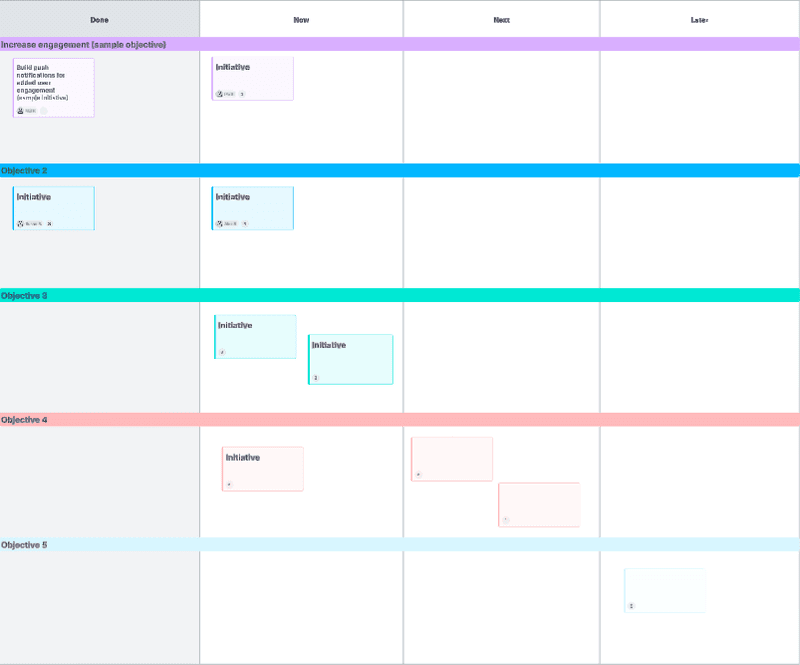
An outcome-driven roadmap organizes initiatives around measurable goals and key performance indicators (KPIs) instead of features or deadlines. It helps teams prioritize high-impact work, measure progress, and focus on initiatives that drive business growth.
Columns show time periods, and rows show objectives or themes. Each card tracks projects with their success metrics, showing key results like feature adoption and retention to measure effectiveness.
For instance, a product team might track adoption of a new onboarding feature and adjust the roadmap in real time. If users aren’t engaging as expected, they can shift focus to fix the flow before committing more resources.
Best for:
- Prioritizing initiatives based on impact and value rather than just features.
- Aligning work with business objectives and showing measurable progress to stakeholders.
- Teams with clearly defined goals and measurable KPIs, where success can be tracked.
👉 Outcome-driven roadmap template:
5. Feature-based roadmap
A feature-based roadmap focuses on individual product features and their planned release. Key features appear as cards on a Kanban-style board, organized by delivery sequence and priority, showing what will be built and when.
For example, a team launching a new messaging app might use a feature-based roadmap to track when chat, notifications, and file-sharing features will be built and released.
Best for:
- Stakeholders who need visibility into which features will be built and when.
- Cross-functional teams that need to track feature delivery and dependencies to avoid delays or conflicts
- Prioritizing work based on feature value or customer impact, helping PMs make trade-offs effectively.
👉 Feature-based roadmap template:
6. Portfolio roadmap
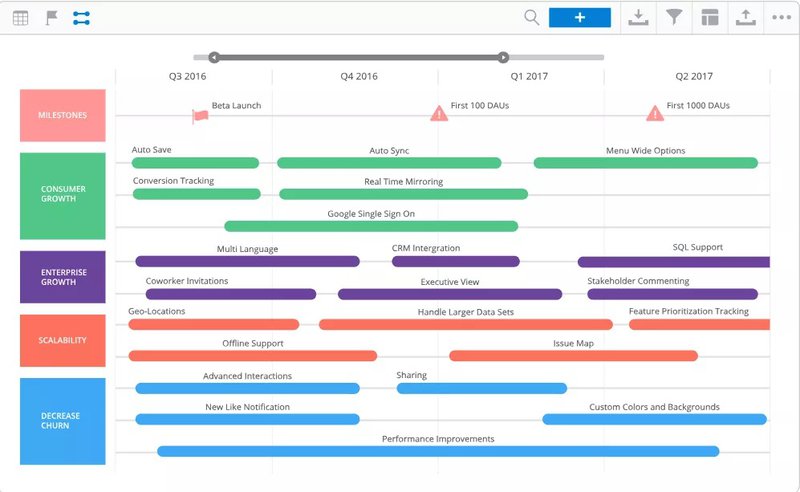
A portfolio roadmap provides a high-level view of multiple products or major initiatives, showing how work across the organization is prioritized, sequenced, and aligned to business objectives.
The roadmap groups initiatives by product line, strategic theme, or priorities and shows when focus shifts are expected.
For example, a portfolio roadmap can map when the design team updates the app, the marketing team launches a campaign, and the product team builds new features, so priorities are clear across the organization.
Best for:
- Coordinating multiple products or initiatives so teams can make informed decisions about resource allocation.
- Focusing on projects that deliver the most business impact across the portfolio.
- Balancing investments across products to prevent over-concentration and ensure steady growth, retention, and platform improvements.
👉 Portfolio roadmap template:
7. Quarterly/annual roadmap
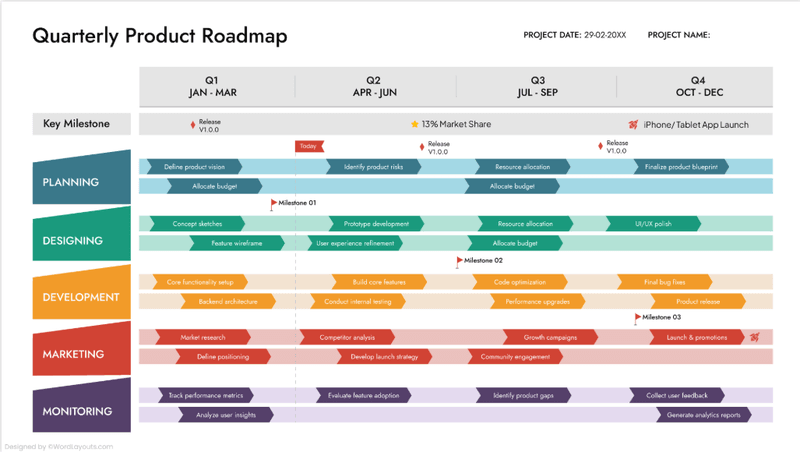
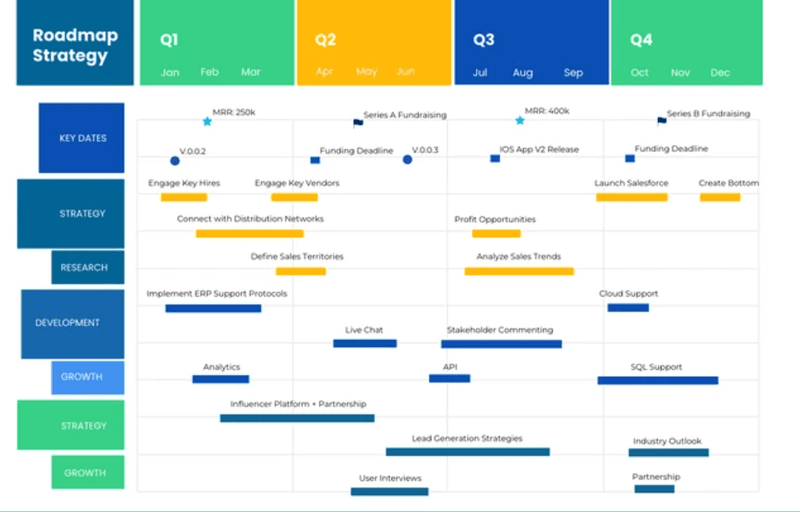
A quarterly or annual roadmap maps product priorities and initiatives to calendar periods, giving teams clarity on what’s planned and when. Instead of tracking every feature, it emphasizes themes, goals, and measurable outcomes for each quarter or year.
Teams use quarterly and annual roadmaps to plan key milestones, track progress, and adjust priorities based on results from each quarter.
For example, a team could schedule a Q3 feature update and adjust it based on customer feedback collected in the previous quarter.
Best for:
- Planning initiatives over quarters or the year, helping teams allocate resources strategically.
- Linking product work to OKRs, KPIs, or business targets to track measurable progress.
- Giving stakeholders a view of long-term outcomes instead of focusing on individual features.
👉 Quarterly/annual roadmap template:
8. Release roadmap
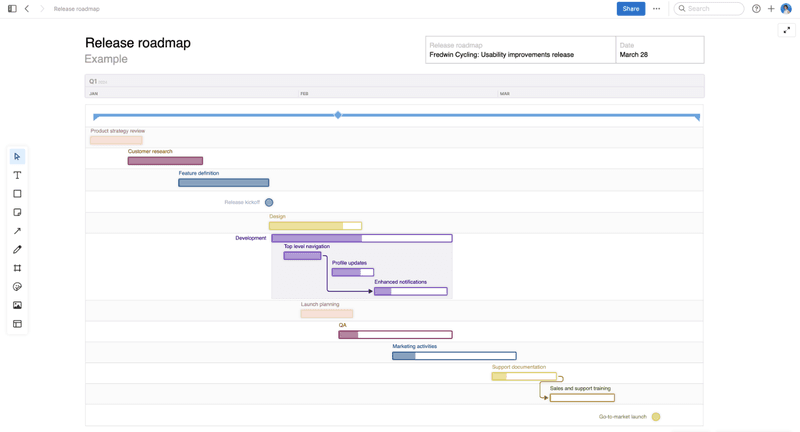
A release roadmap lays out upcoming features, improvements, and bug fixes, providing a comprehensive view of what’s shipping and when.
Consider you’re planning a major feature rollout next quarter. A release roadmap helps you coordinate engineering, marketing, and support so everyone’s ready on launch day.
Structured around versions or time-bound cycles, it shows deliverables, dependencies, and key features, letting you track progress, adjust timelines, and keep the release on track.
Best for:
- Teams with formal release cycles or versioning plans who need to clearly show what’s included in each release.
- Engineering, QA, and product teams that need a single source of truth to track dependencies, handoffs, and readiness.
- Stakeholders who need visibility on what’s shipping and when, so expectations are aligned across teams.
👉 Release roadmap template:
9. Agile sprint roadmap
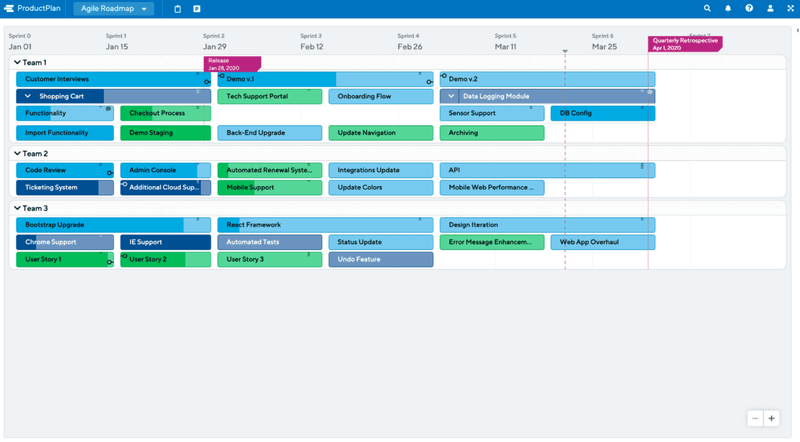
An agile roadmap breaks high-level initiatives into focused, actionable sprint goals. It highlights priorities, planned deliverables, and dependencies in a visual format, so teams understand the product strategy and communicate effectively.
For instance, you’re rolling out new features and want to keep users from dropping off. A sprint roadmap tied to user-impact metrics helps you measure results and reduce churn.
Each sprint shows what’s being delivered, when, and by whom, keeping the roadmap detailed and easy to update as the team iterates on features.
Best for:
- Product teams working in 1–4 week sprint cycles and seeking visibility into what’s being delivered each sprint.
- Maintaining visibility into progress and risks across sprints.
- Ensuring each sprint contributes directly to upcoming releases and strategic goals.
👉 Agile product roadmap template:
10. Product strategy > roadmap cascade
A product strategy → roadmap cascade connects high-level company goals to actionable product roadmap items. In turn, every initiative on the product roadmap links back to outcomes and strategic priorities.
The roadmap flows from company goals to product strategy and themes, then breaks work into initiatives. Each initiative ties to clear metrics, turning roadmap items into deliberate strategic bets, not just feature requests.
For example, you aim to improve overall product engagement. The roadmap translates this goal into initiatives around push notifications, in-app nudges, and personalized content.
Best for:
- Companies with defined business goals or OKRs that want strategy reflected in product work.
- Product teams handling multiple initiatives and deciding what to build next.
- Tracking progress from strategy to measurable outcomes, not just feature delivery.
👉 Product strategy template:
Final checklist before you share your roadmap
After building, revising, and defending roadmaps, I’ve come up with a simple checklist I run through before sharing one. It keeps the roadmap honest, focused, and easy to communicate. Steal it NOW!
- Is every item tied to one clear goal?
If it doesn’t link to a product or business objective, it fails the prioritization check. - Do the themes fit on one slide?
Clear themes prioritize work and prevent a feature dump. - Are success metrics defined upfront?
Define metrics to turn ideas into testable hypotheses and validate them. - Is ownership obvious?
Precise ownership keeps prioritization decisions moving and ensures validation doesn’t stall. - Can a new hire understand it in five minutes?
If it needs heavy explanation, the roadmap hasn’t passed a clarity audit.
If the answer is “yes” across the board, the roadmap is doing its job. But it only stays useful if ideas can be validated quickly and continuously. That’s where Userpilot fits into the picture.
Userpilot helps product teams validate roadmap decisions fast by combining product analytics, user segmentation, and in-app experiences in one platform. Teams use it to test initiatives via labelled events, guide users contextually, and measure engagement using built-in analytics and segmentation.
The roadmap sets direction. Userpilot helps you stay on course. Book your free Userpilot demo today!
Simplify Actionable Product Roadmap Templates with Userpilot
FAQ
What does a good product roadmap look like?
A good product roadmap template uses a clear structure, such as themes, time horizons, or now-next-later buckets, depending on the context. It focuses on key objectives and outcomes rather than detailed tasks, making it a reliable communication tool to align stakeholders with the planning process.
What should be included in a roadmap?
A product roadmap should include your vision and goals, the key initiatives or themes you’re focusing on, and the metrics you’ll use to track progress. Detailed roadmaps clearly communicate priorities, ownership, and strategic direction, while avoiding task-level details. Include features or epics for context, and use timelines or horizons to indicate timing without enforcing rigid dates.
How to create a product roadmap in Excel?
Product roadmap templates can be built in various formats, including Excel, Word, and PowerPoint. Here’s how to use Excel for color-coding initiatives against time and adding visual cues.
- Create a table with time periods as columns (months or quarters) and themes listed as rows.
- Group related features or initiatives under each theme to keep the roadmap easy to scan.
- Use merged cells or shaded ranges across columns to represent when an initiative starts, progresses, and ends.
- Apply consistent color coding or swimlanes to indicate priority, ownership, or strategic category.
- Add milestone labels for key releases to show progress without introducing task-level detail.
- Maintain a backlog sheet to track assumptions, dependencies, and changes without cluttering the roadmap.
For teams working together, real-time collaboration in Excel immediately reflects roadmap changes, reducing misalignment.
About the author