10 Free (AI) Product Roadmap Templates for 2026 [Free Download]

![10 Free Product Roadmap Templates You Need in 2026 [+Free Download] cover](https://blog-static.userpilot.com/blog/wp-content/uploads/2026/01/10-product-roadmap-templates-you-need-in-2026-free-download_d8269f0b0b9749f6ad7b519ab7ac1833_2000-1024x670.png)

Most product roadmap templates were built for a world that ceased to exist somewhere around 2024.
In 2026, teams ship seven to nine features a quarter instead of one or two, and AI agents use SaaS tools through MCP as a new user class. The Gantt-chart product roadmap artifact you handed your CEO last year? Doesn’t reflect either of those two major changes.
Of the 10 product roadmap templates that we previously wrote about in an earlier version of this post – six are dying or dead for product-led SaaS, and only two are non-negotiable in 2026.
The other two still work in narrow circumstances. Are you still using “extinct” product proadmap templates that do more harm than good?
This sime – I wanted to write something more useful than another “10 templates and a CTA” listicle. So this article does four things:
- Scores all 10 product roadmap templates on how well they’ve survived the AI revoluton (Keep, Still works, Dying, Dead).
- Pulls in Janna Bastow, Marty Cagan, Teresa Torres, and Melissa Perri’s thoughts on what should actually survive when it comes to product roadmapping.
- Reframes the exercise around two streams: human features and agent capabilities.
- Gives you a 5-question roadmap test for 2026 so you can see how well you’ve adapted.
The 2026 scorecard for the 10 product roadmap templates
The short version of the scorecard, before the per-template breakdown:
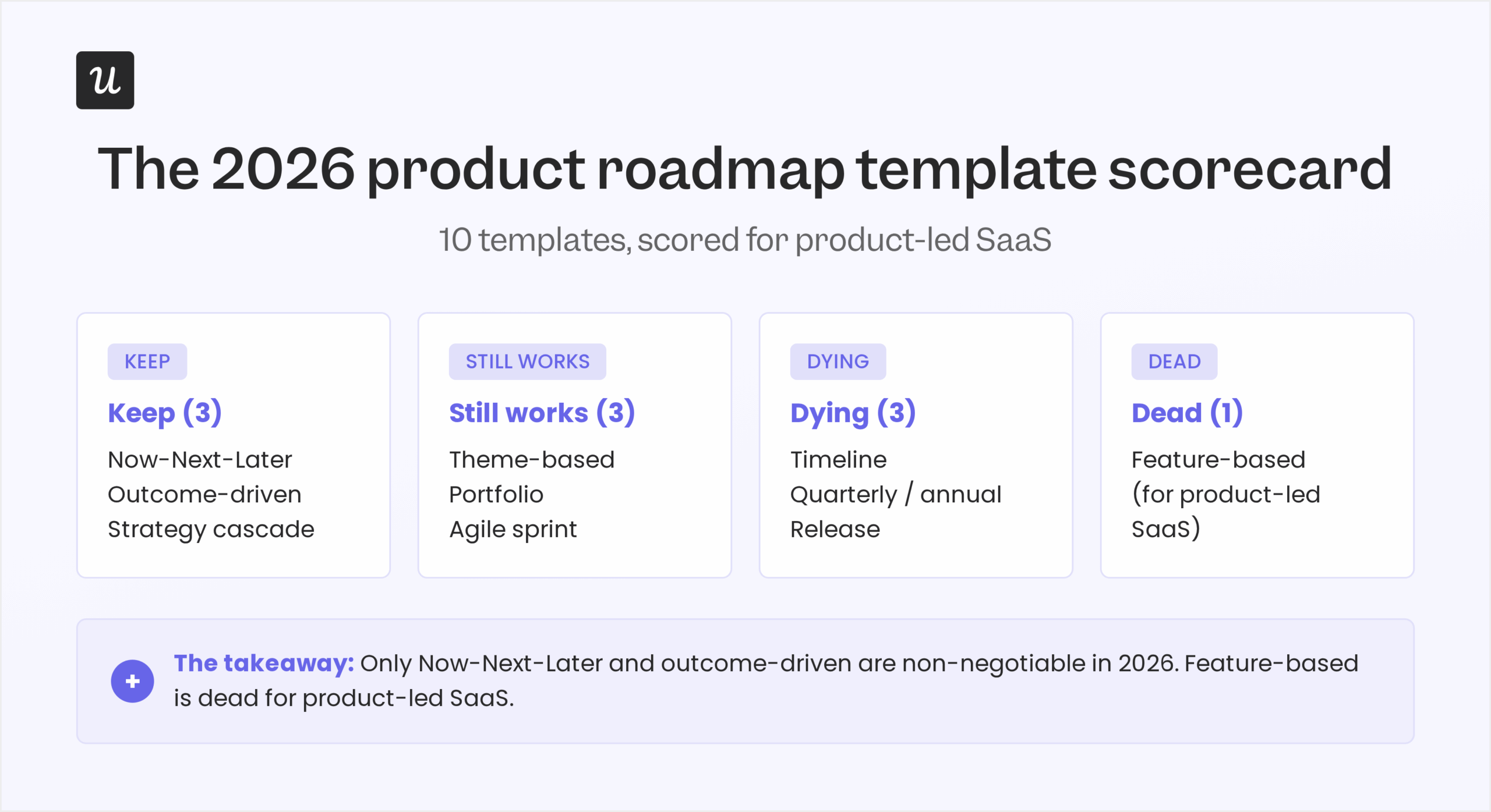
Verdict on all 10 product roadmap templates
- Keep: Now-Next-Later, outcome-driven, product strategy cascade.
- Still works: Theme-based, portfolio, agile sprint.
- Dying: Timeline, quarterly/annual, release.
- Dead: Feature-based (for product-led SaaS).
The two that actually matter in 2026
If you pick only two product roadmap templates to run this year, pick Now-Next-Later and outcome-driven. Janna Bastow invented Now-Next-Later at ProdPad in 2012 because she kept failing on dated timelines. Marty Cagan, founder of the Silicon Valley Product Group, has been pointing out for years that 95% of roadmaps are output, not outcome.
Both critiques sharpen in 2026. Dates fail harder when shipping velocity is 10x what it was, and outputs lie louder when AI agents reach into your product and never click a feature you scoped.
The 2026 roadmap test (three questions)
- Does the roadmap survive a 10x increase in shipping velocity without becoming meaningless? If not, your roadmap is a fiction by April.
- Where does the roadmap plan for agent capabilities, not just human features? If your template can’t answer “what do Lia or an external agent need from us?”, it’s planning for half the user base.
- Can every initiative tie to an outcome a human or agent can measure? If the unit is “ship X by Q3”, you’re back in the feature factory.
What a product roadmap template was for, and what it has to do now
A product roadmap template is a reusable visual framework that captures the product vision, strategic initiatives, timelines, and goals over a defined period. That definition still holds, but the operating context has changed enough that the template has to do double duty in 2026.
Most product roadmap templates capture five core components: features and epics, dependencies, ownership, milestones, and product management metrics or KPIs. Don’t mistake a roadmap for a backlog, project plan, or release plan. Backlogs hold user stories and technical tasks ordered for delivery; project plans break work into specific tasks with owners and timelines; release plans lock in version numbers.
The bigger shift in 2026 is who the roadmap is planning for. A product roadmap template that only plans the next six months of features humans will click on is now planning for half the user base.
The two-stream roadmap
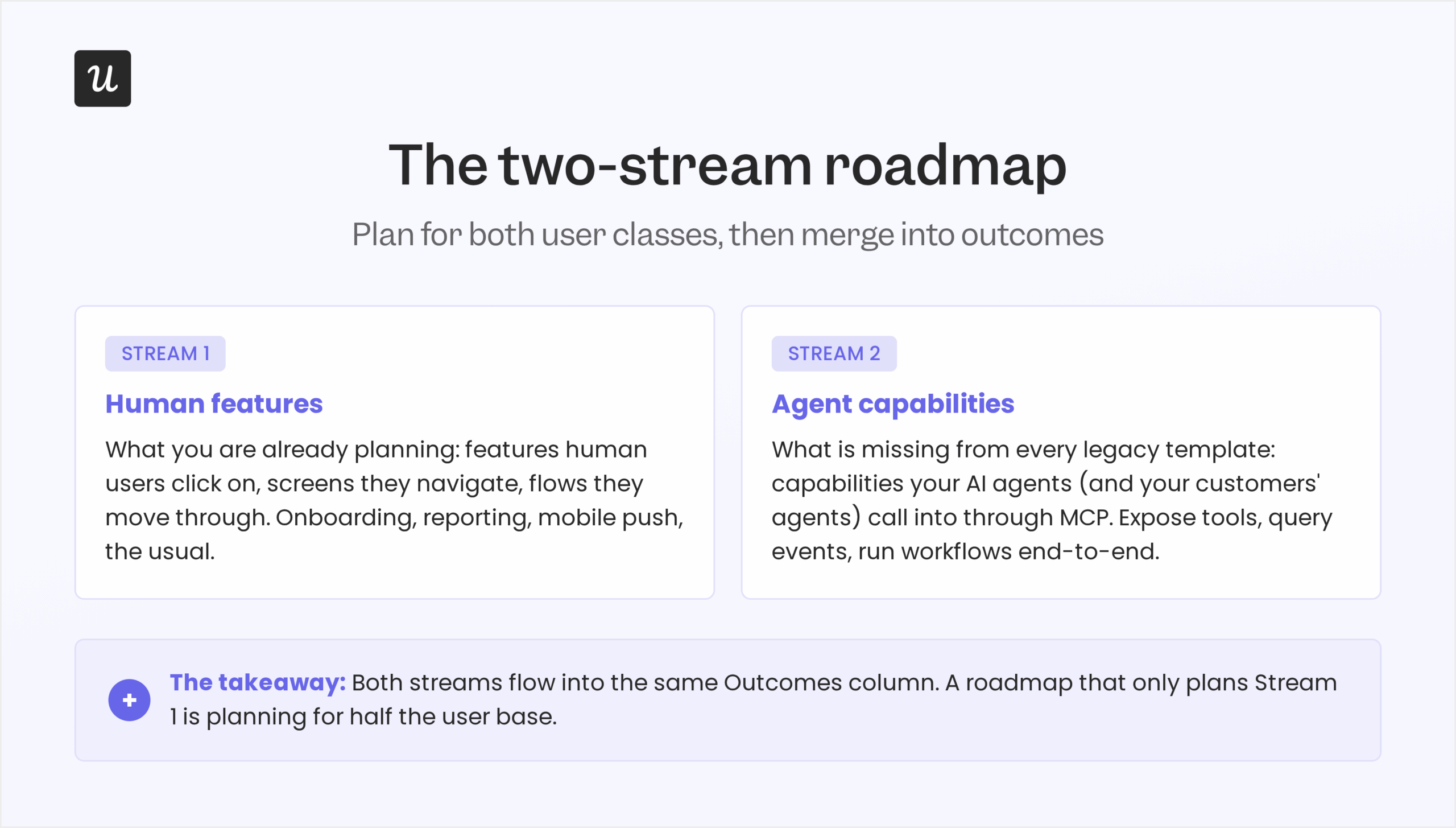
The strongest reframe I can offer for any product roadmap template in 2026 is to draw two parallel streams instead of one. One stream is what you’re already doing: features human users click on, screens they navigate, flows they move through. The other stream is what’s missing from every template in this article’s original version: capabilities your AI agents (and your customers’ agents) call into.
Capabilities is the unit on the agent stream. Things like “expose campaign creation as an MCP tool”, “make X event programmatically queryable”, or “let Lia or an external agent execute a workflow end-to-end without a UI handoff”. These don’t appear on a Gantt or a “Quarter 3 features” column, but they’re now the bottleneck on which kinds of buyers you can sell to.
Yazan Sehwail, our CEO, frames the shift this way:
People don’t wanna do any of this. That’s the truth. What it’s gonna be is that you literally do not need to do anything. It’s gonna look like you just go, you create a project, you tell it what you want, and it should do the rest. You’re no longer operating. The AI is operating. You’re just basically evaluating and monitoring the agent workflow.
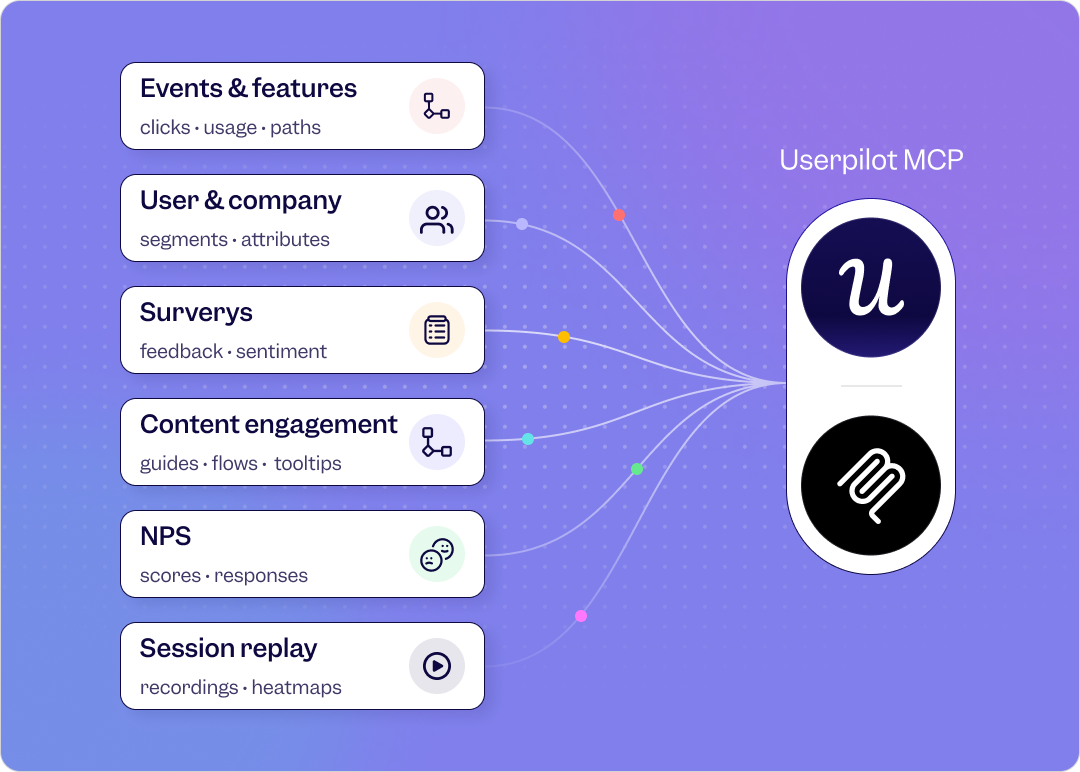
A product roadmap template without a column for the second stream will mis-rank everything on the first stream within twelve months. Our CMO covered the strategic side of this shift in more depth last week.
How product roadmap templates work
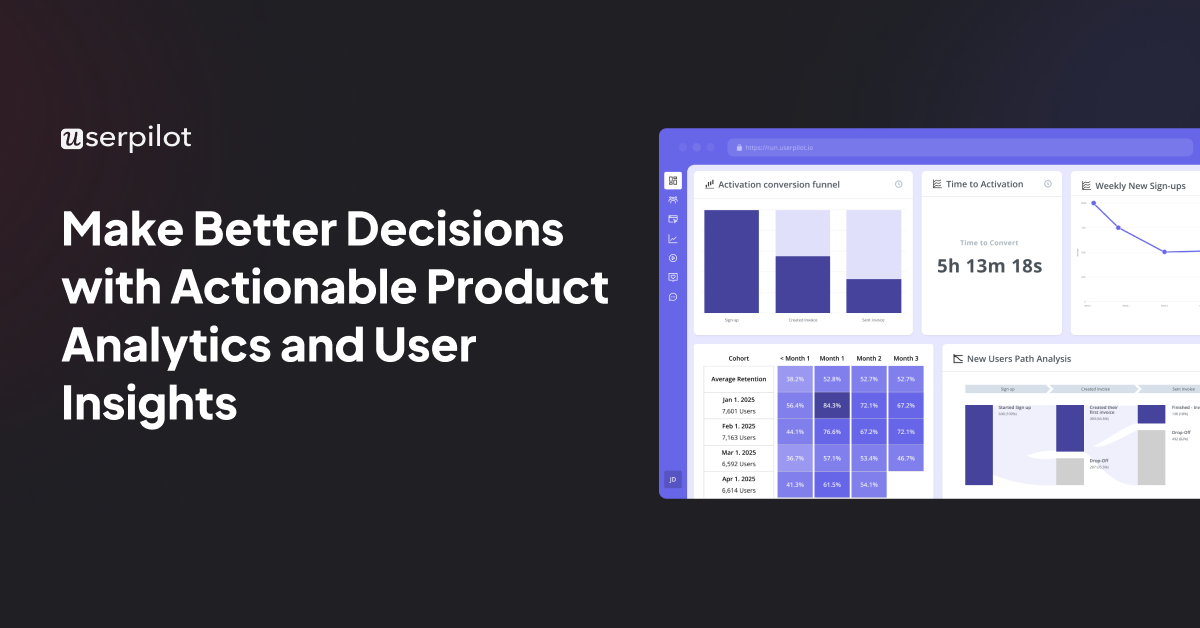
Product roadmap templates work by turning customer input, product usage data, and (now) agent interaction data into ranked priorities. Customer feedback surfaces real user pain points through tickets, interviews, and in-app responses, while product usage metrics show how users interact with your product and where they drop off.
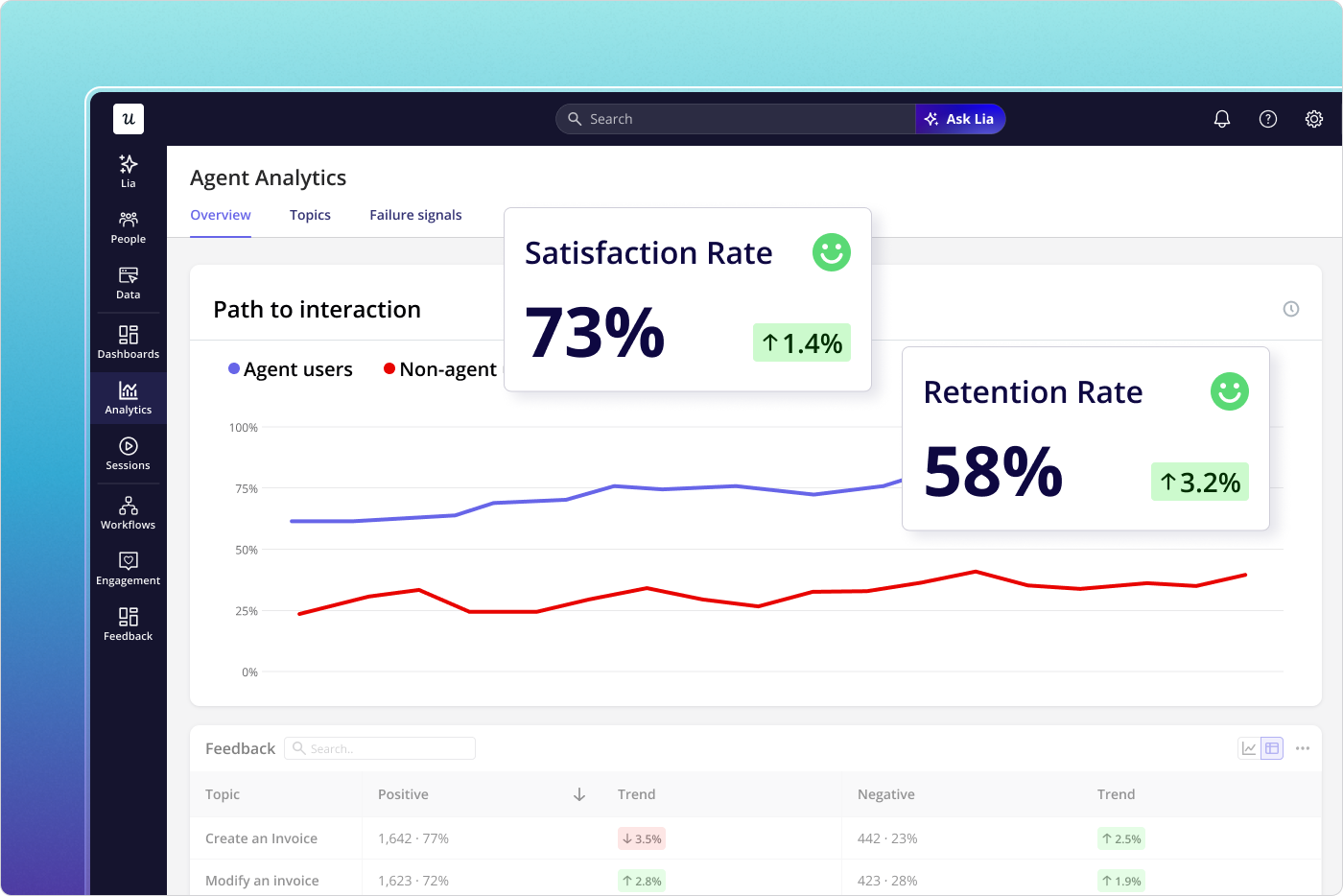
That second clause was the original premise of this section, and it’s the part that broke first. Agent interactions don’t look like user sessions, and most analytics tools weren’t built to see them. Userpilot’s Product Analytics ships both human-side funnels and product-usage dashboards in one view, alongside an AI Agent Analytics view that tracks what agents asked, did, and failed at.
Once inputs are visible, the trade-off layer is unchanged. PMs still use a weighted scoring model with frameworks like a RICE score calculator to rank initiatives by reach, impact, confidence, and effort.
The validation layer is intact too. Fake door testing gauges demand before you scope a feature, which means fewer items on the roadmap that didn’t earn their slot.
Once a feature ships, product usage dashboards tell you whether it’s doing what you scoped it to do, and that signal feeds back into the next roadmap cut.
What changes is the deprioritization rhythm. When teams ship seven features a quarter, the rate at which you cut items from the roadmap has to match, or the roadmap becomes a feature factory with extra steps.
One more validation tool worth keeping: microsurveys reveal intent before users fill out a long-form survey. They sit upstream of the roadmap and tighten what makes it onto the Now column in the first place.
The 10 product roadmap templates, scored
Here are the 10 product roadmaps this post used to recommend, each with a 2026 verdict and what does or doesn’t work about it. The free templates are linked at the bottom of each section, in case the original reason you searched was to grab one.
1. Timeline roadmap (Dying)
Verdict: Dying. Useful for hardware launches and regulatory deadlines, increasingly useless for product-led SaaS where shipping velocity broke the Gantt model.
A timeline roadmap lays initiatives along a time axis as Gantt-style bars with durations and dependencies. The point is visibility into when things will happen, with projects sequenced by priority so everyone sees the same plan.
What broke in 2026: the typical SaaS product roadmap template now spans deliverables that ship in three-week cycles, not three-month bars. Product-led teams shipping seven to nine features a quarter can’t pretend a 12-month Gantt is honest. The template still has a place for compliance, hardware, or contractual launches where the date is the real artifact.
Best for:
- Regulatory launches, hardware releases, and contractual commitments where the date is the deliverable.
- Cross-team projects (engineering, marketing, design, support) that need a shared “when”.
- Other teams who plan their own work off your timeline (procurement, sales enablement, finance).
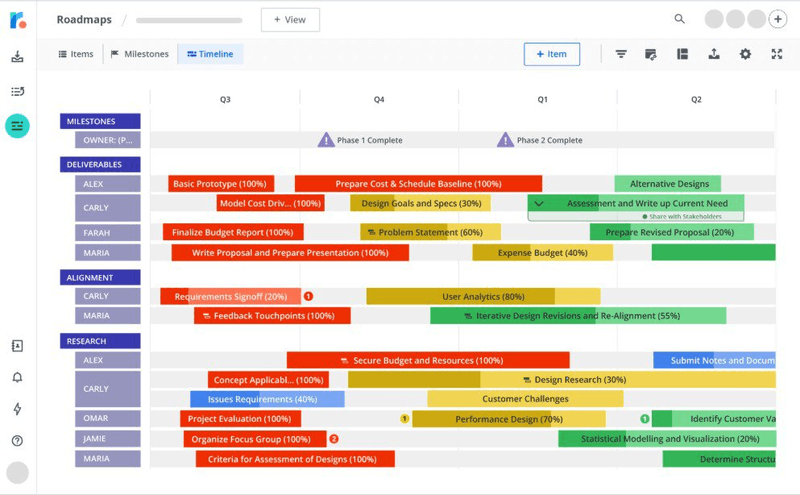
👉 Download: Roadmunk’s timeline roadmap template.
2. Now-Next-Later roadmap (Keep)
Verdict: Keep. Janna Bastow’s 2012 invention gets stronger every year shipping velocity climbs.
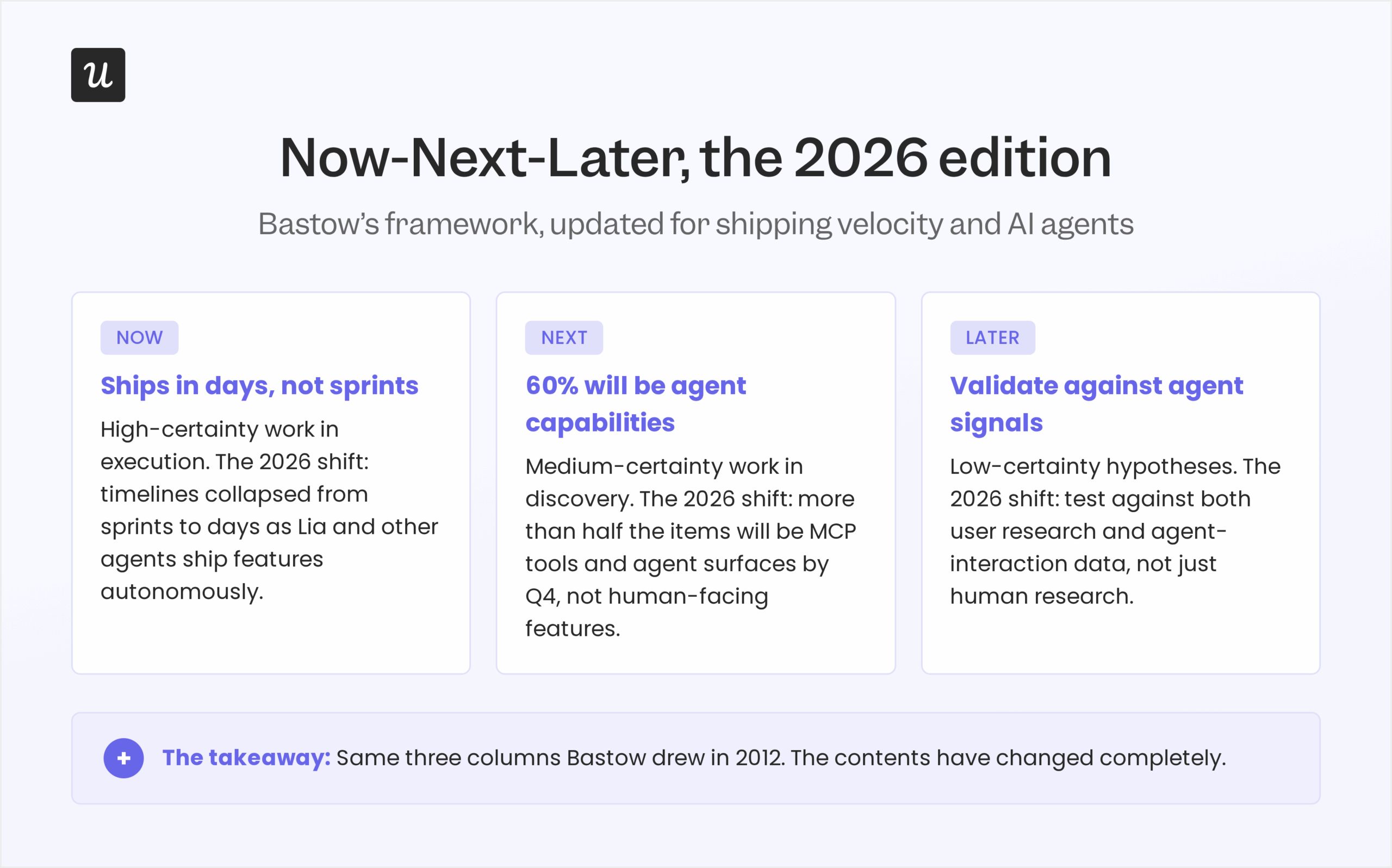
The Now-Next-Later roadmap separates work into three time-shaped buckets without committing to dates:
- Now: High-certainty work currently in execution, with finalized scope and a strong likelihood of near-term delivery.
- Next: Medium-certainty work with a clear problem statement and ongoing product discovery, where the solution stays flexible.
- Later: Low-certainty hypotheses that fit the long-term vision but stay intentionally unscoped.
What changed in 2026: every column has shifted shape. The work in Now ships in days or weeks instead of sprints, the work in Next is increasingly capabilities for AI agents alongside features for humans, and the work in Later is mostly hypotheses you’ll validate against agent-signal data the original framework never planned for.
Bastow built Now-Next-Later because she kept failing on dated timelines and stopped beating herself up about it long enough to question the format. The template treats discovery as the gating constraint, not delivery dates. Regular backlog grooming moves Next items into Now after discovery and drops Later items that no longer fit the strategy.
Best for:
- Product teams shipping faster than any quarterly horizon can honestly describe.
- Communicating progress and direction without committing to dates that will move.
- Mixing validated work and active discovery without losing the distinction.
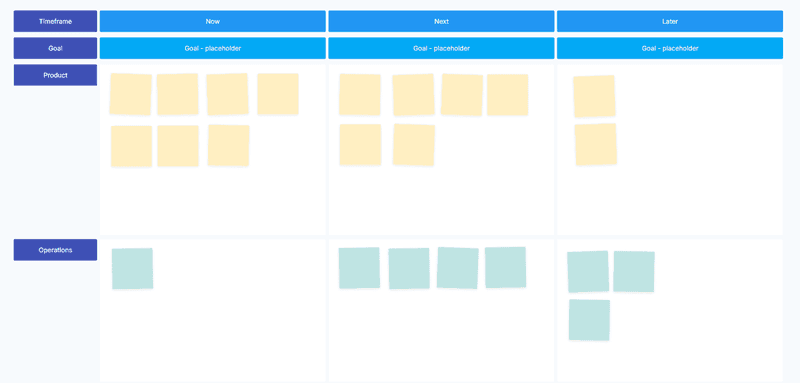
👉 Download: Ludi’s Now-Next-Later roadmap template.
3. Theme-based roadmap (Still works)
Verdict: Still works. The closest thing to an outcome-driven roadmap that most teams will tolerate adopting in one quarter.
A theme-based product roadmap template groups initiatives under strategic themes and desired outcomes instead of individual features. Kanban-style columns show time horizons (Current Focus, Near Term, Future), rows show themes like “onboarding friction” or “enterprise security”, and cards hold the features tied to each theme.
Melissa Perri, author of Escaping the Build Trap, has been arguing for years that good roadmaps are “made up of outcomes, a theme, and hypotheses, while leaving out any unvalidated solutions or features.” Theme-based templates get you 70% of the way to her version without the org change of going fully outcome-driven. The trap to avoid: themes that read like feature categories (Mobile, Reporting, API) aren’t themes, they’re product areas.
Best for:
- Teams who want to track impact by strategic theme, not feature count.
- Agile environments where individual initiatives swap in and out without breaking the plan.
- Teams with baseline metrics they can attach to each theme.
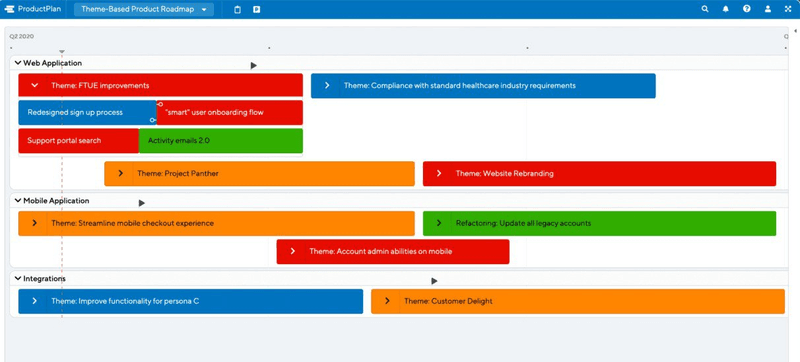
👉 Download: Theme-based roadmap template from ProductPlan.
4. Outcome-driven roadmap (Keep)
Verdict: Keep. The format Marty Cagan would tell you to run by default, and he’s right.
An outcome-driven product roadmap template organizes initiatives around measurable goals and KPIs instead of features or deadlines. Columns are time periods, rows are objectives or themes, and each card tracks projects with their success metrics, including feature adoption metrics and retention numbers that prove whether the work actually moved an outcome.
Cagan has said 95% of roadmaps are output, not outcome. That number gets worse in 2026, because output-based roadmaps look productive when shipping velocity is high even if no outcome moved. A product team tracking adoption of a new in-app onboarding flow can shift the roadmap in real time when users aren’t engaging as expected, instead of waiting for the quarterly review to find out the work didn’t land.
Best for:
- Prioritizing initiatives by impact and value, not feature count.
- Aligning roadmap work with business OKRs and showing measurable progress.
- Teams with defined goals and KPIs where success is actually trackable.
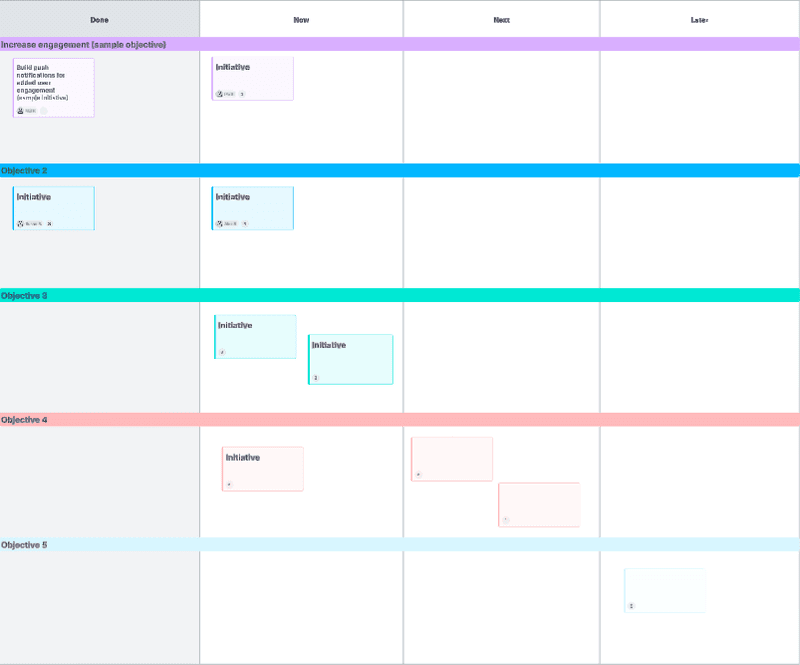
👉 Download: Lucid’s outcome-driven roadmap template.
5. Feature-based roadmap (Dead)
Verdict: Dead for product-led SaaS in 2026. Still alive if you sell to enterprises who buy features by name from your sales deck.
A feature-based product roadmap template focuses on individual product features and their planned release. Features appear as Kanban-style cards organized by delivery sequence and priority, showing what will be built and when.
The thing this template encodes, by design, is the feature factory. Cagan has been writing about this since 2017 and Melissa Perri’s whole book is about it. The 2026 version of the problem: when shipping seven features a quarter looks like progress on the roadmap, you can fill a feature-based template completely and still move zero outcomes.
Best for:
- Enterprise sales motions where the contract lists features by name and renewal depends on shipping them.
- Compliance and hardware launches: the feature list IS the deliverable.
- Almost no other context in 2026, if your product is software and your buyers are users.
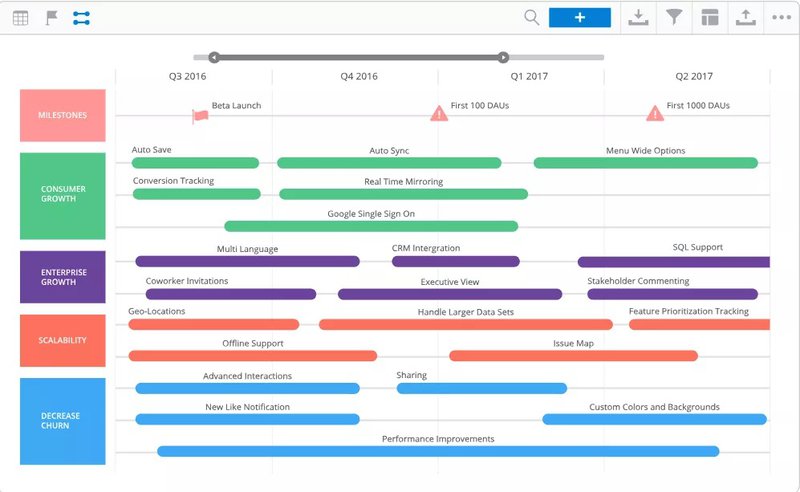
👉 Download: Feature-based product roadmap template from Roadmunk.
6. Portfolio roadmap (Still works)
Verdict: Still works. For orgs running multiple products, the only template that surfaces resource trade-offs across the portfolio.
A portfolio product roadmap template provides a high-level view of multiple products or major initiatives, showing how work across the org is prioritized, sequenced, and aligned to business objectives. The roadmap groups initiatives by product line, strategic theme, or priority, and shows when focus shifts are expected.
This template still works in 2026 because it sits at the right altitude for the strategic product management calls a CPO or CEO makes across products. The failure mode: if the underlying per-product roadmaps are feature-based, the portfolio view inherits that problem. Pair it with outcome-driven roadmaps at the product level.
Best for:
- Coordinating multiple products so resource calls are made on portfolio impact.
- Surfacing concentration risk when too much investment is going into one product line.
- Communicating the org’s strategic shape to the board or the exec team.
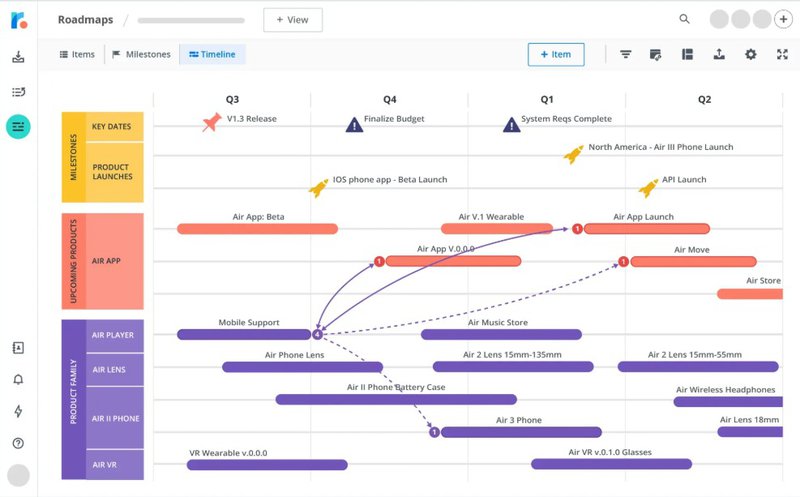
👉 Download: Roadmunk’s portfolio roadmap template.
7. Quarterly or annual roadmap (Dying)
Verdict: Dying. The Q3 milestone is a fiction when most of Q3 will be features Lia builds in May.
A quarterly or annual product roadmap template maps product priorities and initiatives to calendar periods, focusing on themes, goals, and measurable outcomes for each quarter or year rather than individual features. Teams use it to plan milestones, track progress, and adjust priorities based on results from the previous quarter, often informed by customer feedback.
The thing breaking this template in 2026 is shipping velocity. When Yazan watches teams ship seven to nine features a quarter, the unit of planning is the two-week iteration where the agent-built feature gets adoption signal, not the quarter. The annual roadmap version still works as a vision artifact, but the quarterly version is increasingly a stale snapshot a month after publish.
Best for:
- Vision-level annual planning, especially for board or exec audiences.
- Linking product work to OKRs or measurable business targets at the year scale.
- Setting outcomes a year out without committing to the features that will deliver them.
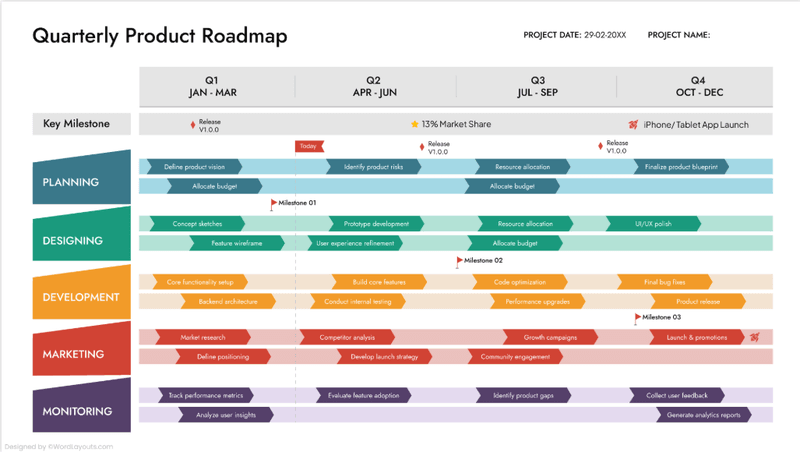
👉 Download: Wordlayouts’ quarterly product roadmap template.
8. Release roadmap (Dying)
Verdict: Dying. Continuous delivery and AI-built features ship daily; the “release cycle” is mostly a comms artifact now.
A release product roadmap template lays out the product updates – features, improvements, and bug fixes — structured around versions or time-bound cycles. It shows deliverables, dependencies, and features, letting teams track progress and coordinate engineering, marketing, and support around launch day.
Here’s the 2026 reality: most product-led SaaS ships continuously, not in versioned releases, and the “release” is the comms wrapper around a feature that’s already been live to 5% of users for two weeks. In places with formal versioning (enterprise on-prem, hardware firmware, mobile App Store cycles), this template still works, but for SaaS PMs running a continuous-deploy product, the release roadmap is mostly a marketing planning tool now.
Best for:
- Teams with formal release cycles or versioning (enterprise on-prem, mobile, hardware).
- Marketing and customer comms coordination for big launches with set dates.
- Engineering and QA when there’s a true cutover, not a feature flag rollout.
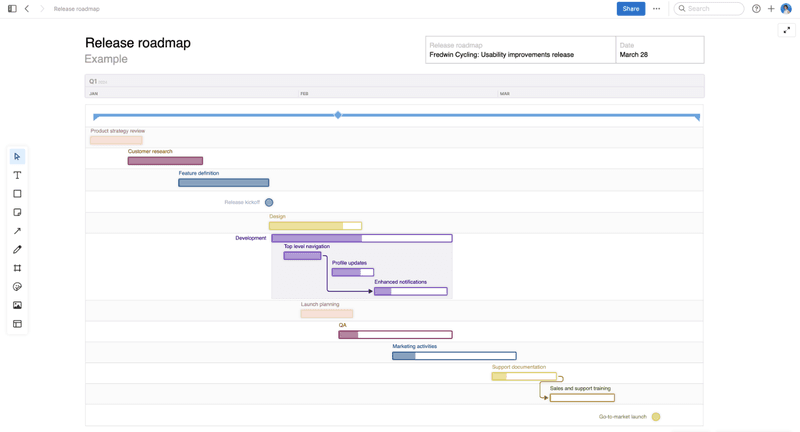
👉 Download: Aha’s release roadmap template.
9. Agile sprint roadmap (Still works)
Verdict: Still works. Sprint mechanics aren’t broken; the failure mode is pairing them with a feature-based template instead of an outcome-driven one.
An agile sprint roadmap breaks high-level initiatives into focused sprint goals, showing priorities, planned deliverables, and dependencies in a visual format. Each sprint shows what’s being delivered, when, and by whom, keeping the roadmap detailed and easy to update as the team iterates.
Sprint cycles of one to four weeks remain the right resolution for execution visibility. The fix in 2026 is to tie each sprint goal to an outcome metric, not a feature checklist. Otherwise the agile sprint roadmap becomes a feature factory at 2-week resolution instead of quarterly resolution.
Best for:
- Product teams working in 1-4 week sprint cycles who need execution visibility.
- Tracking progress and risks across sprints without losing the bigger picture.
- Linking sprint goals to release readiness and strategic outcomes upstream.
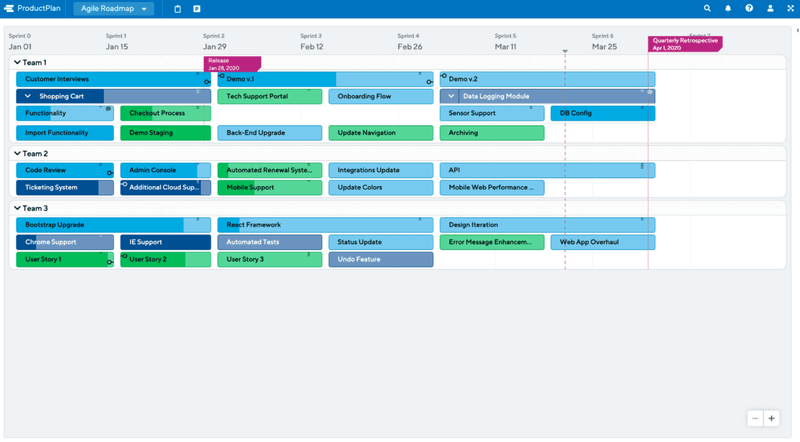
👉 Download: ProductPlan’s agile sprint roadmap template.
10. Product strategy to roadmap cascade (Keep)
Verdict: Keep. A real cascade ties every roadmap initiative back to a measurable outcome and a company-level OKR. The unreal version is a Notion page no one looks at.
A product strategy to roadmap cascade connects high-level company goals to actionable product roadmap items. The cascade flows from company goals to product strategy and themes, then breaks work into initiatives, each tied to a metric so roadmap items read as deliberate bets, not feature requests.
Teresa Torres, a product discovery coach, designed the Opportunity Solution Tree as the discovery side of the same idea: outcome at the top, opportunities below, solutions and experiments below that. A cascade template that doesn’t link to discovery is just a Notion org chart. The version that does link to discovery is the closest thing to a 2026-ready product roadmap template most orgs will ever build.
Best for:
- Orgs with defined business goals or OKRs that should be reflected in product work.
- Product teams handling multiple initiatives and deciding what to build next.
- Tracking progress from strategy to measurable outcome, not just feature delivery.
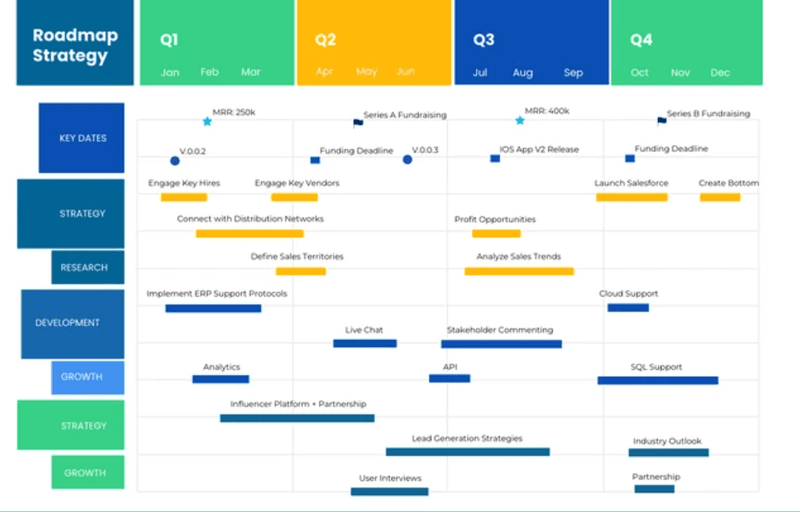
👉 Download: Venngage’s product strategy roadmap template.
The roadmap that ships in hours, not quarters
Here’s the part that broke my mental model of product roadmap templates in the first place. When my team launched our email feature, the funnel showed a sharp drop-off at domain verification, and the obvious answer was to queue an engineering ticket for the next sprint. I built a targeting tooltip and a user onboarding checklist directly inside Userpilot in a few hours; the friction dropped, and the engineering ticket never got opened.
That fix never appeared on any of the 10 product roadmap templates we ran at the time. It was an in-product intervention shipped against a problem the funnel data flagged that morning. The roadmap was still useful for the strategic question of where to invest in onboarding next quarter, but the tactical question of “this specific friction, today” sat under the roadmap, not on it.
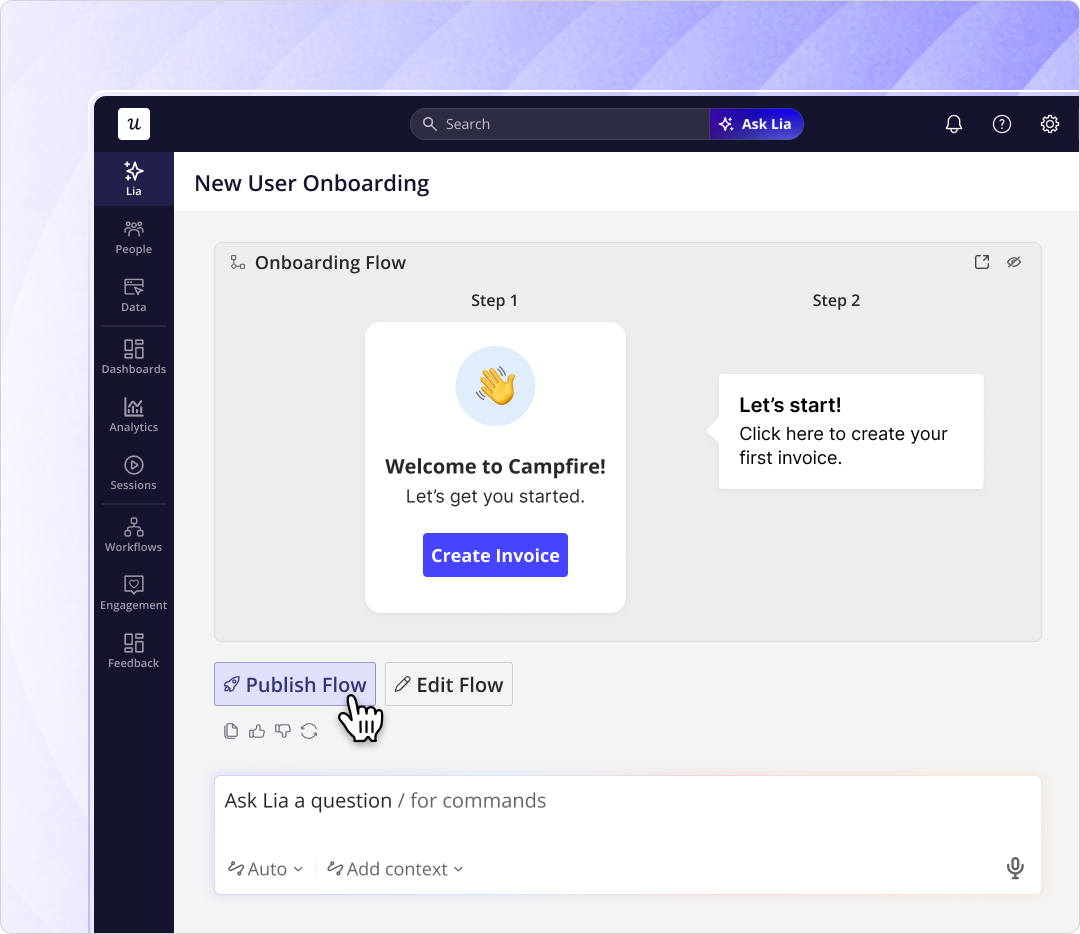
The 2026 update to the same story is that Lia, Userpilot’s AI agent, now builds that kind of fix without me. She watches adoption signals, identifies friction, ships an in-app intervention end-to-end, and surfaces the result for review. The roadmap I have to maintain shrinks every time Lia handles another category of work autonomously, and the work I do shifts from execution to oversight.
I wrote about this shift in more depth in my post on agentic-era product adoption.
For the measurement side, my piece on product feature analysis for human and agent users walks through how to track adoption when half the traffic doesn’t have a cursor.
The 5-question roadmap test for 2026
Here’s the test I run before signing off on any product roadmap template I’ve filled in. Five questions, in order, no skipping.
- Is every item tied to a measurable outcome, not just a feature shipped? If a card reads “Build X by Q3” without an outcome metric next to it, the item fails the prioritization check.
- Do the themes fit on one slide? If the answer is no, you have a backlog with formatting, not a roadmap.
- Are product success metrics defined upfront for every theme? Roadmap items without metrics turn into features that ship and never get measured.
- Is ownership obvious for every item, including agent-capability items? Both streams need a name attached; if “expose campaign-creation as an MCP tool” is on the roadmap but no one owns it, the work doesn’t ship.
- Can a new hire understand the roadmap in five minutes? When the artifact needs heavy explanation, it hasn’t passed the clarity audit.
Yes across all five means the roadmap is doing its job. The catch: it only stays useful if your product experimentation can validate hypotheses fast and continuously, which is what most product roadmap templates were never designed to support.
Validate roadmap bets faster with Userpilot
Userpilot helps product teams validate roadmap decisions by combining product analytics, user segmentation, and in-app experiences in one platform. Teams use it to test initiatives, guide users contextually, and measure engagement with built-in analytics.
Two specific capabilities matter for the two-stream roadmap. Labelled events let you instrument new feature work without engineering tickets, so you can measure roadmap bets on the day they ship.
AI Agent Analytics tracks the second stream: what AI agents asked, did, and failed at when interacting with your product. If you’ve added an agent-capability column to your roadmap, this is the measurement layer that makes the column honest. Pair it with product analytics for the human side and you’ve covered both streams in one tool.
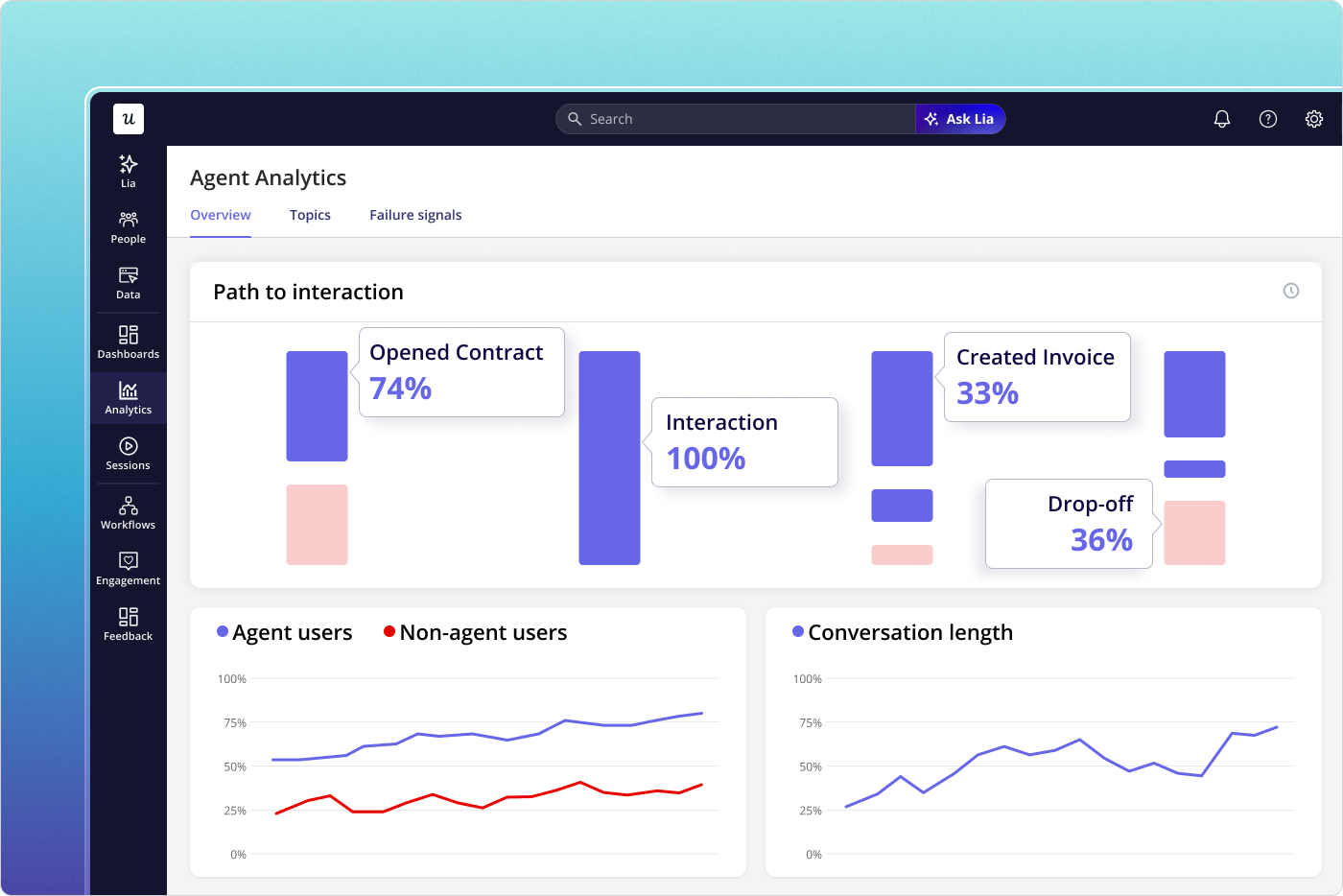
The roadmap sets the direction, and Userpilot helps you measure both streams it covers.
Book your free Userpilot demo.
FAQ
What does a good product roadmap look like in 2026?
A good product roadmap template in 2026 uses outcomes as the unit of planning instead of features, and has a place for agent capabilities alongside human-facing work. The structure (Now-Next-Later, themes, time horizons) matters less than whether every item ties to a measurable outcome and an obvious owner.
How do you create a product roadmap in Excel?
Excel still works for product roadmap templates if Excel is what your org reads. Quick setup:
- Time periods as columns (months or quarters) and themes as rows.
- Group features or initiatives under each theme.
- Use merged cells or shaded ranges across columns to indicate when an initiative runs.
- Apply color coding or swimlanes for priority, ownership, or strategic category.
- Milestone labels for releases without descending into task-level detail.
- A backlog sheet for assumptions and dependencies, kept separate from the roadmap.
For teams working together, Excel’s real-time collaboration reflects roadmap changes immediately, which keeps the team on the same version of reality.
Are feature roadmaps dead in 2026?
For product-led SaaS, feature roadmaps are mostly dead. Cagan’s argument that 95% of roadmaps are output, not outcome, has only sharpened as shipping velocity climbs. For enterprise, hardware, or contractual launches where the feature list IS the deliverable, feature-based templates still work.
How do AI agents change product roadmap templates?
They add a second user class your product roadmap template has to plan for. Features humans click on are one stream; capabilities AI agents call into through MCP are the second. Most templates today only have a column for the first stream, which is the gap this article’s scorecard is mostly about.
About the author