The 10 Best SaaS Automation Tools in 2026: AI Agents and Outcome-Based Pricing

If you’re comparing SaaS automation tools, you’re probably in deep evaluation mode, so I’ll keep the setup brief. Below are the ten best contenders across marketing, sales, support, workflow, accounting, and other categories. Each with current pricing, key features, and review-based pros and cons.
Automation is the part of my job I think about most at Userpilot, and the category has changed enough to reshape how I’d buy across every tool. The change is the shift from rule-based triggers to AI agents that read context and act on their own, with several vendors now billing for work by outcome rather than per seat. I’ll cover that change first, and then walk through the ten tools I’d shortlist with verified pros, cons, and current pricing for each.
What changed in SaaS automation tools
For a decade, a SaaS automation tool meant a rules engine: set a trigger, set an action, and the software runs the same path every time. Most of the workflows in this guide still run that way, and for predictable tasks, I wouldn’t change it.
What’s new is a second layer on top: AI agents that read context, decide what to do, and finish multi-step tasks without me clicking through each step. HubSpot, Salesforce, Zendesk, and Intercom all shipped autonomous agents into their core products over the past year.
The pricing story is what convinced me it’s real. Per-seat pricing as a primary model fell from 21% to 15% among B2B companies over 12 months, while credit-based models grew 126% year over year. Support vendors went further into outcome-based billing, charging per resolved issue instead of per agent.
Our CEO, Yazan Sehwail, frames the bigger change as a move from operating software to supervising it:
“People don’t wanna do any of this. What it’s gonna be is that you literally do not need to do anything. You’re no longer operating. The AI is operating. You’re just basically evaluating and monitoring the agent workflow.”
That’s the lens I now buy with. A SaaS automation tool still has to nail the rules engine, and I also want it to show me what its agents did and whether the outcome was worth the spend. The role of AI in SaaS has moved from a feature bullet into the pricing model itself.
The different types of SaaS automation tools
I built the table below to map each automation type to its purpose and a few example tools, so you can spot the gaps in your own stack.
I use it to align vendor conversations and find the categories where I’m still doing work by hand.
| Type of SaaS automation tool | What it automates | Example tools |
|---|---|---|
| Marketing automation | Email campaigns, lead nurturing, customer segmentation, social posting, A/B testing | HubSpot, ActiveCampaign, Mailchimp |
| Sales automation | Lead scoring, CRM updates, follow-ups, proposals, contract workflows | Salesforce, Apollo, Outreach |
| Customer support automation | Chatbots, ticket routing, FAQs, CSAT tracking, SLA monitoring | Zendesk, Intercom, Freshdesk |
| Onboarding & product adoption | In-app tutorials, tooltips, walkthroughs, NPS surveys | Userpilot, Appcues, WalkMe |
| Workflow automation (general) | Task routing, multi-step workflows across apps (Slack, Google Sheets, Notion) | Zapier, Make, Workato |
| Finance & billing automation | Invoice generation, payment processing, recurring billing, expense tracking | Stripe, QuickBooks, Chargebee |
| Performance monitoring & testing | Load testing, uptime monitoring, alerting, mobile performance metrics | Datadog, Postman, BrowserStack |
| Data & analytics automation | ETL workflows, dashboard updates, report generation | Segment, Fivetran, Looker |
| AI agents / agentic AI | Autonomous ticket resolution, lead qualification, in-product actions, agent usage analytics | HubSpot Breeze AI, Salesforce Agentforce, Intercom Fin AI |
The bottom row is the one that did not exist in this comparison a year ago. Tools like Agentforce and Breeze no longer fit cleanly into “marketing” or “support” because the same agent can qualify a lead, answer a ticket, and update a record in a single run.
Industry analysts now treat fleets of these tools as their own category, sometimes grouped under what Gartner calls SaaS management platforms.
The 10 best SaaS automation tools
Each entry below follows the same shape: who I’d pick it for, the key features, three pros and three cons from verified review aggregator platforms, and a short pricing summary.
I’ve ordered them roughly by category and saved the in-app layer I know best for last.
1. HubSpot for marketing automation
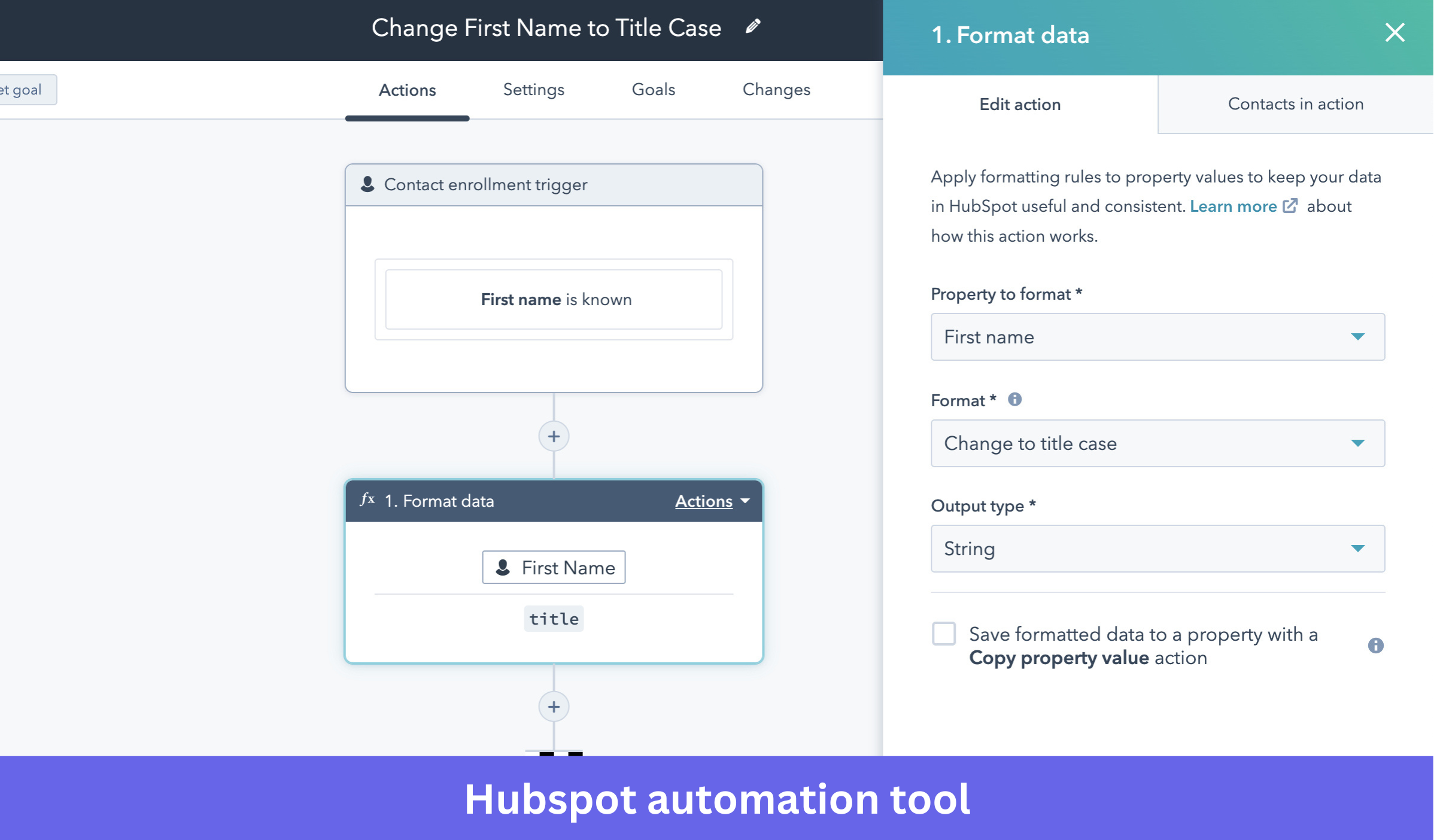
HubSpot is an all-in-one platform that integrates marketing automation, sales, and service into a single customer record. I like that its marketing tools plug straight into the CRM, so campaigns, lead scoring, and reporting share one source of data.
Best for: B2B SaaS teams running inbound-led go-to-market who want marketing, sales, and service in one platform.
Key features:
- Custom if/then workflows for email, list segmentation, property updates, and lead assignment.
- Email marketing automation with a drag-and-drop editor and behavior-based A/B testing.
- Lead scoring and segmentation that route high-intent contacts into tailored nurturing flows.
- Social and ad management synced back to contact records for cleaner ROI tracking.
- Breeze AI suite: Copilot, Customer Agent, Prospecting Agent, and Breeze Intelligence.
- Unified analytics with multi-touch attribution across the funnel.
Pros:
- Keeping CRM, email, landing pages, and analytics in one connected system removes constant tool-switching.
- The free CRM and starter marketing tools are genuinely useful and do not expire.
- Onboarding and customer support are widely described as helpful in getting teams live.
Cons:
- There is a real learning curve before the platform starts to feel easy.
- CRM data hygiene is weak, and duplicate-company handling on import frustrates users.
- Costs climb as contact counts grow, and some expected features sit only in higher tiers.
One change worth flagging: HubSpot moved Customer Agent and Prospecting Agent to outcome-based pricing on April 14, charging $0.50 per resolved conversation and $1 per qualified lead, per MarTech’s reporting. HubSpot says Breeze Customer Agent resolves 65% of conversations for the 8,000 customers using it.
Pricing:
A free Marketing Hub is available, with Starter at $20/seat/month, Professional at $800/month for 3 seats, and Enterprise at $3,600/month for 5 seats. Breeze AI agents require Professional or higher.
2. Salesforce for sales automation
Salesforce, now branded Agentforce Sales, is the cloud CRM that enterprise teams bend to fit almost any process. In my experience, the customization that makes it adaptable is also what earns it a reputation for complexity.
Best for: Enterprise sales teams with dedicated admins and complex pipeline needs.
Key features:
- Lead and opportunity management with filtering and qualification in one place.
- Point-and-click flow builder for approvals, field updates, and record routing.
- Einstein opportunity scoring that predicts which deals are likely to close.
- Real-time pipeline inspection and forecasting.
- Agentforce agents for autonomous prospecting and service actions.
- Configurable live reports and dashboards across the Salesforce ecosystem.
Pros:
- Highly customizable, so it can be shaped to match nearly any business process.
- Centralizes leads, contacts, notes, and communication history in one record.
- A large ecosystem of integrations sits alongside a deep pool of trained admins to hire.
Cons:
- The breadth of features, menus, and settings makes setup and adoption hard for new users.
- Getting full value takes dedicated admin resources and management buy-in.
- Reviewers describe the interface as dated and crowded, with loading delays in larger orgs.
Agentforce is also the clearest example of automation pricing in flux. It now runs three models at once: Flex Credits at $500 per 100,000 credits, a $5/user/month user license, and Agentforce 1 at $550/user/month with bundled credits, which SaaStr argues is the honest response to a market that has not settled on how to buy AI insights yet.
Pricing:
Sales Cloud runs from Starter Suite at $25/user/month, Pro Suite at $100/user/month, Enterprise at $165/user/month, and Unlimited at $330/user/month, up to Agentforce 1 Sales at $550/user/month.
3. Apollo for sales prospecting automation
Apollo is the prospecting and outbound engine I’d hand a self-serve sales team, with the contact database and the sequencing in one tool. It’s my replacement for the LinkedIn-automation point tools that used to fill this slot.
Best for: Startups, SMBs, and self-serve sales teams running email-led outbound.
Key features:
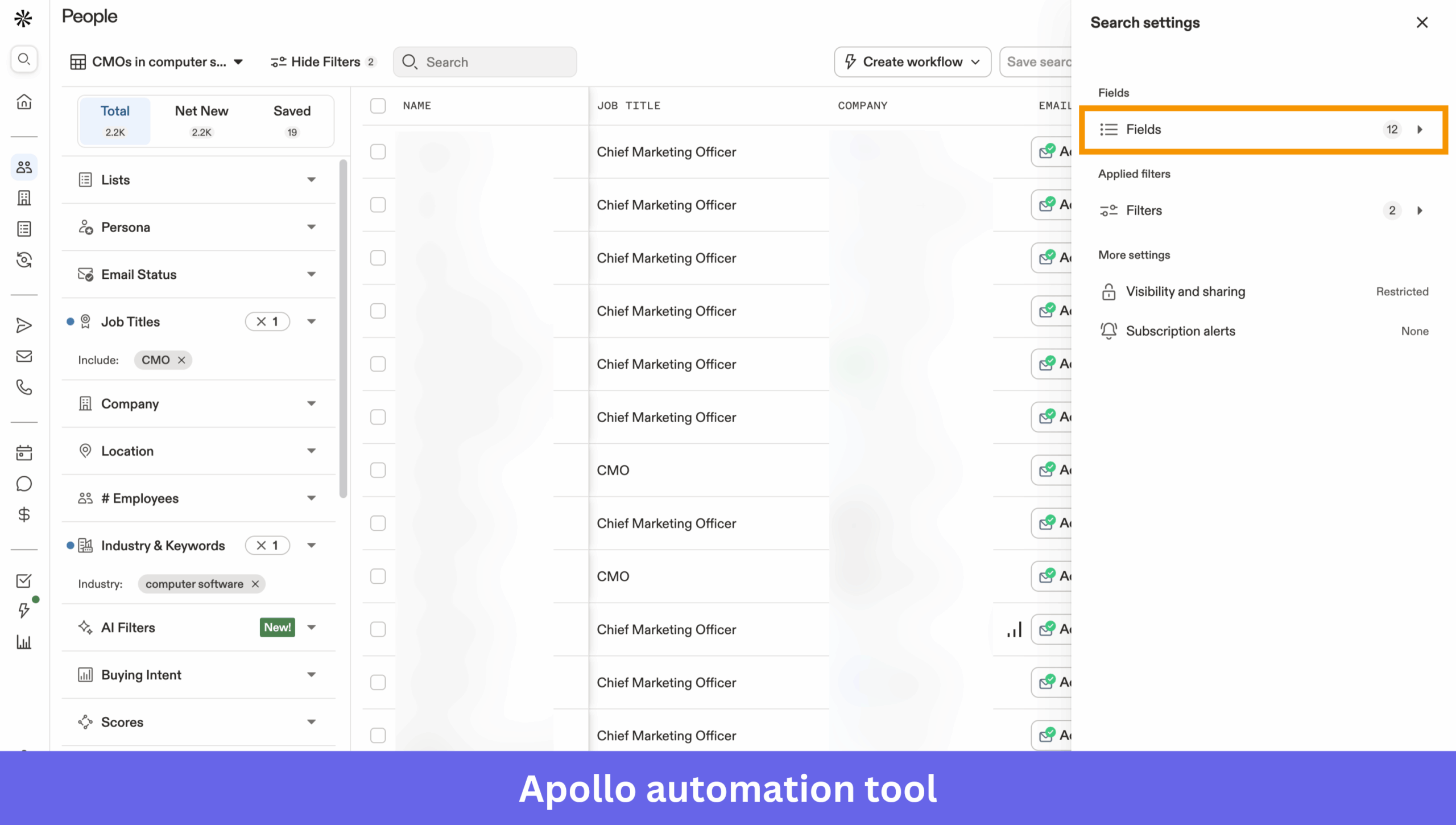
- 275M+ contact database with 65+ search filters for targeted prospecting.
- Built-in email sequences, a phone dialer, and LinkedIn tracking in one tool.
- AI Assistant for writing, AI Research, and AI Lead Scoring.
- Apollo MCP server for AI agent integrations.
- Native integrations with Salesforce, HubSpot, Outreach, and SalesLoft.
- Chrome extension that reveals contacts on LinkedIn and company sites.
Pros:
- The depth of filters lets teams build targeted lists in minutes instead of hours.
- Automated email sequencing with follow-ups keeps outreach consistent.
- Integrations with major CRMs, LinkedIn, and Gmail keep the workflow in one place.
Cons:
- Contact data accuracy varies and drops noticeably outside North America.
- The Chrome extension can glitch, requiring a refresh and re-use of credits.
- Credit-based usage is hard to predict during a high-volume sprint.
Pricing:
A free tier includes 10,000 email credits per month; Basic at $49/user/month; Professional at $79/user/month; Organization at $119/user/month with a 3-seat minimum; and custom Enterprise.
4. Zendesk for customer support automation
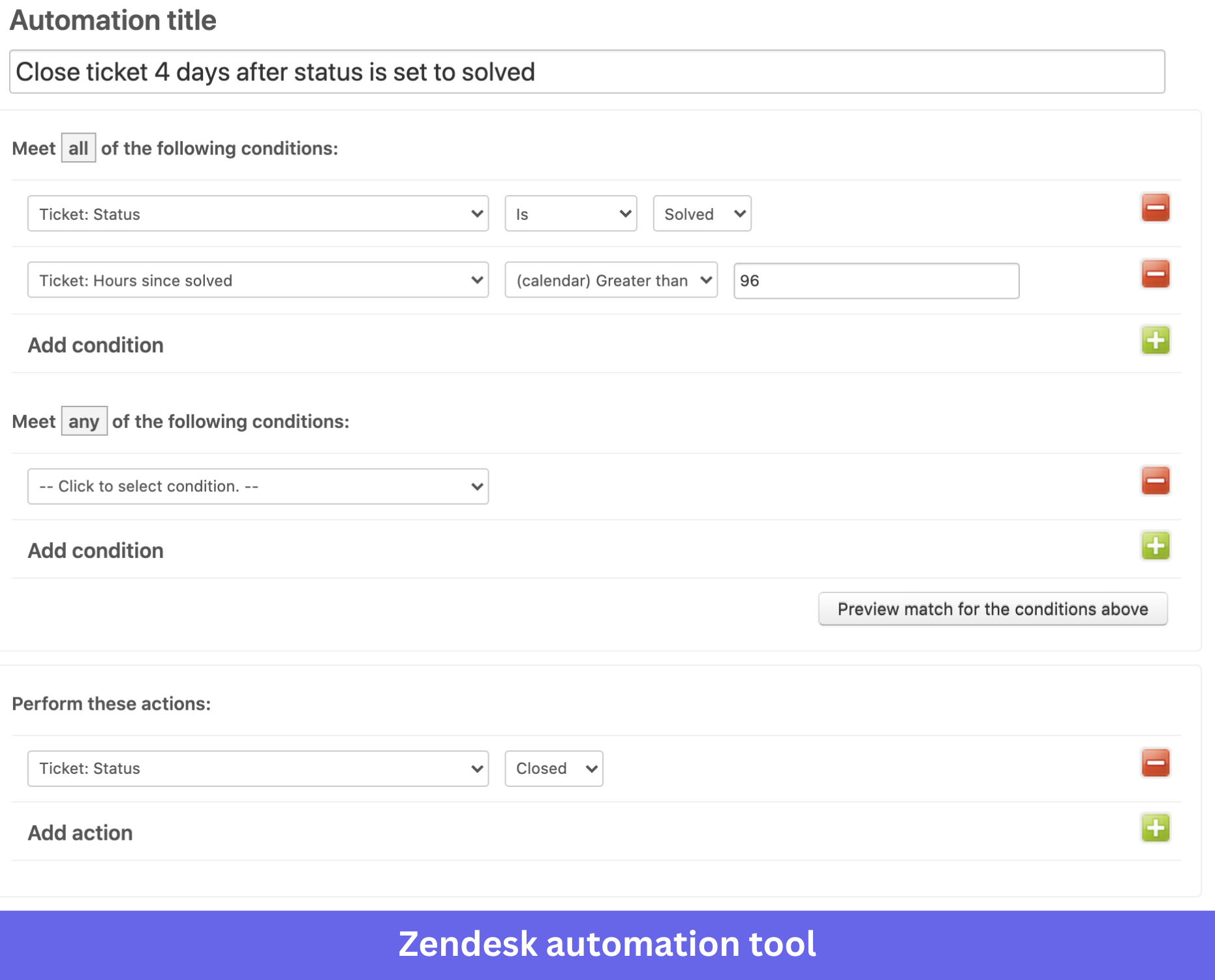
Zendesk is the omnichannel ticketing system most growing support teams land on, and it has rebuilt itself around outcome-priced AI. Its ticketing and automation are the features reviewers single out the most.
Best for: Customer support teams that need omnichannel ticketing and outcome-priced AI automation.
Key features:
- Omnichannel ticketing across email, chat, phone, social, and SMS in one queue.
- If/then triggers that auto-route, prioritize, and escalate tickets.
- AI Agents trained on a help center and conversation history.
- SLA management with real-time dashboards for customer satisfaction targets.
- Macros and canned responses for faster, consistent replies.
- Autonomous Service Workforce and the Zendesk Resolution Platform.
Pros:
- Ticket management is the most consistently praised strength, unifying every channel in one queue.
- Automation and macros cut repetitive work as ticket volume grows.
- Reporting gives clear visibility into response times, resolution trends, and agent performance.
Cons:
- Complex needs require significant configuration and customization time.
- Reviewers report inconsistent customer support and slow response times.
- Some admin permissions and ticket-form customization options feel limited.
Pricing:
At Relate 2026 on May 19, Zendesk launched its Autonomous Service Workforce and moved AI Agents to $1.50 per committed automated resolution, or $2.00 pay-as-you-go, plus a $50/agent/month Advanced AI add-on, as CMSWire reported. The platform is trained on roughly 20 billion ticket interactions and bills only on resolutions it can verify.
Support Team starts at $19/agent/month, then Suite Team at $55/agent/month, Suite Professional at $115/agent/month, and Suite Enterprise at $169/agent/month.
5. Intercom Fin AI for autonomous support resolution
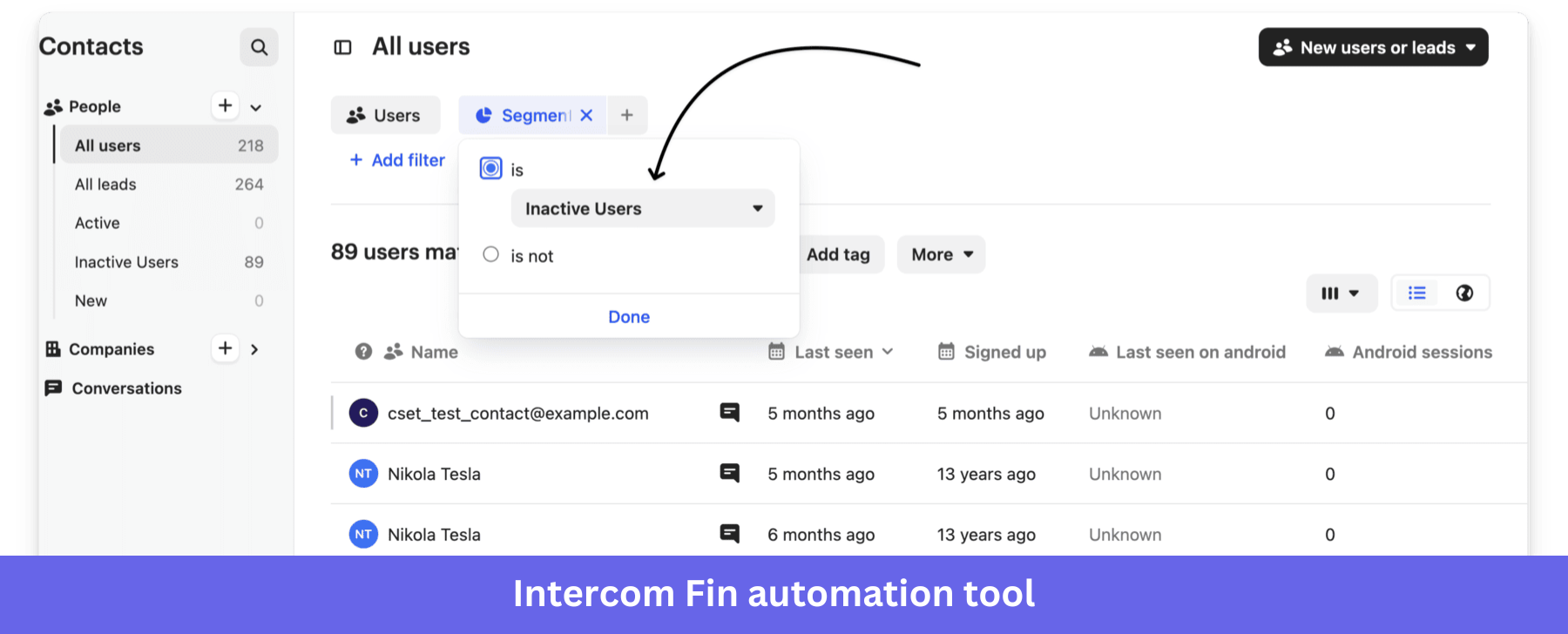
Intercom Fin AI is the clearest example of the outcome model: an agent that resolves tickets on its own and charges only when it succeeds. Review sentiment is strongest among high-volume software and SaaS teams.
Fin also grew from $1M to more than $100M ARR on per-resolution pricing and now resolves over a million issues a week, which is why it keeps getting cited as the proof case for outcome-based billing.
Best for: SaaS teams that want to automate Tier-1 support resolution with outcome-based pricing.
Key features:
- Resolves up to 50% of support tickets autonomously, trained on a help center and conversation history.
- Multilingual support across roughly 45 languages with real-time translation.
- 24/7 coverage without adding headcount.
- Copilot for human agents that drafts replies and surfaces context.
Pros:
- Handles large volumes of repetitive queries fast, with deflection rates many teams cite at 50% or higher.
- Replies read as natural and friendly, which earns positive customer feedback.
- Quick to set up and works alongside an existing helpdesk.
Cons:
- Answer quality depends heavily on a well-maintained knowledge base.
- On edge cases, it can return incomplete or outdated answers that a human has to correct.
- Per-resolution costs are hard to forecast and add up quickly at scale.
Pricing:
The Fin AI plan is $0.99 per resolved conversation and works with existing helpdesks, while Intercom seats run Essential at $39, Advanced at $99, and Expert at $139 per seat per month, with a $35/user/month Copilot add-on.
6. Zapier for workflow automation
Zapier is still the fastest way I know for a small team to connect SaaS tools without code, and it’s adding agents on top of its Zaps. Reviewers point to ease of use and the size of its integration catalog as the main draws.
Best for: SMBs and solo founders connecting SaaS tools without code.
Key features:
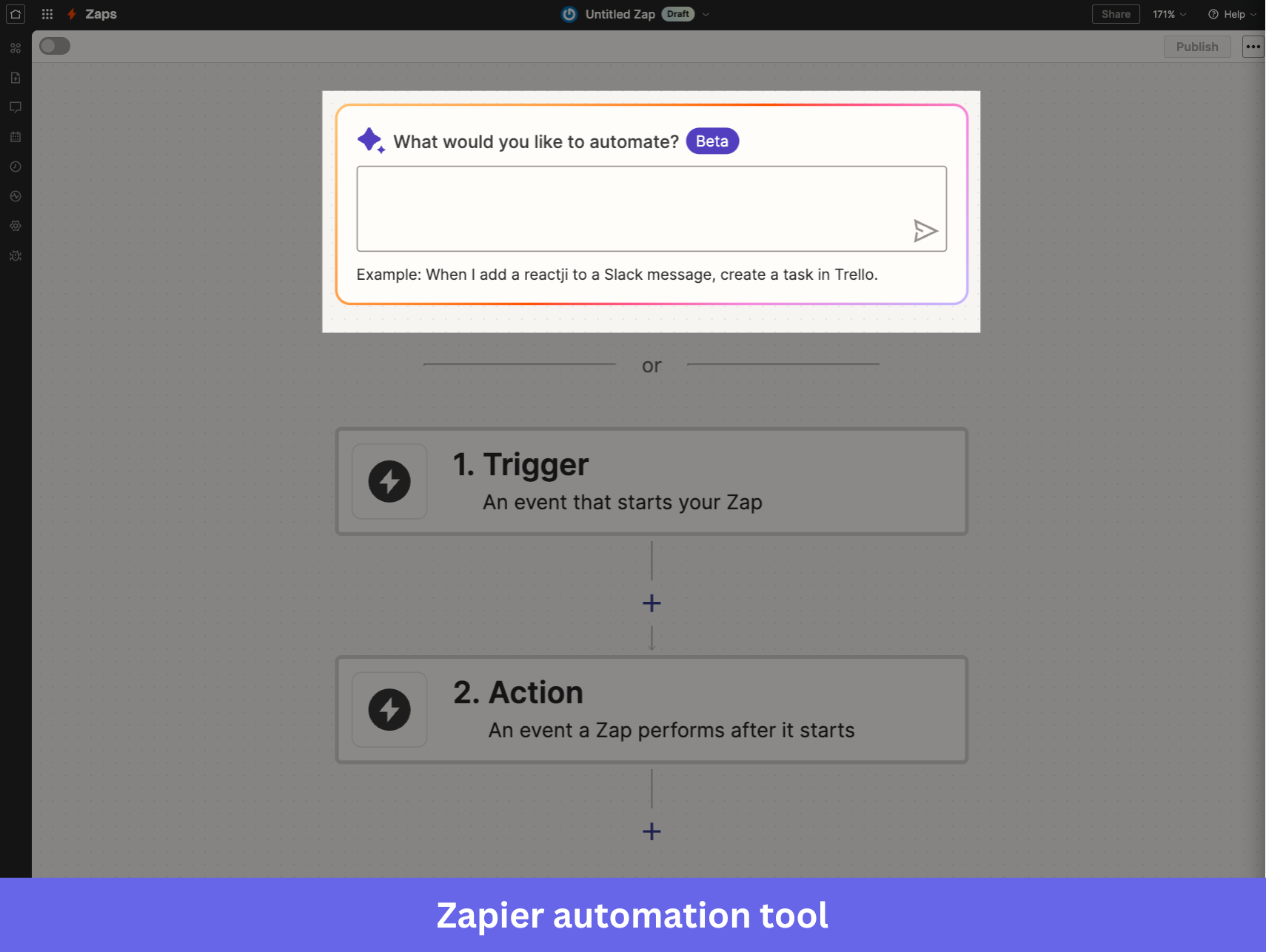
- Multi-step Zaps and Paths for conditional, branching workflows.
- Filters and delays for timed, condition-based runs.
- Zapier Agents, autonomous AI agents that act across connected apps.
- Zapier Copilot, a natural-language Zap builder.
Pros:
- The most beginner-friendly automation builder, usable by technical and non-technical people alike.
- The broadest app-integration catalog in the category.
- Reliable once Zaps are live, with few technical issues reported.
Cons:
- Niche or specialized apps sometimes have thin integration support.
- Advanced multi-step workflows carry a learning curve and can run with delays.
- Task-based billing climbs faster than rival platforms as usage grows.
Pricing:
The free plan covers 100 tasks per month; Professional is $19.99/month billed annually or $29.99/month for 750 tasks; Team is $69/month annually; and Enterprise is custom.
Note: Tables, Forms, Canvas, and Interfaces are now bundled on paid plans, so Zapier is moving from a connector into a light app builder.
7. ClickUp for project management automation
ClickUp combines tasks, docs, dashboards, and AI into a single workspace, which suits cross-functional teams that dislike switching tools. Reviewers value its flexibility, and most also flag a real setup curve.
Best for: Cross-functional teams that want tasks, docs, dashboards, and AI in one workspace.
Key features:
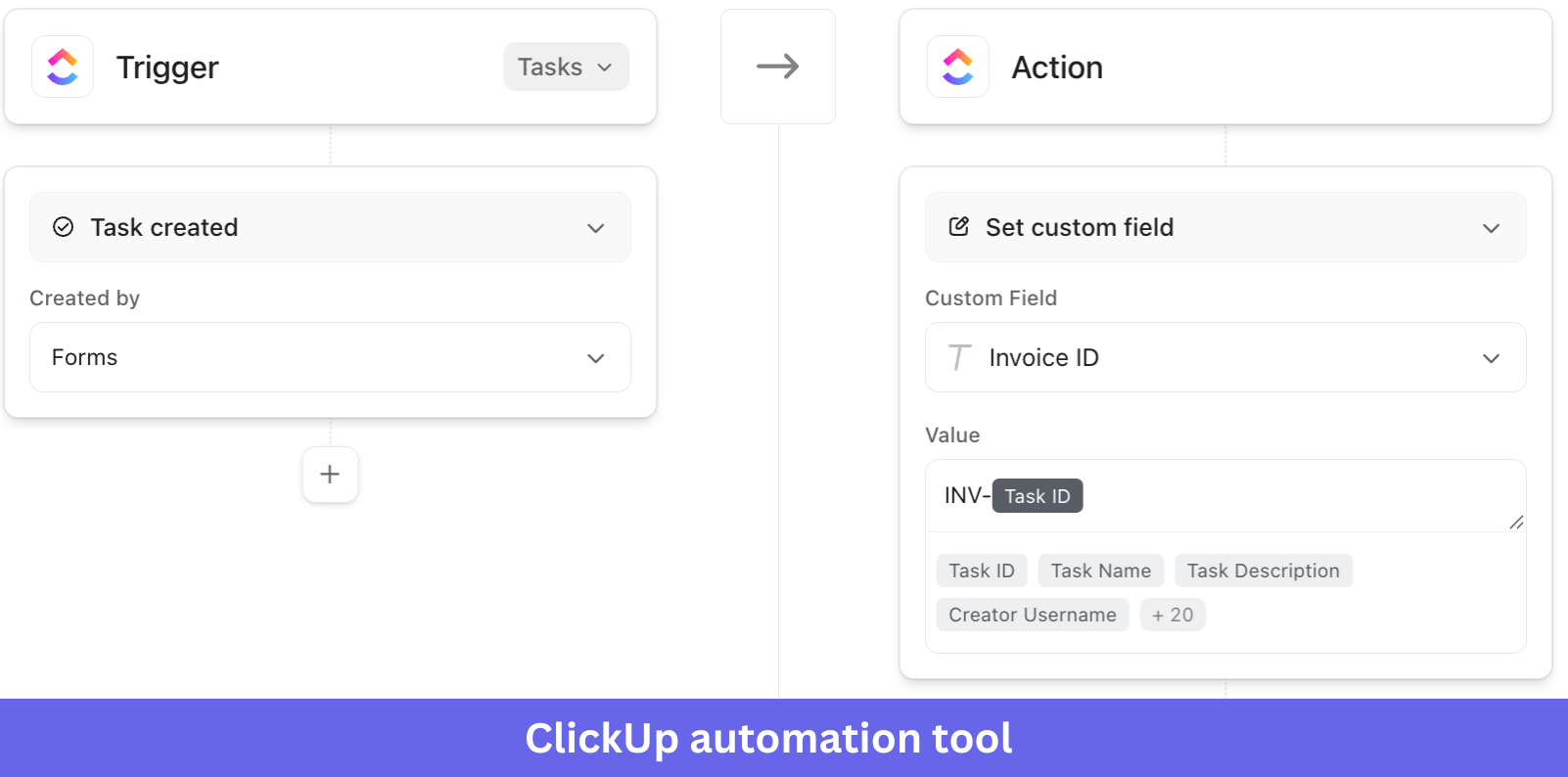
- No-code automations to create tasks, change statuses, assign owners, and notify teammates.
- Granular hierarchy of Spaces, Folders, and Lists for managing parallel workflows.
- Live dashboards and reporting from tasks, custom fields, and goals.
- Super Agents: AI coworkers that show up as real users and can be @mentioned and assigned.
Pros:
- Deep customization and flexibility to fit almost any workflow.
- Strong value per dollar, with tasks, docs, dashboards, time tracking, and goals in one place.
- Customer support is praised across thousands of reviews.
Cons:
- A 2 to 4 week learning curve, and the feature volume can overwhelm new users.
- Performance lags and notifications get noisy in larger workspaces.
- Teams wanting a simple, plug-and-play tool may find it too much to configure.
Pricing:
Free Forever covers the basics; Unlimited is $7/user/month, and Business is $12/user/month, with a custom Enterprise plan. Brain AI is a separate add-on, starting at $9/user/month annually.
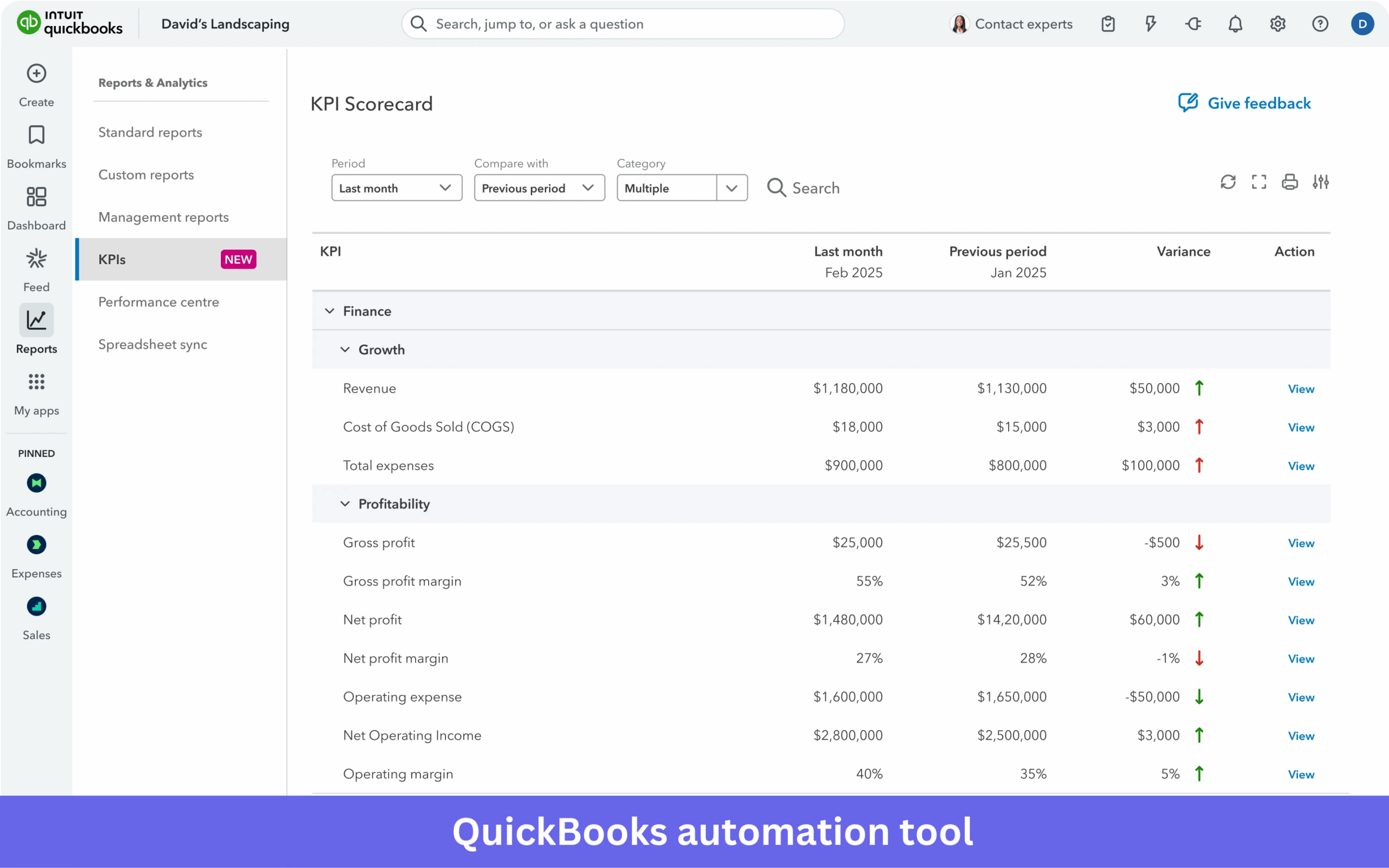
8. QuickBooks for accounting automation
QuickBooks Online is the default for small and mid-sized teams that want invoicing, expenses, and reconciliation handled without an accounting background. Cloud access and time savings are the recurring themes in its reviews.
Best for: Small to mid-sized businesses that need automated invoicing, expense tracking, and reconciliation.
Key features:
- Automated invoicing and recurring billing with follow-ups on late payments.
- Expense capture through receipt photos and bank rules that categorize transactions.
- Bank reconciliation that flags discrepancies before they snowball.
- Built-in financial reports and dashboards for performance reporting.
- Optional payroll for pay runs, tax filings, and direct deposits.
Pros:
- Cloud access from several devices keeps books reachable from anywhere.
- Integrations and the API cut double entry and save time on invoicing and estimates.
- Clear navigation and customizable reports suit a range of company needs.
Cons:
- Performance slows with high data volume during reconciliation or large reports.
- Customer support quality is mixed, with some reviewers reporting slow escalations.
- Sales-tax configuration is fiddly, and report-format changes can force relearning.
Pricing:
Simple Start is $35/month, Essentials is $65/month, Plus is $99/month, and Advanced is $235/month, each with increasing user counts and feature depth.
9. Datadog for performance monitoring
Datadog is the full-stack observability suite that engineering and DevOps teams reach for to catch issues before customers do. Reviewers praise the unified view and flag a steep ramp for new users.
Best for: Engineering and DevOps teams that need full-stack observability across infrastructure, APM, and real user monitoring.
Key features:
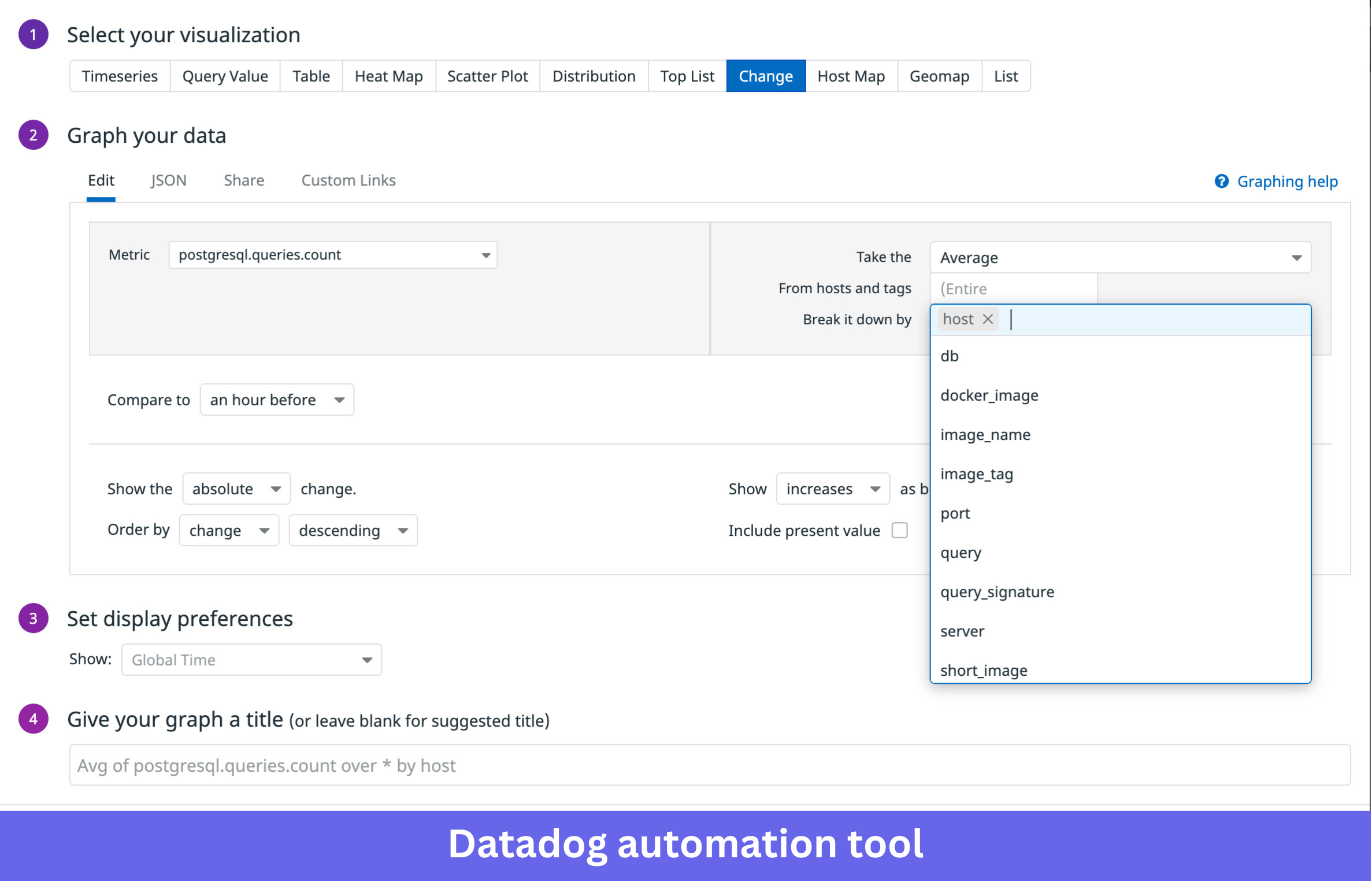
- Real-time dashboards combining infrastructure, APM traces, logs, and real user monitoring.
- Synthetic monitoring that simulates key flows from global locations.
- APM and distributed tracing with flame graphs and latency breakdowns.
- Front-end metrics captured from actual user sessions.
Pros:
- Brings logs, metrics, and traces into one interface, which speeds up troubleshooting.
- Drag-and-drop dashboards and fast cloud integrations get a view running in minutes.
- ML-based anomaly detection and smart alerts catch issues early across the user journey.
Cons:
- A steep learning curve, with a UI that feels cluttered after expansion into many modules.
- Documentation is thorough but scattered, which slows down specific configurations.
- Usage-based costs can grow faster than expected as log and host volume scale.
Pricing:
Infrastructure monitoring starts at $15/host/month, APM at $31/host/month, and synthetic testing at $5 per 10,000 tests. Most teams combine several modules.
10. Userpilot for in-app onboarding and product growth automation
Userpilot automates the layer that the other nine tools don’t touch: what happens inside your product once a user is in. It lets product, UX, and marketing teams ship in-app experiences without writing code.
Best for: Product, UX, and PMM teams automating in-app onboarding, feature adoption, and surveys without code.
Key features:
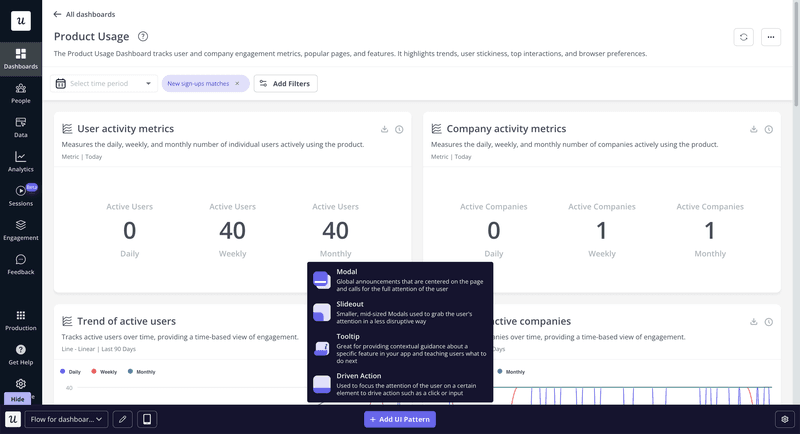
- No-code in-app flows using tooltips, modals, and checklists, targeted by user role and plan.
- Auto-triggered NPS, CES, and microsurveys at the right moments.
- Behavior-based emails, push notifications, and in-app messages for product launches.
- A self-serve resource center for in-app support on demand.
- Event tracking through autocapture, which removes manual tagging.
- Segmentation that stays real-time and consistent across every experience.
Pros:
- Non-technical teams can build flows, surveys, and messages without engineering help.
- Strong segmentation and analytics give clear visibility into feature adoption.
- Responsive, hands-on customer support is the most praised element in reviews.
Cons:
- No fully free plan, so it can feel costly for early-stage startups.
- The flow editor can feel fiddly when designing detailed, complex flows.
- Advanced analytics and custom event setup take time, and mobile support is lighter than web support.
There’s a reason I trust in-app automation over louder channels. When we launch new features, feedback is often split between what a few vocal users say and what most users do. In-app messages help bridge that gap by reaching users at the exact moment they’re interacting with the product.
That’s the gap Userpilot closes for me, turning “someone said” into a measured outcome I can act on. I build the experiences without code, and the in-app messages run on the same real-time segments as my analytics.
Pricing:
Starter begins at $299/month for up to 2,000 monthly active users, with Growth and Enterprise priced custom as usage scales.
How to choose a SaaS automation tool
When I’m choosing, I start with how the work scales instead of the feature list. A workflow that runs the same way every time fits a rules engine like Zapier or a native automation, which stays cheaper and more predictable than an agent.
Work that needs judgment, like resolving a ticket or qualifying a lead, is where I’d look at the agentic tools, and that’s where I read the pricing closely. Per-resolution billing rewards steady volume, though one Zendesk customer reportedly used a year of automated resolutions in a few weeks, so I’d model a worst-case before committing.
My last test is visibility. I’ll only trust an automation tool that acts on its own if it shows me what it did and what it cost, which is the operator-to-monitor shift Yazan described earlier. The tools that make that visible are the ones I can scale without losing oversight.
Conclusion
For me, choosing the right automation tool starts with the user journey. Plenty of these tools automate marketing or sales, while Userpilot automates the in-app experience, like onboarding and feature adoption, that drives retention.
If you want a no-code automation engine for your user journey, book a demo with Userpilot and see how the product becomes a growth asset for human users today and their agents next.
FAQ
What is SaaS automation?
SaaS automation is the process of using cloud-based software to automate repetitive tasks, such as email campaigns, lead scoring, ticket routing, and data sync. Most SaaS automation tools (like ours) include no-code builders, integration capabilities, and detailed analytics.
What are the best saas marketing automation tools?
The best SaaS marketing automation tool depends on your use case. Some of our top picks include:
- Userpilot: Our software is best for in-app marketing automation (build contextual flows with modals, tooltips, and behavior-based emails).
- Mailchimp: For email marketing automation (AI-driven sequences, advanced segmentation, 300+ integrations).
- Customer.io: for omnichannel messaging (email, SMS, Slack, push, in-app triggers).
What is AI automation and SaaS?
AI automation in SaaS is when we integrate technology like machine learning, natural language processing, and predictive analytics into software. This approach helps you automate decision-making, personalize user experiences, and streamline your workflows. For example, you can automatically translate your content into most languages to target users in different regions with our AI-powered localization feature.
About the author