What is a Product Manager? The Honest Guide I Wish I Had


If you look up the definition of a product manager, you will find a lot of vague diagrams and corporate buzzwords. You will hear people call us the “CEO of the product.” I hate that phrase. CEOs have authority. They can hire, fire, and set budgets.
As a product manager, I rarely have direct authority over the people I work with. I cannot order an engineer to build a feature. I cannot force a designer to change a pixel. Instead, I have to influence them. I have to prove that building feature X will solve a real problem for our users and drive business value. My job isn’t to be the boss. My job is to solve user problems.
If you are looking to understand product management, hire for it, or become one, you need to look past the title. You need to look at the messy, complicated, and incredibly rewarding reality of what we actually do.
Loading Product Manager Assessment…
What is a product manager?
You have probably seen the Venn diagram that places product management at the intersection of business, technology, and user experience (UX). It’s a cliché, but it is accurate. I live in that center spot.
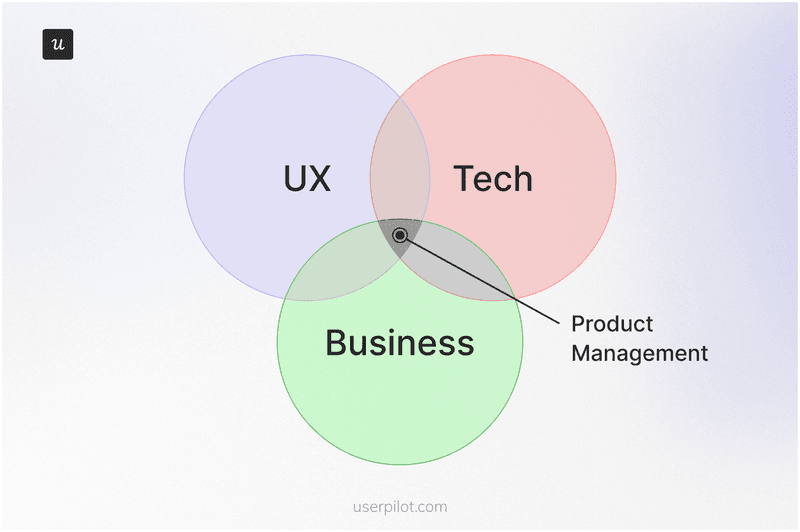
This definition is accurate but incomplete. It describes where we sit, not what we do. A product manager is responsible for a product’s success. Note that I said “success,” not “delivery.” A project manager ensures a feature ships on time. Just as essential, a product manager ensures that the feature actually solves a problem and drives business value.
We are responsible for:
- Identifying customer needs and business objectives that a product or feature will fulfill.
- Articulating what success looks like.
- Rallying a team to turn that vision into a reality.
In my daily work, I focus heavily on product-led growth (PLG). This means I don’t just rely on sales or marketing to grow the business; I build the product so it sells itself through value realization.
Here is how those three circles actually play out in my daily work:
1. The business
I have to make sure the product makes money. This sounds obvious, but it’s easy to get lost in building cool features that nobody pays for.
I constantly check our product success metrics to ensure that what we build drives retention and lowers churn.
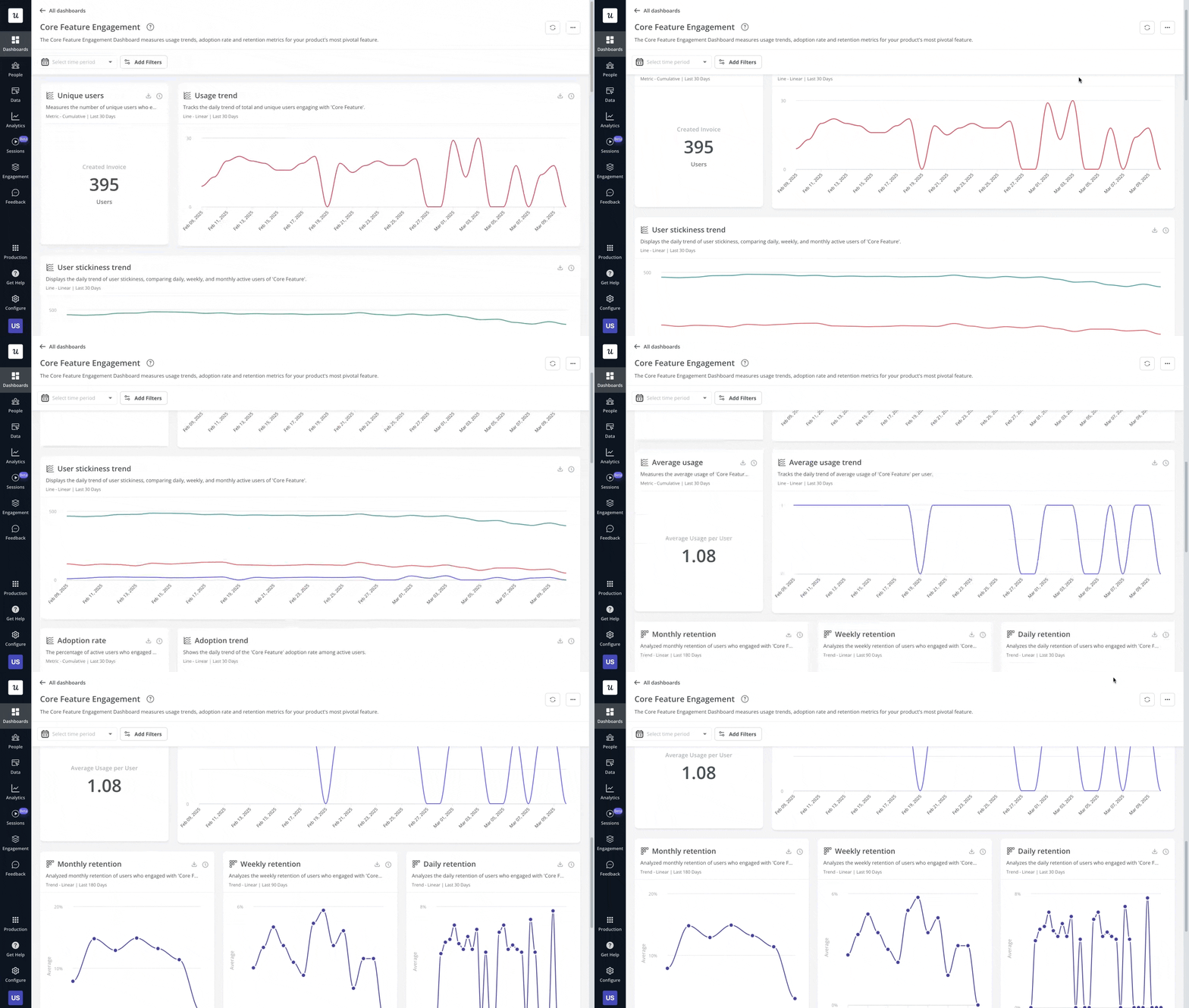
If a feature doesn’t move the needle on the business’s bottom lineor contribute to market success, I have to ask why we are building it.
2. The technology
I’m not a developer. I don’t write code for the production app. But I need to understand how software development works. If I don’t understand the tech stack, I can’t have honest conversations about estimates or trade-offs. I need to know whether a request will take two hours or two weeks.
3. The user experience
This is where my heart is. I advocate for the user. Engineers want clean code. Salespeople want features that close deals. I have to fight for the user’s ability to actually use the product. This means obsessing over UX design and ensuring the flow makes sense.

What does a product manager actually do?
The day-to-day work varies, but it generally falls into three buckets: strategy, discovery, and execution.
1. Product strategy and vision
You cannot build a dozen products at once. Resources are finite. My job is to decide what not to build as much as what to build. This requires a clear product strategy. I have to look at the market trends, industry research reports, our competitors, and our own data.
I have to ask:
- Where do we want to be in a year?
- How does this specific feature help us get there?
- How is this feature helping our users better solve their problems?
If I cannot answer that, we shouldn’t build it. Here’s how I focus on strategy:
- Map the path: Product vision is the destination (e.g., “Become the #1 CRM for small businesses”); product strategy is the map (e.g., “Focus on seamless email integrations first”). Without this alignment, shifting goals sabotages 50% of product teams.
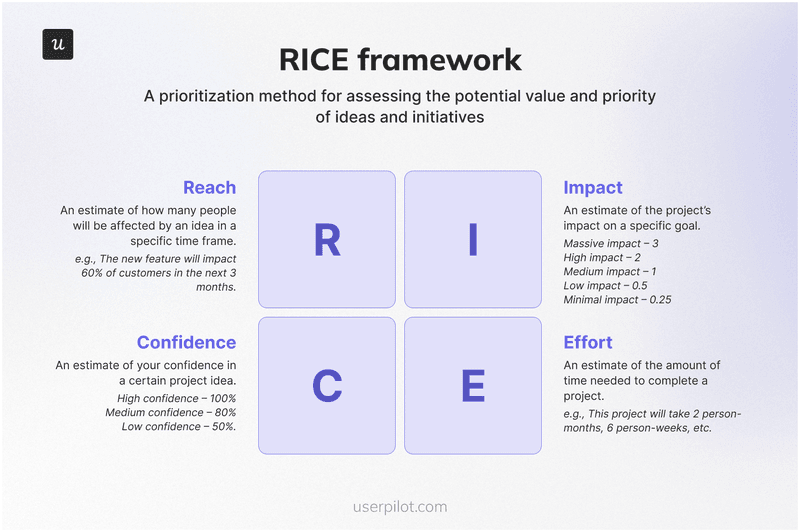
- Defend against bias: I use frameworks like RICE (Reach, Impact, Confidence, Effort) or MoSCoW (Must/Should/Could/Won’t have) to prevent the “loudest voice in the room” (often the CEO or Sales VP) from hijacking the roadmap.
- Avoid the “Build Trap”: Do not build features just to match competitors (feature parity trap). Build features that differentiate you or solve a unique problem for your specific segment.
2. Product discovery
This is the most critical part of the job. You have to talk to users. You have to understand their pain, not just their feature requests.
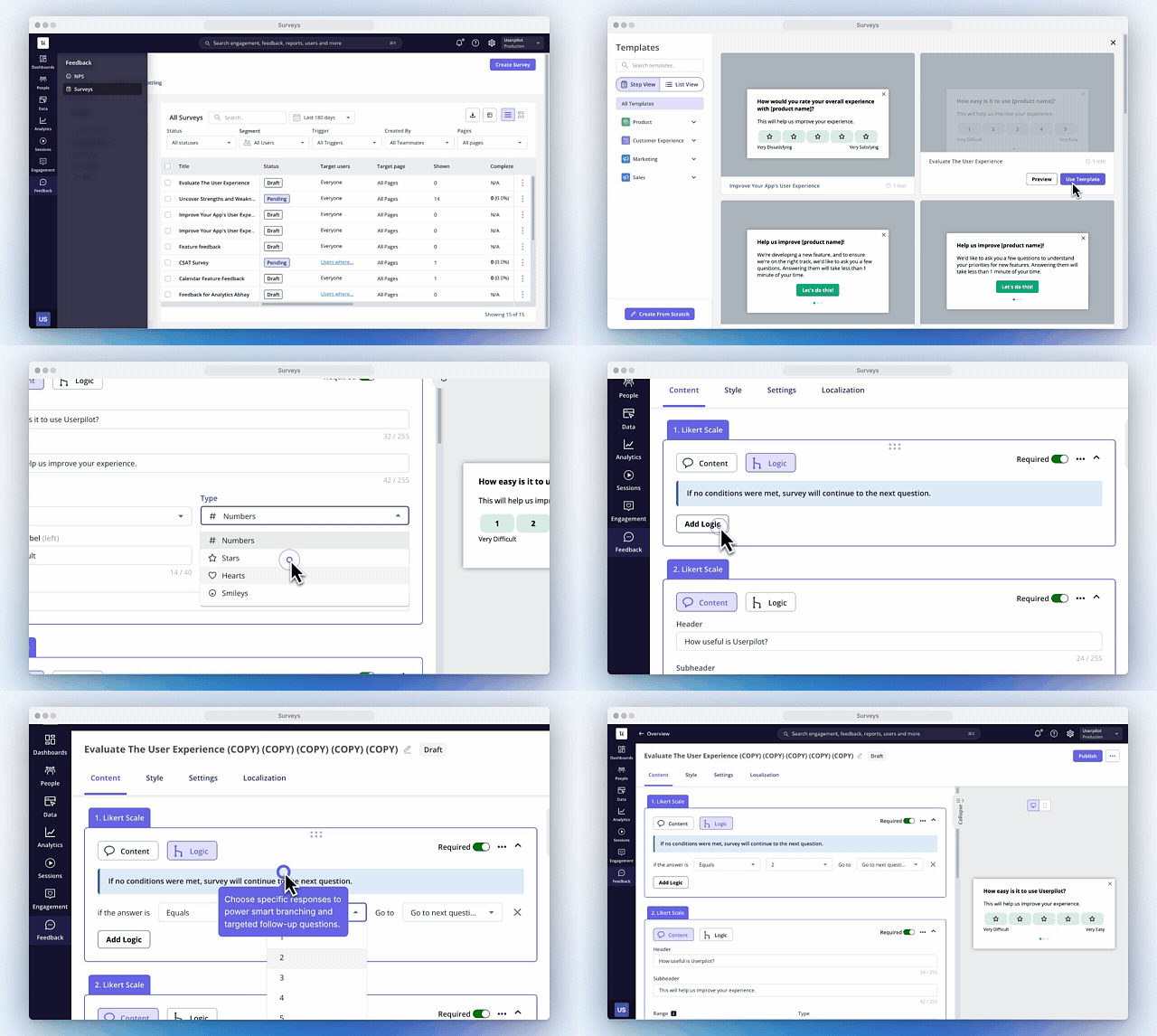
If a user asks for a “dark mode,” I need to know why. Are they working at night? Is it an accessibility issue? Or do they just think it looks cool? The solution changes based on the answer.
I spend a lot of time on customer discovery to get the right “why”. I conduct market research, interview users, read support tickets, and look at feedback to separate signals from noise.
3. Execution and delivery
Once we know what to build, we have to build it right. This involves working closely with designers and engineers. I write requirements, but I don’t dictate solutions. I define the “what” (the problem) and “why” (the business case), and trust engineers with the “how” (the solution).
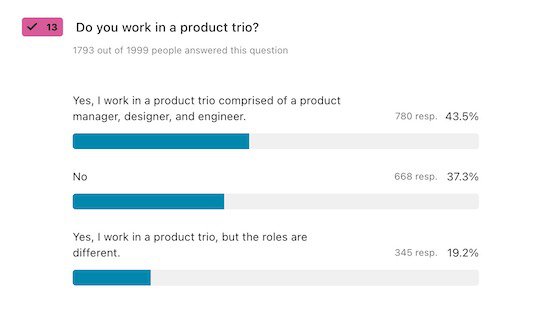
Modern delivery relies on shared context, which is why 62.7% of professionals now operate in “product trios” (PM, Design, Engineering lead) rather than solo command structures. This phase also involves a lot of “unsexy” work.
I manage the backlog, clarify requirements, and perform backlog grooming religiously. A cluttered backlog is a graveyard of good intentions. If an item has been sitting there for six months, delete it. If it’s important, it will come back. A clean backlog keeps the development team focused.
Product manager vs project manager vs product owner
Confusion regarding roles leads to bad hires and workplace friction. A product manager sits at the intersection of business, technology, and user experience. However, they must respect their counterparts’ boundaries. This is the cheat sheet for how PMs differ from the rest:
Product manager vs project manager
A product manager vs. project manager comparison comes down to outcome versus output. A project manager asks: “Will this be done by Friday?” A product manager asks: “Will this solve the user’s problem?”
Project managers focus on logistics (resources, timeline, budget). Their main question is “When will it be done?” and “Are we on schedule?”
Product managers focus on value (solvency, viability, desirability). Our main question is “Should we build this at all?” and “Does this solve the user’s problem?” Both roles are vital, but they are different disciplines.
Product manager vs product owner
This distinction is muddier, often due to agile methodology or the Scrum framework. In many organizations, the product owner is a role within the agile team focused on the backlog and the development team. On the other hand, the product manager faces outward toward the market and customers.
At Userpilot and in many modern tech companies, these roles often merge. You must balance the tactical backlog work with strategic market work.
I act as both. I define the strategy (PM), and I manage the backlog (PO).
Essential product manager skills
You do not need a CS degree to succeed in this field, but you do need a specific set of soft and hard skills, including understanding the technology stack. You must master these four specific operational behaviors to survive and thrive in a high-pressure environment.
1. Prioritizing product features
You will face immense pressure from Sales (“I can close this deal if you build X”), Support (“Users are complaining about Y”), and the C-Suite (“I had a great idea in the shower”). Saying “yes” to everyone creates a Frankenstein product: a collection of disjointed features that serve no one well.
You must master feature prioritization and learn to say “no” using data rather than opinion. Speed is critical: 70% of large enterprises take at least 1-2 months to make key product decisions. You must avoid this sluggishness by having clear criteria.
You need prioritization frameworks like RICE to make objective decisions. Another key trait is to be comfortable disappointing people in the short term to deliver value and meet customer needs in the long term.
2. Data analysis
Avoid vanity metrics (page views, likes, total signups). Focus on actionable product usage metrics like activation rate, feature adoption rate, and retention. 66.9% of professionals say product analytics visibly helped them achieve their goals, validating the efficacy of a data-driven strategy.
A product manager without data is just another person with an opinion.
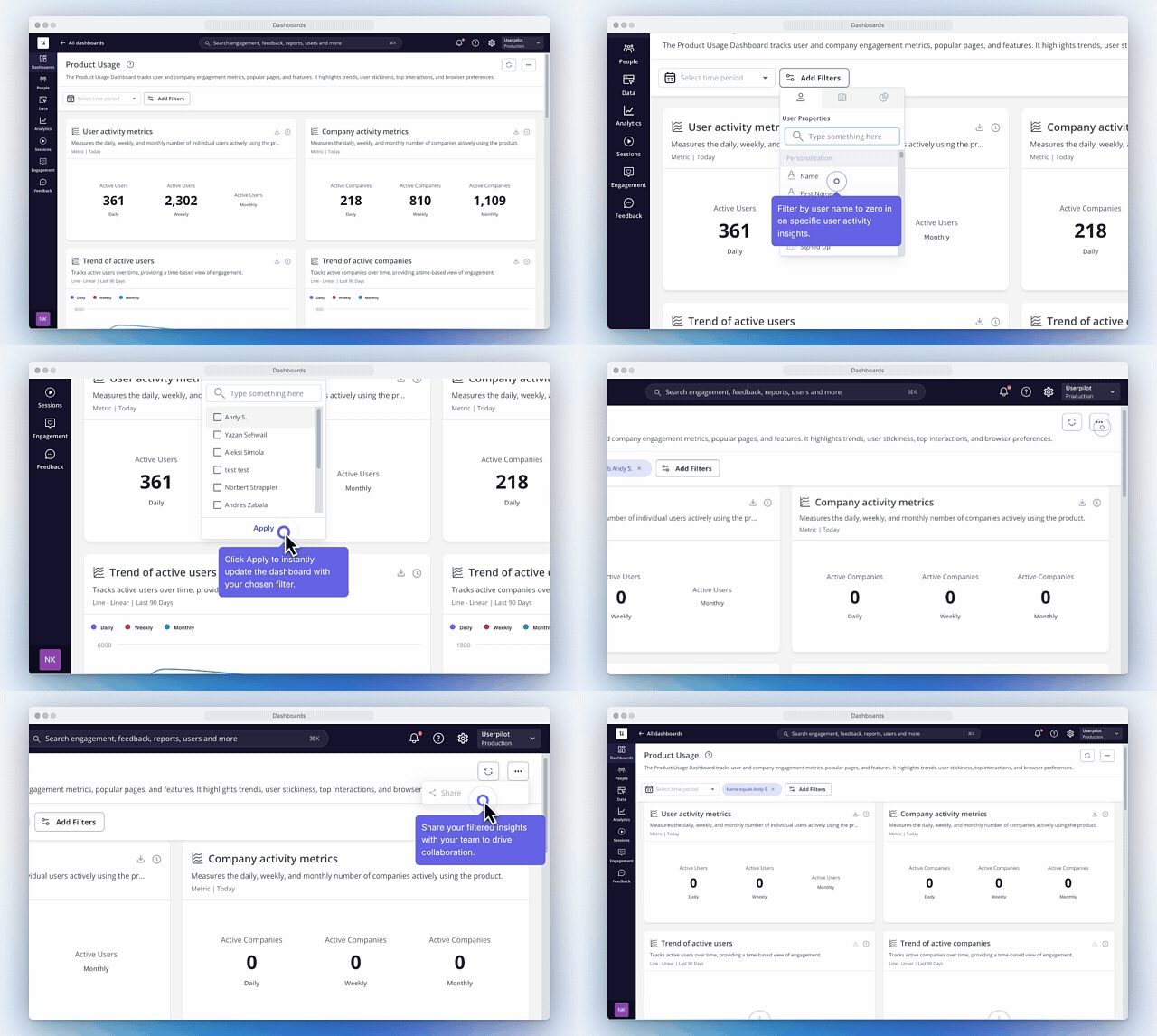
I use product usage dashboards to monitor daily market trends. If logins drop on a Tuesday, I need to know why immediately. I analyze who uses a feature versus who ignores it. If I hypothesize that “Power users need keyboard shortcuts,” I check the data. If power users aren’t using them, my hypothesis was wrong, or the implementation is poor.
Data is useless in aggregate. I look at cohort analysis to see if updates are actually improving retention for newer users compared to older ones.
3. Influence without authority
Nobody reports to you. To mobilize engineers, designers, and marketers, you need storytelling backed by evidence. This “soft skill” is actually the most challenging part of the job. You must gather input, build consensus, and rally a cross-functional team around a shared product vision. Here is how I do it:
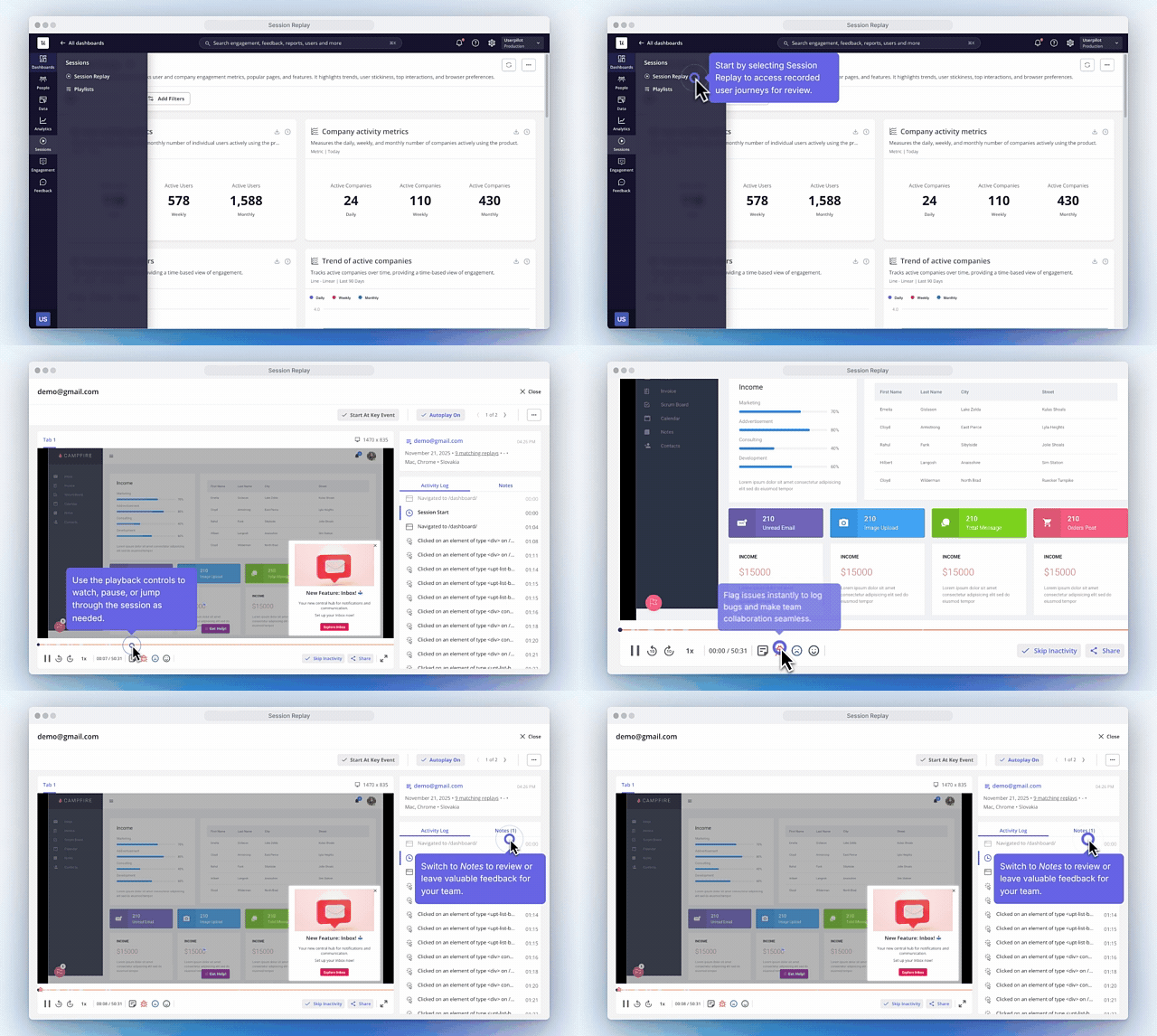
- Use session replays to show the team a user “rage-clicking” on a broken UI: This builds empathy faster than any JIRA ticket description ever could. Seeing a user struggle creates a visceral reaction in engineers to fix it.
- Use the “Why” Narrative: Never assign a task without context. Don’t say “Move the button to the left.” Say, “20% of users are missing the checkout button because it’s below the fold on mobile devices. Moving it up should increase conversions.”
4. Operationalize user empathy
Empathy is a cognitive skill, not a feeling. It is the ability to predict friction. We use user journey maps to exit our “expert mindset” and identify where a beginner will fail. A product manager must constantly advocate for the user when business requirements threaten to degrade the user experience (UX).
Empathy Exercise:
Once a month, sign up for your own product using a personal email. Try to achieve a specific goal (e.g., “Export a report”) without using admin shortcuts or asking developers for help. Note every moment you feel frustrated. That is your roadmap.
The modern product management toolkit
I use specific tools within Userpilot to drive results throughout the user lifecycle. These tools allow a product manager to run experiments and drive adoption without always waiting for engineering cycles.
| Use Case | Feature Used | How I Use It |
|---|---|---|
| Targeting Users | Segments | Group “Power Users,” “New Signups,” or “At-Risk Churners” to eliminate generic messaging. I never send a “Welcome” tour to a user who has logged in 50 times. |
| Contextual Feedback | In-app surveys | Trigger surveys at the exact moment a user engages (or downgrades) rather than sending cold emails. Contextual feedback response rates are significantly higher than email. |
| Driving Adoption | Flows and Checklists | Close the post-launch loop: only 36% of teams conduct post-launch studies. When I launch a new analytics dashboard, I set up a checklist for relevant users: “Try the new Dashboard.” |
| Fixing Leaks | Funnel reports | Isolate exactly where users drop off. If 100 users start the setup wizard and only 10 finish, I know exactly where to focus engineering resources for the next sprint. |
How to become a product manager?
The product manager career path is non-linear. Whether you are in customer success, engineering, or marketing, execute these steps today to start thinking like a PM:
- Document problems, not solutions: When you see an issue, write down the user pain, the frequency, and the business impact. Do not just report “It’s broken.” Frame it as an opportunity for value creation.
- Ask “Why” five times: Before you ask engineering “How” to build something, ask yourself “Why” five times to get to the root cause of the request. This technique uncovers the actual user need hidden behind a feature request.
- Build something: Experience trumps theory. Build a side project, a newsletter, or a simple tool. Manage it. Market it. Get users. Fail. The scars you get from shipping your own product are the best certification you can get.
You will face impostor syndrome. You will face prioritization crises where every choice feels like a bad one. But when you navigate the storm and ship something that saves a user hours of work or solves a critical business problem, it justifies the struggle.
Your challenge: Open an app you use daily. Ignore how it works. Determine why it was built that way. What metric are they trying to improve with that specific button placement? Answering that question is the first step to becoming a true navigator and a successful product manager.
From understanding to ownership: Your next move
In many businesses, only a product manager is held accountable for the ‘why’ behind the build. It is about taking responsibility for the value you deliver to the world. If you are ready to deal with ambiguity, love solving puzzles, and care deeply about the people on the other side of the screen, you could make a great PM.
Start by looking at your current product. What is one thing you would change? Why? How would you measure if it worked? Answer that, and you are already doing the job.
Userpilot provides features like product analytics, user segmentation, and A/B testing to drive product adoption without burning engineering cycles. Book a demo to explore the same toolkit I use daily to prioritize features, track adoption, and fix drop-off points.
FAQ
What does a product manager do?
A product manager defines what to build, why to build it, and measures whether it solved the problem. We work at the intersection of business, technology, and user experience to inform strategic product decisions. Product managers spend their days bridging these gaps.
Primary responsibilities include:
- Setting product strategy
- Prioritizing product features
- Conducting user research
- Working with engineering teams during the development process
- Analyzing data to measure success
Is product manager a high-paying job?
Yes, product management offers competitive salaries. Entry-level product managers have a median salary of $123,967 annually, while senior product managers at tech companies earn $150,000-$240,000, including equity.
Compensation varies based on company size, location, industry, and experience. Directors and VPs of Product at major tech companies can earn $280,000-$490,000.
Is PM hard to get into?
Yes, product management is challenging to break into because most roles require 2-5 years of relevant experience, creating an experience paradox. Few companies hire entry-level PMs.
Common entry paths include internal transfers from customer success or engineering, Associate PM programs at large tech companies, building your own product as a side project, or leveraging domain expertise in a specific industry.
What are top 3 skills for a product manager?
The top 3 skills are:
- Prioritization: Deciding what not to build using data-driven frameworks to balance competing demands from stakeholders.
- Data analysis: Using market data metrics like activation rate and retention to validate decisions and measure impact.
- Influence without authority: Rallying cross-functional teams around a shared vision through storytelling and evidence.
About the author