Upselling Examples in SaaS That Actually Drive Expansion in 2026

Upselling examples in SaaS always revolve around encouraging customers to upgrade their plan, adding more seats, increasing capacity, etc. For seat-based businesses, for instance, every new hire in the customer’s team is a potential new seat where expansion revenue could increase.
However, the old model may become obsolete soon. According to Kyle Poyar’s 2026 State of B2B Monetization survey of 230+ B2B software companies, three in four changed their SaaS pricing models or packaging in the last year, and the direction is consistently toward usage, credits, and outcomes. In a usage-based model, revenue doesn’t grow as much with exact number of customers as it does with infrastructure. And thus, the framing of upgrade prompts matters more than it ever did before.
In fact, the number one monetization complaint across those 230+ companies was: not enough expansion revenue. Median net revenue retention across private B2B SaaS has compressed from roughly 105% in 2021 to about 101% in 2024, per Benchmarkit and Maxio data.
So for this piece, besides just going through multiple upselling examples I like, I’ll also cover the principles of good upselling methods that hold up in 2026.
What actually matters in an upselling strategy
Upselling in SaaS is the motion of growing revenue from customers you already have: encouraging them to upgrade their plan, add seats, increase usage capacity, or unlock capabilities they weren’t yet paying for. It targets customers who already derive value from your product, and when done well, it gives users a natural reason to spend more on your product.
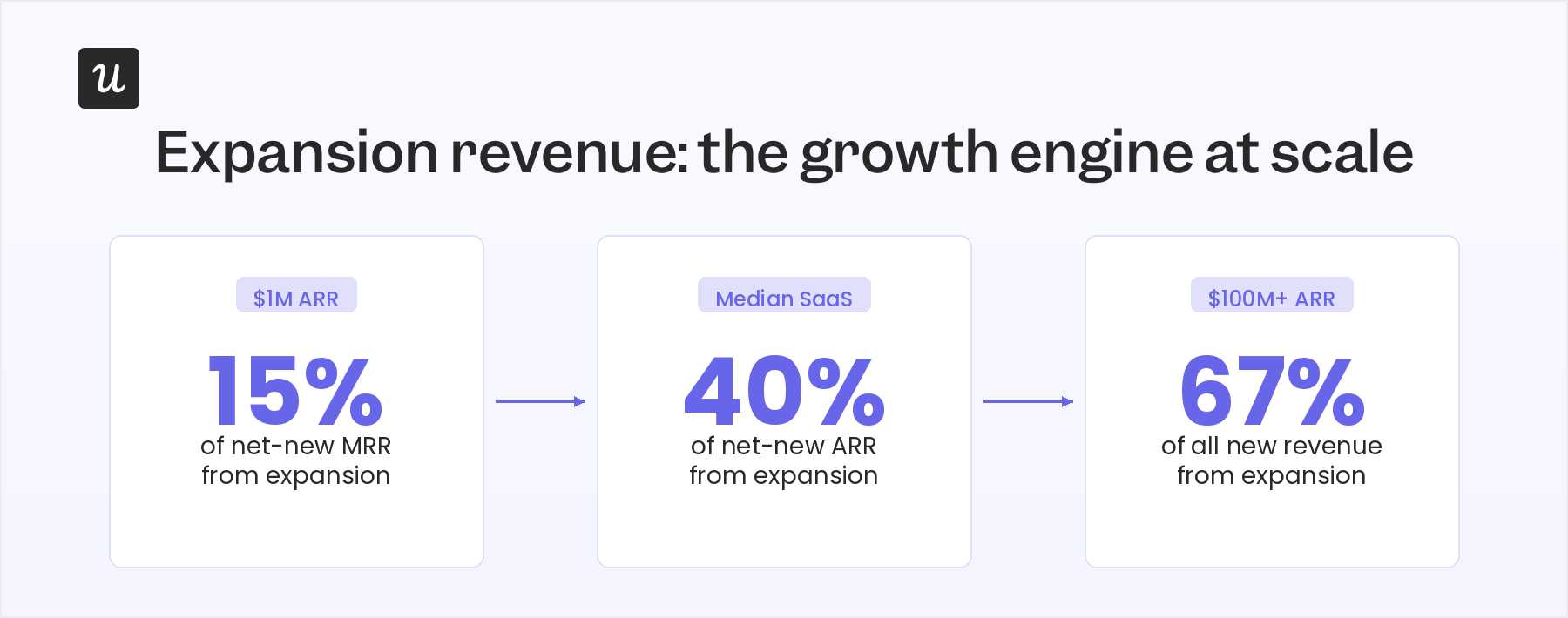
You see, lifting your revenue growth rate through expansion is one of the most impactful goals in SaaS. At $1M ARR, expansion typically contributes about 15% of net-new MRR. By $20M ARR, top-performing SaaS companies had lifted that to 34.7%. Then, above $100M ARR, expansion accounts for roughly 67% of all new revenue (per Kyle Poyar’s compounding startup research).
Additionally, Kyle Poyar identified the two strongest predictors of long-term profitable growth in his 2025 SaaS Benchmarks Report: CAC payback period and net revenue retention. Upselling improves both. It grows ARPU without raising your average customer acquisition cost and shortens effective CAC payback. NRR, in particular, is also a key metric that tells you whether existing customers are growing with you or quietly contracting.
Obviously, increasing these product success metrics via upselling is much easier said than done. As I mentioned, the number one complaint across 230+ B2B software companies in Kyle Poyar’s Monetization survey was “not enough expansion revenue”. Also, the median net revenue retention across private B2B SaaS compressed from roughly 105% in 2021 to about 101% in 2024, which represents a lack of expansion revenue despite being one of the most valuable metrics.
This challenge explains the shift toward usage-based pricing. Three in four companies surveyed changed their pricing or packaging in the last year, with the direction consistently toward usage, credits, and outcomes. Per m3ter’s 2026 NRR benchmarks, usage-based and hybrid models achieve 115–130%+ NRR compared to 95–105% for flat-rate subscriptions, because consumption revenue grows automatically as customers derive more value, without requiring a separate upgrade decision.
For me, these principles separate upsell strategies that convert from those that don’t:
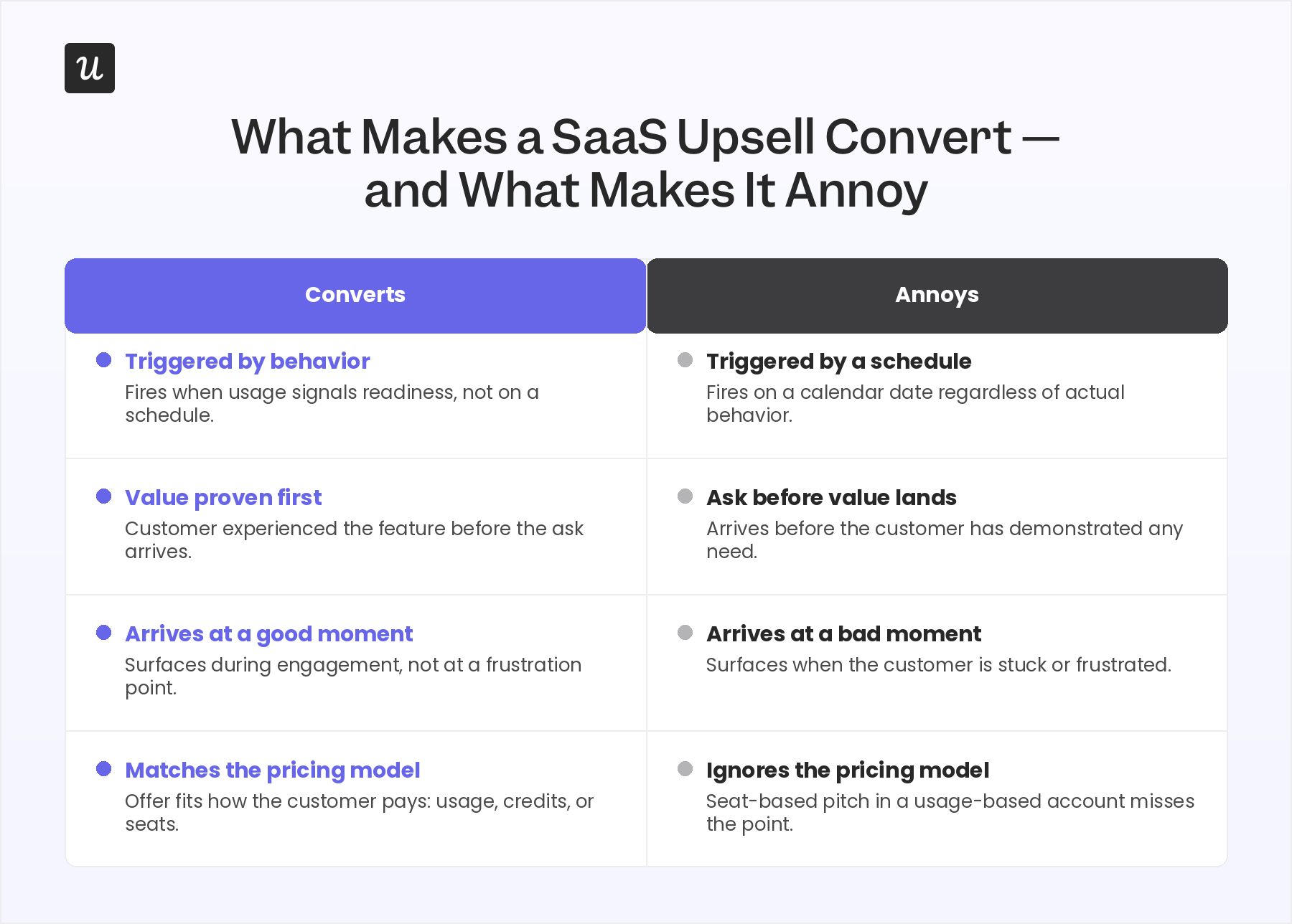
- Behavioral trigger: The best upgrade prompts don’t trigger on a schedule; they trigger because something changed in the customer’s product usage metrics. A user who spent the last two weeks building inside a feature is very different than one who logged in twice this month.
- Value demonstrated before the ask: Every upsell that converts follows evidence. The customer hit a storage limit because they stored a lot, or they ran out of AI credits because they actually used the AI. When the upgrade offer follows demonstrated need rather than preceding it, the prompt feels more like a reasonable invitation rather than sales pressure.
- Timing that matches attention, not contract schedules: One of the most underrated mistakes in customer success is timing upsell outreach to the quarterly business review rather than to what the customer is doing right now. If your engagement data shows a customer actively using a specific feature, that is the moment to step in. By the time the QBR arrives, that momentum has already passed.
- Framing aligned with the pricing model: In a seat-based business, the upsell is about adding users. But in a usage-based model, it’s about acknowledging that the customer is getting more value than their current tier was designed to support. So, to better get the attention of users, design your upsell messaging and tactics around your pricing model.
Upselling examples from B2B companies worth studying
Most upselling example roundups focus on screenshots of modals. I think it’s useful to understand the behavioral logic behind each example: why it triggers when it triggers, what it assumes about the customer’s state of mind, and where the approach breaks down. The examples below cover a range of models, from traditional gated features and time-limited trials to upselling newer AI products.
ClickUp: Gating features at the moment of discovery
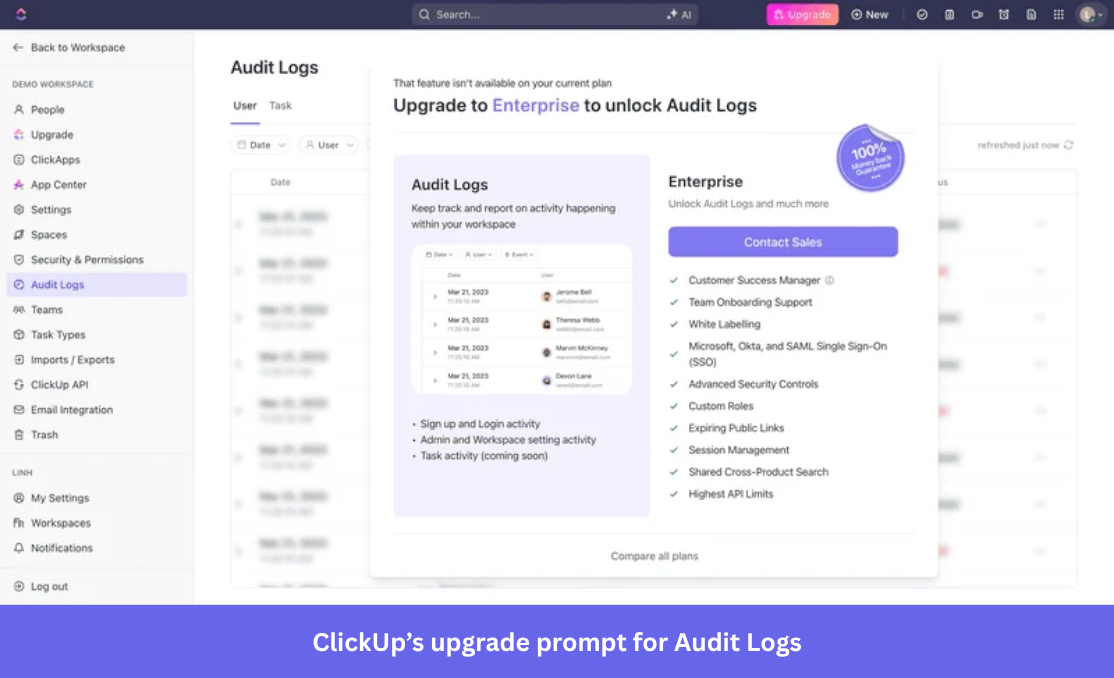
ClickUp lists premium features like Audit Logs directly in its navigation, fully visible to users on lower plans. When a user lands on a gated feature, they get a breakdown of the benefits, a clear CTA to upgrade, a “Contact Sales” path for enterprise buyers, and a money-back guarantee to reduce perceived risk. The upgrade prompt fires at the exact moment a user proves interest by clicking into the feature.
The mechanics are clean: the feature is visible, the benefit is immediately framed, and the user self-selected the moment by navigating there. For products with tiered pricing models, this is among the most conversion-efficient approaches available. It makes power users reveal their own expansion readiness by exploring deeper into the product rather than requiring a sales team to identify them first.
That said, if you lock too many features behind upgrades, the product starts feeling inadequate at its base tier. The balance between offering premium value and delivering a fair default plan is a requirement for this tactic to work.
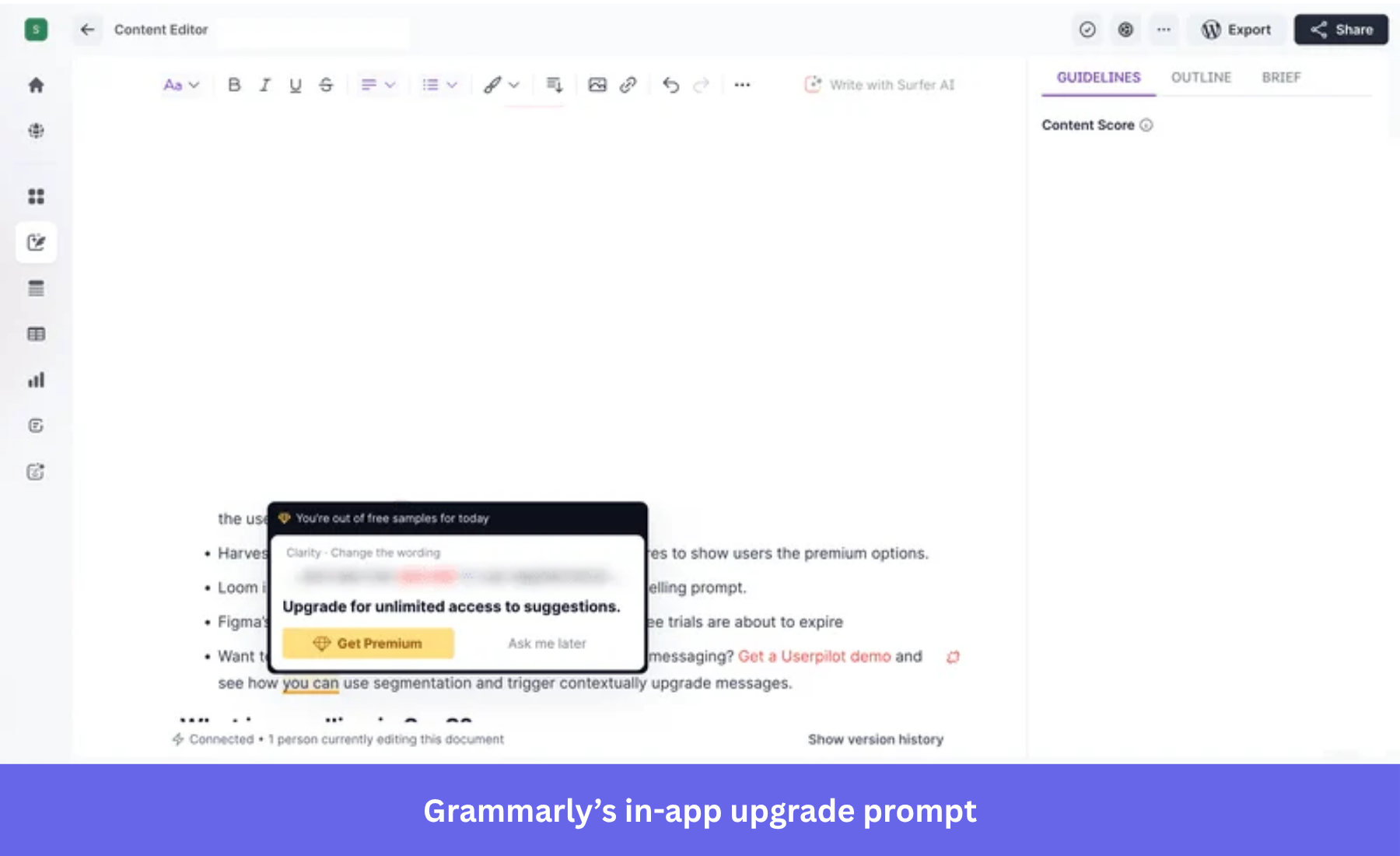
Grammarly Business: Limited access as a conversion engine
Grammarly gives users three free accesses to premium features per day, letting them experience the full product value before the freemium to premium prompt arrives. The prompt arrives after the third use, which means the customer has already built a usage pattern before the ask arrives. The upgrade prompt itself frames the offer in terms of what the user has already done rather than what they are missing.
My gripe with this strategy is that daily limits can create friction on high-use days without necessarily signaling genuine upgrade intent. A user who hits the limit during a deadline-heavy afternoon is more likely to feel annoyed than persuaded, and the friction can undermine the positive experience the limited access was supposed to create.
Alternatively, for advanced tools that require some product adoption, offering reverse trials threads the needle between showing the product and allowing indefinite free use. It lets users try your product to its full potential for a longer time, so they feel compelled to upgrade in order to avoid losing the benefits.
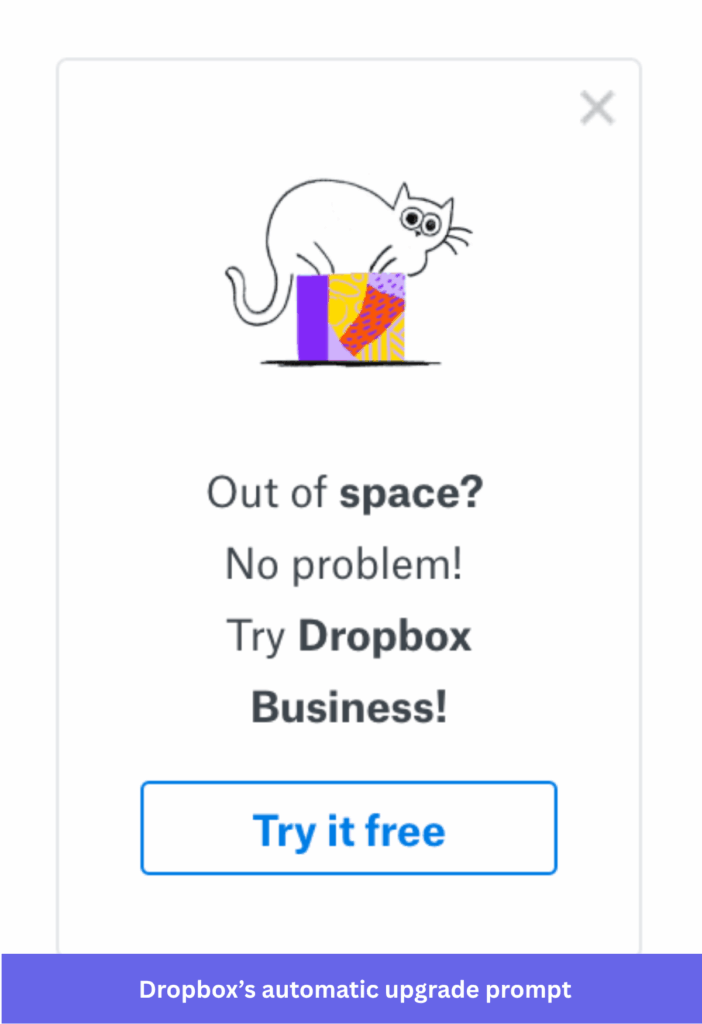
Dropbox: Proactive reminders before the crisis
Dropbox doesn’t wait until a user runs out of space. It shows upgrade reminders through announcement banners and email as storage usage climbs, keeping the expansion option visible before the customer reaches a frustration point. The messaging is simple: here’s what you’re using, here’s what more looks like, here’s how to get it. The prompt feels routine rather than urgent because it arrives early.
The timing advantage is real: the customer isn’t annoyed yet, and the conversion happens in a positive context rather than a crisis one. For capacity-limited products, this model consistently outperforms reactive prompts because the customer is still in a growth mindset when the offer arrives. They aren’t in troubleshooting mode looking for alternatives, which is where customer churn starts, and instead, they’re expanding.
On the other hand, early and frequent reminders can become annoying for users, particularly when the messaging doesn’t differentiate between a user at 30% capacity and one at 90%. I’d recommend segmenting the reminder cadence by actual usage pace, so that a customer adding significant storage weekly gets a different message than those with little usage.
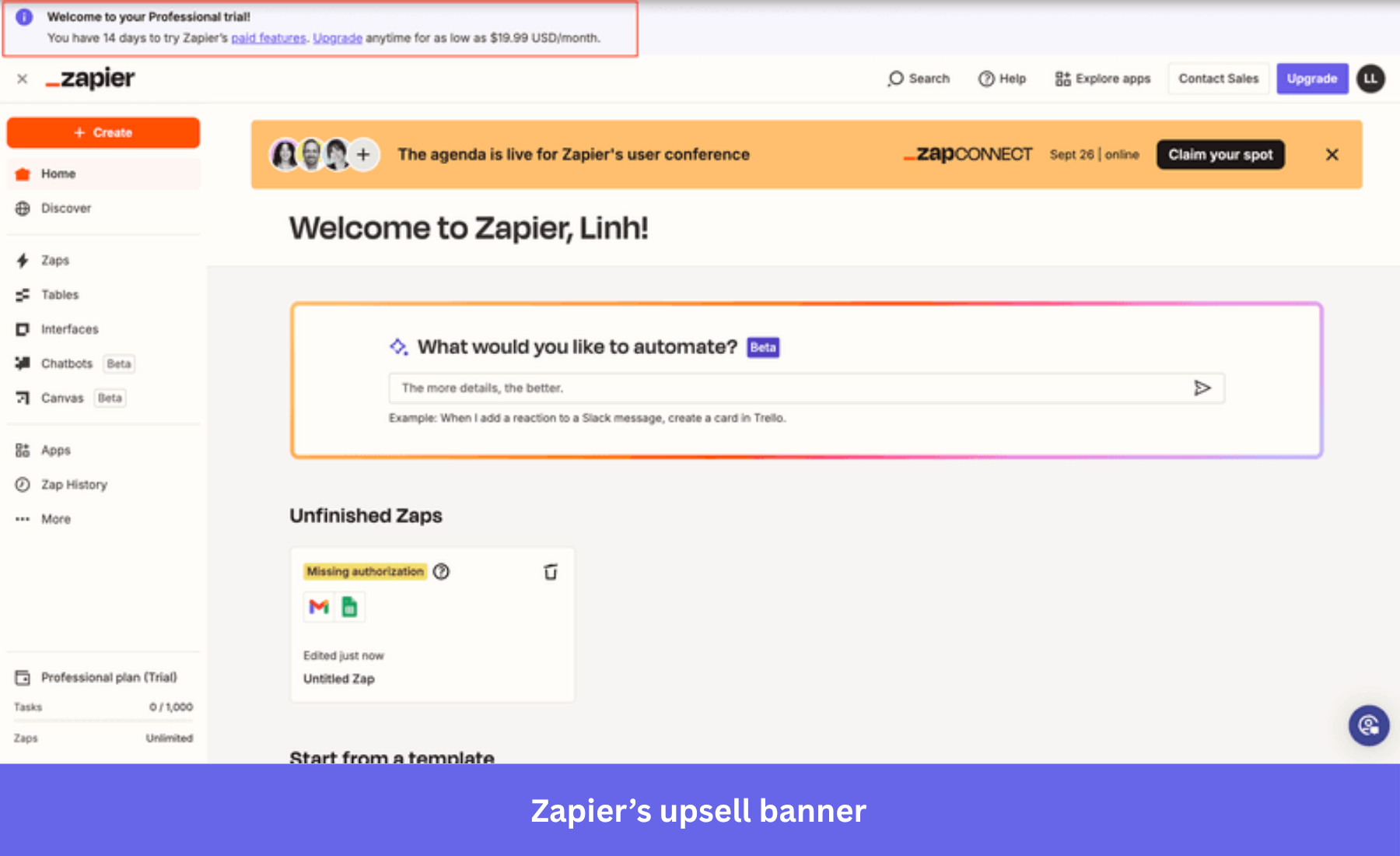
Zapier: Countdown urgency during trial
Zapier runs in-app banners throughout the trial period, showing users exactly how many days remain before they lose access to paid features. Unlike friction-at-the-limit approaches, this one uses free trial length for saas products rather than usage as the primary signal. A banner reading something like “You have 14 days to try Zapier’s paid features” keeps the upgrade option consistently visible without tying the prompt to any specific frustration moment.
I like it because the constant exposure to the upgrade option (anchored to a deadline the customer signed up for) moves the upgrade from a decision requiring fresh motivation to one they’ve been warming up to since day one.
The risk I see here is banner fatigue, particularly for users who view the trial as exploratory rather than evaluative. Moderating banner frequency based on user engagement and making it skippable would probably improve the user experience.
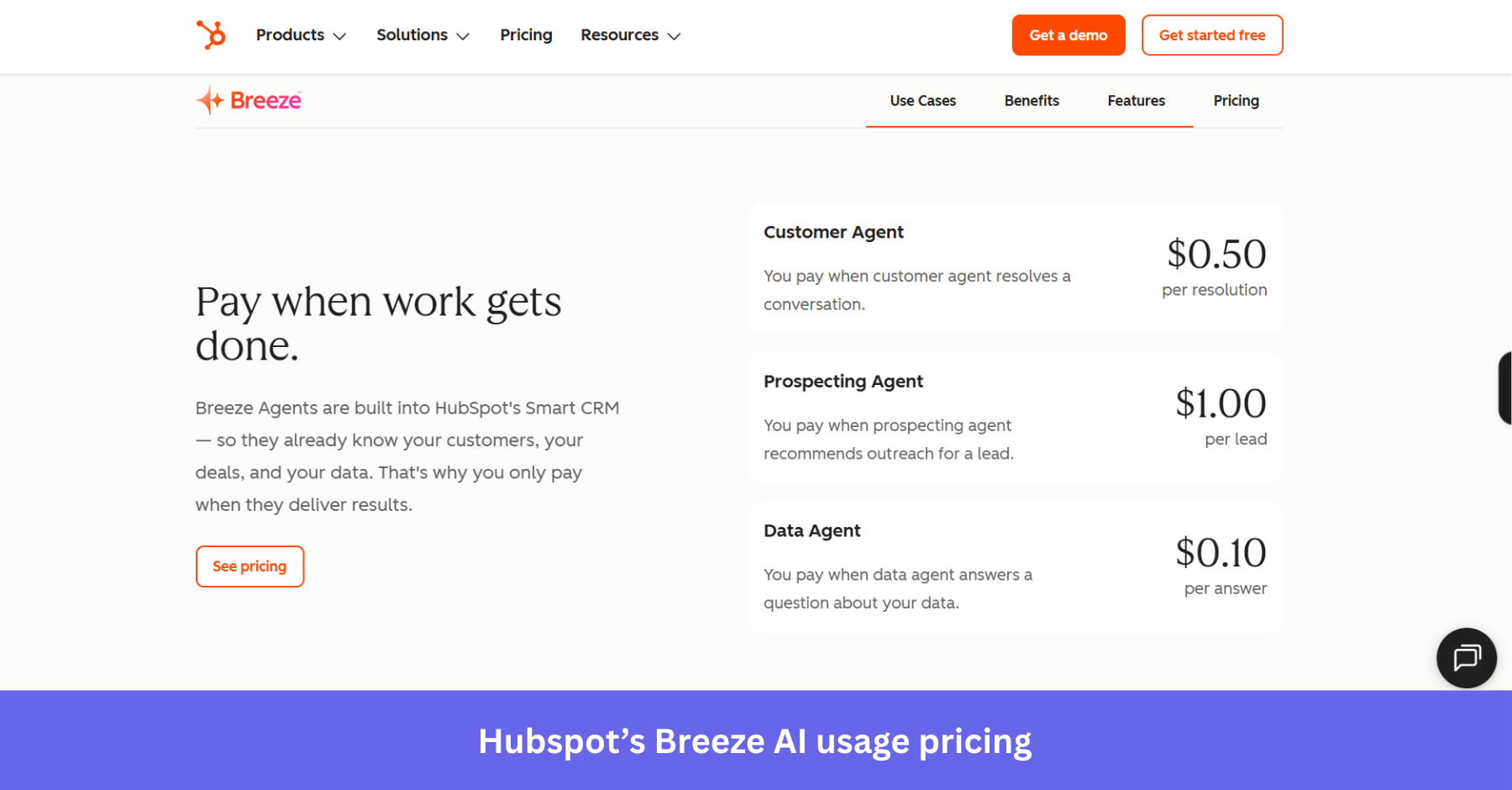
HubSpot Breeze: Pay-per-result AI agents
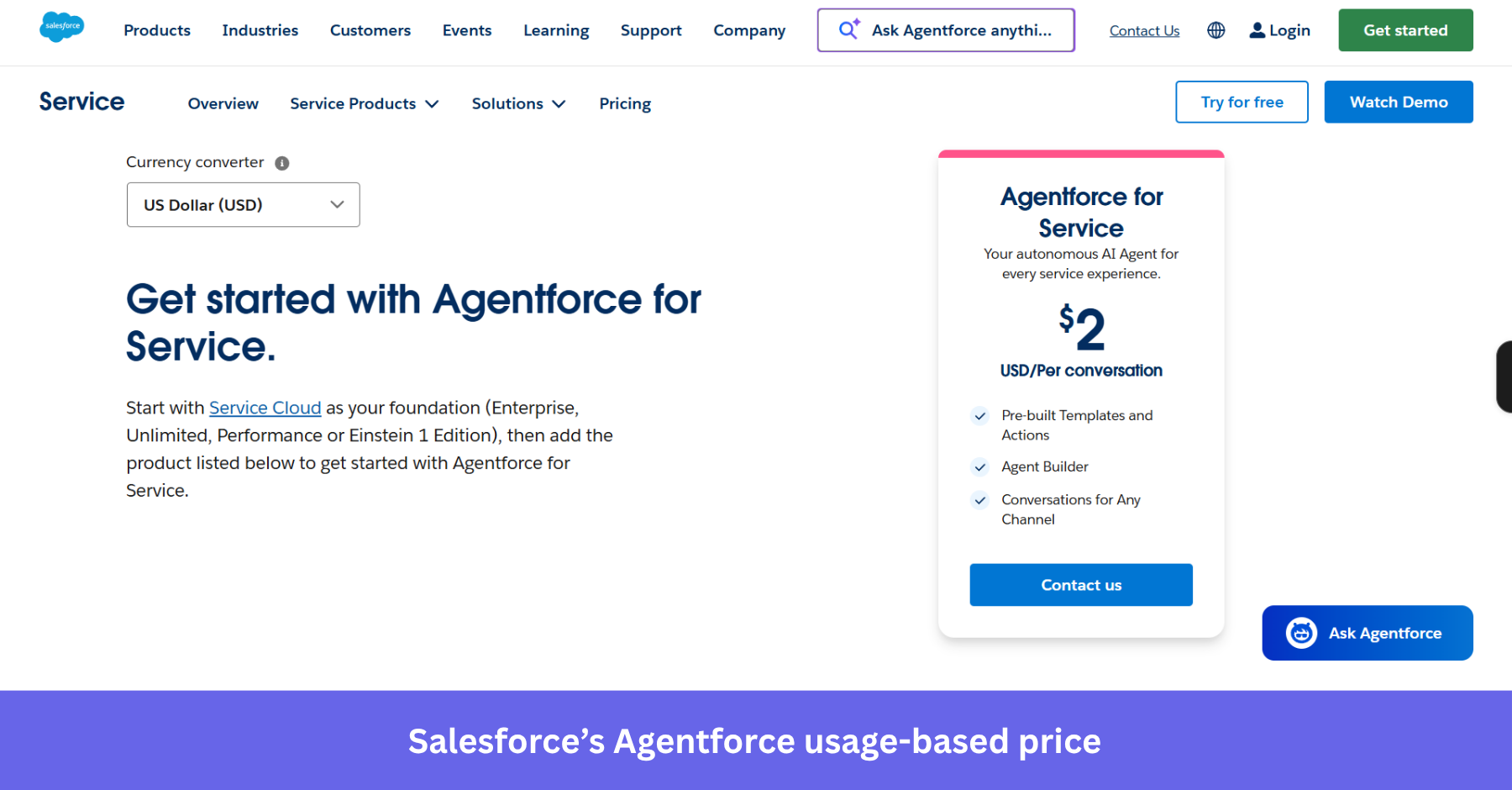
In April 2026, HubSpot announced outcome-based pricing for two of its Breeze AI agents. Breeze Customer Agent moved from $1.00 per conversation to $0.50 per resolved conversation, and Breeze Prospecting Agent moved from a monthly per-enrolled-contact charge to $1.00 per qualified lead for outreach. Both agents are available to Pro and Enterprise customers. Jon Dick, HubSpot’s chief customer officer, framed the shift directly: “Too often, that means paying for potential rather than performance. Outcome-based pricing removes that risk. You pay when it works, full stop.”
What’s the upselling mechanic here, you ask? Well, it’s built into the pricing model itself. Existing HubSpot customers don’t need a separate upgrade conversation to access Breeze agents. They start paying when the agent produces results. Breeze Customer Agent resolves 65% of conversations and cuts resolution time by 39% across 8,000 HubSpot customers, per HubSpot’s own data. A customer who starts using the agent and sees those resolution rates will naturally increase usage, and spend follows without any active sales/messaging strategy.
The challenge with outcome-based AI pricing is revenue predictability on the vendor side. Unlike a flat per-seat charge, billing for Breeze agents fluctuates with agent performance and customer adoption patterns. For HubSpot’s finance team, this variability might require a fundamentally different kind of revenue modeling.
Salesforce Agentforce: Existing customers as the primary expansion channel
Salesforce’s Agentforce product reached $800 million in ARR by the end of fiscal year 2026, up 169% year-over-year, according to their Q4 FY2026 earnings release.
The detail is that more than 60% of Agentforce and Data 360 Q4 bookings came from existing customer expansion. Agentforce is not primarily a new-logo acquisition story. It is a land-and-expand motion executing at a massive scale, with the AI agent layer sold into an existing CRM install base that already trusts the platform.
How? Well, Salesforce is selling this AI agent capability to customers who already have their data inside it and are already paying for a Salesforce seat (similar to the dynamic at HubSpot). The switching cost of leaving is high, and the incremental cost of adding an AI agent layer is perceived as low relative to the value delivered. This expansion strategy works because Agentforce directly addresses a problem the existing customer already has (specifically, too much repetitive work for humans) rather than introducing a need the customer wasn’t already feeling.
However, in my opinion, the four simultaneous Agentforce pricing models (per-conversation, credit-based, per-user add-on, and Agentic Enterprise License Agreement) create real decision complexity and shouldn’t be replicated. Kyle Poyar noted in his survey that customers increasingly find managing different credit models across multiple vendors overwhelming. Sure, offering pricing flexibility is genuinely useful for enterprise buyers, but there is a point at which choice becomes friction, and Salesforce is testing that boundary.
The foundational upselling methods for B2B SaaS teams
The methods below work across different behavioral contexts and product structures. Some are best triggered at specific usage milestones, others require behavioral segmentation, and a few only trigger correctly once you’ve built a product analytics foundation. The right method is the one that matches what a specific customer is actually doing in your product at the moment the prompt appears.
Plan upgrades
A plan upgrade prompt invites a customer to move from a lower to a higher pricing tier, typically by surfacing a feature they tried to access or surfacing the capability gap between their current plan and the next one. This prompt works best when it arrives at a moment the customer has already demonstrated interest, rather than as a default suggestion on the product dashboard.
To implement this, I use Userpilot to set up event based analytics for any premium feature in the product, then configure a trigger that showcases an in-app modal the second or third time a user engages with a gated feature rather than the first. That’s because a single attempt could be just curiosity, while two or three attempts across different sessions signal a user with a genuine use case.
ClickUp’s Audit Log gate is a clean example. The upgrade prompt appears with a full value breakdown, a clear CTA, and a money-back guarantee inside the same prompt. The customer never has to leave the product to understand what they’d get or how to get it.
Usage-based upselling
Usage-based upselling involves personalized offers based on current usage. It tracks consumption patterns and surface upgrade options when a customer’s usage signals they’ve outgrown their current tier.
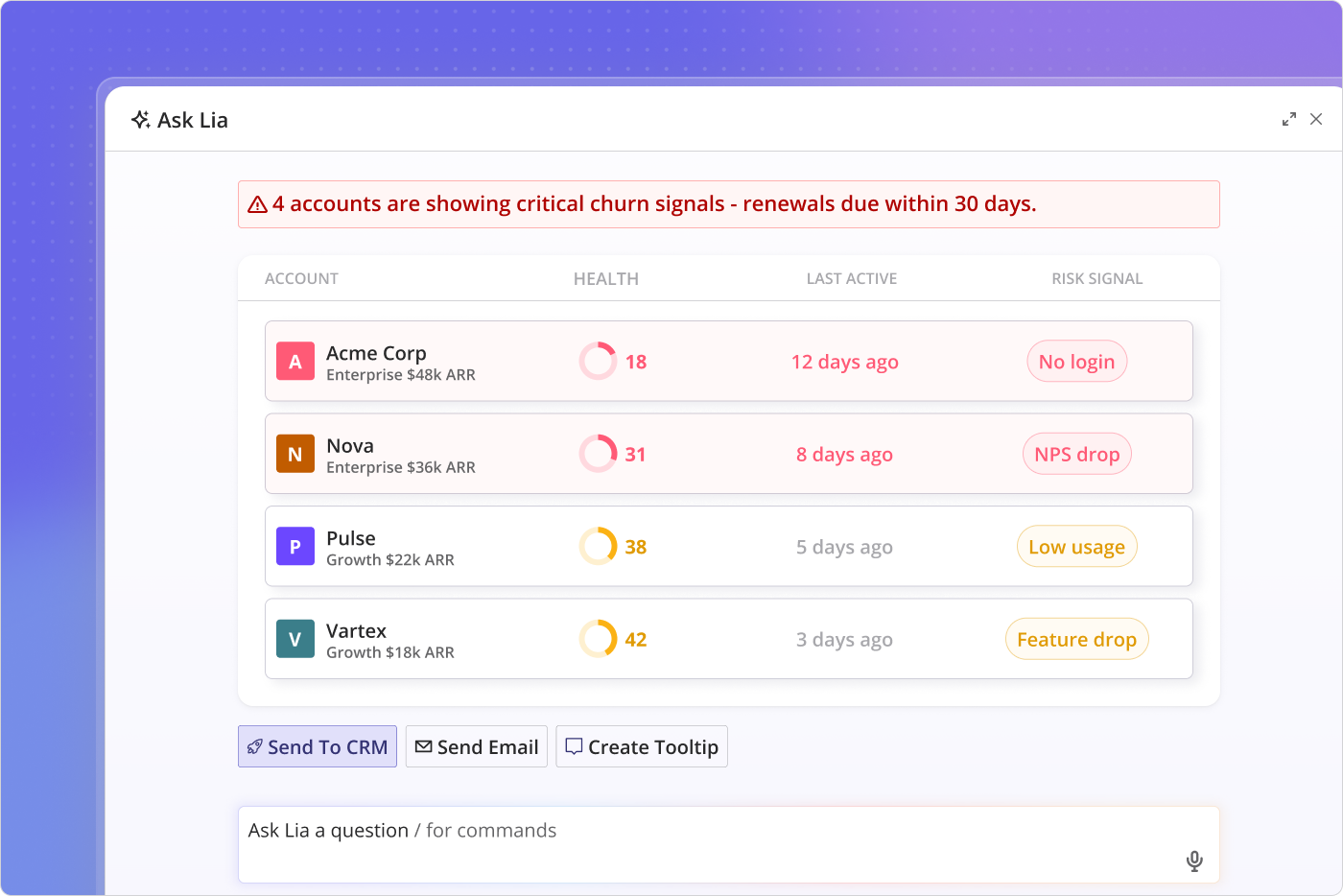
To do this, set up behavioral events for consumption milestones at 70%, 90%, and full saturation of any usage limit. Configure different in app communication at each stage: informational at 70%, a clearer offer at 90%, and a specific upgrade CTA at the limit. Additionally, Userpilot’s Lia monitors usage trends across your customer base and can flag accounts accelerating toward limits before they arrive, giving your CS team time to initiate a proactive conversation rather than a reactive one.
Dropbox’s proactive storage reminders are a good example, showing the upgrade option while the customer is still growing with the product. Zapier’s trial countdown banner also works on a similar principle but uses time rather than usage as the trigger.
Personalized upselling
Personalized upselling builds a personalized customer experience around what a specific customer has actually been doing inside your product. A user who has engaged with several advanced features in the last 30 days is a fundamentally different expansion conversation from one who is still primarily using basic functionality. The offer, the timing, and the framing all need to reflect what that individual account is doing, not what the average user does.
Personally, I use Userpilot to build a user segment for accounts that meet expansion-readiness criteria, for example, users who have triggered a set of advanced feature engagement events in the last 30 days with usage velocity that’s increasing week over week. And then, show them a message referencing the specific features they’ve been using rather than a generic pitch. Also, Lia can analyze your product usage data and surface accounts matching this profile before you’ve built the segment manually.
Educational upselling
Educational upselling introduces customers to advanced capabilities they haven’t yet explored, building enough familiarity that the upgrade feels like a logical continuation rather than an external pitch. The feature onboarding process involves introducing the feature at a moment of high engagement, demonstrating its value in context, and then presenting the upgrade option.
To do this, I can use Userpilot’s in-app tours and tooltips to introduce premium features at moments of high engagement. If a user just completed a key workflow successfully, that’s the right moment for a brief contextual tooltip showing the next-level capability. Pair this with in app help for the feature so users can explore at their own pace without feeling pushed toward an immediate commitment.
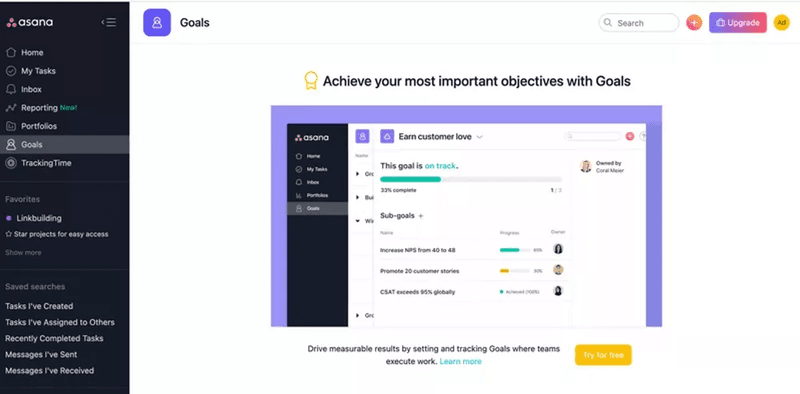
A great example is Asana’s approach of targeting power users with in-app modals. It showcases premium features, offers trials, and adds a “Learn more” button to give users the option to understand the feature before making a decision.
Renewal upselling
Renewal periods are natural checkpoints for your customer retention strategy, where customers evaluate what they’ve gotten out of your product and plan for the next year. Done well, the renewal conversation can present an expansion opportunity if it’s grounded in what the customer accomplished and what their next phase of growth requires.
In customer success, the combination that consistently flags expansion readiness is: usage velocity increasing, new users being added to the account, advanced features being explored for the first time, and engagement with billing or pricing pages rising. In a customer approaching renewal, these signals can validate a proactive expansion conversation.
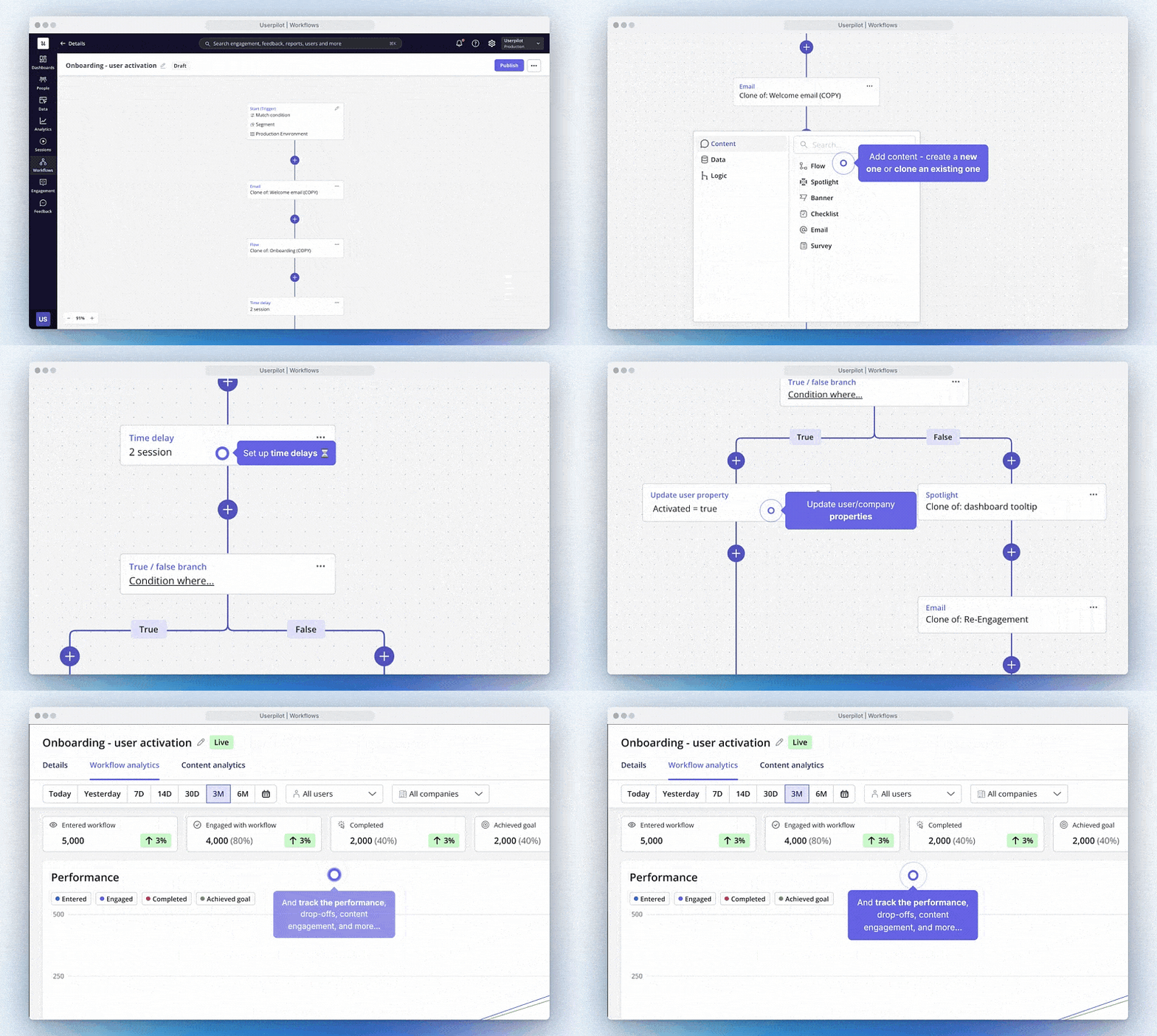
What I like to do is use Userpilot’s data sync and product analytics to build a renewal-readiness signal based on the behavioral indicators above, then set up a Workflow that alerts our team 60 days before renewal for any account that clears the threshold. Then, Lia can surface the behavioral summary automatically so a CSM walks into the call with specific usage data rather than generic account notes.
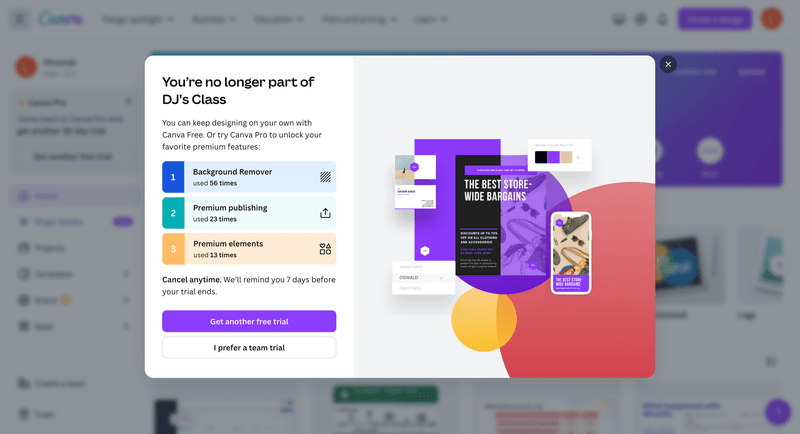
Another good example is how Canva shows users exactly how many times they used premium features before their trial ends. It follows the same principle, anchoring the upgrade message to quantified past usage, making it more persuasive than describing potential future value.
Expansion revenue is a precision problem, not a volume problem
The companies I see struggling with upselling are not struggling because they lack upgrade prompts. They’re struggling because those prompts fire at the wrong moments, for the wrong customers, in a pricing context the prompts weren’t designed for.
The companies doing it well (including Intercom, Salesforce, HubSpot, Canva, etc) have the same thing in common. Their upselling strategies follow user behavior analytics and are applied at the right time.
Now, building that system requires visibility into how customers are actually using your product at a behavioral level. Userpilot gives your team the product analytics, segmentation, and in-app engagement tools to detect the signals, act on them at the right moment, and measure which upsell strategies are actually driving expansion revenue. So if you want to see how that works in practice, get a Userpilot demo, and we can walk you through it based on your product’s needs.
About the author