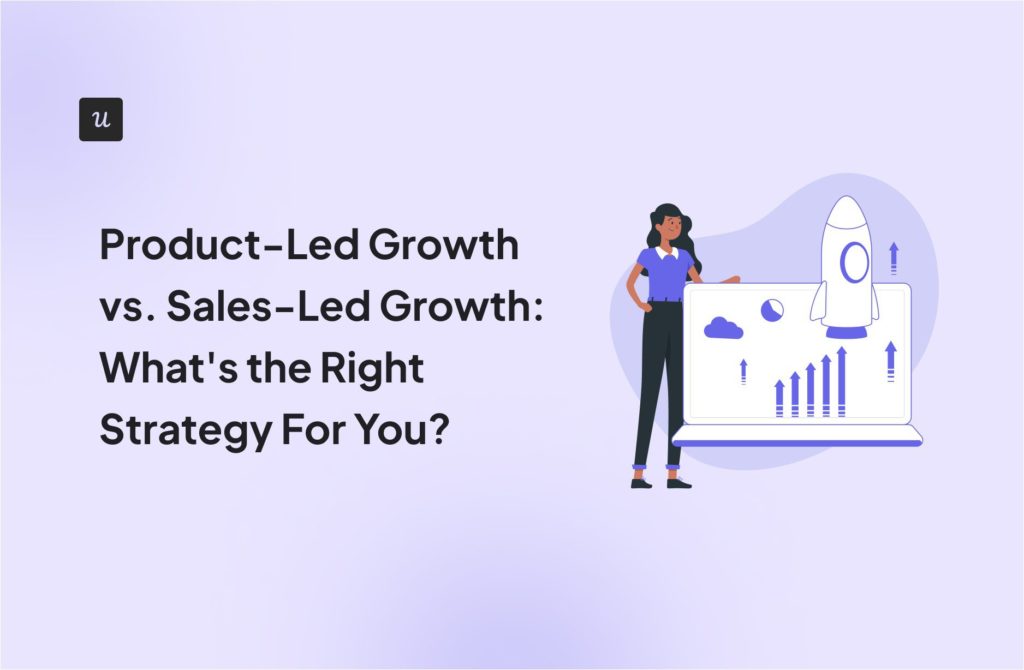
Product-Led Growth vs. Sales-Led Growth in 2026: Why Hybrid Wins

Product-led growth vs. sales-led growth has been the defining SaaS go-to-market debate for a decade. In 2026, most takes ranking on Google haven’t caught up to what’s actually happening.
The strategic question we keep treating as binary (PLG or SLG?) is the wrong frame. The right one: which flavor of PLG should you run, and how thick should the SLG layer on top be? Hybrid is the default for almost every B2B SaaS above $10M ARR, and inside that hybrid motion, PLG itself is splitting into three eras.
The data on hybrid is no longer subtle. Per OpenView’s 2024 SaaS Benchmarks, 67% of hybrid PLG+SLG companies hit their net revenue retention targets, versus 58% of pure-PLG. The other pressure: AI agents are starting to use and buy software. Lovable hit $200M ARR in 12 months. Cursor crossed $2B in three years. At Netlify, 80% of new signups are AI agents, not humans.
So the real 2026 decision isn’t “PLG or SLG.” It’s how thick your SLG layer is, how fast your PLG motion already lets users hit value, and how much agent-readable surface you’ve already exposed before it’s urgent.
I wanted to write something more useful than another generic PLG vs. SLG comparison. So this guide does five things:
- Explains what’s actually changed about each motion in 2026 (and what hasn’t).
- Makes the case for why hybrid PLG+SLG is the dominant motion right now, with the data.
- Walks through real companies winning with each motion, including the agentic-era examples (Lovable, Cursor, Netlify) most posts ignore.
- Layers in the PLG 1.0 / 2.0 / 3.0 evolution from our updated PLG hub.
- Gives you a 2026 decision framework that replaces the old “complexity vs. budget” matrix with the question that actually matters: are you selling to humans, agents, or both?
PLG vs. SLG in 2026: TL;DR
For those of you who don’t have the time to read, or your agents 😅, here’s a quick summary of this post:
The new question (it’s no longer “PLG or SLG?”)
- Pure SLG still works for genuinely complex, high-ACV enterprise sales (think six-figure security platforms with multi-month implementation cycles). It’s the smallest, slowest-growing slice of the market.
- Hybrid PLG+SLG is the dominant motion in 2026. Self-serve at the bottom of the PLG funnel, sales-assist at the top. HubSpot, DocuSign, Atlassian, Notion, Figma all run this.
- Agentic PLG (PLG 2.0) is where the fastest-growing companies live: Lovable, Cursor, Gamma, Harvey AI, Perplexity. Time to value drops from minutes to seconds because AI does the work, not the user.
- Headless PLG (PLG 3.0) is what Netlify and a handful of dev-tool companies are already shipping. AI agents are the primary user. Humans approve outputs in Slack.
Your GTM motion at each stage
If you’re running pure SLG today:
- Add a self-serve trial or freemium tier for SMB and individual buyers.
- Keep the enterprise sales motion for accounts above your ACV threshold.
- Identify the product-qualified accounts (PQAs) inside trial accounts your sales team should chase, instead of cold-prospecting from scratch.
If you’re running hybrid PLG+SLG today (most B2B SaaS):
- Optimize self-serve activation to seconds, not minutes. Replace feature discovery with outcome clarity.
- Define your PQLs precisely enough that sales only chases accounts the product has already pre-qualified.
- Build agent-readable surfaces (MCP, structured docs, machine-parseable pricing) before they’re urgent.
- Keep a sales-assist layer for accounts above your ACV threshold and for complex implementations.
If you want to graduate to Agentic PLG (PLG 2.0):
- Redefine activation as first successful output, not first interaction.
- Shift onboarding from “where to click” to “how to ask” (prompt design).
- Build agent observability so users can see when their agents fail.
- Tighten feedback loops with microsurveys on every agentic output.
If you’re already in Headless PLG territory (PLG 3.0):
- Make every product surface usable by agents (MCP, APIs, structured data).
- Move the command center to where users actually work (Slack, CRM), not inside your product.
- Measure success via task execution, not user behavior.
- Move the moat from UI polish to proprietary context: data plus codified workflows agents can’t reproduce.
Decision checklist: which motion is right for you?
- What’s your average contract value? Below $5K ARR: PLG-led. $5K to $50K: hybrid. Above $50K with complex implementation: SLG-led with a PLG entry point.
- Who is your primary user today, and three years from now? If “AI agents” is in either answer, you need agent-readable surfaces in your roadmap now.
- Can a user reach value in under 60 seconds? If not, your PLG motion is from the 2018 playbook and is leaking funnel.
- Is your pricing self-serve and machine-readable? If an AI agent can’t parse your pricing page, you’re not ready for PLG 3.0.
- Do you have a product-qualified-account model your sales team uses? The hybrid motion only works if sales chases pre-qualified accounts, not cold leads.
- Have you exposed an MCP server or agent-readable API? Table stakes for hybrid in 2026, mandatory for agentic PLG.
Product-led growth vs. sales-led growth: What’s actually changed in 2026
The textbook definitions still hold. Product-led growth means the product itself is the primary driver of customer acquisition, engagement, and retention, with users reaching their ‘Aha!’ moment through self-service exploration. Sales-led growth means a dedicated sales team identifies, qualifies, and converts leads through personalized outreach.
What’s changed is the context around both motions.
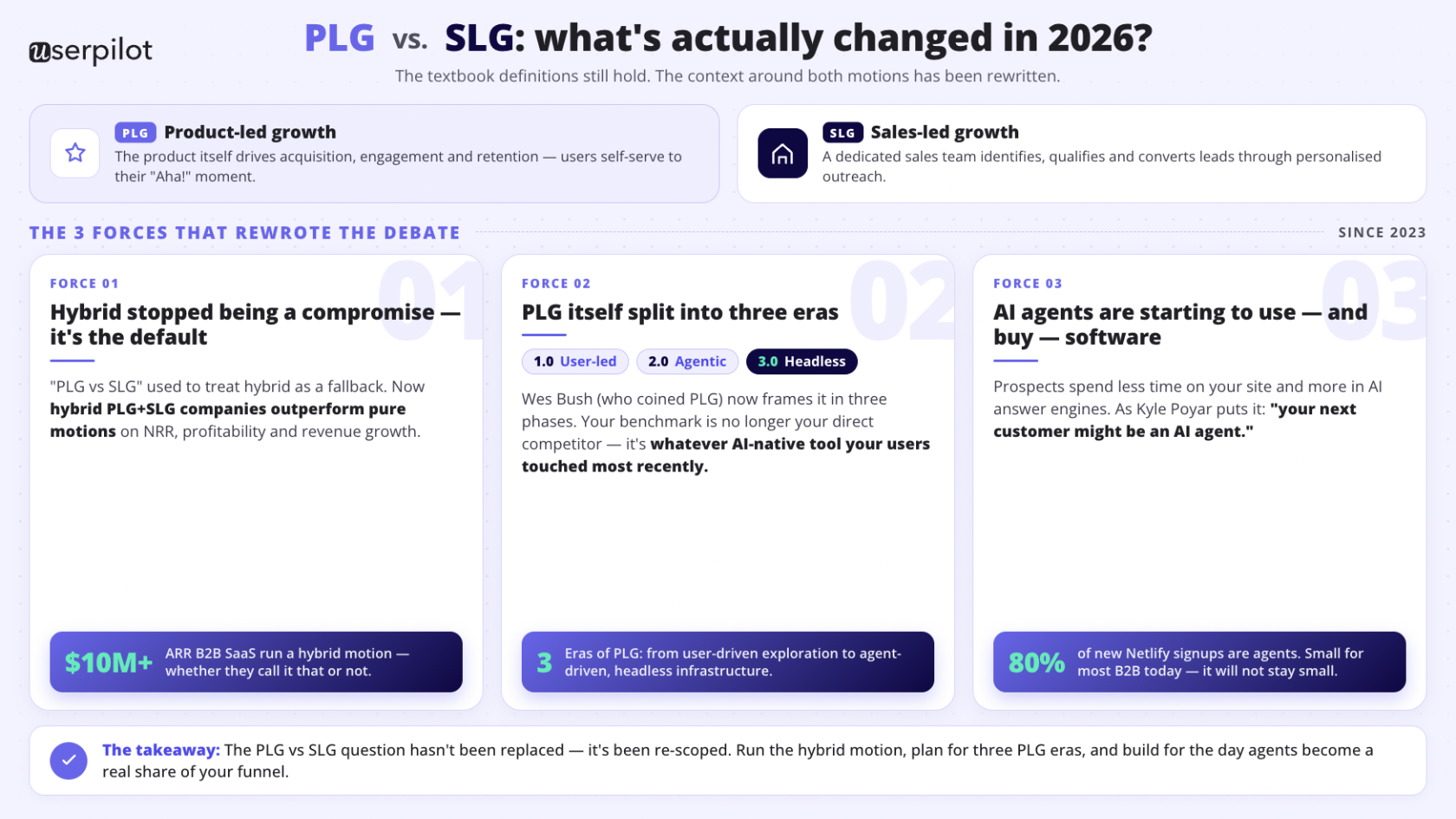
Three forces have reshaped the PLG vs. SLG debate since 2023, and most posts ranking for this query haven’t caught up to any of them.
Force 1: Hybrid stopped being a compromise and became the default. The early-2020s framing of “PLG vs. SLG” treated hybrid like a fallback for companies that couldn’t commit to a single motion. That framing is dead. The data now shows hybrid PLG+SLG companies outperform both pure motions on net revenue retention, profitability, and revenue growth. Most B2B SaaS companies above $10M ARR run a hybrid motion whether they call it that or not.
Force 2: PLG itself split into three eras. Wes Bush, founder of ProductLed and the person who coined the term “product-led growth,” now describes the model in three phases: PLG 1.0 (user-led), PLG 2.0 (agentic), and PLG 3.0 (headless). The company you compare yourself to is no longer your direct competitor. It’s whatever AI-native tool your users touched most recently.
Force 3: AI agents are starting to use and buy software. Kyle Poyar of Growth Unhinged put it bluntly in his recent essay “your next customer might be an AI agent”: prospects spend less time on your website and more time in AI answer engines. At Netlify, agents are now 80% of new signups. That number is small for most B2B today. It will not stay small.
The product-led growth approach: Empowering the user (and now, the agent)
The product-led growth (PLG) approach focuses on the product as the primary driver of customer acquisition, engagement, and retention.
In practice, this means giving users opportunities to try the product early on and depending on the product to qualify leads (the classic product-qualified lead motion) by leading them to the ‘Aha!’ moment.
Companies running this motion bet that a valuable, intuitive, user-centric product will attract customers, retain them, and turn them into a distribution channel through word-of-mouth. The bet has aged well. If you’ve used Slack, Zoom, Dropbox, Calendly, Figma, or Notion, you’ve experienced PLG in action. You didn’t need a demo. You signed up, got into the product, hit your “aha” moment, and either stayed or churned based on whether the product did what it promised.
3 Key characteristics of a product-led strategy
The PLG model imprints itself on every part of the business. Its notable features include:
- Freemium and free trials: PLG companies use free trials and freemium models to make their products easily accessible. Free trials give users access to the full product for a limited time. Freemium plans offer limited functionality for an unlimited time at no cost, betting on the freemium to premium upgrade later. The 2026 wrinkle: AI-native PLG products often skip free trial windows entirely and let users hit value before account creation. Lovable lets you generate an app on the homepage. Perplexity answers your first question without a signup. Time to value goes to zero.
- Self-service onboarding: Product-led companies use self-serve onboarding and interactive user guides so users can explore, evaluate, and adopt the product without sales involvement. The goal is to minimize time to value so users immediately start using the product, adopt it, and tell other people. The PLG 1.0 benchmark for time to value was around 10 minutes. The PLG 2.0 benchmark, per Wes Bush’s research, is closer to 60 seconds.
- Product-led content: Product-led content marketing promotes a product by showing users how to use it to solve their problems. PLG companies use this strategy (blog posts, webinars, case studies, tutorial videos) to drive organic growth and build trust. The 2026 layer: this content also has to be agent-readable, because AI answer engines are increasingly the place where buyers find your product before they ever land on your site.
The sales-led growth approach: Building the relationships AI can’t
The sales-led growth (SLG) strategy is the more traditional approach to growth. It relies on a dedicated sales team to identify, qualify, and convert leads.
Sales-led companies bet that personalized outreach, relationship building, and tailored offers lead to higher conversion rates and higher customer LTV at the enterprise end of the market. For genuinely complex, high-ACV deals (six-figure security platforms, regulated-industry implementations, multi-stakeholder enterprise rollouts), this bet still pays off. SLG isn’t dead. It’s just no longer the default.
3 Key characteristics of a sales-led approach
The sales-led approach is what successful businesses looked like before the rise of modern SaaS. Its identifying traits include:
- Dedicated sales teams: The sales-led model is built around direct sales through a sales team. Sales reps actively seek out and qualify potential customers, reach out to them, and build relationships with key decision-makers to close deals.
- Personalized demos and consultations: Sales reps use a combination of sales calls, product demos, and sometimes in-person meetings to understand each customer’s needs and showcase how the product solves them.
- Relationship management: Beyond conveying the product’s value, sales reps address customer concerns, build trust, and develop rapport. This positions them to secure favorable deals and close sales effectively, especially in industries where the buying committee includes legal, security, procurement, and finance.
Product-led growth vs. sales-led growth: 5 Differences that still matter
The headline difference: SLG depends on the sales team to drive revenue. PLG relies on the product itself. That difference shows up in five concrete places.
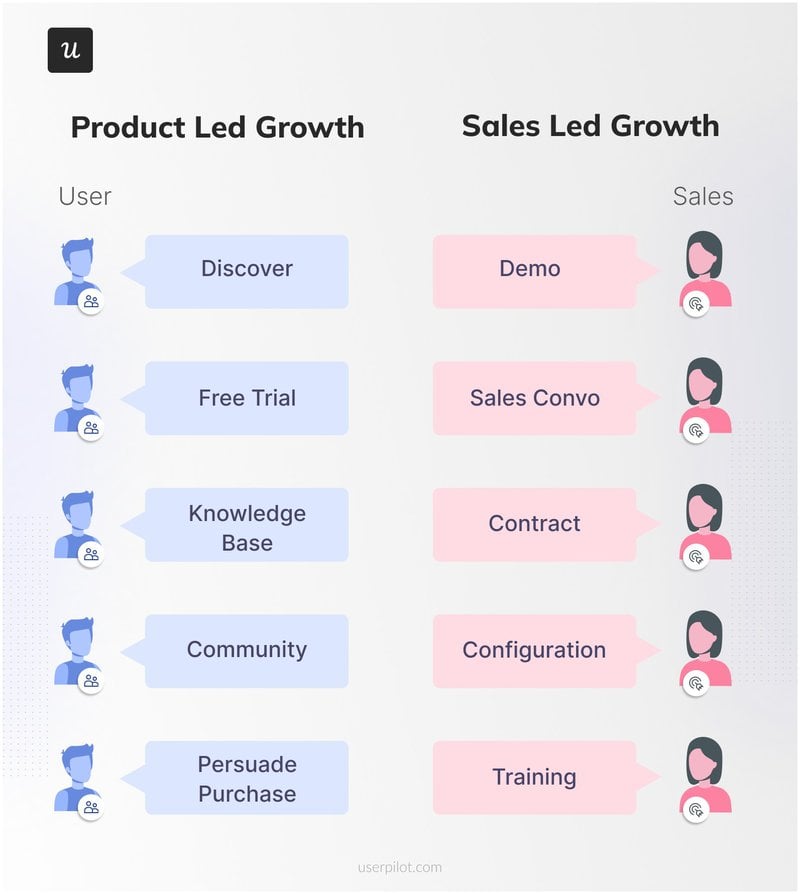
- Discover vs. Demo: PLG users discover product value through self-service exploration. SLG users explore the product through personalized presentations by the sales team.
- Free Trial vs. Sales Conversation: PLG builds interest by letting users experience the product directly through free trials (the free trial vs demo trade-off in miniature). SLG uses sales conversations to understand customer needs and nurture relationships.
- Knowledge Base vs. Contract: PLG users rely on self-education through a knowledge base. SLG users receive a formal contract outlining the product’s terms.
- Community vs. Configuration: PLG focuses on building a strong user community for peer-to-peer learning. SLG emphasizes configuring products to meet specific customer requirements.
- Persuade Purchase vs. Training: PLG persuades users to purchase through in-product experiences and clear value props. SLG provides training and ongoing support to guarantee successful product adoption.
Notice how few of these differences are actually mutually exclusive. A hybrid company can run free trials AND sales conversations, a knowledge base AND contracts, community AND configuration. The “vs.” in the title of this comparison is a teaching device, not a strategic constraint.
Why hybrid PLG+SLG is the dominant GTM motion in 2026
This is the section most “PLG vs. SLG” posts get backward. They treat hybrid as the diplomatic answer at the end. In 2026 the data says hybrid is the lead, and pure-PLG or pure-SLG is the exception.
Here’s the case in numbers.
- Hybrid outperforms pure PLG on net revenue retention: OpenView’s 2024 SaaS Benchmarks report shows 67% of hybrid PLG+SLG companies hit their NRR targets, versus 58% of pure-PLG companies. The reason is structural: hybrid companies use sales-assist for the accounts that have the most expansion potential, while pure-PLG companies leave those accounts to expand (or churn) on their own.
- Product-led sales companies grow faster than sales-led-only: Per FounderOperator’s analysis, companies running a product-led sales motion are 2x as likely to achieve a 100%+ year-over-year revenue growth rate as their sales-led-only counterparts. The product is the lead generation engine. Sales is the conversion engine for the highest-value accounts only.
- Hybrid lets you decouple revenue from headcount: Pure SLG scales revenue by scaling people: every dollar of new ARR requires more reps, more enablement, more management overhead. PLG breaks that dependency by shifting acquisition, education, and qualification into the product itself. In a hybrid motion, you can grow ARR much faster than headcount, because the product does the bottom-of-funnel work and the sales team only touches accounts where the unit economics justify a human.
- Hybrid is what every category-defining B2B SaaS company runs: HubSpot offers free CRM tools while a sales team chases enterprise expansion. DocuSign sells individual seats self-serve while enterprise deployments go through sales. Atlassian built the category on PLG and added an enterprise sales layer once it scaled upmarket. Notion, Figma, Slack, Zoom: all hybrid. The pure-PLG-no-sales companies you can name are mostly developer tools (and even most of those have a sales-assist motion above $50K ARR).
The 2026 wrinkle: the same forces that made hybrid the default are now reshaping what “PLG” inside a hybrid motion looks like. The fastest-growing companies are running an agentic PLG layer (AI-native onboarding, prompt-design instead of click paths, microsurveys on every agentic output) underneath their hybrid go-to-market.
Companies winning with PLG, SLG, and hybrid in 2026
The “examples” section in most PLG-vs-SLG guides is a screenshot listicle of the same six companies. Let’s do something more useful: split the examples by motion, name the new agentic-era winners most posts ignore, and cite specifically what each company gets right.
Pure PLG (still working): Airtable, Zapier, DigitalOcean
Airtable’s PLG formula boils down to two words: build and share. The company offers a vast library of templates spanning content calendars, project management, applicant tracking, and dozens of other use cases. Once users land inside a template, Airtable nudges them toward becoming product-qualified leads by encouraging them to fill out the template (build), sync it with a database, and invite colleagues to collaborate (share).
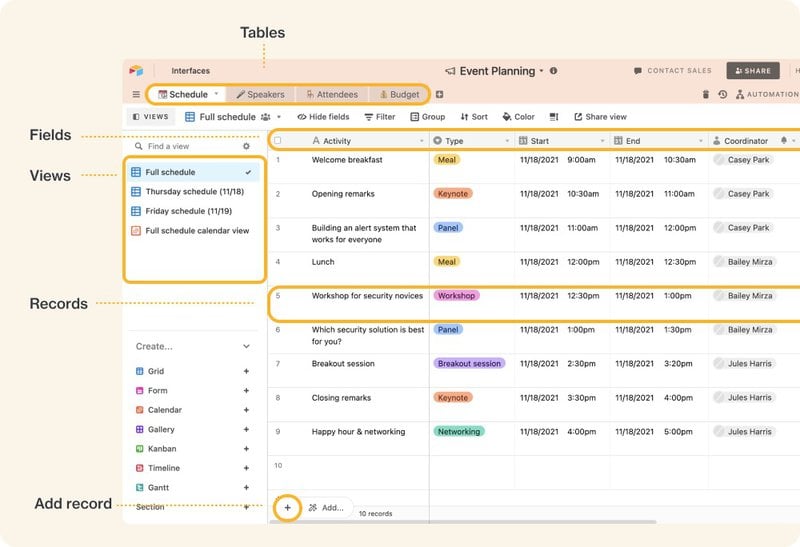
The collaborative editing surface plus the ease of sharing a self-designed template (or embedding it on third-party platforms) gave Airtable the virality it needed to scale past the early-adopter wave.
Zapier has all the hallmarks of a PLG product: a free plan, an intuitive interface, deep self-serve support. What differentiates it is how aggressively it centers the user, prioritizing customer feedback and incorporating user input into its product roadmap through in-app surveys, community forums, and social monitoring.
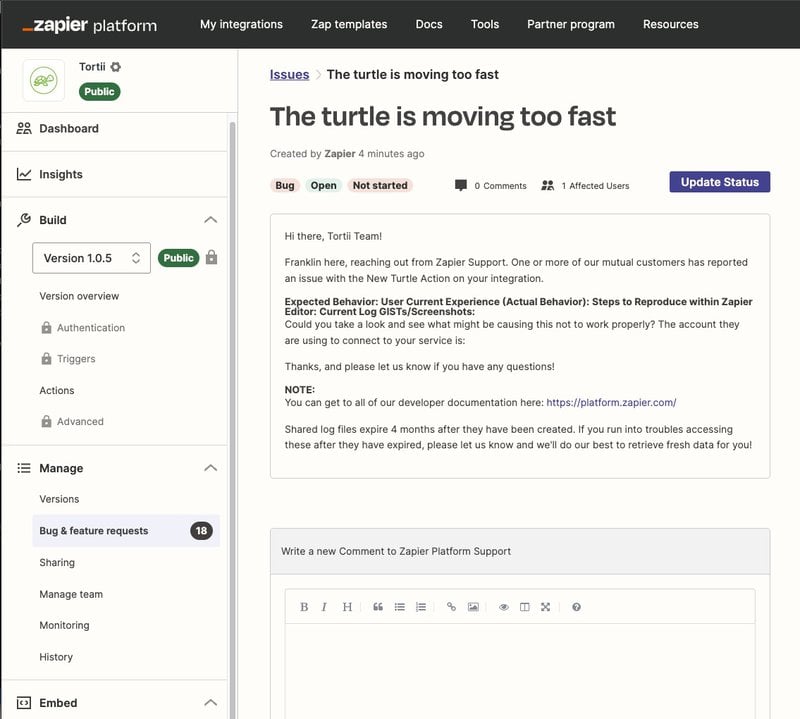
The result: a loyal user base that sticks around even as competitors emerge. Zapier converts feedback into roadmap into user retention into advocacy. That’s a PLG flywheel.
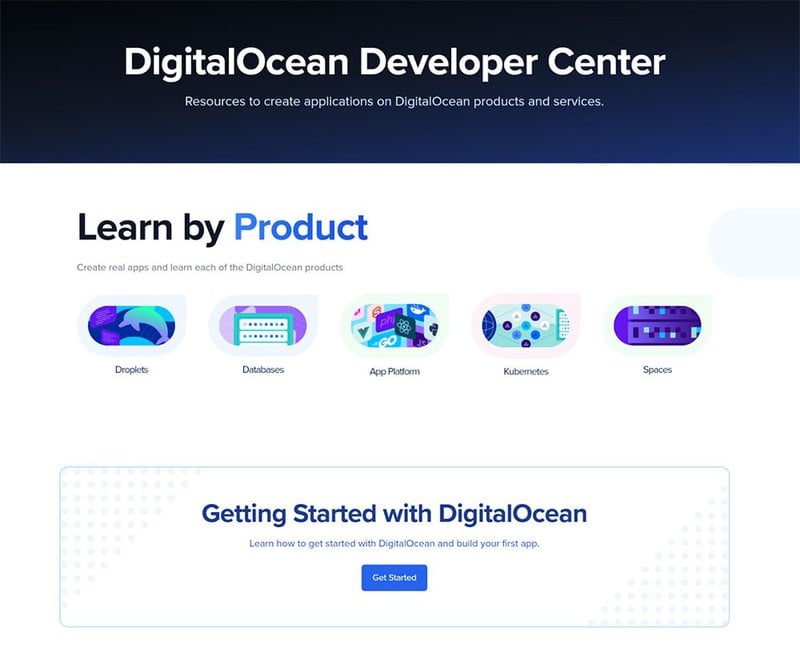
DigitalOcean shows that PLG works for developer tools too. Its Development Center provides a curated collection of resources to help developers learn, upskill, and scale across DigitalOcean’s product offerings (Droplets, Databases, Kubernetes, etc.). The free educational resources build trust, attract developers to the platform, and create the customer loyalty that compounds as users’ technical needs grow.
Pure SLG (where it still wins): Salesforce, ServiceNow, Oracle
Salesforce remains the textbook SLG example for one reason: the product surface is genuinely too complex for self-serve. The company’s sales team works closely with businesses to understand their needs and configure custom solutions, with tailored demos that map specific business challenges (lead generation, customer service, multi-cloud integration) to specific platform capabilities.
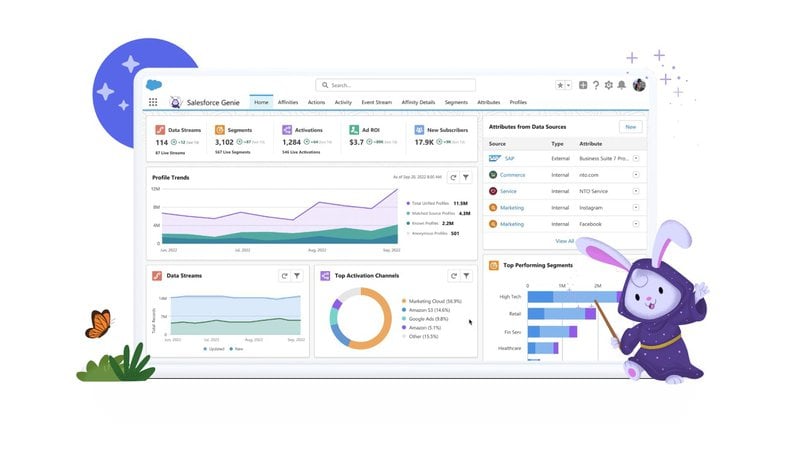
The interesting 2026 wrinkle on Salesforce: co-founder Parker Harris recently asked publicly whether anyone should ever log into Salesforce again. Even the canonical SLG company is preparing for a headless future where agents do most of the interacting and humans just approve outputs.
ServiceNow runs an enterprise sales motion at scale. A large in-house sales team handles lead qualification, demos, and deal closure, while a wide partner ecosystem and third-party referrals provide specialized regional or industry expertise. This dual structure greatly expands ServiceNow’s market reach without diluting deal quality.
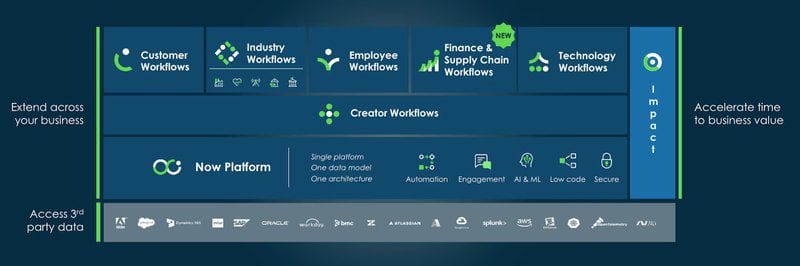
ServiceNow’s in-house sales team plus partner ecosystem. The structure works because enterprise IT buying committees still want a human in the loop. Via ServiceNow.
Oracle’s SLG strategy relies on human-driven engagement across multiple touchpoints. Every prospect gets a knowledgeable sales representative, and every customer gets a dedicated Customer Success Manager. Oracle deploys expert sales consultants to build relationships with business executives, understand their strategic priorities, and emphasize the long-term ROI of Oracle’s solutions.
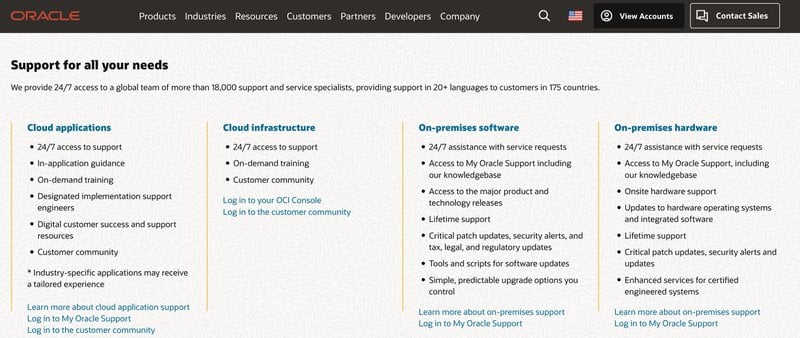
The pattern with the SLG winners: very high ACV, complex implementation, multi-stakeholder buying committees. Below those thresholds, even Salesforce and Oracle now run product-led entry motions for SMB segments.
Hybrid PLG+SLG (the 2026 default): HubSpot, Notion, Figma, Atlassian
HubSpot is the cleanest hybrid example: free CRM and marketing tools at the bottom of the funnel, a sales team that pursues enterprise expansion at the top. The product qualifies the lead. The sales team converts the qualified ones. Notion, Figma, Slack, Zoom, and Atlassian all run a structurally similar motion.
The unlock with hybrid is that you stop fighting over which segment gets which motion. SMB and individual users go through the self-serve funnel. Enterprise accounts that show meaningful product usage get assigned to a sales rep. The product does the lead-generation work. Sales handles the negotiation, security review, and procurement work humans are still better at.
Agentic PLG (PLG 2.0, the new generation): Cursor, Lovable, Gamma, Harvey AI, Perplexity
This is the category most “PLG vs. SLG” posts ignore entirely, and it’s the category that’s growing fastest.
Cursor hit $2B in three years by removing the work, not just the friction. Lovable reached $200M ARR in 12 months with 100 employees by letting users generate working apps in seconds. Gamma, Harvey AI, and Perplexity all built on the same insight: in PLG 2.0, the user’s job shifts from builder to editor. They prompt, refine, and verify. The product does the heavy lifting.
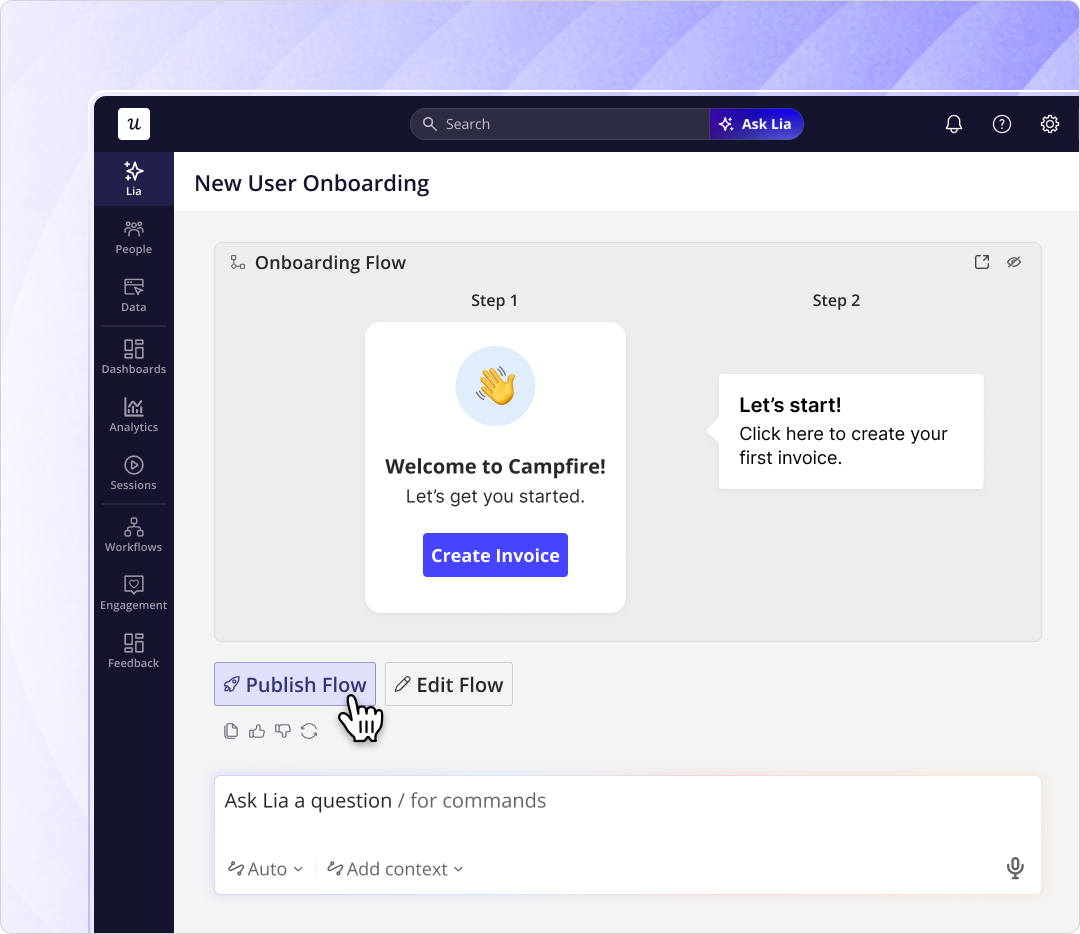
You don’t even have to build PLG 2.0 onboarding manually anymore. Lia, Userpilot’s AI agent, builds in-app onboarding experiences autonomously. You describe the outcome you want new users to reach (publish their first report, invite a teammate before day three, complete the integration setup), and Lia generates the interactive walkthrough, writes the copy, places the tooltips, sets the behavioral triggers, and ships the flow inside your product. No PM writing UX copy at midnight. No designer placing modals. No engineer wiring up event triggers. You give Lia an outcome; she ships the flow.
Headless PLG (PLG 3.0, the leading edge): Netlify
Netlify is already operating in PLG 3.0. 80% of new signups are AI agents. The company recently dropped seat-based pricing from its Pro plan because seat-based SaaS pricing models make no sense when AI agents and non-developers are building with the product. The user isn’t a developer logging into a dashboard. The user is an agent calling an API, deploying a build, returning a URL.
Most B2B SaaS is years away from this. But the product decisions you make today (whether your product is agent-readable, whether your pricing is machine-parseable, whether your docs describe outcomes or just buttons) determine whether you’re ready when it arrives.
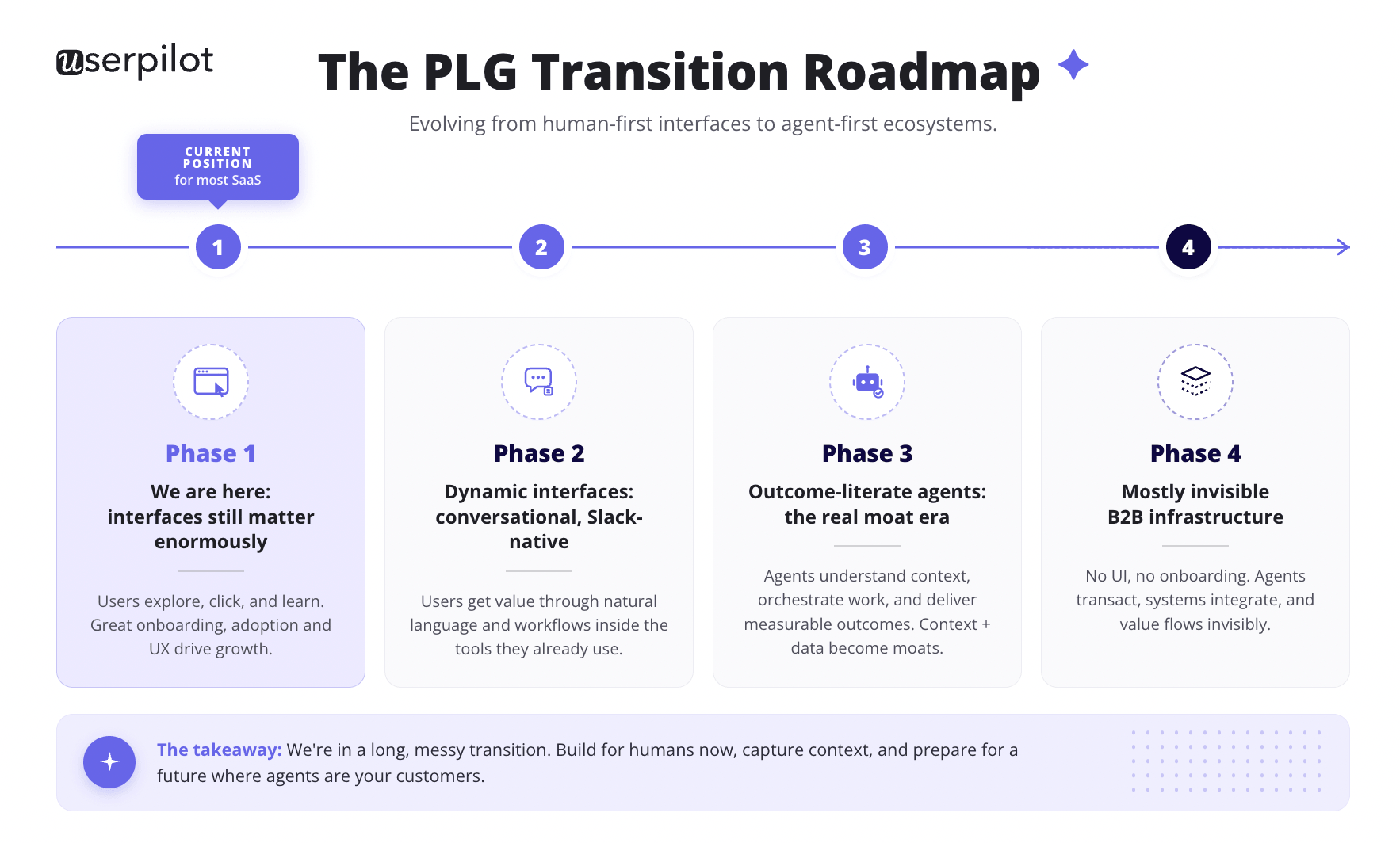
Where this is heading: The PLG 1.0 → 2.0 → 3.0 evolution
This is the part of the PLG vs. SLG conversation almost no other guide will give you. The question of “PLG or SLG” is becoming less interesting because PLG itself is splitting into three eras, and the strategic decision shifts from “PLG or SLG?” to “which PLG, and how much SLG on top?”
Wes Bush, founder of ProductLed and the person who coined “product-led growth,” recently framed the shift this way:
“PLG 1.0 = user-led. PLG 2.0 = agentic. PLG 3.0 = headless.”
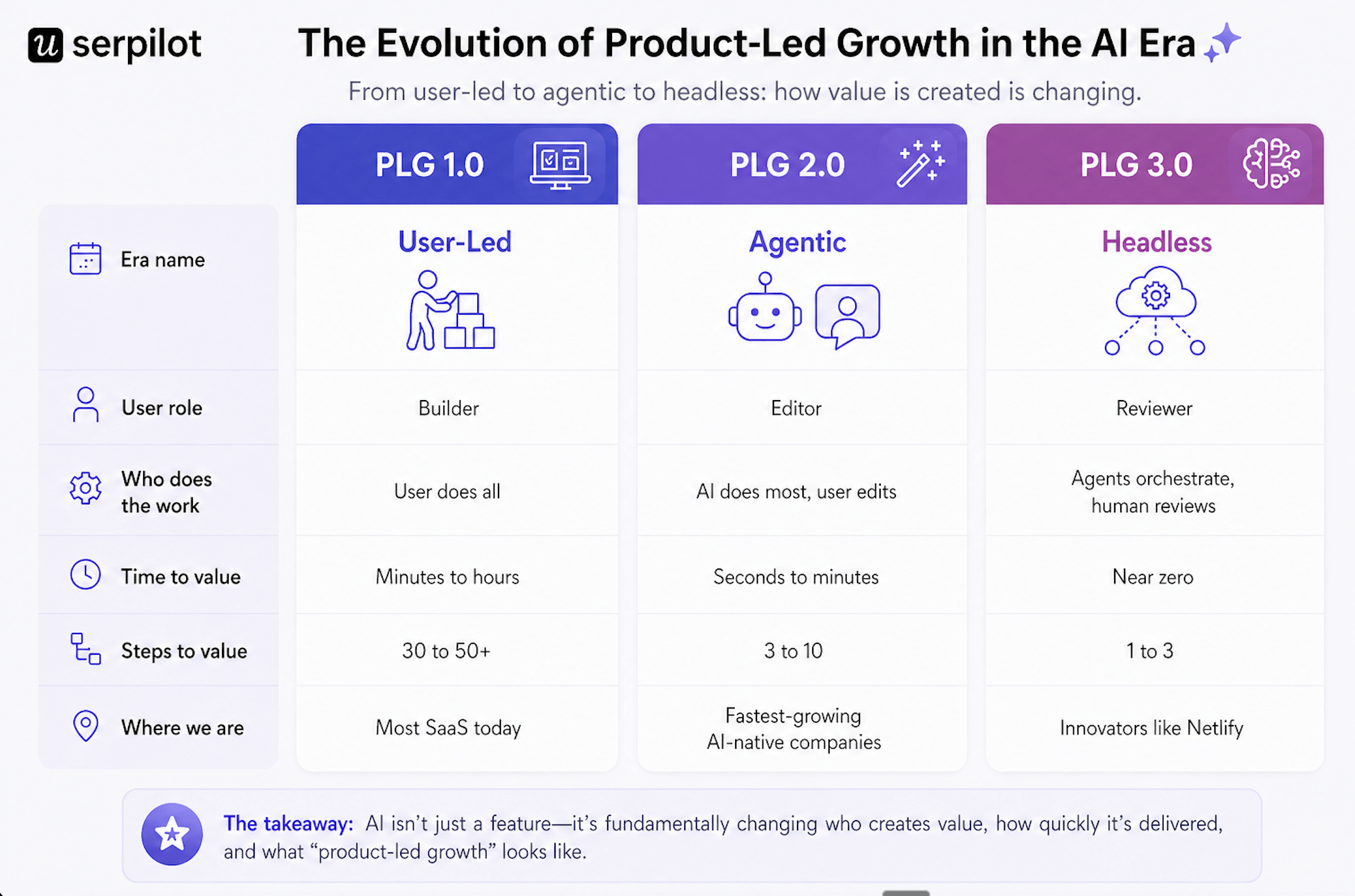
- PLG 1.0 (user-led): The user is the builder. They learn the interface, configure the workflow, navigate the onboarding, and reach their “aha!” moment if the product is well-designed. Time to value is measured in minutes to hours. Most traditional SaaS still operates here. Tooltips and interactive product tours from companies like Userpilot, Pendo, and Appcues addressed adoption bottlenecks in this era.
- PLG 2.0 (agentic): Roughly 20% of software has already shifted here. AI does most of the work. The user prompts, refines, and verifies. Time to value drops to seconds. Activation is redefined as first successful output, not first interaction. Onboarding becomes prompt design. The leading PLG 2.0 companies (Cursor, Lovable, Gamma, Harvey AI, Perplexity) all built on the same insight: remove the work, not just the friction.
- PLG 3.0 (headless): The user becomes a reviewer. AI agents orchestrate work across products. Humans approve outputs in Slack and move on. Netlify is already here. For most B2B SaaS, this is a few years away, but “a few years” isn’t “never.”
The force driving all three transitions is what Wes calls the Halving Principle™: digital task completion time halves every few years. Better tools create gradual halvings; AI creates rapid ones. Every time it happens, users stop comparing your product to your direct competitors. They compare it to the fastest thing they’ve touched recently.
For the PLG vs. SLG decision, the implication is: your “PLG” doesn’t mean what it meant in 2018. The hybrid motion you build in 2026 needs to incorporate at least PLG 2.0 thinking (faster activation, agentic surfaces, output-based metrics) even if your customer base is still primarily human today.
How to choose between PLG, SLG, and hybrid: A 2026 decision framework
The old “PLG vs. SLG” decision framework asked four questions: product complexity, target audience, pricing model, available budget. Useful, dated. Here’s the version that matches the 2026 motion landscape.
The 6 questions that actually matter
- What’s your average contract value, and what’s the implementation complexity at that ACV? Below $5K ARR with low-touch implementation: lead with PLG. $5K to $50K with moderate complexity: hybrid PLG+SLG is your default. Above $50K ARR with multi-stakeholder buying committees: SLG-led with a PLG entry point for the SMB segment.
- Who is your primary user today, and three years from now? If “AI agents” is in either answer, you need agent-readable surfaces (MCP, structured docs, machine-parseable pricing) on your roadmap now. Elena Verna, head of growth at Lovable, has been making this point loudly: “Should MCP be in your ICP?”
- Can a user reach value in under 60 seconds? If not, your PLG motion is from the 2018 playbook. The PLG 2.0 benchmark is sub-minute. The PLG 1.0 benchmark of 10 minutes is now table stakes for the bottom of your hybrid funnel.
- Is your pricing transparent, self-serve, and machine-readable? Can an AI agent parse your pricing page without making inferences? If not, you have homework before PLG 2.0 will work for you.
- Do you have a defined PQL or product-qualified-account model? The hybrid motion only works if sales chases accounts the product has already pre-qualified. Without a PQL definition, hybrid devolves into “PLG with a sales team bolted on top,” which is the worst of both worlds.
- Have you exposed an MCP server or agent-readable API? Table stakes for hybrid in 2026. Mandatory for agentic PLG. Kyle Poyar’s argument here is direct: prospects increasingly show up to evaluation having already spent more time in AI answer engines than on your website. The agent has to be able to read your product before the human ever does.
Decision matrix: Which motion fits which profile
Use this rough matrix to find the motion that fits your business today, then layer in the agentic surfaces that prepare you for 2027 and beyond.
- Pure PLG-led with no sales: Individual buyers, ACV under $5K, low implementation complexity, primarily SMB and prosumer. Examples: Notion (early), Figma (early), Calendly, most developer tools.
- Hybrid PLG+SLG: Mixed buyer profile (individual and committee), ACV $5K to $50K, moderate implementation, mid-market plus enterprise expansion. Examples: HubSpot, Notion (today), Figma (today), Atlassian, DocuSign, Slack, Zoom.
- SLG-led with a PLG entry: Buying committees, ACV $50K+, complex multi-month implementations, regulated industries. Examples: Salesforce, Oracle, ServiceNow, most enterprise security platforms.
- Agentic PLG (PLG 2.0): AI-native products where the user’s job is to prompt, refine, verify. ACV varies widely. Examples: Cursor, Lovable, Gamma, Harvey AI, Perplexity.
- Headless PLG (PLG 3.0): AI agents are the primary user. Humans approve outputs. Today: Netlify and a handful of developer tools. Tomorrow: most B2B infrastructure software.
The hybrid approach: Best of both worlds, with an agentic layer
So far we’ve treated the factors impacting PLG vs. SLG choice as binary. They’re not. You can combine elements of both motions to create a more flexible GTM strategy, the hybrid approach, and that’s exactly what most successful B2B SaaS companies do today.
The hybrid approach typically retains the product as the central driver of user engagement and initial value discovery, while a sales team focuses on identifying high-value accounts, guiding complex implementations, and closing large enterprise deals.
You adopt the strengths of both motions and mitigate their weaknesses.
Why combine product-led and sales-led growth?
Combining elements of both PLG and SLG offers several key advantages:
- Adaptability across customer segments: Meet the needs of early adopters and SMBs with free trials and intuitive onboarding, while catering to large enterprises that need account managers and tailored demos.
- Wider customer reach: You can appeal to a wider range of customers by combining self-serve options with personalized support, or freemium offerings with strategic enterprise sales.
- Balanced growth: The hybrid motion balances PLG’s rapid customer acquisition with SLG’s larger average deal size, leading to more sustainable growth.
- A bridge to the agentic era: Hybrid is also the natural shape of GTM during the human-agent transition. Your hybrid motion today is what you’ll incrementally upgrade with agentic-PLG capabilities (agent observability, machine-readable surfaces, prompt-design onboarding) over the next 24 months.
Build for hybrid today, prepare for agentic tomorrow
Product-led growth vs. sales-led growth is the wrong frame for 2026. The right frame is: hybrid PLG+SLG is the dominant motion now, and PLG itself is splitting into three eras (user-led, agentic, headless) that you need to incrementally adopt. Pure SLG still works for the largest, most complex enterprise deals. Pure PLG still works for the smallest, simplest, individual-buyer products. Everything in between is hybrid, and the hybrid motion you run today should already be incorporating PLG 2.0 thinking (faster activation, agentic surfaces, output-based metrics) before it becomes urgent.
The companies that navigate this transition successfully won’t be the ones that picked PLG or SLG. They’ll be the ones that built lovable human journeys now and agent-accessible systems next, and used the data from the former to power the latter.
Userpilot is built to support teams across each stage of that system: welcome surveys that capture user intent at signup, interactive onboarding flows that shorten time to value, segmentation and analytics that surface usage patterns, an in-app Resource Center for self-serve support, and Lia (our AI agent) that builds onboarding flows autonomously from an outcome prompt. It’s built for the transition period: the long, valuable stretch where humans are still driving and where the teams designing great experiences for them will be best positioned when agents eventually take over.
Ready to see it in action? Book a demo and we’ll show you how teams are building hybrid PLG+SLG motions designed to evolve into the agentic era as the buyer (and the user) keeps changing.
FAQ
What's the main difference between product-led growth vs. sales-led growth?
Product-led growth relies on the product itself to attract potential customers, educate them, and convert them into paying customers through self-service. Sales-led growth relies on a dedicated sales team to identify, qualify, and convert leads through personalized outreach. In 2026, most successful B2B SaaS companies run a hybrid motion that blends both, with the product handling the bottom of the funnel and sales handling the top.
Is product-led growth dead in the AI era?
No. PLG is evolving, not dying. Wes Bush, who coined the term, now describes PLG in three phases: PLG 1.0 (user-led), PLG 2.0 (agentic), and PLG 3.0 (headless). The fastest-growing companies (Lovable, Cursor, Gamma, Perplexity) are operating in PLG 2.0. Netlify is already in PLG 3.0 with 80% of signups being AI agents. The model has never been more relevant. It’s just expanding from “make the product easy for humans to use” to “make the product easy for humans and agents to use.”
What are the pros and cons of a product-led strategy?
Pros:
- Scalability and lower customer acquisition costs. Eliminating the cost of a large sales team lowers customer acquisition costs and makes scaling efficient.
- Faster growth potential. PLG products often encourage viral sharing or user-generated content, accelerating the sales cycle.
- Increased customer satisfaction. Empowering users and providing a positive product experience tends to lead to higher satisfaction and retention.
Cons:
- Over-reliance on product-market fit. PLG depends heavily on organic growth and virality. Complex, niche, or explanation-heavy products struggle.
- Competition in the freemium space. The freemium model lowers the barrier to entry, which intensifies competitive pressure as your product succeeds.
- Monetization challenges. Freemium attracts low-paying users who can be hard to convert into paying customers without strong upgrade paths.
What are the pros and cons of a sales-led strategy?
Pros:
- Effective for complex or high-priced products. SLG works for products that need detailed explanations, customized implementations, or significant evaluation and negotiation.
- Stronger customer relationships and higher CLTV. Personalized interactions and ongoing support foster customer loyalty, larger contract sizes, and increased lifetime value.
- Valuable customer feedback. Direct interactions provide insights for product development.
Cons:
- Longer sales cycles. Personalized sales requires more time to build relationships, run demos, and negotiate deals.
- Potential for friction. An overly aggressive sales rep can damage prospects’ trust and kill deals.
- Higher customer acquisition costs. Building and maintaining a sales team is expensive, and scaling revenue requires scaling headcount.
What is the hybrid PLG+SLG approach, and why is it the dominant motion in 2026?
The hybrid approach combines product-led growth at the bottom of the funnel (self-serve trials, freemium, in-app onboarding) with a sales-led layer at the top (enterprise deals, complex implementations, expansion). It’s the dominant motion in 2026 because the data favors it: hybrid companies hit NRR targets at 67% versus 58% for pure PLG, and product-led-sales companies are 2x as likely to achieve 100%+ year-over-year revenue growth as sales-led-only counterparts. Most category-defining B2B SaaS companies (HubSpot, Notion, Figma, Atlassian, Slack, Zoom) run a hybrid motion.
What is agentic PLG (PLG 2.0)?
Agentic PLG is the second era of product-led growth. Instead of the user doing the work to learn an interface, AI does most of the work and the user shifts from builder to editor (prompt, refine, verify). Time to value drops from minutes to seconds. Activation is redefined as first successful output. Leading examples: Cursor ($2B in three years), Lovable ($200M ARR in 12 months), Gamma, Harvey AI, Perplexity.
What is headless PLG (PLG 3.0)?
Headless PLG is the third era, where AI agents are the primary users, and humans become reviewers approving outputs in Slack or other systems. Netlify is already here, with 80% of new signups being AI agents. For most B2B SaaS, this is 2 to 4 years away, but the foundational decisions (agent-readable surfaces, machine-parseable pricing, MCP integration) need to happen now.
About the author