How Relitix Grew Product Stickiness With Segmented In-App Onboarding



Relitix is a SaaS company that turns raw real estate data into AI-assisted insights for brokerages of every size. Real estate companies use the platform to recruit productive agents, evaluate merger and acquisition targets, and coach agents on the weak spots in their business.
| ⚙️ Challenges | Relitix’s platform is powerful but complex, so every new client equaled another round of one-on-one training. Onboarding couldn’t scale, and the team had no visibility into what users actually did in the app. Relitix needed in-app guidance and behavior analytics in one tool to set up and optimize a self-serve trial. |
| 🏆 Solutions | ✅ Segmented onboarding flows route each new user into the tour that matches why they signed up: recruiting, market share, or office performance. ✅ Relitix launched their first-ever self-serve trial, guided only by in-app flows. ✅ Event labeling and product usage dashboards give the client success team user-level adoption data. Adoption scores are transferred into the CRM and trigger outreach. ✅ Usage data fuels the product roadmap. The features nobody clicks get redesigned or deprioritized. Product stickiness has been climbing since implementation. |
Challenge: Hard to scale one-on-one training and no visibility into user behavior
Relitix’s clients buy the platform to get more visibility into the complex real estate data. The product itself reflects that complexity and has a bit of a learning curve to it. Adie Dugan, the Head of Execution and Client Success, set out to improve adoption and stickiness, and three problems stood in the way:
- Onboarding that didn’t scale: Every new brokerage meant another round of live training, with Adie repeating the same conversations over and over.
“What I started looking for was an overlay to help guide users once they got in our platform. I was doing a lot of one-on-one training with people, repeating the same kinds of conversations. They needed to be able to get into the software and quickly figure out how to use it.”
- Tools that weren’t the right fit: Adie evaluated 6 to 8 vendors, and most of them turned out to be LMS-style platforms rather than the in-app guidance layer she was seeking.
- No visibility into user behavior. The team couldn’t tell which features clients clicked, which they ignored, or how often they logged in.
Solution: segmented onboarding flows, in-the-moment guidance, and user-level adoption data
The Relitix team went with Userpilot because it combined user engagement with strong product analytics features. Relitix could also easily feed its own backend data into the platform, and Userpilot had the best price-to-value ratio.
“I think Userpilot had the lowest cost, or it was very, very close. And if it wasn’t, there was an additional feature or support that I felt was worth the money.”
Relitix built its new onboarding around one idea: clients come to the platform for different jobs, so they should be onboarded differently.
Segmented onboarding flows for every use case
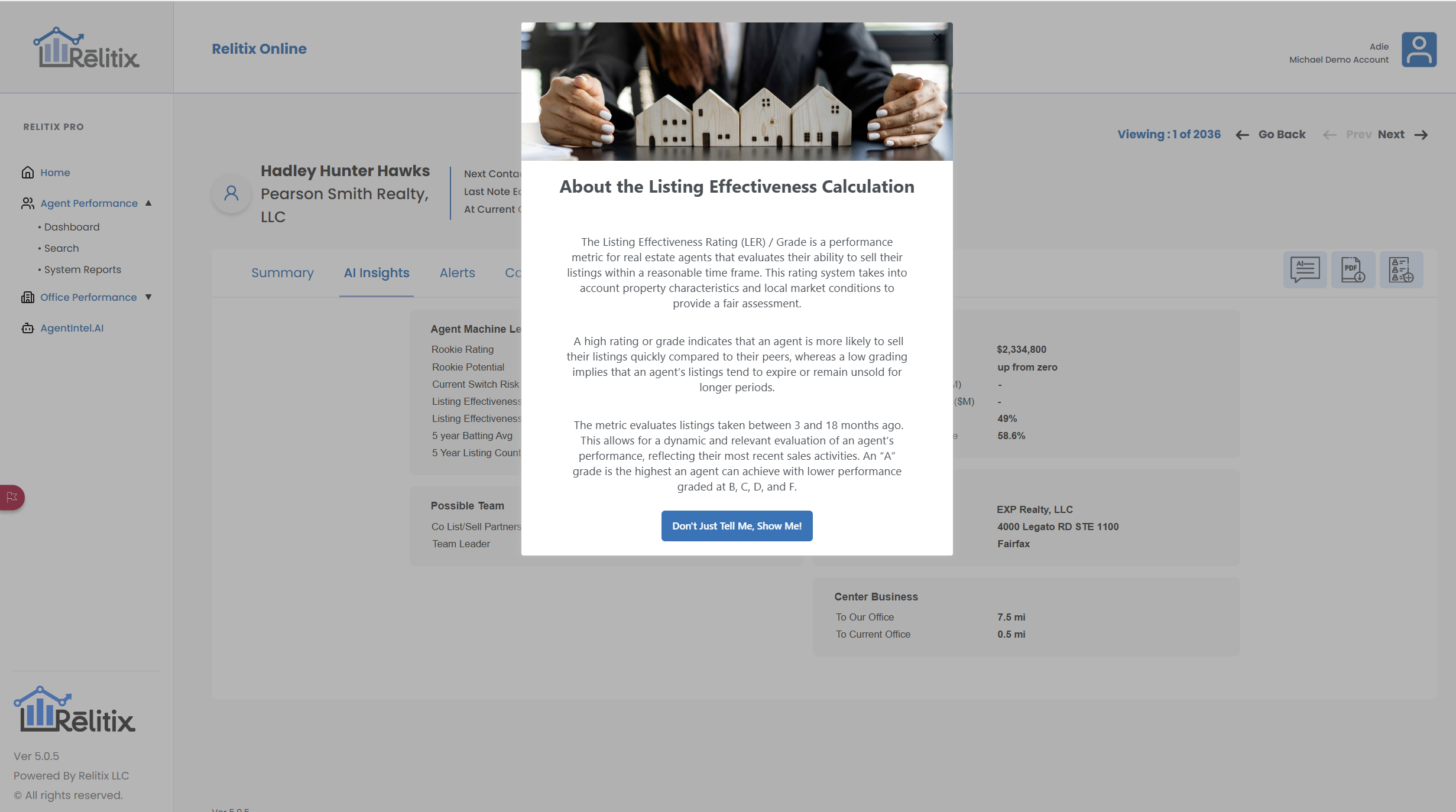
A signup wizard on Relitix’s side collects what the new user is trying to accomplish. A Userpilot welcome modal then picks up where the wizard ends and routes the user into the matching flow.
“The welcome flow says: Welcome to Relitix, take a moment and pick which tour you want to go through. The users can follow that, but they can stop, come back, or choose other options.”
Each flow teaches the basics of its use case, which helps every user type get to their activation moment quickly.
Spotlights, checklists, and a resource center for contextual learning
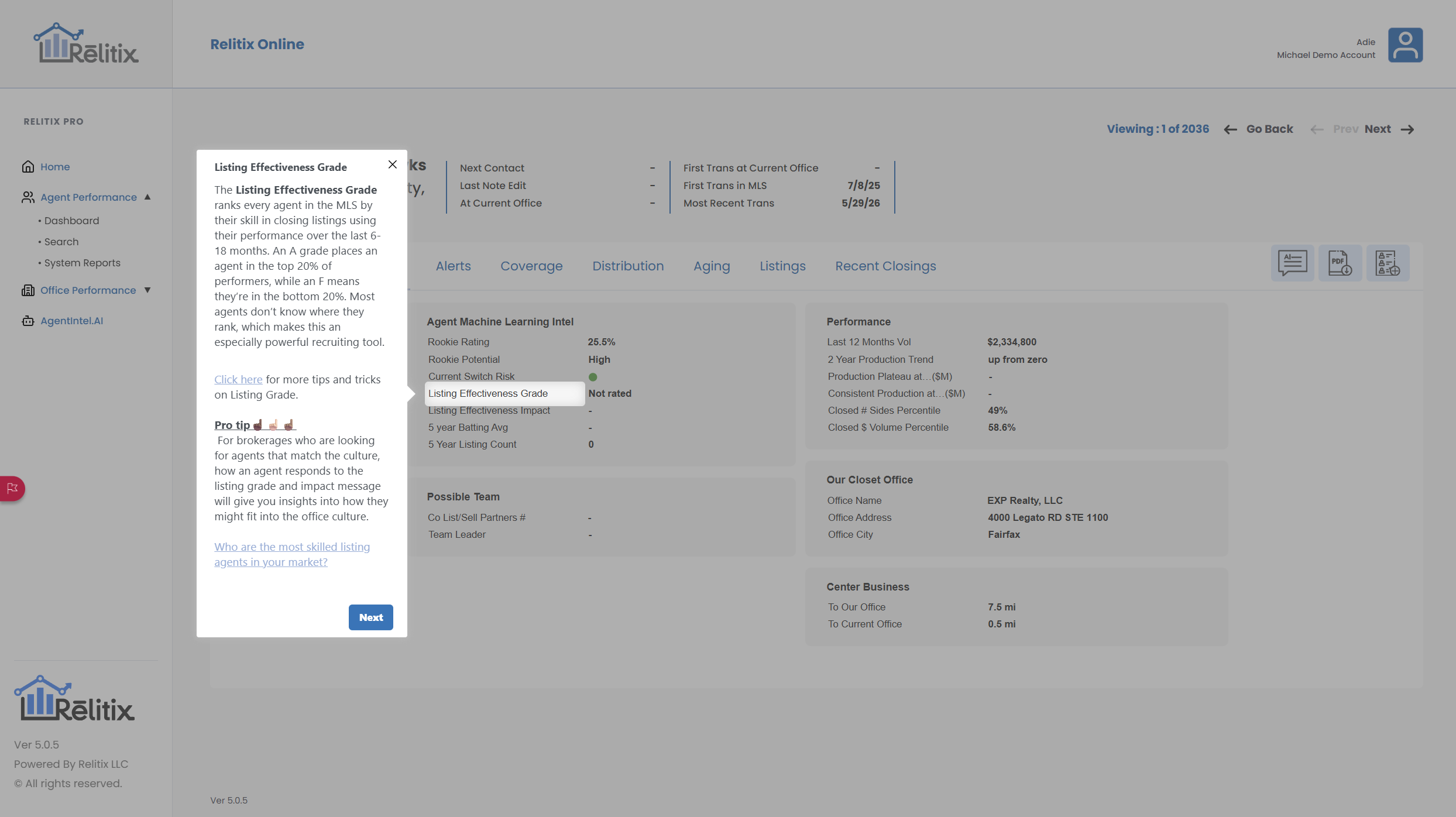
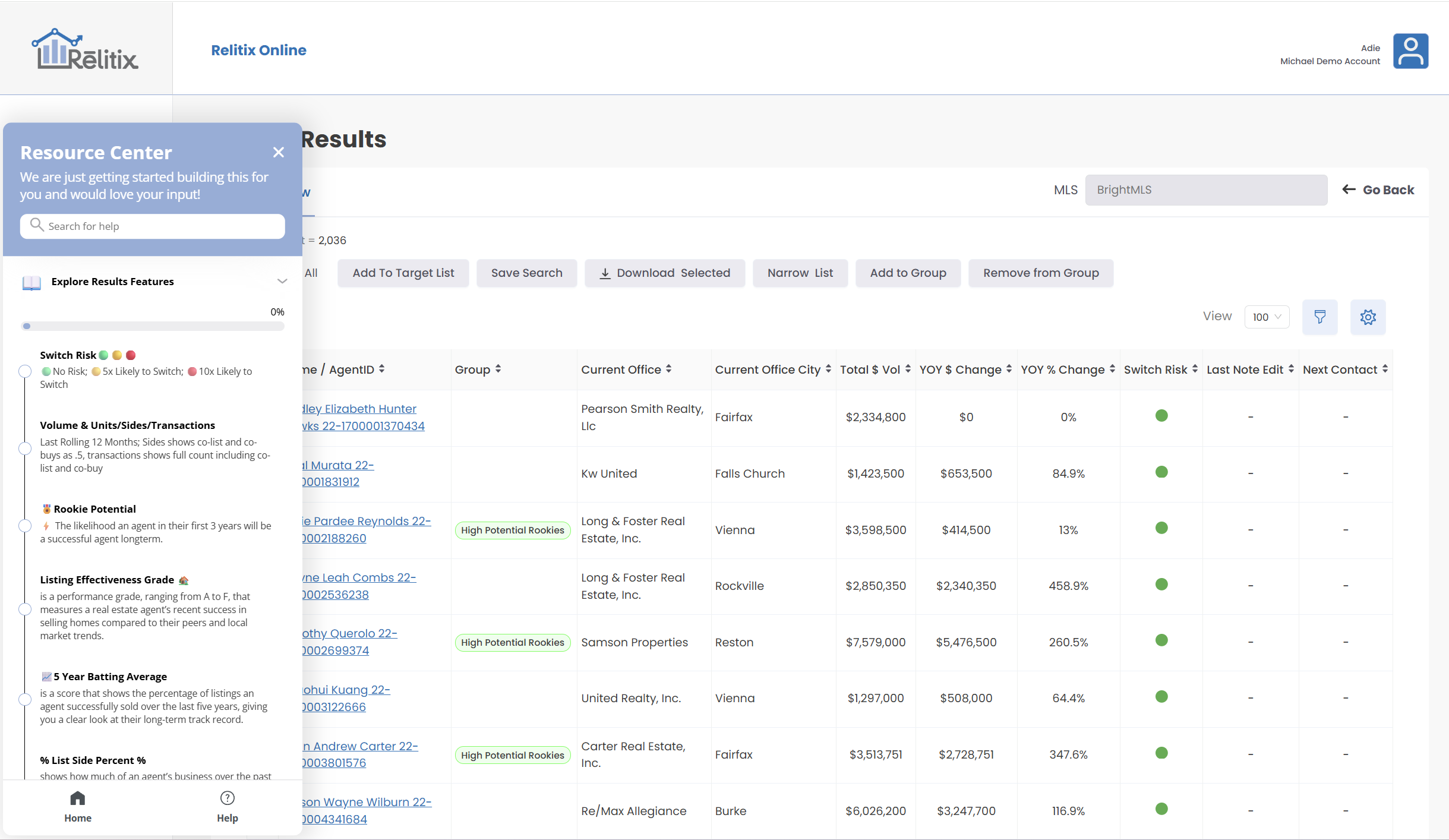
Beyond the first session, Relitix uses spotlights to explain features right when users encounter them. Adie is now combining them with checklists to create an in-app learning experience: a user opens “explore this page” from the resource center, picks the item they’re curious about, and gets the explanation and videos for that exact element.
The resource center also collects feature requests.
User-level analytics that trigger client success plays
Adie labels events without involving developers and tracks pages, sessions, and top events for every account. When a client approaches the end of their first 90 days, she checks how consistently they log in, watches session replays to see what they engaged with, and grades their adoption in the CRM. Then, they adjust educational resources to the client’s specific needs.
Product usage dashboards that inform the roadmap
Adie regularly checks the product usage dashboard with its stickiness report. The data visibility also changed how she works with the product team:
“All the metrics that I’m getting now help me inform the conversation when I’m talking to my product team. I can say: nobody’s actually ever clicking on that, it might be a feature that we sunset. Or nobody’s clicking on it, but I know they want it based on the conversations we’re having, so we need to make that UX better.”
Results: a first-ever self-serve trial, climbing stickiness, and faster product decisions
Userpilot helped Relitix free the human resources they used for onboarding while improving user stickiness and their internal decision-making processes.
A self-serve trial that converts without hand-holding
The clearest win came when Relitix did something it had never dared to do: let prospects start a trial directly from the website, with no human walkthrough.
“We had never done a self-service trial before Userpilot because our platform was complicated and needed a lot of hand-holding. But the first person who came through the in-app trial said: “It was great, you had all these pop-ups that came up and walked me through, and I knew just what I was doing.” And that’s the entire reason why we did this.”
Raising product stickiness to 30%
Relitix’s north-star metric has moved in the right direction since the Userpilot rollout, with user stickiness reaching 30% at its peak.
Product decisions backed by behavior data
Click and event data now decides whether a feature gets sunset, redesigned, or promoted harder, and adoption scores in the CRM decide which client gets outreach. In Adie’s words: “All the information that we’re getting out of Userpilot is helping us to make better decisions.”
Less support work on the horizon
With the knowledge base still being filled in, Adie expects the next measurable win to be a decrease in support tickets.
Make product adoption drive itself: Relitix’s advice for getting value out of Userpilot
Relitix’s first year with Userpilot shows what a single inquisitive owner can get out of one tool. If you’re considering a similar setup, here’s what you can learn from Adie’s experience:
- Segment onboarding by the job users signed up for. Relitix routes new users into recruiting, market share, or office performance tours from a single welcome modal, and each tour targets the most relevant activation moment.
- Compare vendors on data access, support, and price. Adie evaluated 6 to 8 platforms. Userpilot won on the analytics behind the engagement layer, the responsiveness of support, and a price that was at or near the lowest quoted.
- Act on adoption data instead of just reporting it. A medium adoption score within a client’s first 90 days triggers a client success play in the CRM. Stickiness, which has peaked at 30% since rollout, is the metric that tells Adie whether those plays work.
- Use behavior data to settle product debates. Features that nobody clicks get deprioritized or redesigned, so roadmap conversations start from events rather than opinions.
- Jump in and ask questions. Adie learned the platform by clicking around and emailing support: “I really appreciate how fast support is, and how incredibly helpful and specific.”
Here’s how Adie sums it up:
“Userpilot is absolutely worth the money. Its learning curve depends on its complexity, but once you adopt it, you will have exactly the level of success that you said you wanted.
About the author