Features, Advantages, Benefits in 2026: FAB Statements for Decision-Makers and End-Users


In B2B SaaS, the buyer approving the purchase and the practitioner using the product every day are two different people evaluating it through entirely different lenses. Decision-makers evaluate at the business level by measuring how much it costs, what it produces, and whether it adds or reduces risk. On the other hand, practitioners evaluate whether the product actually removes friction from their daily work. When FAB statements skew toward buyers, practitioners are left without a personal reason to engage. Conversely, leading with workflow detail gives practitioners what they need but gives buyers nothing they can use to justify the spend.
The fix lies in connecting the dots for both audiences. Create a cohesive chain between feature (what the product does) to advantage (how it changes daily work) to benefit (its impact/outcomes) within the contexts that both audiences can read from. This guide covers all three elements within the two-audience structure and shows real examples from Slack, Dropbox, and even our own work at Userpilot.
What is the FAB model?
FAB analysis is a technique used to understand and communicate the value of a product by mapping its attributes into three categories: features, advantages, and benefits. The goal is to define what matters in the interaction between the three elements, such as what advantages the features unlock and how those advantages translate into benefits for the user. A FAB statement is the sales and marketing output of that analysis that conveys all three elements to a target audience in a way that connects them into a logical chain.
You’ll find FAB statements in sales decks, product pages, in-app guidance, onboarding copy, and any other surface where you’re trying to help customers understand what a feature produces for them. The reason FAB statements are so important is that most buyers make purchase decisions based on outcomes rather than capabilities. A well-constructed FAB statement does the translation work for them, connecting what the product is to what it does to what that change is worth so they don’t have to make the connections themselves.
Features are the characteristics of the product: what it does and what it includes. They’re objective and describable without reference to any particular user. For a smartphone, a feature is the camera, whereas in a SaaS product, it’s a specific capability (e.g., in-app surveys, product analytics, workflow automation, session replay, etc.). The feature description answers “what does this product do?” without yet making claims about why that matters to any particular person.
Advantages are how the product helps the user. They elaborate on a feature by explaining what the user can now do because of it (not what the feature is but what it enables). The camera in a phone allows the user to take photos anytime without carrying a separate camera. The feature changes what’s possible in the user’s daily life, but it’s the advantage that takes the technical description into the user’s actual world. Advantages are also the evidence layer that makes the benefits that follow believable to both audiences.
When a decision-maker reads a subsequent benefit claim, the foundational advantage is what makes it credible by explaining the mechanism rather than just asserting the outcome.
Benefits are what the user gains from using the product. In other words, the outcomes that advantages make possible. A benefit of the smartphone camera is that you no longer need to carry additional equipment to take photos, which follows from the advantage of being able to take photos without that equipment. The benefit follows from the advantage (which itself follows from the feature). What matters for SaaS product managers is that benefits can resonate with the two audiences who might be reading.
End-users respond to individual-level benefits like tasks getting done faster, eliminated friction points and manual decisions they no longer have to make. Decision-makers respond to business-level benefits like increased output, decreased cost, and managed risk. The same advantage can apply to both but a benefit statement that articulates only applies to one audience leaves the other with an incomplete answer. Even within the same audience, different user personas can experience different benefits from the same advantage so that gap is all the more noticeable between end-users and decision-makers.
Writing FAB statements for decision-makers and end-users
FAB statements that lead with ROI give decision-makers the clear business outcomes and productivity claims they need to put in a budget justification. But practitioners reading the same copy see nothing about their actual daily work and adopt slowly as a result because no one has bothered to explain why the product improves their specific workflow.
As a result, the product closes deals well but onboards badly, causing a pattern of high acquisition but low retention.
Conversely, FAB statements that lead with workflow detail help end-users immediately understand how the product changes their day-to-day work but the decision-makers reading the same copy can’t translate those workflow improvements into business terms they can justify to their organization. This creates the opposite issue where genuinely good products (that would have been easily adopted) keep losing deals all because the buying committee never saw a benefit that they recognized or understood.
The surface-dependent fix
The right approach depends on whether you’re able to control who the reader is. In scenarios where you can control the audience, feel free to write separate FAB statements optimized for each group. A tooltip that’s only ever shown to practitioners via targeted in-app messaging can lead with the individual-level benefit without having to justify itself in business terms. Similarly, a proposal delivered only to a non-technical buying committee can lead with ROI without diving too deep into the daily workflow mechanics.
When you know who’s reading, it’s easy to optimize for them. Sadly, that’s not always possible. For shared surfaces where you can’t control the reader (such as a homepage, comparison page, or blog post) the fix is making the chain as explicit as possible. Fully state the progression from what the product does (feature) to how it changes daily work (advantage) to the resulting business-level outcomes (benefit) so that both audiences can follow along the entire journey regardless of which part they’re involved in or care about most.
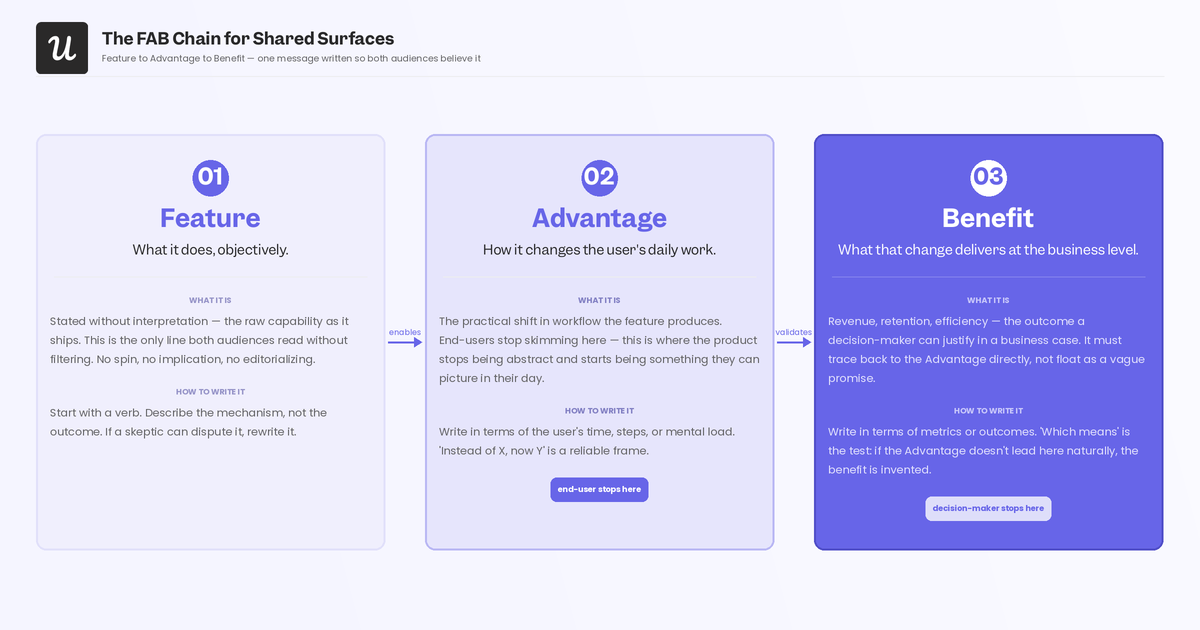
A decision-maker who reads “your support team logs fewer escalations which reduces ticket volume by an average of 30%” gets the business outcome they need to justify the spend, while the preceding advantage “shows users the next step in context without leaving the product” already told the practitioner how their daily work changes before the benefit was stated. The advantage is the shared evidence that makes the benefit credible to both readers from the same sentence without alienating either one.
How the FAB model can help product managers
The FAB model is invaluable in helping product managers write product descriptions, differentiate from competitors, and prioritize features.
1. Features and benefits help in writing product descriptions
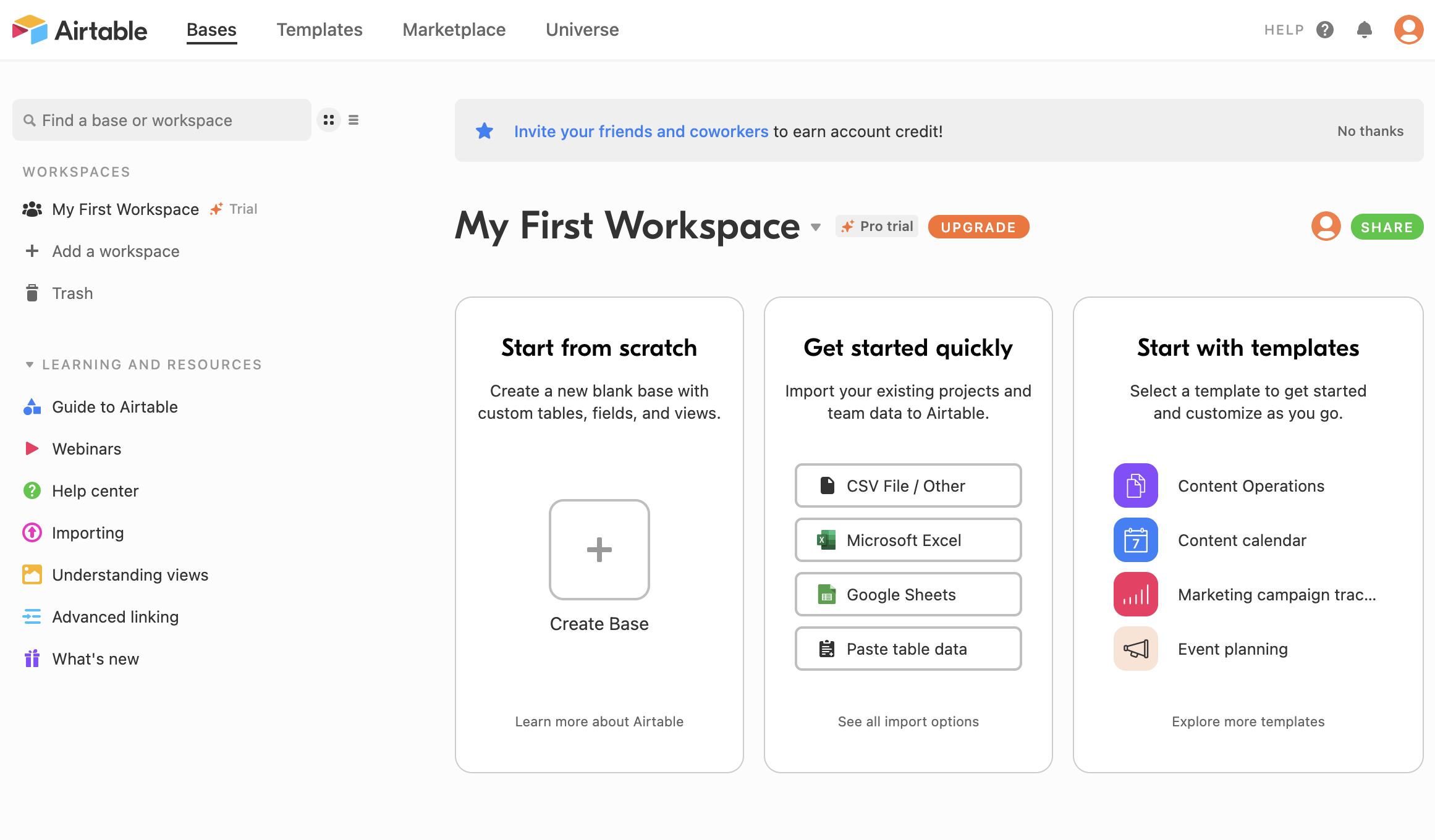
The FAB model helps product managers bring features to life. It’s much easier to describe a feature when you present it through the lens of what it enables and what it produces. That framing also sets the right expectations and helps avoid the value gap because users who understand how a feature changes their work are more likely to try it than users who only know what it does. Mapping out FAB chains also reduces time to value. When users know how a specific feature helps them complete a job, they can choose the right capability quickly rather than exploring blindly.
That’s exactly what Airtable demonstrates in its empty state messaging. Instead of listing feature specifics, it tells users what actions they can take and what those actions accomplish.
2. Advantages help understand how features differentiate the product
Mapping feature advantages and benefits also supports a consistent product differentiation strategy. Different users in different markets have different needs, and a FAB analysis helps you identify how your product satisfies the needs of each segment. This is especially useful when the same feature produces different advantages for different user types. A product analytics feature might advantage a product manager by revealing drop-off points in a funnel, while advantaging a customer success manager by surfacing accounts at risk. Same feature, different advantages, different benefit statements to write for each segment.
This gives your copywriters and product marketing team the material to draft compelling messages that resonate with each target audience rather than generic copy that tries to speak to everyone and lands with no one.
3. The FAB analysis helps with feature prioritization
Establishing the links between features and their corresponding advantages and benefits helps with feature prioritization and backlog grooming. When you can see the chain of value each feature produces, it becomes easier to decide which capabilities will deliver the most benefit and prioritize them on the product roadmap. Features whose advantages and benefits are difficult to articulate are often the ones that serve no clear user need — a useful signal before you commit development time to them. This framing also helps product teams avoid the build trap: shipping features because they seem useful rather than because they produce a specific, articulable outcome for a specific audience.
If you can’t complete the FAB chain for a feature, that’s worth interrogating before it gets scheduled.
Examples of features, advantages, and benefits of successful software products
How does the FAB chain work in practice? Here are two familiar SaaS products broken down by feature, advantage, and benefit (with annotations showing how the benefits land differently for both audiences).
Slack
Slack is a messaging and communication platform.
Features:
- Text messaging, video calls, and audio huddles across teams.
- Searchable channels for organizing conversation by topic or project.
- Workflow automation for recurring tasks and approvals.
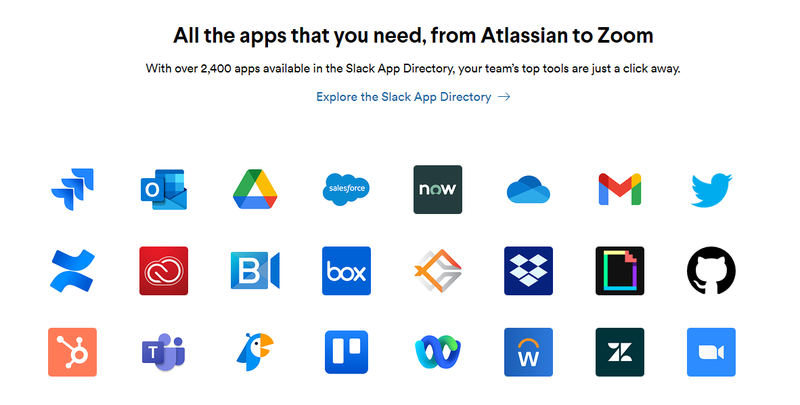
- Integrations with external tools like Miro, Trello, and Salesforce.
Advantages:
- Dispersed teams can choose the most suitable communication mode for each situation, reducing meetings and email threads.
- Searchable channels let team members find information without asking someone else to resurface it.
- Automation handles recurring tasks so teams don’t set up repetitive processes manually.
- Integrations let teams complete tasks in a single workspace without switching between tools.
Benefits:
The main benefit of Slack is that it helps businesses save time and reduce coordination overhead. For the practitioner, the individual-level benefit is fewer interruptions, less context-switching in daily work, and fewer meetings that could have been an email (or emails that required an entire meeting to resolve). For the decision-maker, the business-level benefit is a measurable reduction in meeting overhead and the cost of coordination across teams (which quickly compounds as organization headcounts scale).
Dropbox
Dropbox is a cloud-based file storage and sharing platform.
Features:
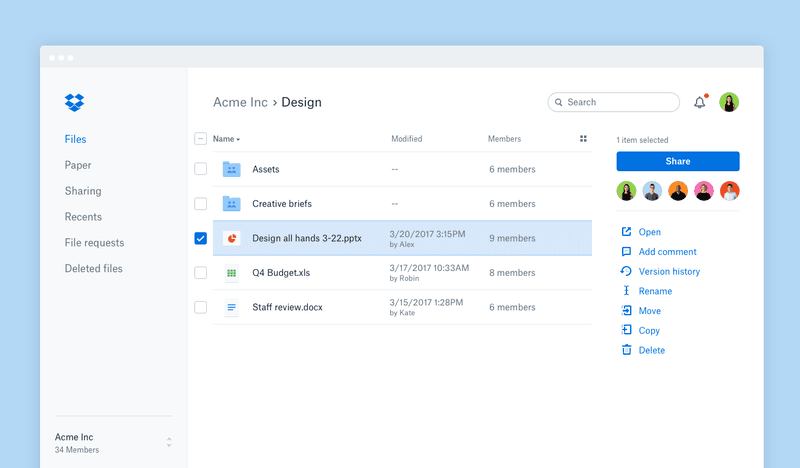
- Cloud file storage and backup.
- File recovery and version history.
- 256-bit AES and SSL/TLS encryption.
- Cross-device sync with desktop and mobile apps.
Advantages:
- Users can store and share large amounts of data without physical drives.
- High-level encryption secures data from unauthorized access.
- File recovery and version history let users retrieve lost files or earlier versions of documents.
- Cross-device sync means the same files are accessible from any device at any time.
Benefits:
The key benefit of Dropbox is convenience, but even that can still mean different things to each audience. For the practitioner, the individual-level benefit is the confidence of having files accessible, recoverable, and safe. For the decision-maker, the business-level benefit is risk reduction provided by the encryption, file recovery, and version history to protect the organization from the financial or legal consequences of accidental deletions and security breaches
How can product managers use features, advantages, and benefits to drive product adoption?
The Pareto rule applies here: 80% of the value in most products comes from about 20% of the features (and most users only engage with that top 20%).
The challenge is that different users need a different 20% and they won’t find it unless you help them. FAB analysis, combined with in-app messaging, is how you close that gap to drive adoption across your user base.
Segment your users to identify relevant features
The first step is grouping users into segments and mapping the relevant features for each group. Users provide a lot of useful data during the sign-up process and in welcome surveys. Even basic segmentation lets you start attributing relevant functionality to each persona.
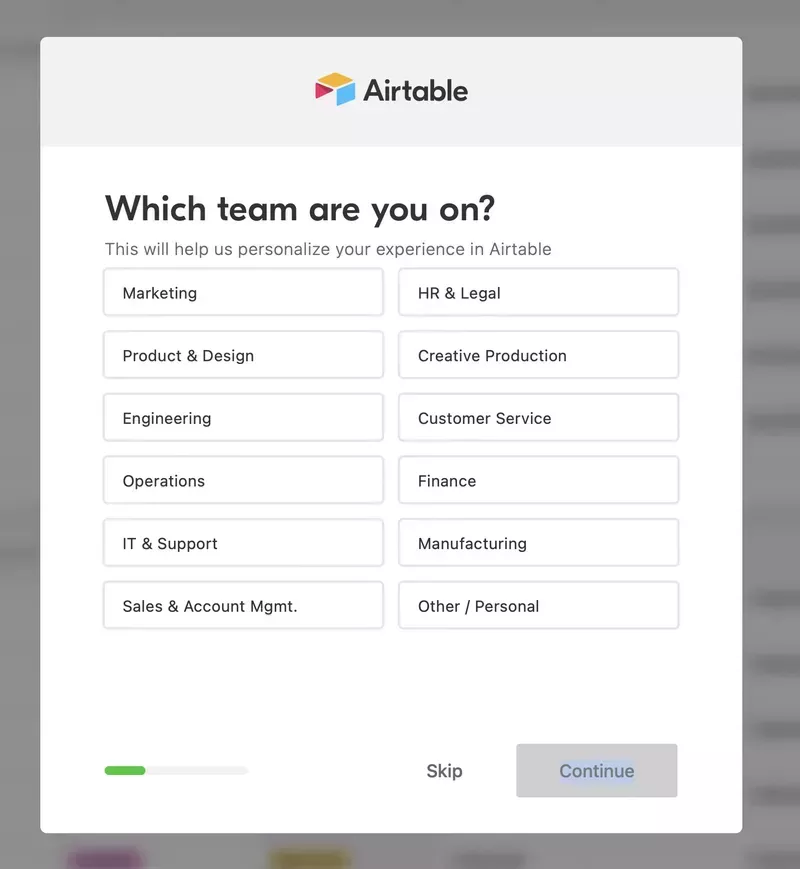
Once you’ve grouped users, you can identify which features produce the advantages and benefits that matter most to each segment. A product manager and a customer success manager using the same product are looking for completely different benefits, so the in-product messages they receive should reflect that.
Use tooltips to highlight the benefits of specific features
Now that you have features, advantages, and benefits mapped to specific user segments, use in-app messages to surface the relevant value to each group. Tooltips are a fast, no-code way to achieve that without engineering involvement.
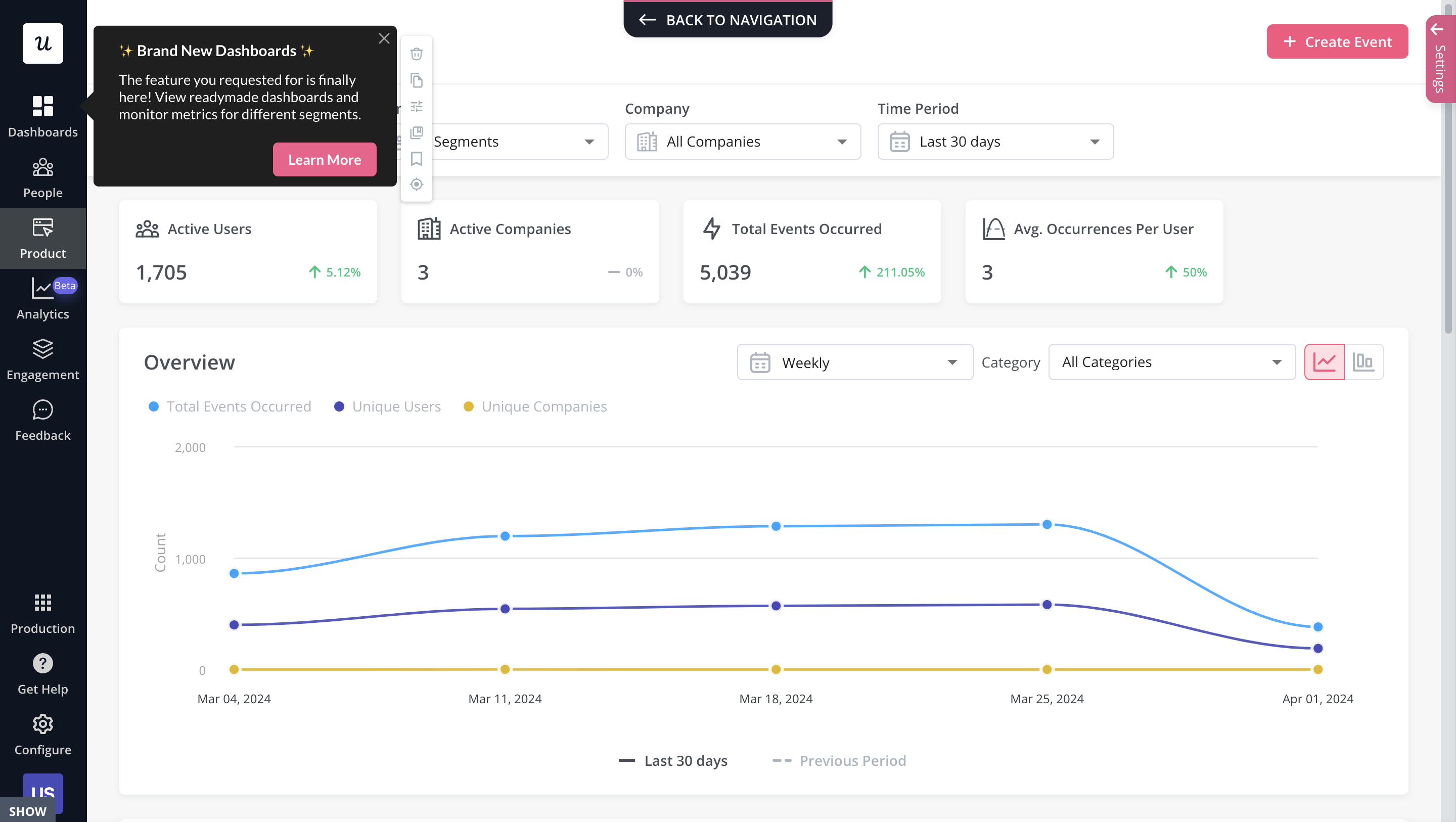
The goal with tooltips isn’t just to describe a feature or explain how to use it. It’s to communicate the advantage: how this specific feature changes what the user can do right now, in the context they’re already in. A tooltip that says “Click here to add a column” is merely describing a feature, whereas a tooltip saying “Add a column to track the metric that matters to your team and filter by it in any report” is communicating the advantage and benefit.
Leverage AI to refine your product messaging
Coming up with copy that encapsulates features, benefits, and advantages in one place takes iteration. You’ll likely need to work through multiple versions before landing on a FAB statement that works for your specific audience.
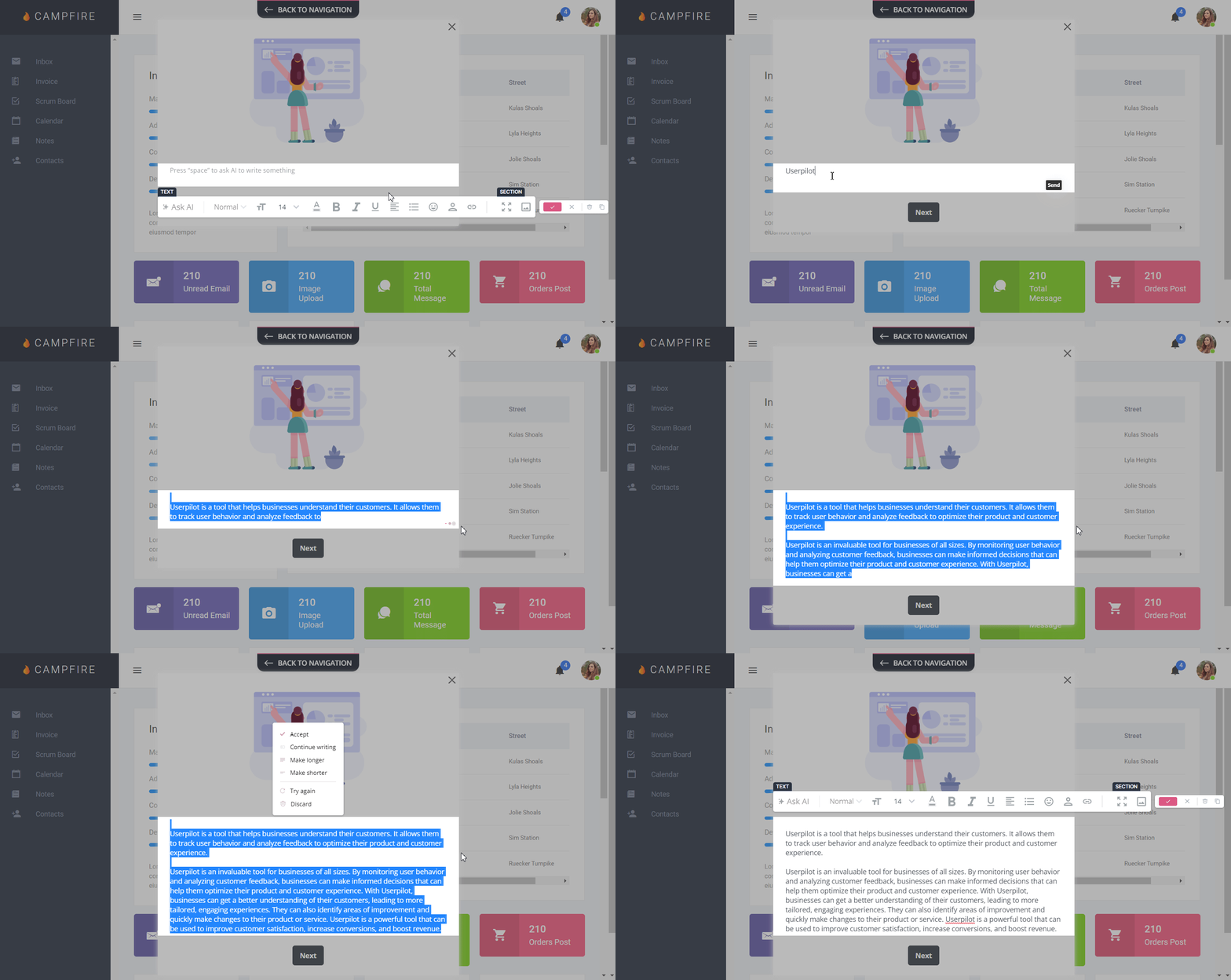
AI writing tools can help accelerate that process, letting you shorten, expand, or reframe a statement to test different emphasis points. The output is raw material for iteration rather than final copy, but it compresses the brainstorming phase considerably. At Userpilot, the AI writing assistant built into the flow builder lets you do this directly inside the context where the message will appear.
Collect user insights and improve your messaging based on them
Qualitative feedback is valuable for FAB work in two ways. First of all, it surfaces user needs and pain points that may not show up in analytics, which gives you material for new advantages and benefits to articulate. Secondly, it shows you how customers describe the product in their own words.
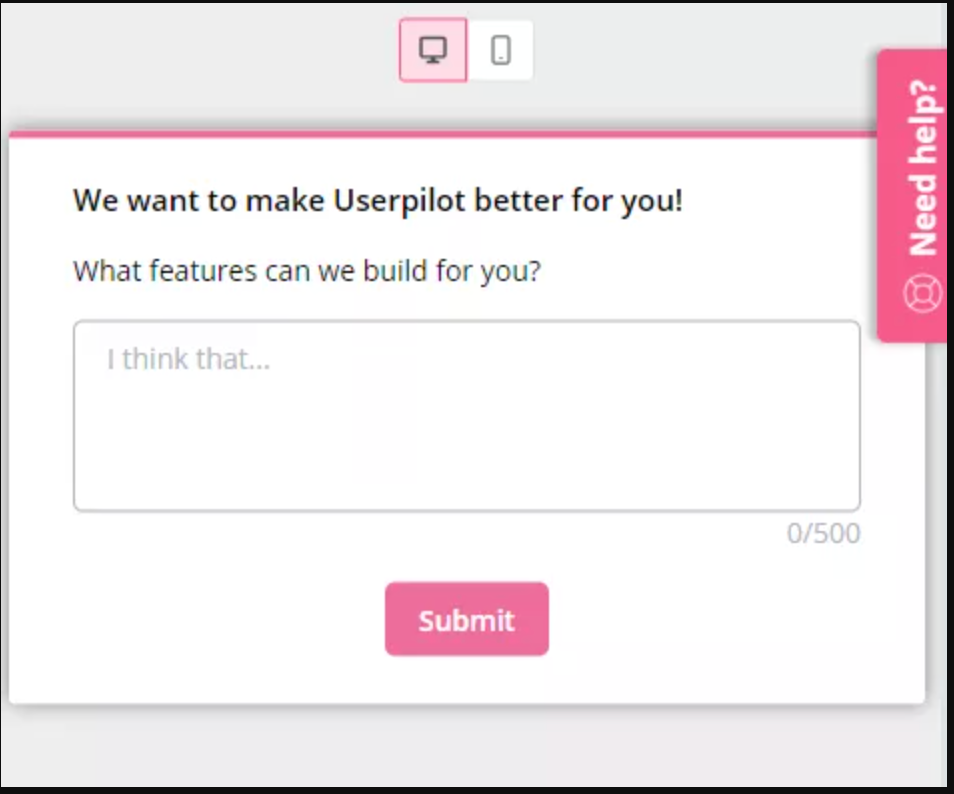
The language users use to describe the benefit they get from a feature is often sharper and more persuasive than anything a product team could write independently. If five customers describe your product as “the tool that stopped me from guessing about my users,” then that exact phrase is more compelling in a FAB statement than any generic benefit claim you could draft.
Conclusion
FAB works when the chain is explicit (feature → advantage → benefit) with the advantage serving as evidence rather than filler and benefits articulated in a way both audiences can appreciate. Controlled surfaces may let you optimize for one audience at a time but shared surfaces require a clear FAB chain that can appeal to either reader. A FAB statement is only doing its job if both decision-makers and end-users can follow along. If you’d like to see how Userpilot helps you contextually communicate features, advantages, and benefits in-app then book a demo so we can show you what that looks like in practice!
About the author