11 Best Digital Adoption Platforms for Customers and Employees


Digital adoption platforms (DAPs) address a challenge shared by product and IT teams: getting people to use software effectively. Our Product Metrics Benchmark Report found that product-led SaaS companies had an average activation rate of just 34.6%.
On the employee side, Ivanti’s 2025 research found that 62% of office workers feel overwhelmed by learning new technologies, while 54% say their employer expects them to teach themselves how to use new tools.
DAPs help ease the learning burden. Product and growth teams use them to drive customer adoption, while IT and L&D teams use them to train employees on business applications.
To help you choose the right DAP, I’ve shortlisted 11 platforms and evaluated each against the criteria that matter most for its intended use case.
Executive summary
- For customer adoption: Look for product analytics, targeted guidance, and AI that helps identify and fix adoption gaps.
- For employee adoption: Prioritize application coverage, workflow enforcement, employee training, and implementation effort.
- Before choosing: Check what’s included in each plan, how pricing scales, and whether the platform supports your adoption goals.
| Tool | Best for | Main limitation | Starting price | G2 rating |
|---|---|---|---|---|
| Product adoption platforms | ||||
| Userpilot | Spotting adoption drop-offs and fixing them with an AI agent | Some web features, like session replay, aren’t available on mobile yet | $299/month (2,000 MAUs) | 4.6/5 |
| Appcues | Reaching users across web, native mobile, email, and push | Less intuitive for teams that want to build and manage flows without extra help | $9,000/year (up to 50,000 MAUs; billed annually) | 4.6/5 |
| Userflow | Teams where everyone builds, with unlimited seats | No native mobile SDK or session replay | $300/month (1,000 MAUs) | 4.8/5 |
| UserGuiding | Combining a knowledge base with in-app onboarding | No native mobile support; Starter limits active guides and languages | $349/month (2,000 MAUs) | 4.7/5 |
| Chameleon | Testing on-brand experiences with AI assistance | Ranger and AI-powered demos require Growth or Enterprise | $279/month (2,000 MTUs) | 4.4/5 |
| Frigade | An AI assistant that learns your product | Growth limited to 2,500 monthly queries; some integrations require Enterprise | $1,000/month (Growth) | 4.8/5 |
| Employee adoption platforms | ||||
| WalkMe | Guidance across many internal apps in large rollouts | Ongoing maintenance and technical expertise for complex workflows | Custom quote | 4.6/5 |
| Whatfix | Training employees in simulated app environments | Mirror simulations require manual updates when applications change | Custom quote | 4.6/5 |
| Userlane | Discovering which apps employees use, then guiding them | It doesn’t autosave guides or support simultaneous editing | Custom quote | 4.7/5 |
| Apty | Enforcing processes and clean data entry in ERP and CRM apps | Some workflows require custom scripts or technical support | Custom quote | 4.7/5 |
| Nexthink Guides | Connecting adoption guidance with device and app performance data | Requires the broader Nexthink Infinity platform | Custom quote | 4.6/5 |
What are the best digital adoption platforms for product adoption?
Some of the best DAPs for product adoption include Userpilot, Appcues, Userflow, UserGuiding, Chameleon, and Frigade.
Most offer similar basics, such as tours, checklists, and AI features. To distinguish them, I’d evaluate each platform against four criteria:
- Built-in analytics: Does it offer native product analytics, or require a separate tool to connect adoption problems with the guidance you launch?
- Platform reach: Does it support web only or native mobile too? Choose one that covers the environments your customers use.
- Who the AI serves: Does AI help your team analyze behavior and build guidance, answer end-user questions, or both?
- Pricing model: Is pricing based on MAUs, seats, tracked users, or usage? Check plan limits and whether a free plan or trial is available.
1. Userpilot: For spotting adoption drop-offs and fixing them with an AI agent
I put Userpilot first because it’s the agentic product adoption platform that connects the full adoption loop, from identifying where users struggle to guiding them forward and measuring whether adoption improves.
Getting started requires a JavaScript snippet or Google Tag Manager for web apps. For mobile apps, Userpilot offers a separate SDK that developers can install in minutes. After installation, your team can start building web experiences code-free through Userpilot’s Chrome extension.
Say you’ve launched a new reporting feature, but adoption remains flat despite announcing it to customers. Here’s how Userpilot can help you investigate and address the problem:
- Find the drop-off: Use funnel analysis to see which users tried the feature but didn’t complete their first report. Path analysis can also show where users go instead.
- Understand what’s stopping them: Watch session replays of users who abandoned the task. Rage clicks, errors, and form abandonment can reveal friction that analytics alone won’t explain.
- Guide users forward: Ask Lia, Userpilot’s AI agent, to analyze the behavior and draft flows or checklists tailored to each user group. Lia draws on product usage, profile data, survey responses, and session replays to personalize the guidance, which your team can review before publishing.
- Measure the impact: Use trends to track feature usage and retention reports to see whether users keep coming back. You can also create custom dashboards to monitor flow performance and survey feedback in one place. If you need AI assistance, Lia can analyze your data and generate reports from natural language prompts like “How did reporting feature adoption change after we launched the checklist?”
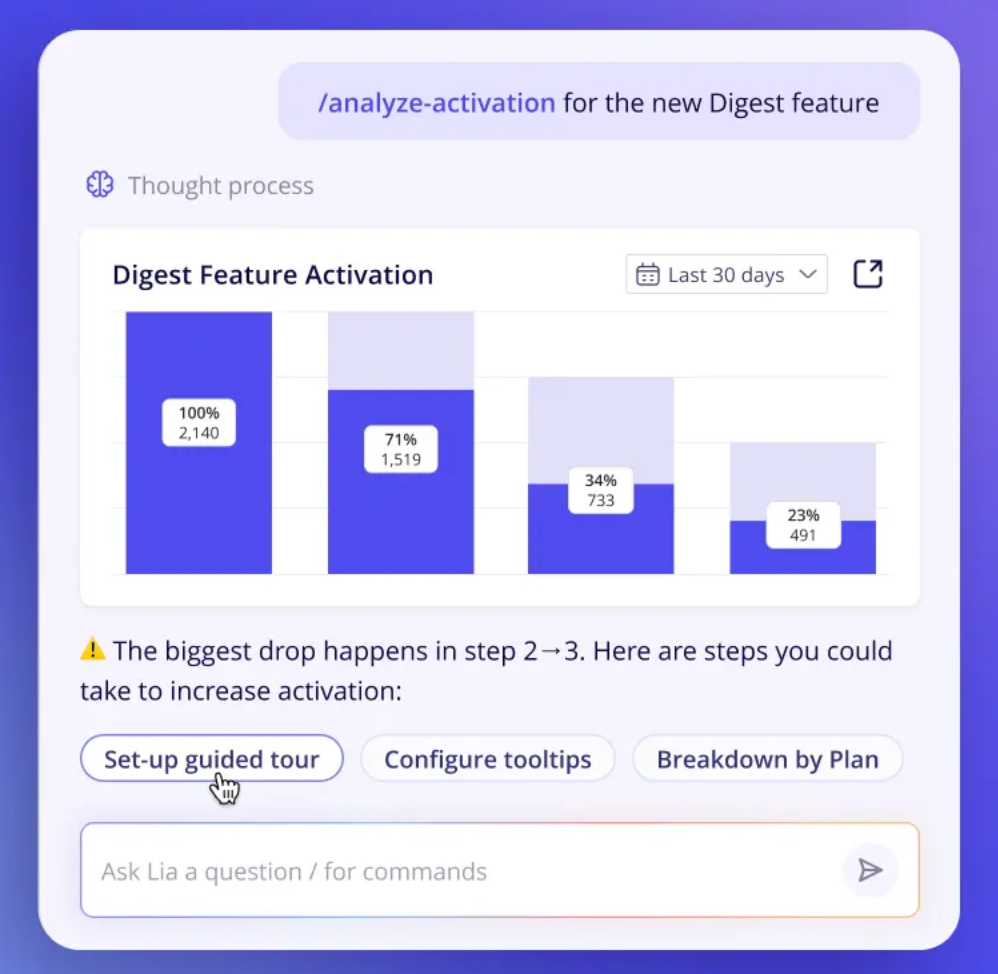
Lia also handles data instrumentation, like tagging pages and features and flagging broken tags. And if your team prefers working in external AI tools, Userpilot’s MCP server (Userpilot Headless) and APIs let you query usage and create reports, dashboards, segments, and surveys through tools like Claude and Cursor.
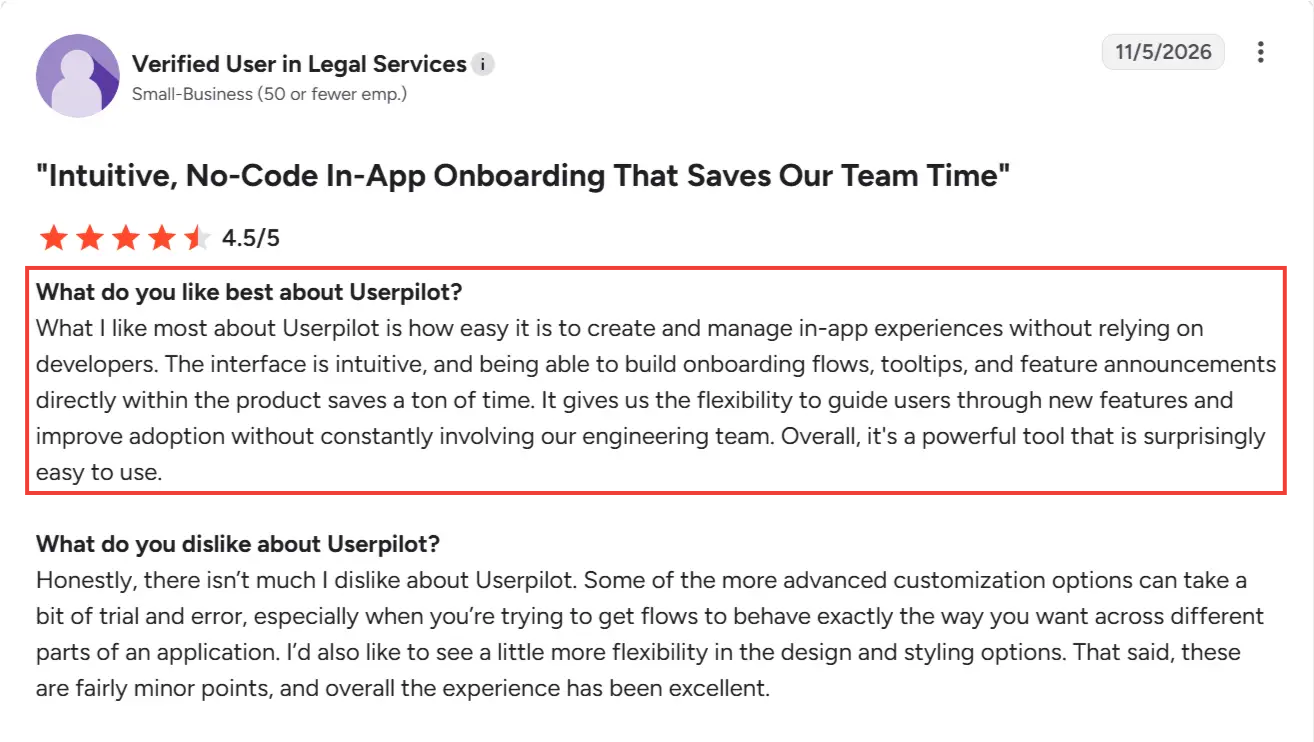
For the guidance itself, you can combine modals, tooltips, slideouts, and banners into interactive walkthroughs or onboarding checklists. One G2 reviewer appreciates being able to create and manage these experiences without developer help.
Amplemarket, our customer, is a good example of this analytics-to-guidance approach. By combining Userpilot’s autocaptured events, session replays, and contextual in-app guides, the company achieved a 5–10x increase in feature adoption.
“As a product manager, you can feel powerless. But with Userpilot, you feel more powerful.” — Awni Shamah, Staff Product Manager at Amplemarket
Mobile is one area where Userpilot still has room to grow. Pierre on G2 says he’d like to see more of the web features available on mobile.
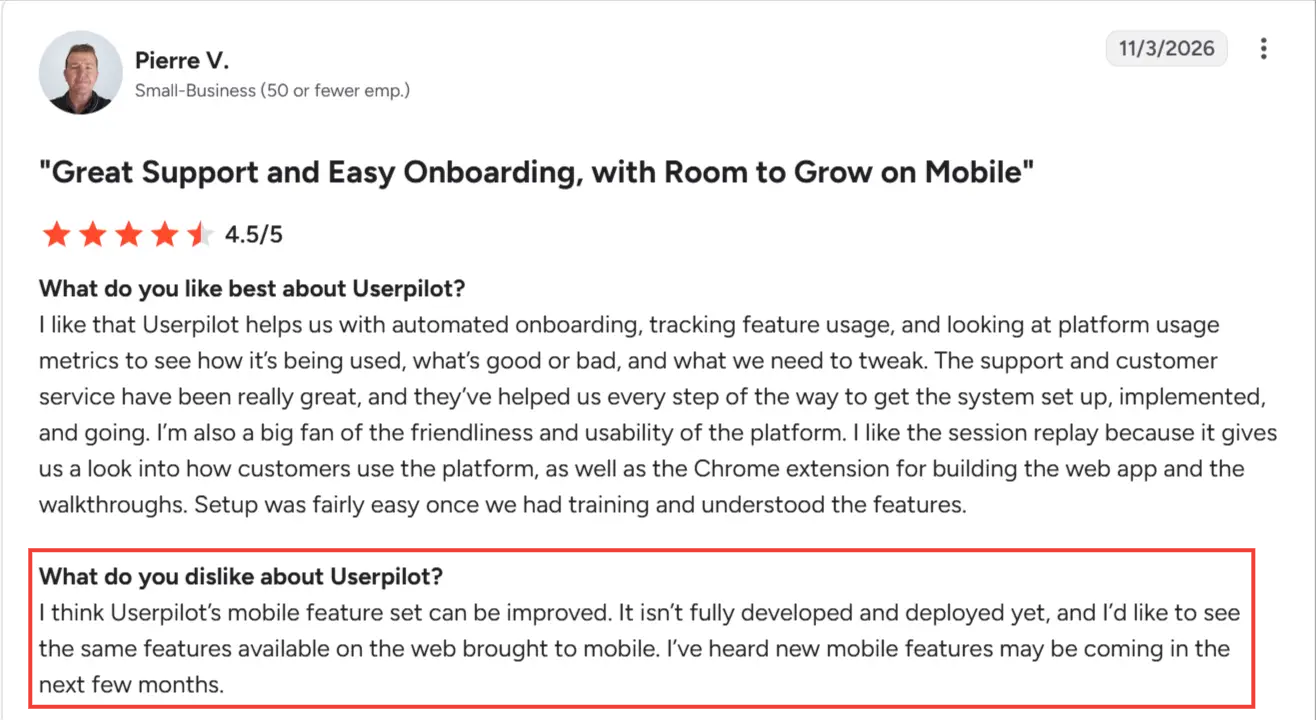
That’s a fair point: Userpilot supports native mobile onboarding, surveys, push notifications, and analytics, but some capabilities aren’t at parity with web yet. Mobile session replay, for example, is coming soon, while session replay is already available for web apps.
Pricing: Starter costs $299/month for up to 2,000 MAUs. Teams with more users or that need advanced analytics start on Growth, which costs from $849/month for up to 100,000 MAUs. Enterprise pricing is custom.
2. Appcues: For reaching users across native mobile, web, email, and push
Appcues has been around since 2013, but its July 2026 Appcues 2.0 relaunch expanded its reach. Teams can now coordinate adoption campaigns across web and native mobile apps, email, and push notifications based on user behavior.
For example, you could announce a feature through an in-app modal, then follow up with an email or push notification based on user behavior. Other capabilities include:
- In-app experiences: Build Flows using modals, slideouts, tooltips, and hotspots. You can also create checklists, banners, Launchpads, embeds, and NPS surveys.
- Campaign measurement: Use the platform’s Campaigns and Tactics framework to set adoption milestones and track completion. Its funnels, retention reports, and user journey analytics help you understand what happens beyond individual experiences.
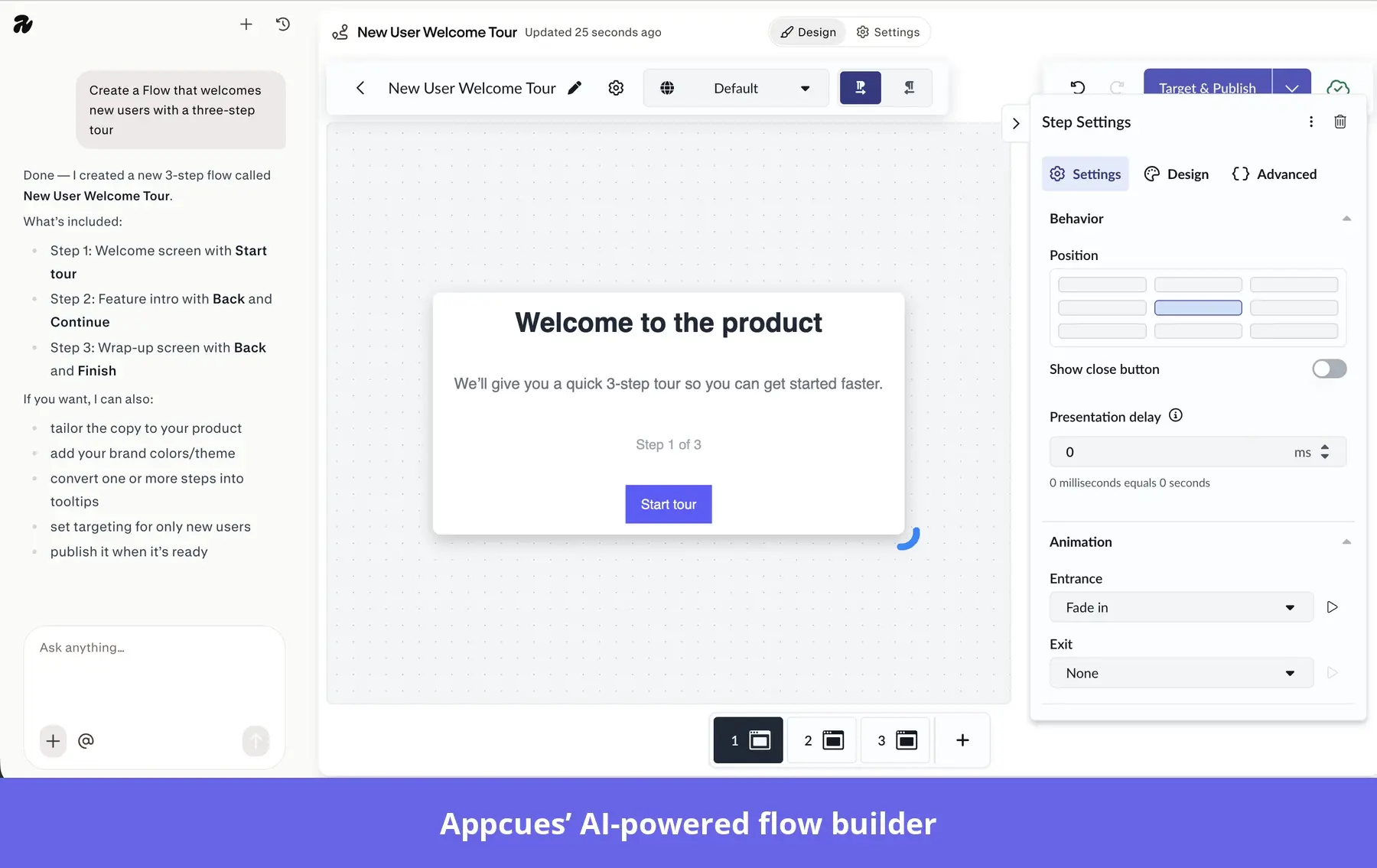
Appcues AI can also draft experiences and analytics dashboards from prompts, mockups, or URLs. In addition, the platform’s Captain AI assists with analytical tasks like segmentation, performance analysis, and troubleshooting.
Developers can install Appcues through a JavaScript snippet, npm package, Segment, or Google Tag Manager for web apps. Native mobile apps require a separate SDK.
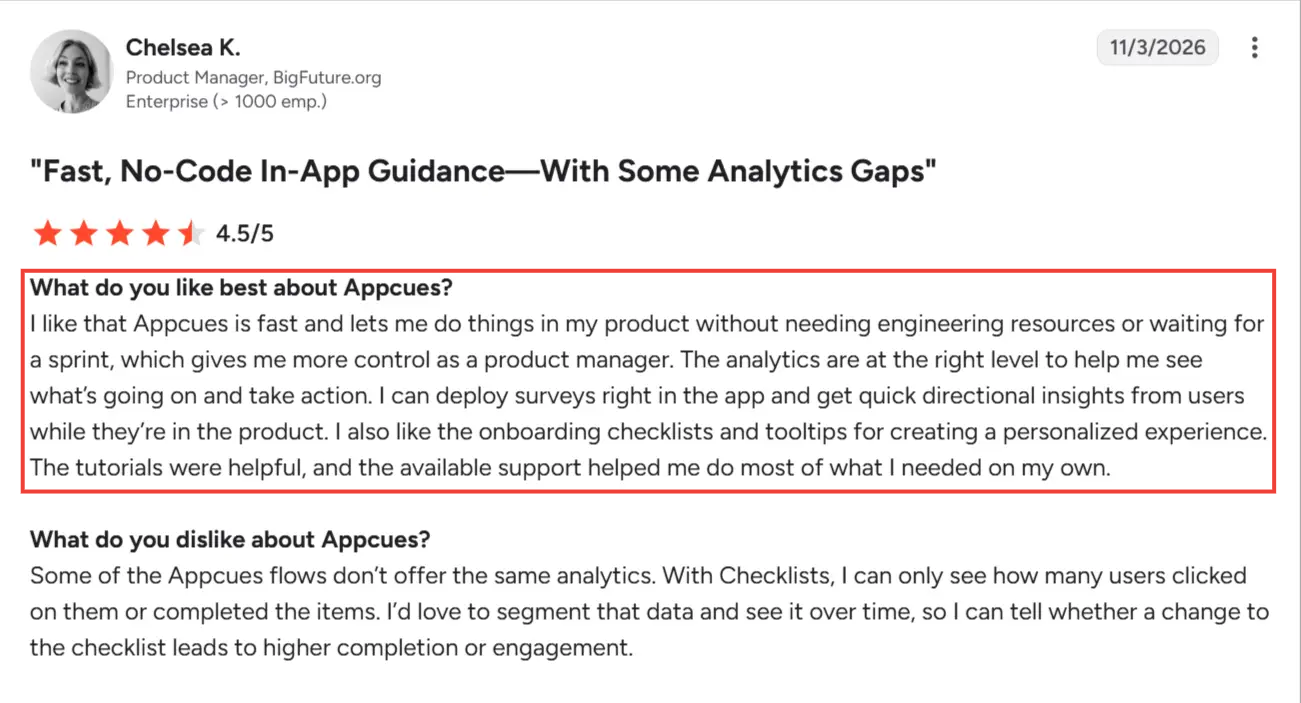
After setup, your non-technical team members can build and manage experiences without relying on engineering for every change. Chelsea on G2 particularly likes that independence.
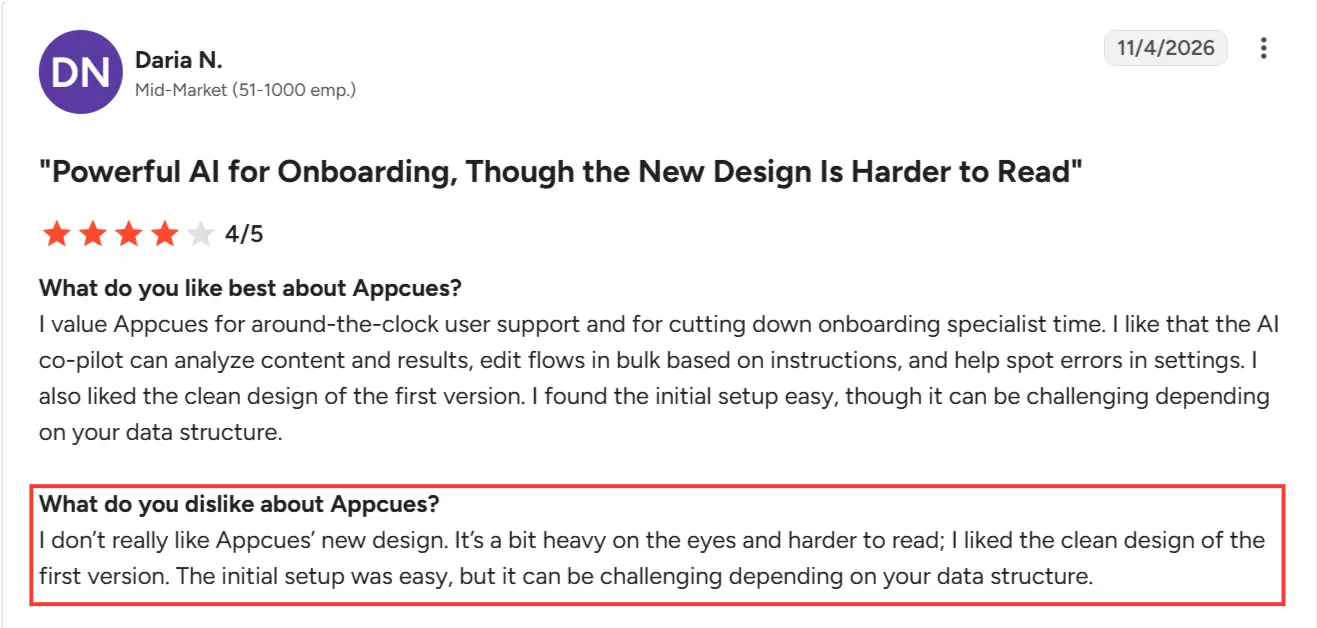
However, no-code doesn’t necessarily mean easy to use. The Room chose Userpilot over Appcues because its team found Userpilot easier to work with and could build flows without additional help. The redesigned interface has also drawn criticism. Daria on G2 finds Appcues 2.0 harder to read than the previous version.
Pricing: Appcues now has only two plans, both with unlimited seats and every feature included. Grow starts at $9,000/year for up to 50,000 MAUs, billed annually, with pricing scaling by MAU volume. Enterprise pricing is custom.
3. Userflow: For teams where everyone builds, with unlimited seats on every plan
Userflow is a good pick when Product, Marketing, and Customer Success all contribute to onboarding. It includes unlimited seats on every plan, so more people can build without increasing seat costs.
Developers install Userflow.js through an npm package, JavaScript snippet, or Google Tag Manager. Your team can then build product tours, tooltips, an in-app resource center, announcements, and onboarding checklists without coding.
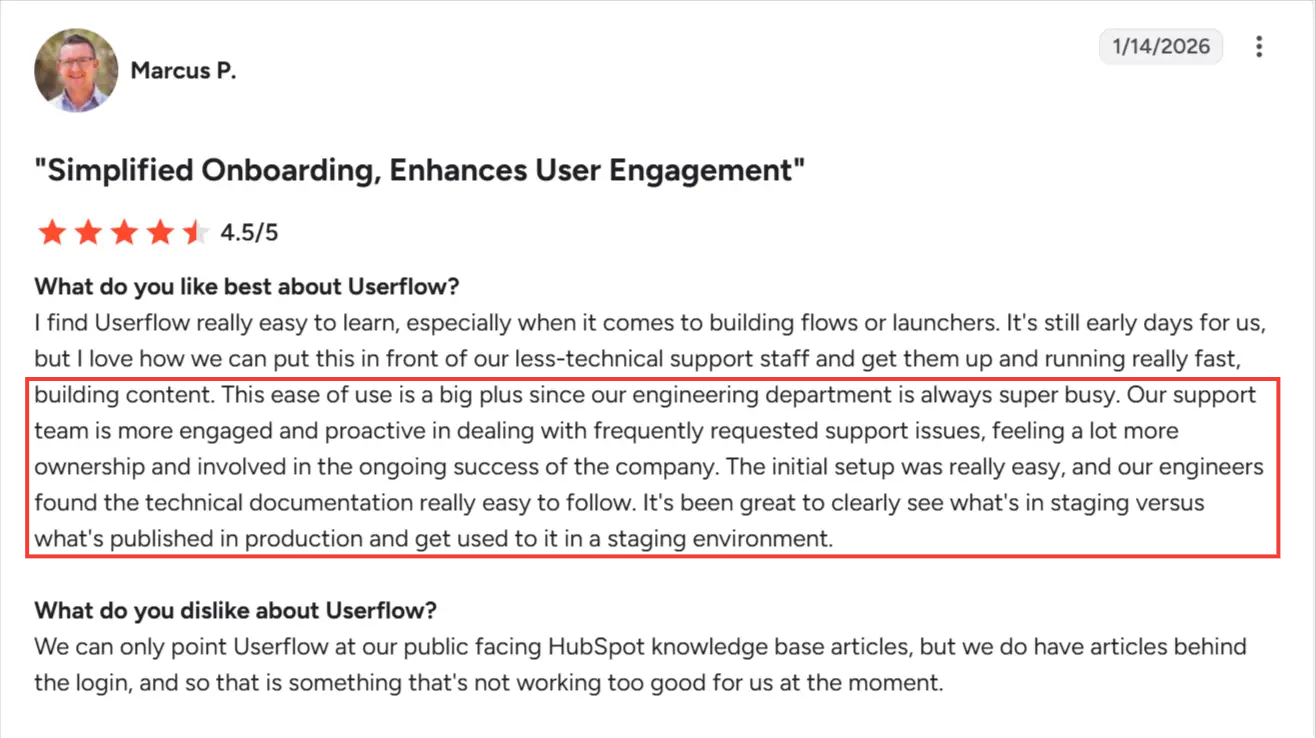
Userflow’s flexibility influences how teams manage onboarding. Marcus on G2 says the platform has helped his support staff take more ownership of onboarding content.
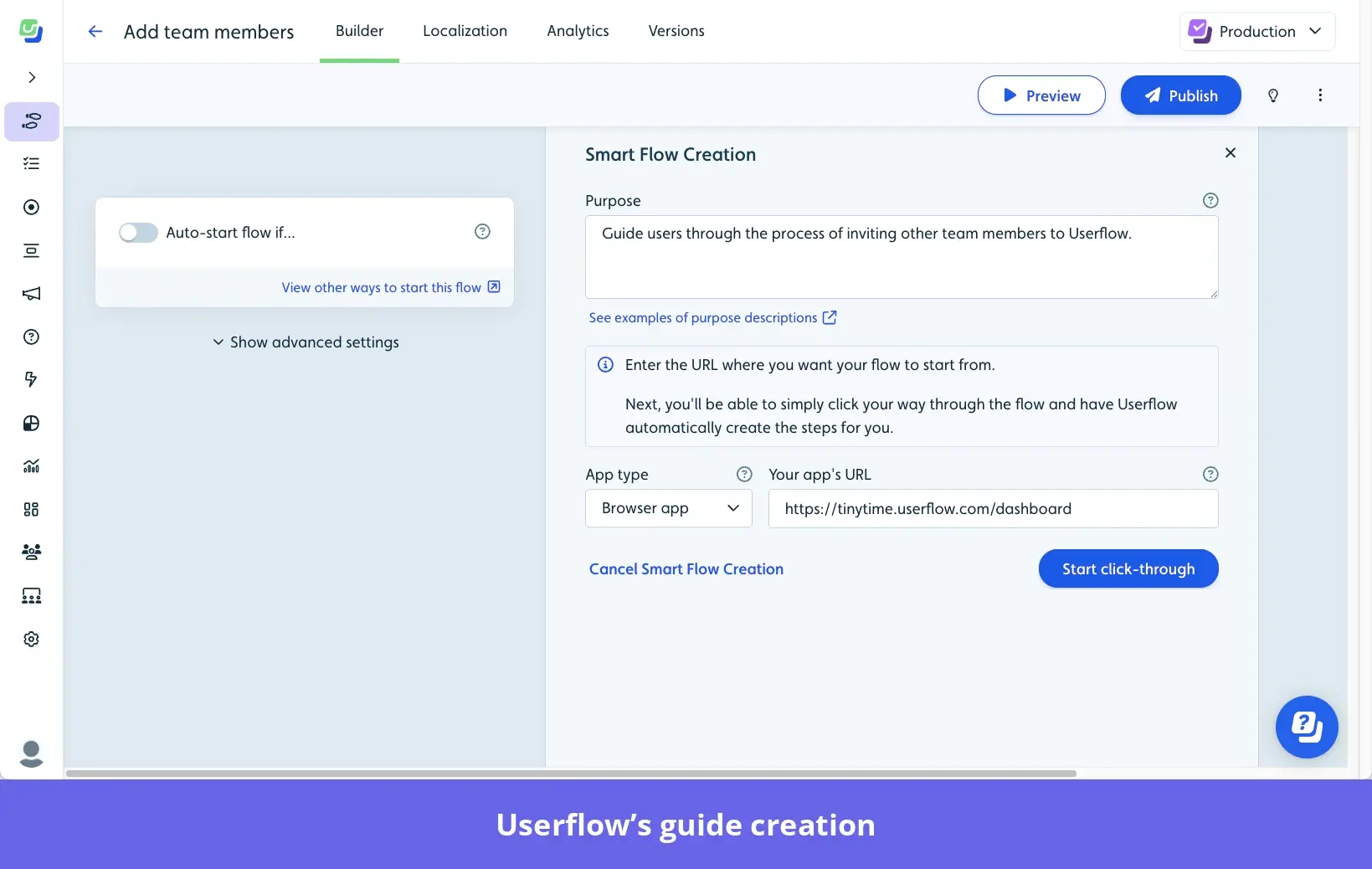
Userflow’s AI works on both sides of the onboarding experience. For your team, it can build flows by interacting with your product, identify recurring friction, and recommend improvements. For customers, its AI assistant can answer questions and complete predefined tasks.
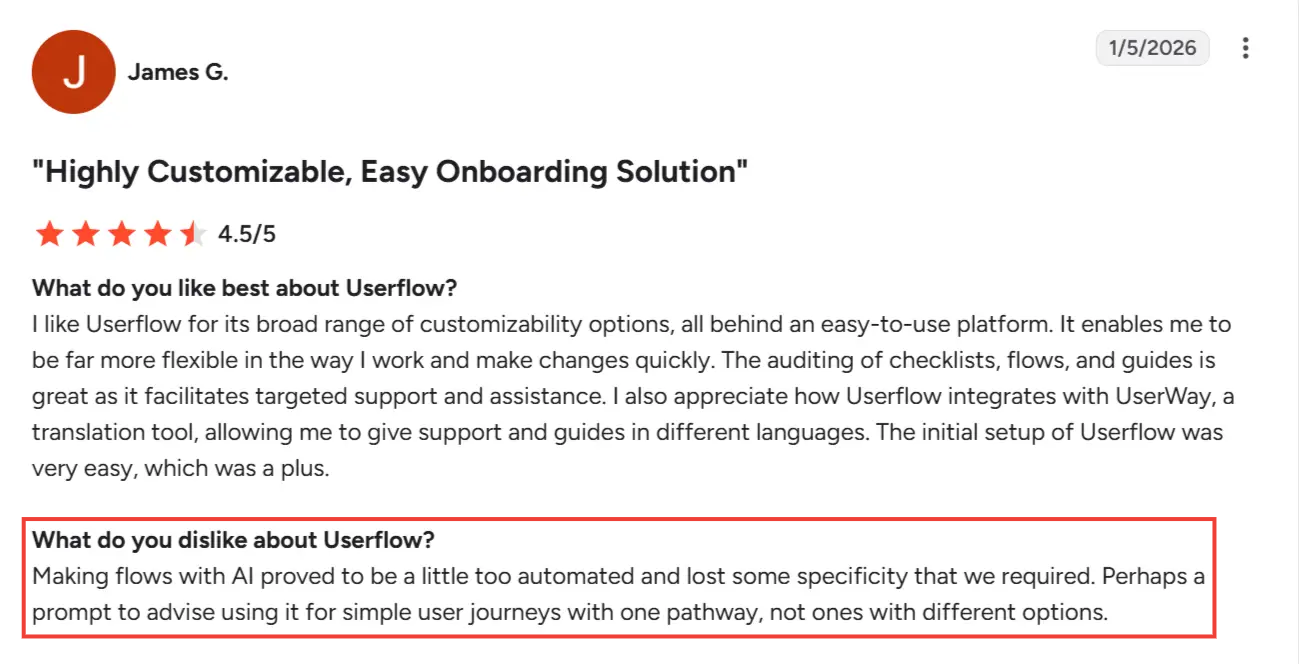
However, AI-generated flows may need more hands-on refinement for complex journeys. Here’s how James explained it:
On the measurement side, Userflow offers no-code event tracking, funnels, flow analytics, and A/B testing. You can also collect feedback through NPS, CSAT, star ratings, and surveys with conditional follow-up questions.
Userflow lacks built-in session replay, though, so you’ll need a separate tool to investigate individual user sessions. And because it has no native mobile SDK, it’s better suited to teams with only web apps.
Pricing: Essentials starts at $300/month and Studio at $500/month, both for 1,000 MAUs. Additional MAUs cost extra, while Enterprise pricing is custom.
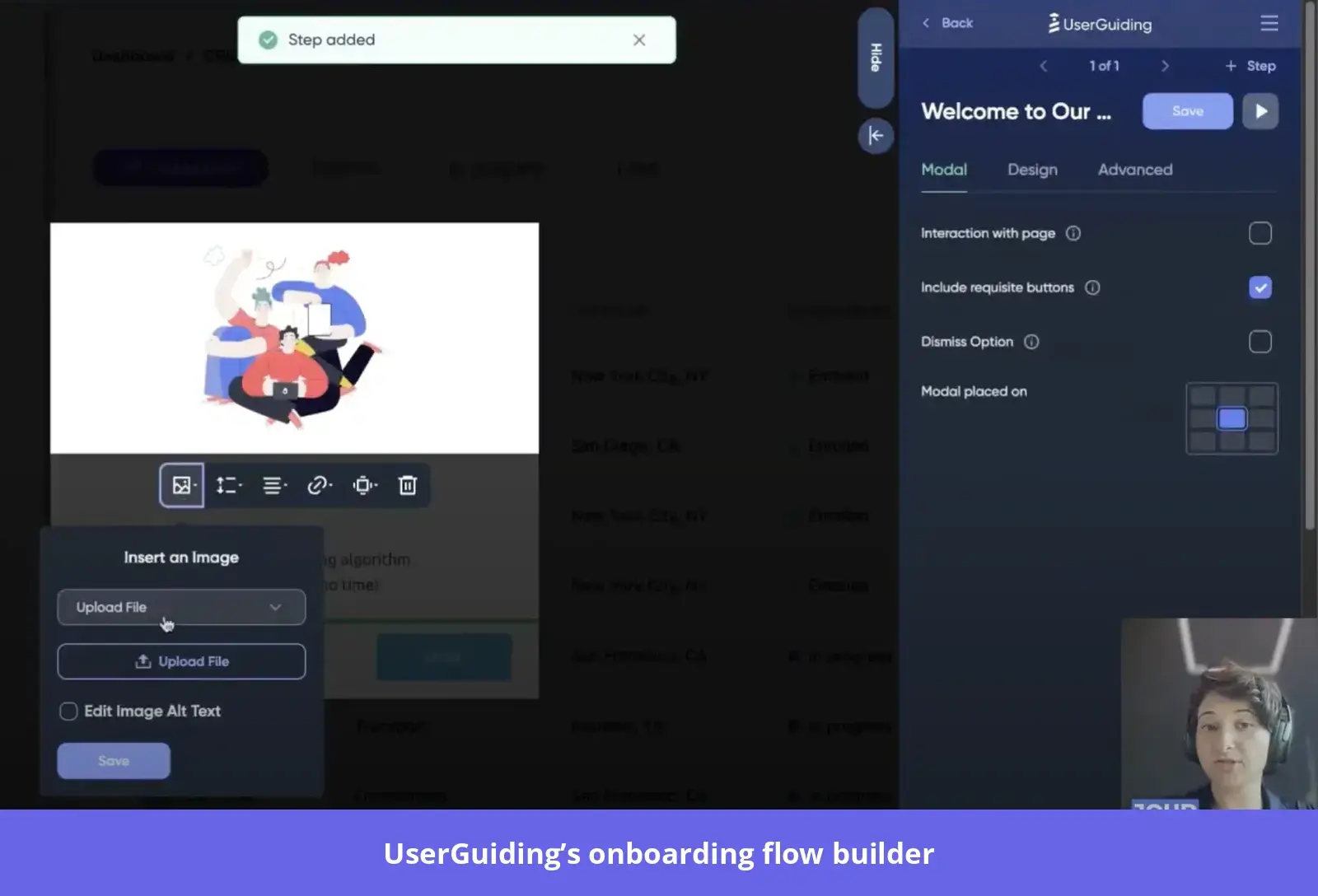
4. UserGuiding: For support-led teams that prioritize having a knowledge base
UserGuiding combines in-app onboarding with self-service support. Choose it if you want a lightweight tool that helps customers find answers and keep up with product changes without contacting your support team for every question.
Its key capabilities include:
- Knowledge base and Resource Center: Publish help articles, videos, and FAQs, then make them accessible inside your product. You can also connect existing knowledge bases from Zendesk or Intercom.
- AI-powered support: UserGuiding’s AI Assistant answers questions using your help content and hands users over to support when necessary.
- Lighthouse AI (beta) and MCP server: Ask questions about your users in plain language and draft relevant support content, whether that’s a quick tooltip or an entire walkthrough. The MCP server connects UserGuiding data to external AI tools.
- In-app onboarding: Create product tours, tooltips, hotspots, and checklists to guide users through key tasks.
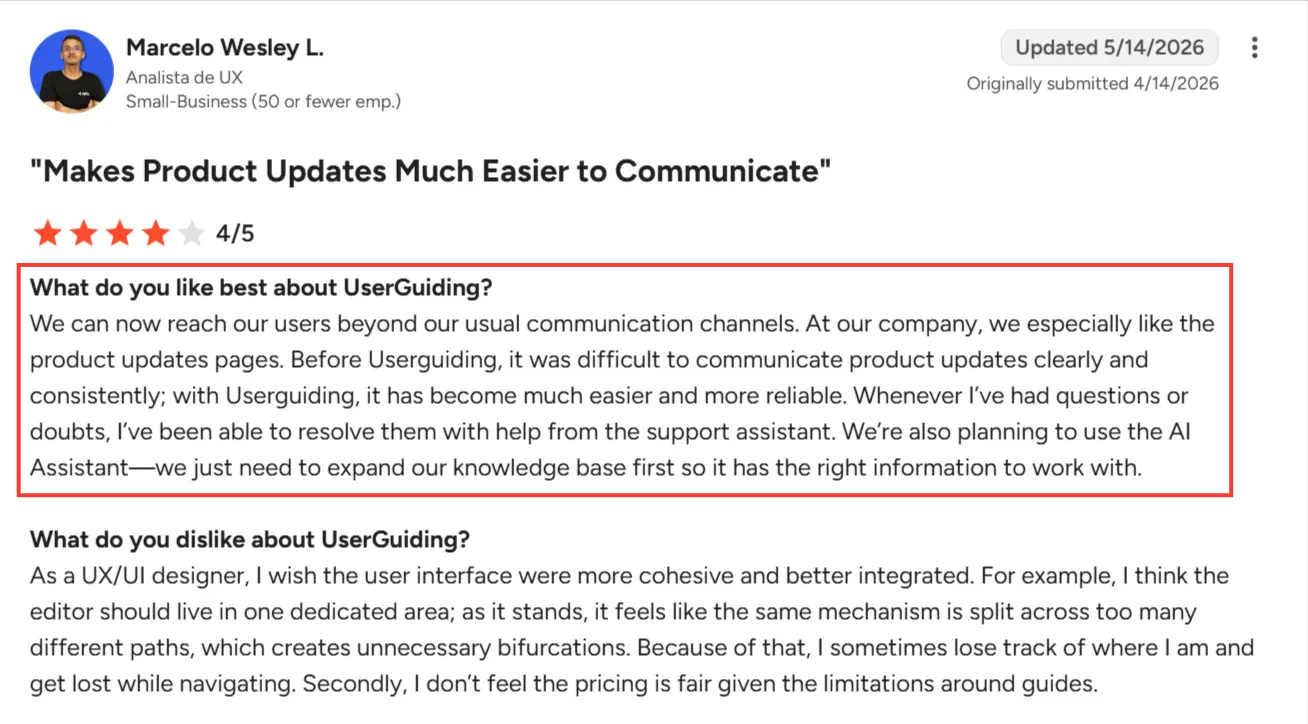
The platform also offers product updates pages for keeping customers informed about changes. Marcelo says these pages have made it easier for his team to communicate product updates clearly and consistently.
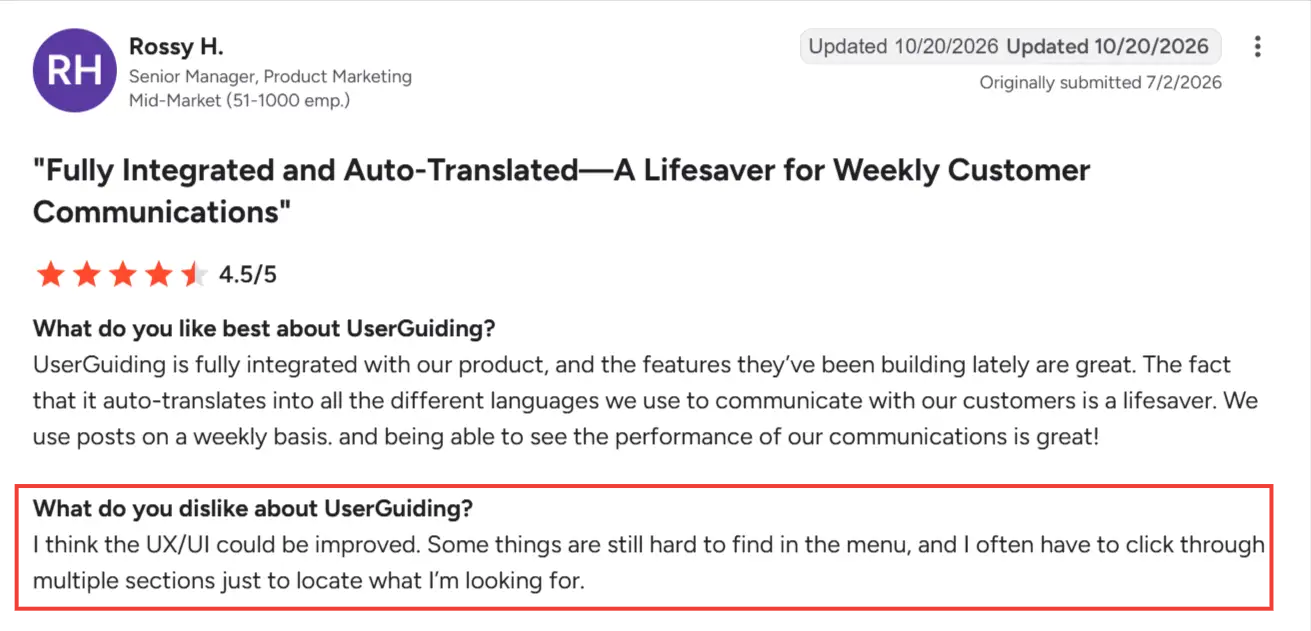
Developers install UserGuiding through a JavaScript snippet or Google Tag Manager. Once installed, your team can manage onboarding and support content without coding, although the interface may take some getting used to. Rossy reports having to navigate multiple sections to find certain features.
The interface aside, there are two additional drawbacks worth noting:
- UserGuiding doesn’t support native mobile apps, and its mobile-web compatibility is still in beta.
- Its Starter plan limits you to 15 active guides and four languages, which I find restrictive for the price.
Pricing: Starter costs $349/month and Growth $699/month, both starting at 2,000 MAUs. Enterprise pricing is custom, and costs increase with MAU volume.
5. Chameleon: For testing on-brand experiences, with AI that builds and checks them
Chameleon stands out for how much control it gives you over the appearance of in-app experiences. Once developers install it through a JavaScript snippet, Google Tag Manager, or Segment, you can use its Chrome extension to create reusable themes and templates and fine-tune component positioning with CSS.
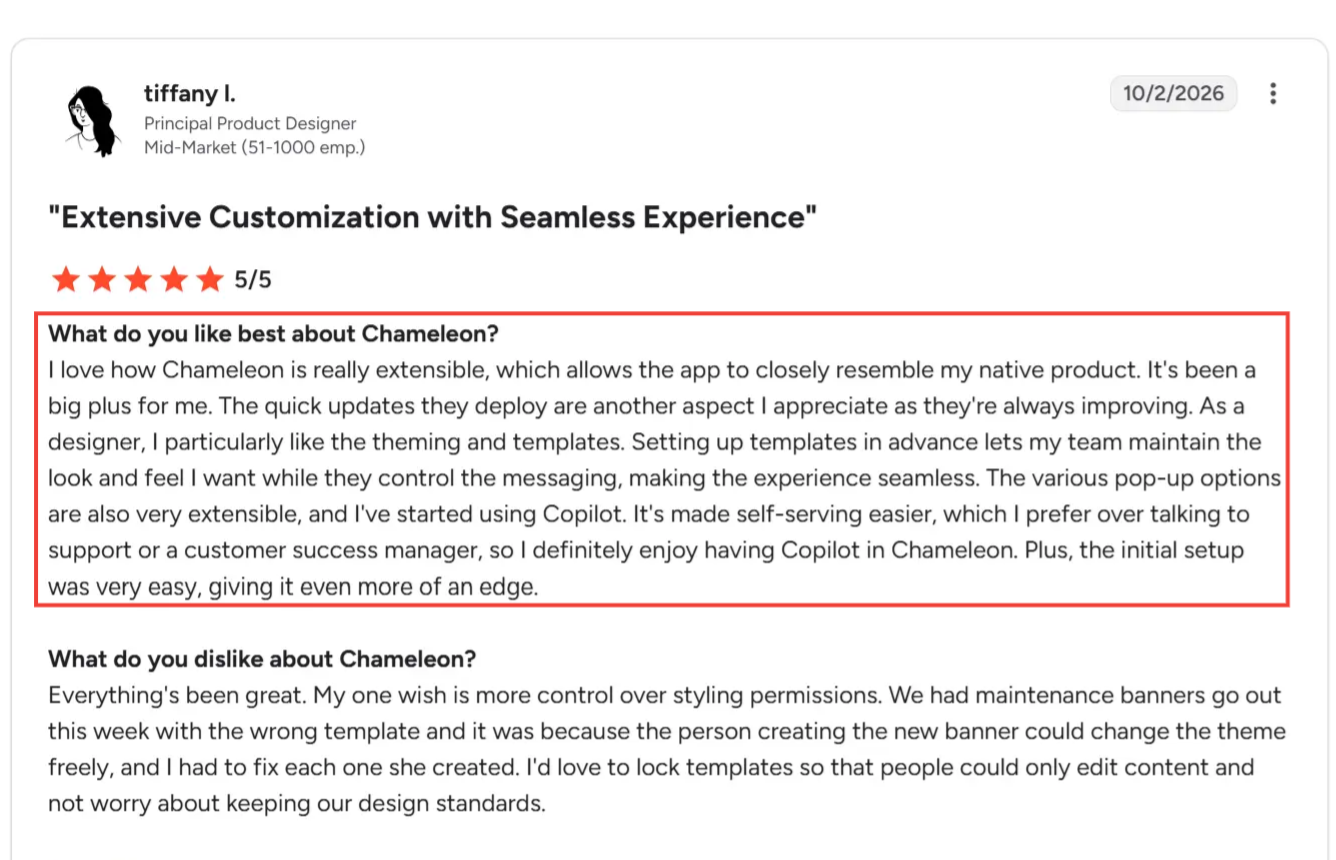
As Tiffany explains it, this level of customization is particularly useful when you want onboarding to feel like part of your product rather than a third-party overlay.
Beyond styling, Chameleon lets you build tours, tooltips, checklists, banners, and microsurveys. You can target specific audiences, run A/B tests, and track goals to see which experiences drive adoption.
Chameleon’s AI capabilities cover both creation and maintenance. Its Copilot helps plan and build campaigns, while its Ranger agent checks existing experiences for broken element targeting and outdated content, then recommends fixes for your team to approve.
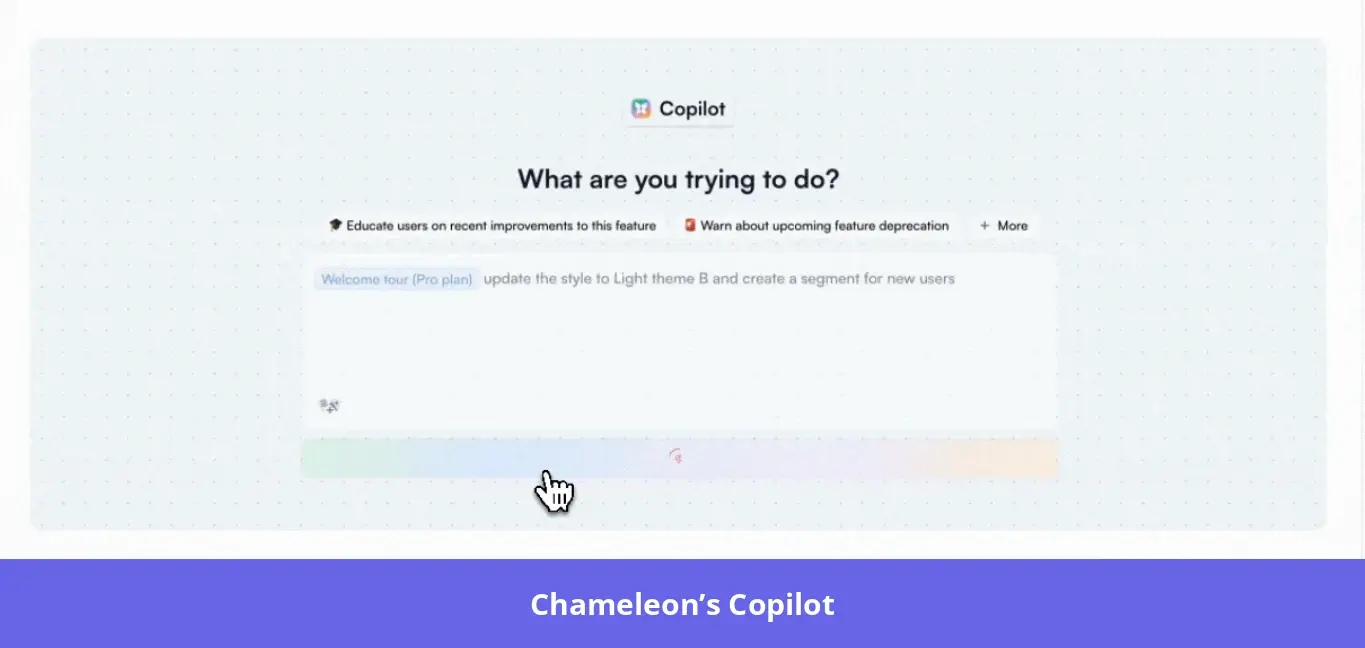
Ranger and AI-powered interactive demos require Growth or Enterprise, putting these advanced capabilities out of reach for teams on cheaper plans.
That said, getting the most out of Chameleon’s customization options can take some learning. Hugo on G2 puts it this way:
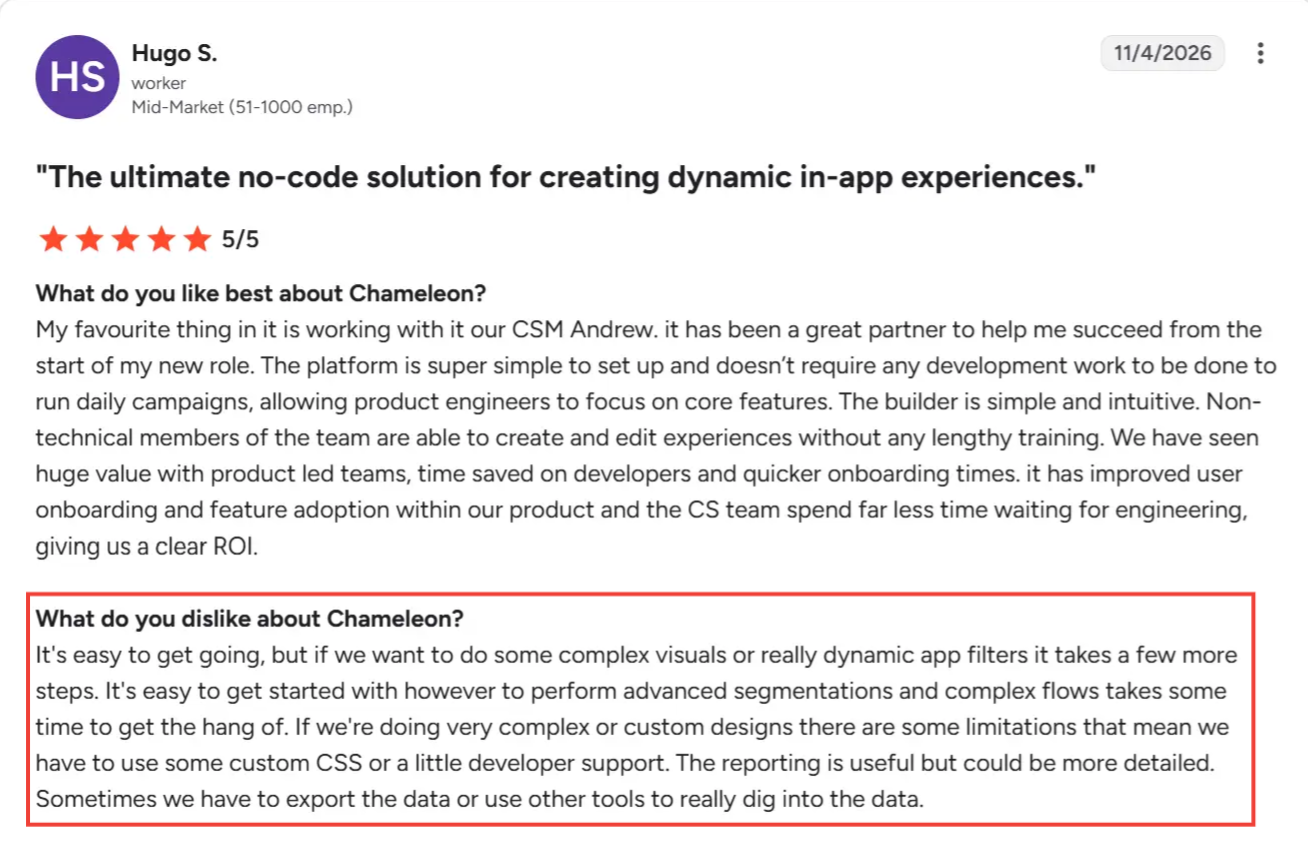
Pricing: Startup starts at $279/month for 2,000 MTUs, Pro at $750/month, and Growth at $1,750/month (billed annually). Pro and Growth start at 5,000 MTUs, with pricing scaling by tracked users. Enterprise pricing is custom.
6. Frigade: For an AI assistant that learns your product
Frigade takes a different approach to onboarding. Instead of manually creating every walkthrough, you give its AI assistant a test account to explore your product and learn how it works. Developers then install the Assistant SDK, and you can connect your help documentation to improve its answers.
Once configured, the assistant can answer user questions and generate step-by-step guidance based on what someone wants to accomplish. It also updates its product knowledge as your interface changes, reducing the need to rebuild walkthroughs whenever you update your UI.
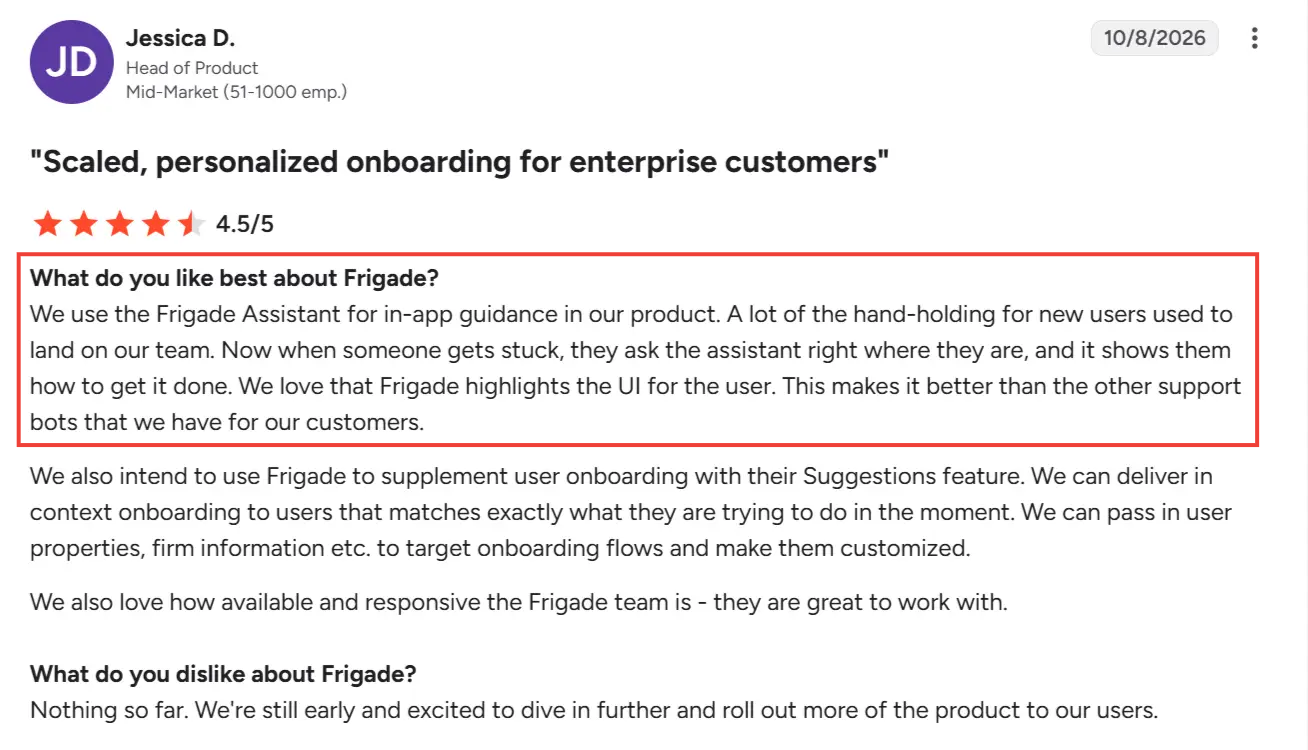
Jessica on G2 highlights how the AI assistant helps users complete tasks without having to contact support.
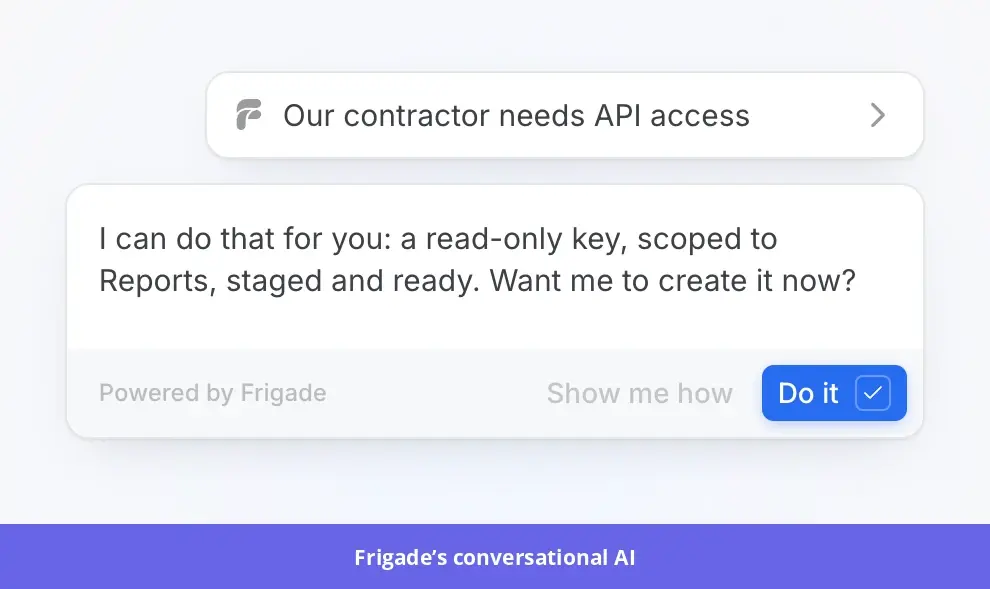
Frigade goes beyond answering questions through its Skills feature, which lets the assistant perform actions inside your product, such as creating records or updating information. It can also suggest relevant features or setup steps based on user context and provide conversation insights to help your team identify recurring questions and friction.
One consideration with this AI-first approach is usage. Frigade’s Growth plan includes only 2,500 queries per month, and additional usage pricing isn’t publicly listed. The mobile SDK, Salesforce and Zendesk integrations, and SAML SSO also require Enterprise.
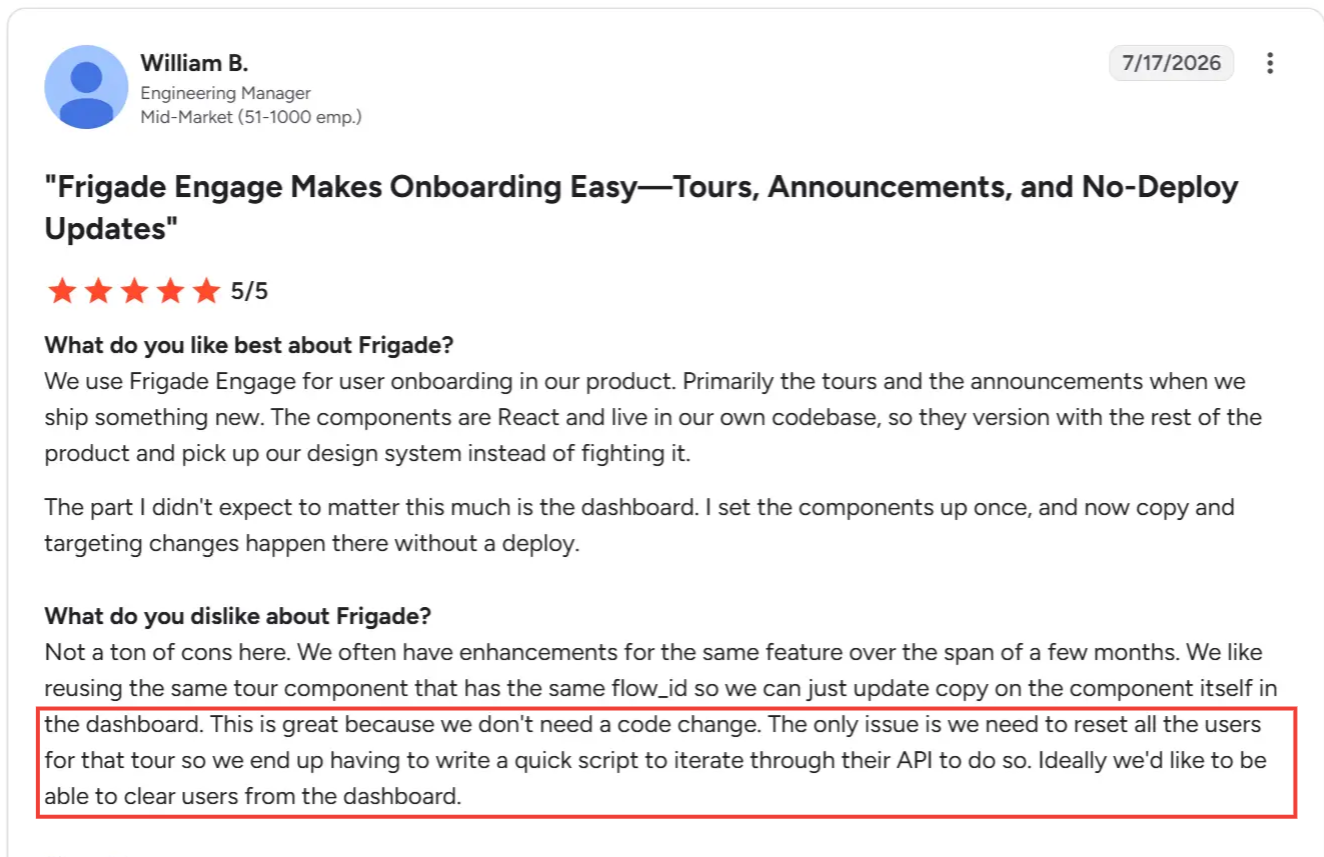
For teams that prefer traditional onboarding, Frigade offers Engage for building checklists, product tours, and announcements. However, as William describes, reusing tours for the same users can require technical work.
Pricing: Growth starts at $1,000/month with two product agents and unlimited team seats. Enterprise offers custom pricing, higher usage allowances, and additional integrations.
What are the best digital adoption platforms for employee adoption?
Employee adoption platforms help IT, L&D, and operations teams roll out software the company didn’t build. Some of the best options include WalkMe, Whatfix, Userlane, Apty, and Nexthink Guides.
What to compare when evaluating employee DAPs:
- Workflow enforcement and data validation: Can the platform ensure employees follow required processes and catch incorrect or missing data before submission?
- LMS integration: Does it connect with your learning management system so employees can access formal training alongside in-app guidance?
- Web and desktop app coverage: Which enterprise applications does it support? Check whether guidance works across browser-based and desktop software.
- Implementation effort and admin overhead: How much technical work does deployment require, and how much ongoing maintenance will your team handle?
7. WalkMe: For guidance across many internal apps in large rollouts
WalkMe is a great choice if your organization needs to train employees and drive adoption across multiple enterprise applications. SAP acquired WalkMe in September 2024, but the platform continues to support non-SAP applications.
To get started, IT teams can deploy WalkMe through a browser extension, while admins use its no-code Editor to build guidance.
Once deployed, WalkMe helps employees complete workflows through interactive walkthroughs, tooltips, and automation. Its Action Bar adds contextual help, suggested actions, and AI Chat, so employees can get assistance without leaving the application they’re using.
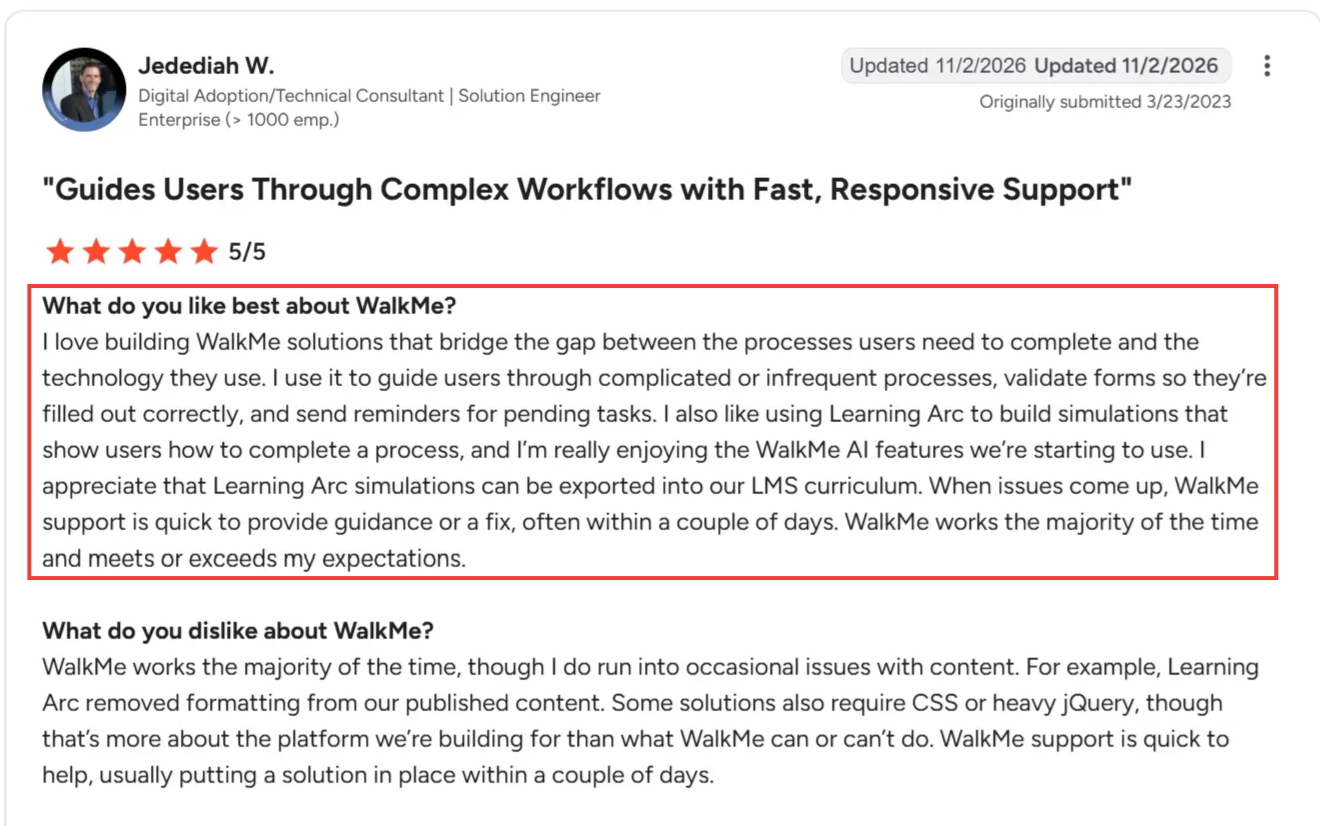
Jedediah on G2 highlights how this guidance helps employees learn unfamiliar applications and navigate their workflows.
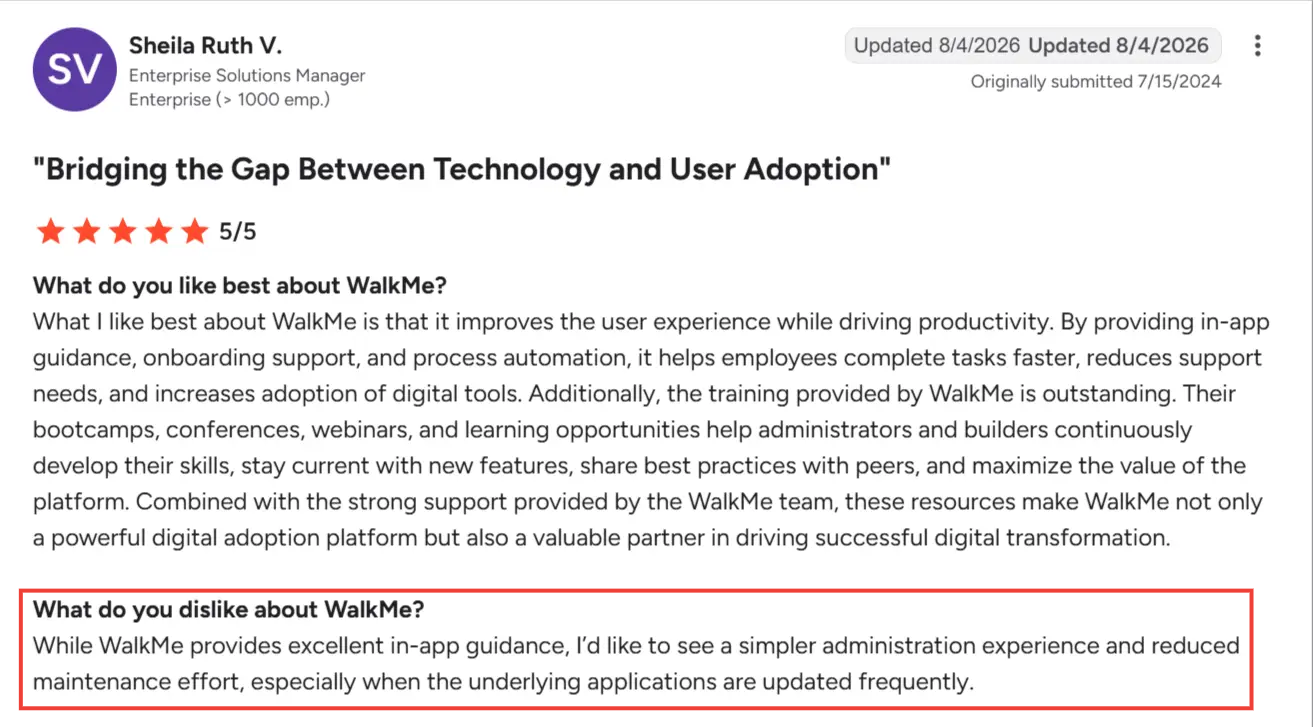
The challenge is maintaining that guidance as applications change. WalkMe’s no-code Editor handles content creation, but complex workflows can require technical expertise to build and maintain:
WalkMe also uses AI to support the teams managing adoption. Its AI Authoring lets admins create or modify guidance using natural-language prompts, while AI Insights helps teams quickly answer questions about application usage and workflow completion.
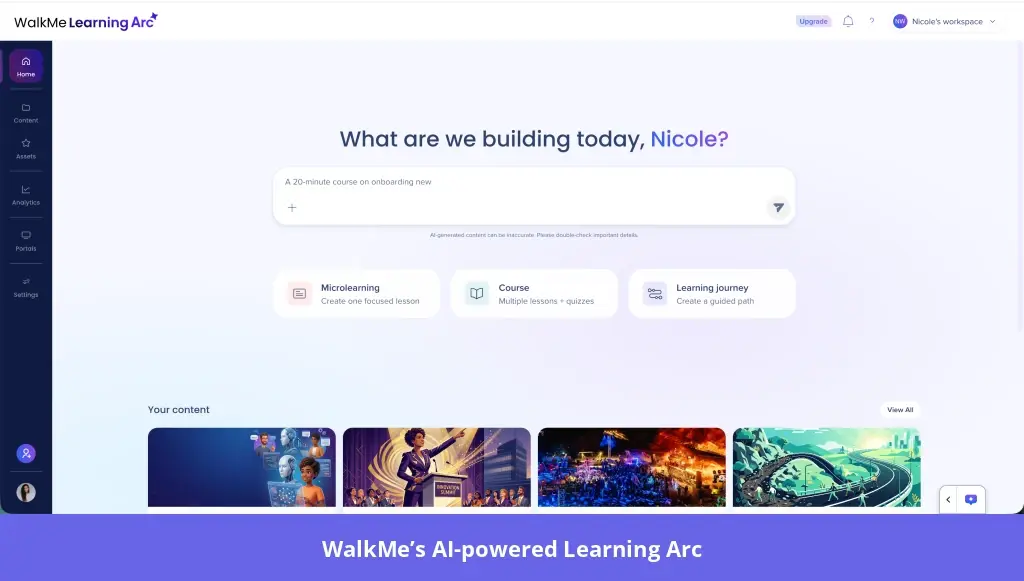
For employee training, WalkMe Learning Arc goes further by using AI to create courses and interactive simulations. This gives organizations a way to prepare employees for unfamiliar workflows before reinforcing what they’ve learned through in-app guidance.
Pricing: WalkMe uses custom pricing based on factors such as user count, number of applications, and selected features. According to Vendr, the average contract value is around $39,000.
8. Whatfix: For training employees in simulated app environments
Whatfix stands out for its Mirror feature, which recreates enterprise workflows in a simulated environment where employees can practice without affecting live data.
The setup: Your team uses the Whatfix Studio extension to capture workflows and build simulations. You can then share them through direct links or your learning management system (LMS). For live guidance, Whatfix supports deployment through a browser extension or JavaScript snippet.
Beyond Mirror, Whatfix offers:
- In-app guidance and self-help: Build walkthroughs, tooltips, task lists, and announcements. The Self Help widget lets employees access support content without leaving their application.
- ScreenSense: This AI context engine detects on-screen activity and delivers relevant guidance. It also adapts to interface changes to reduce manual maintenance.
- AI agents: Authoring Agents generate guidance from prompts, Guidance Agents answer employee questions, and Insights Agents identify adoption friction. Humans retain control over final decisions and actions.
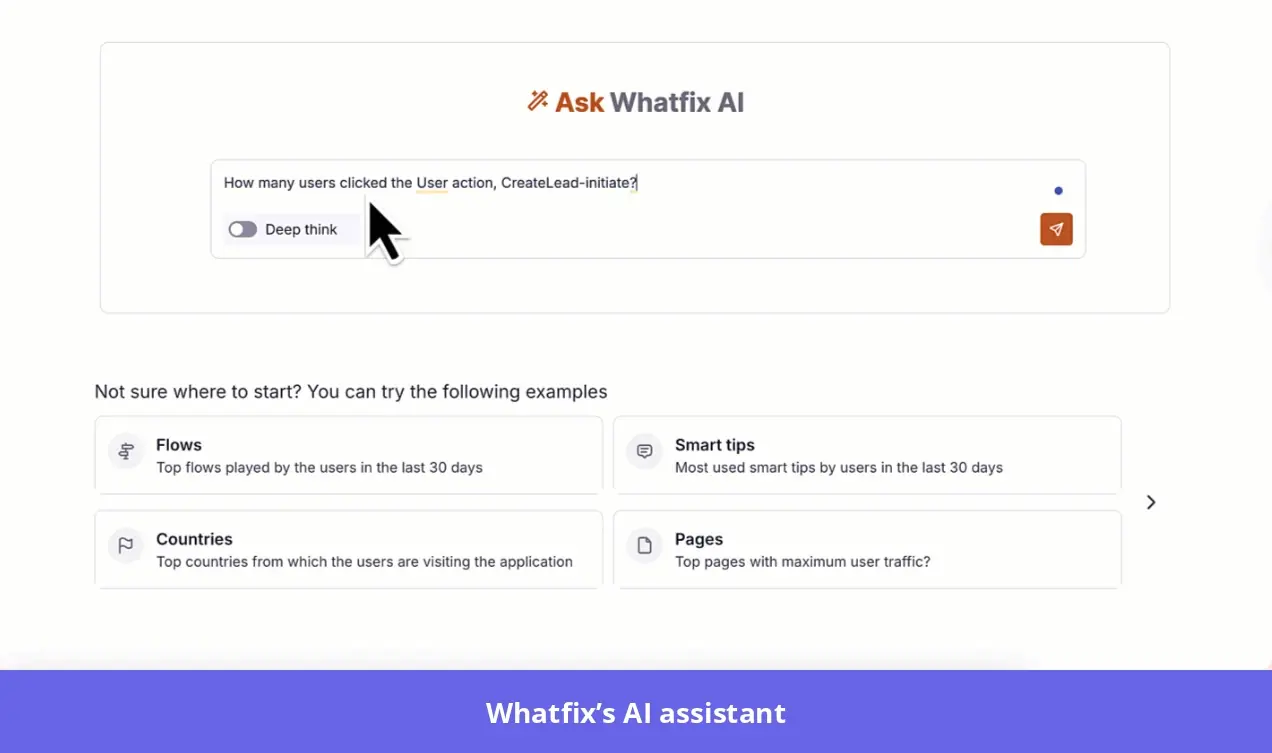
Worth noting that Mirror simulations don’t automatically update when applications change. Your team must recapture affected screens and verify workflows, adding maintenance work for frequently updated applications.
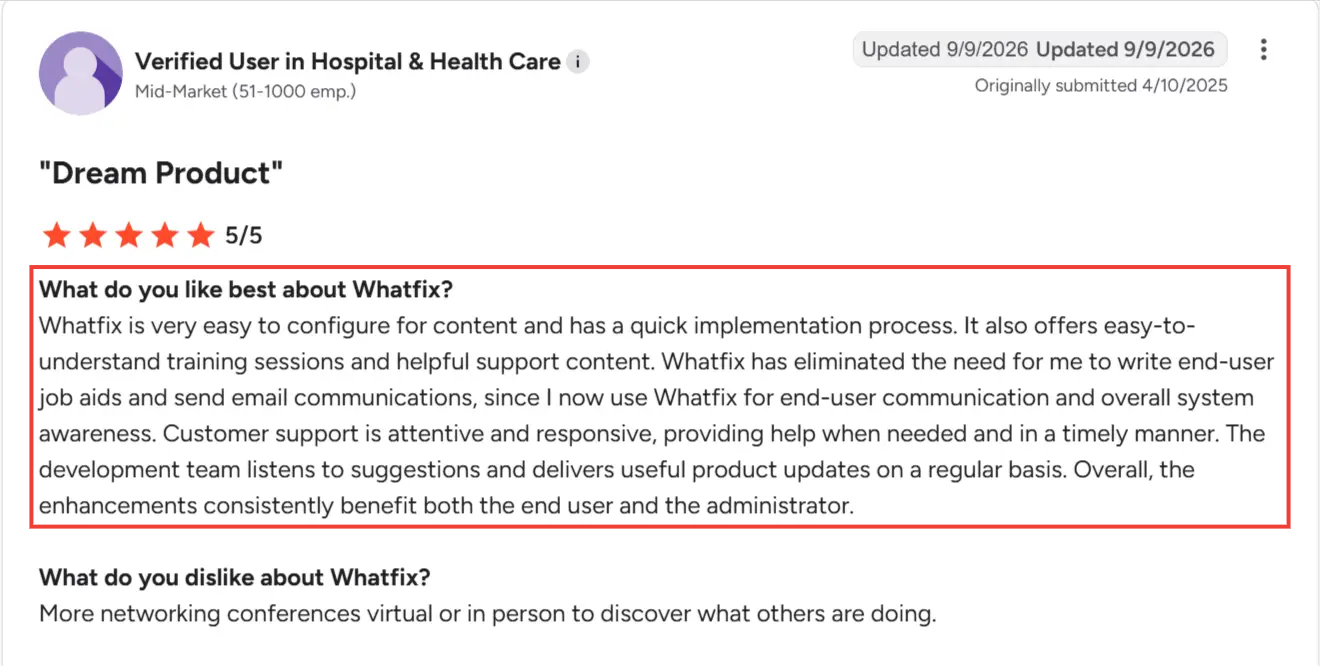
On the positive side, content creation is something users appreciate. One G2 reviewer highlights how Whatfix simplifies the creation of employee onboarding content.
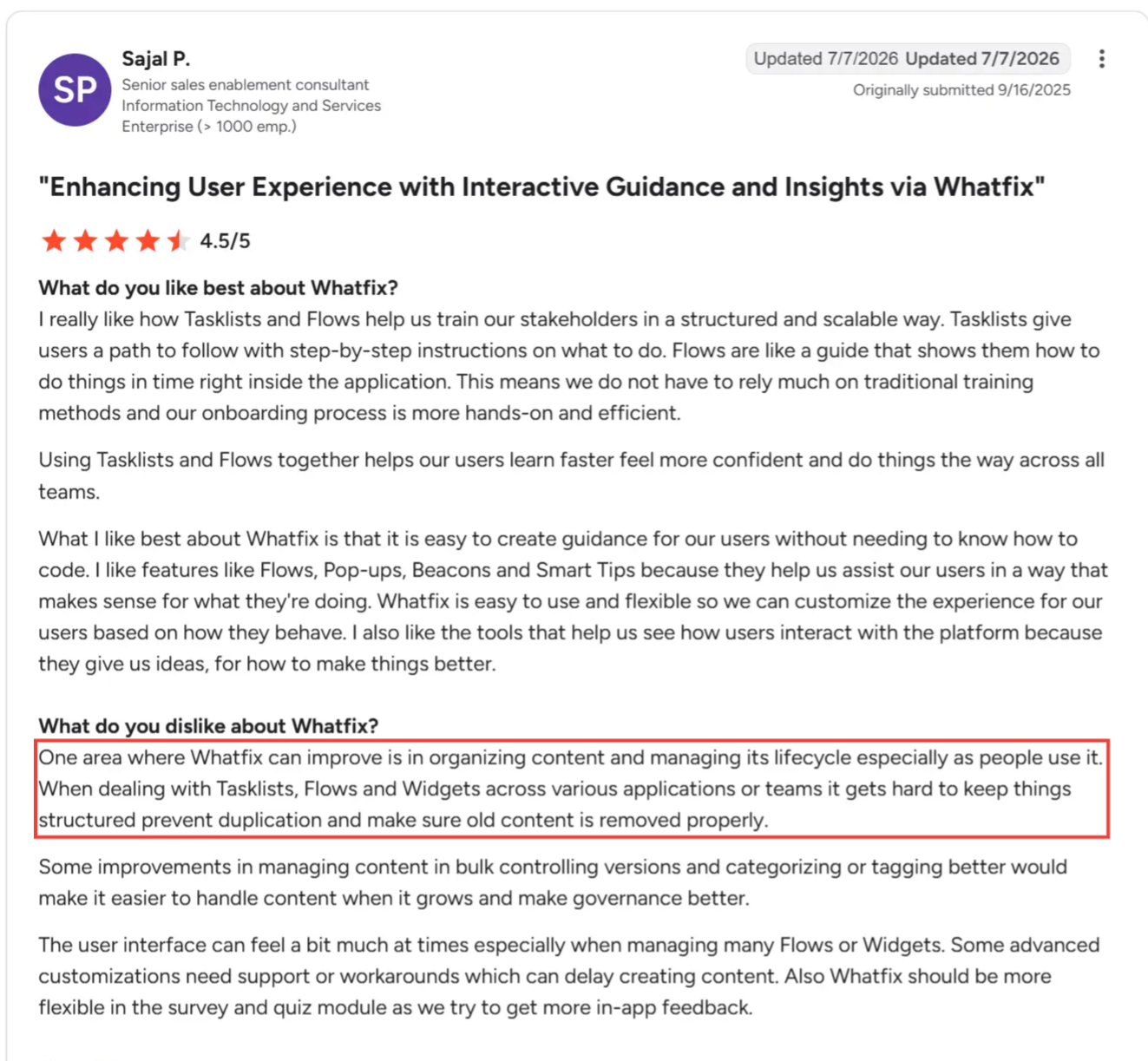
However, organizing that content can become more difficult as your guidance library grows.
Beyond employee training, Whatfix offers Product Analytics for customer-facing applications, which is useful if your organization serves both employees and customers.
Pricing: Whatfix has three plans, but they all use custom pricing. Vendr reports a median annual contract value of $31,950.
9. Userlane: For seeing which apps and AI tools employees use, then guiding them
Userlane helps IT and change management teams understand which browser-based applications employees use, including unauthorized software and AI tools. The setup is simple: IT deploys Userlane’s browser extension through device management tools, then admins monitor application usage and create in-app guidance without coding.
Userlane’s App Discovery provides a portfolio overview that compares application usage with license costs to identify underused subscriptions and potential compliance risks.
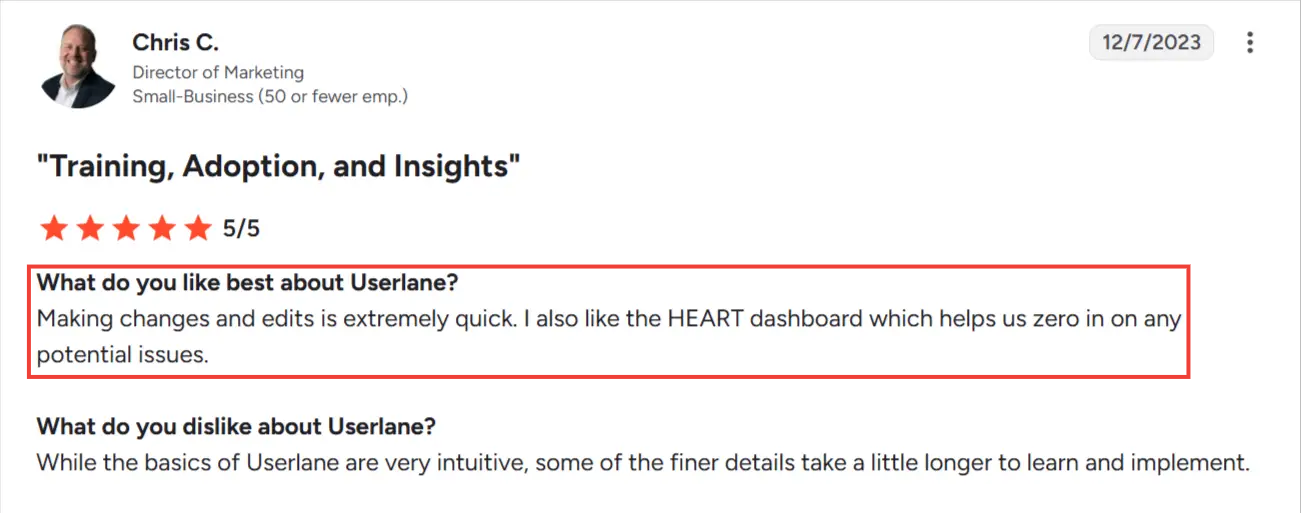
For a closer look at adoption, Userlane offers HEART analytics, a feature that scores applications from 0 to 100 across Happiness, Efficiency, Adoption, Risk, and Task Success.
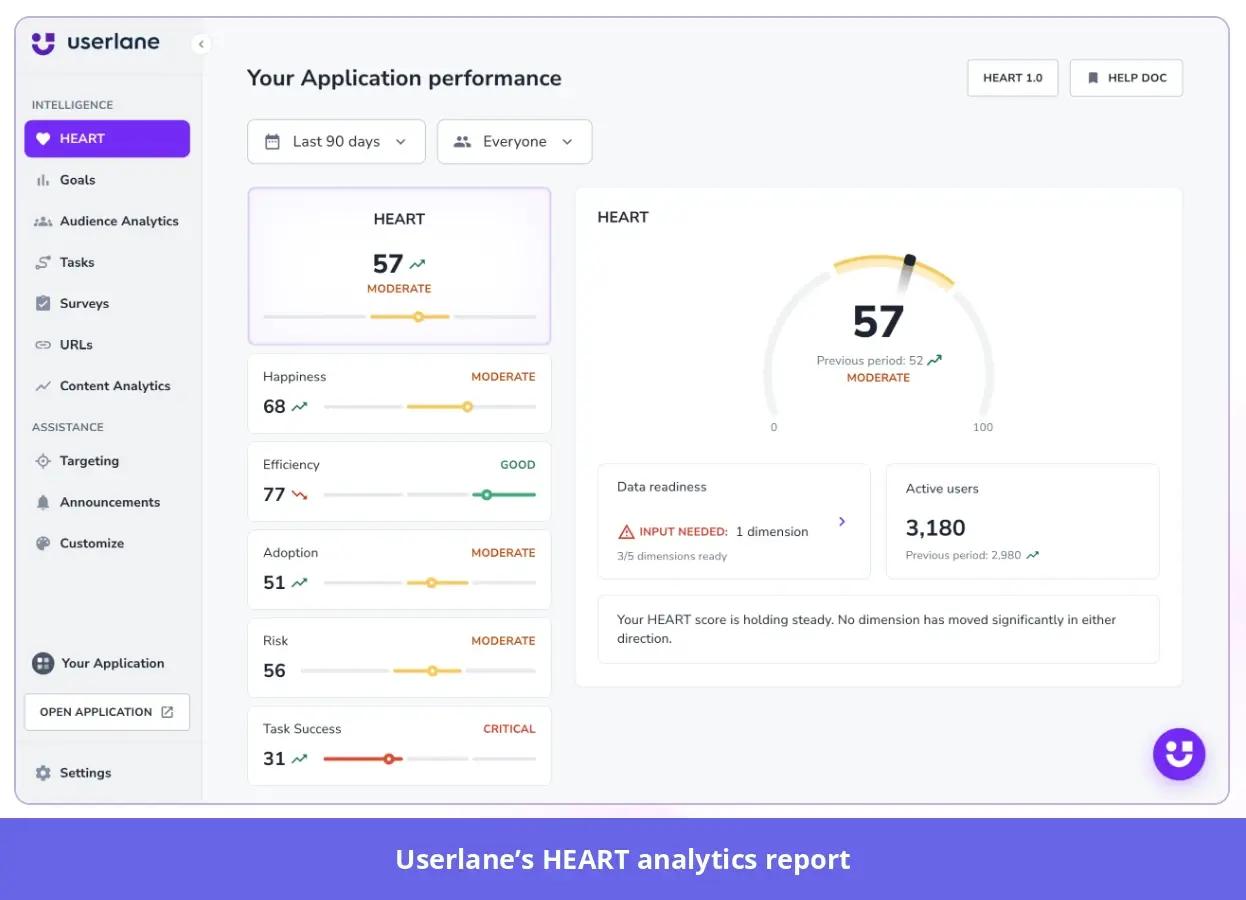
This visibility is something users love. For example, here’s what Chris says:
Userlane also lets teams act on adoption problems through interactive walkthroughs, tooltips, and form validators that catch incorrect entries. Its AI Assistant answers employee questions using published guidance and connected knowledge sources.
The content editing experience has some drawbacks, though. Karen described switching between the portal and editor as clunky, particularly when working with tooltips.
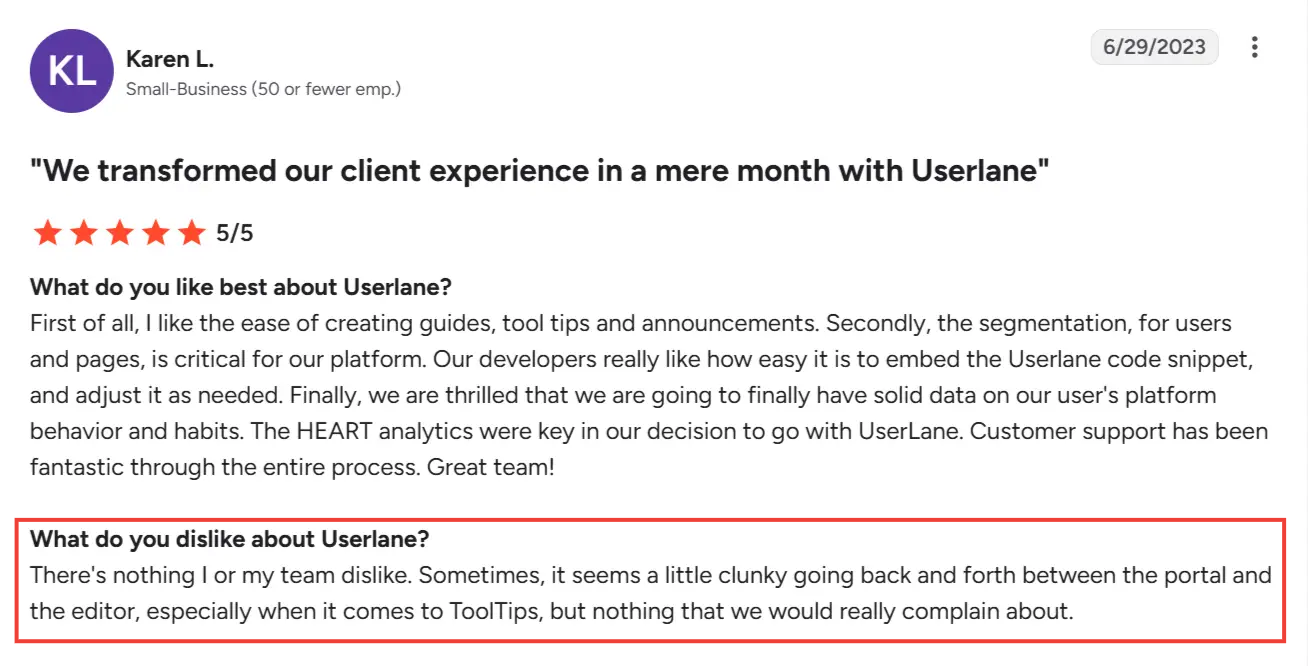
Additionally, Userlane doesn’t autosave guides or support simultaneous editing. Teams with multiple content creators must coordinate edits to avoid overwriting each other’s work.
Pricing: Userlane’s three custom-priced plans are Application (one app), Department (multiple apps), and Organization (unlimited apps). Vendr reports an average annual contract value of $17,529.
10. Apty: For enforcing processes and clean data entry in ERP and CRM apps
Apty helps enterprises enforce workflows where incorrect CRM entries, missing ERP fields, or skipped steps create compliance risks.
One of its key capabilities is real-time data validation. Administrators can set rules that flag missing or incorrect information as employees complete forms. Apty also supports automatic form filling to reduce repetitive data entry and help teams maintain consistent records.
To implement this, IT deploys Apty’s guidance layer across selected enterprise applications. Administrators then use Apty Studio to create validation rules and in-app guidance, while the Apty Admin interface handles publishing and user targeting.
Alongside validation, Apty provides cross-application walkthroughs, checklists, and contextual tooltips to help employees complete processes correctly.
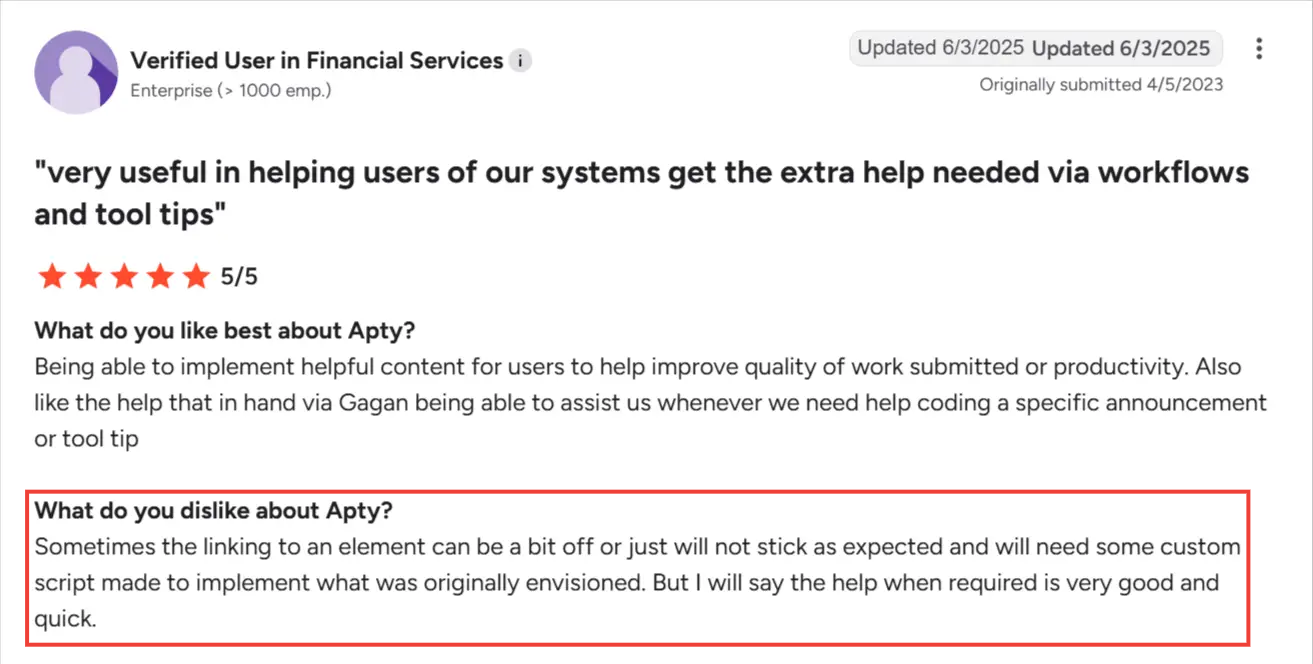
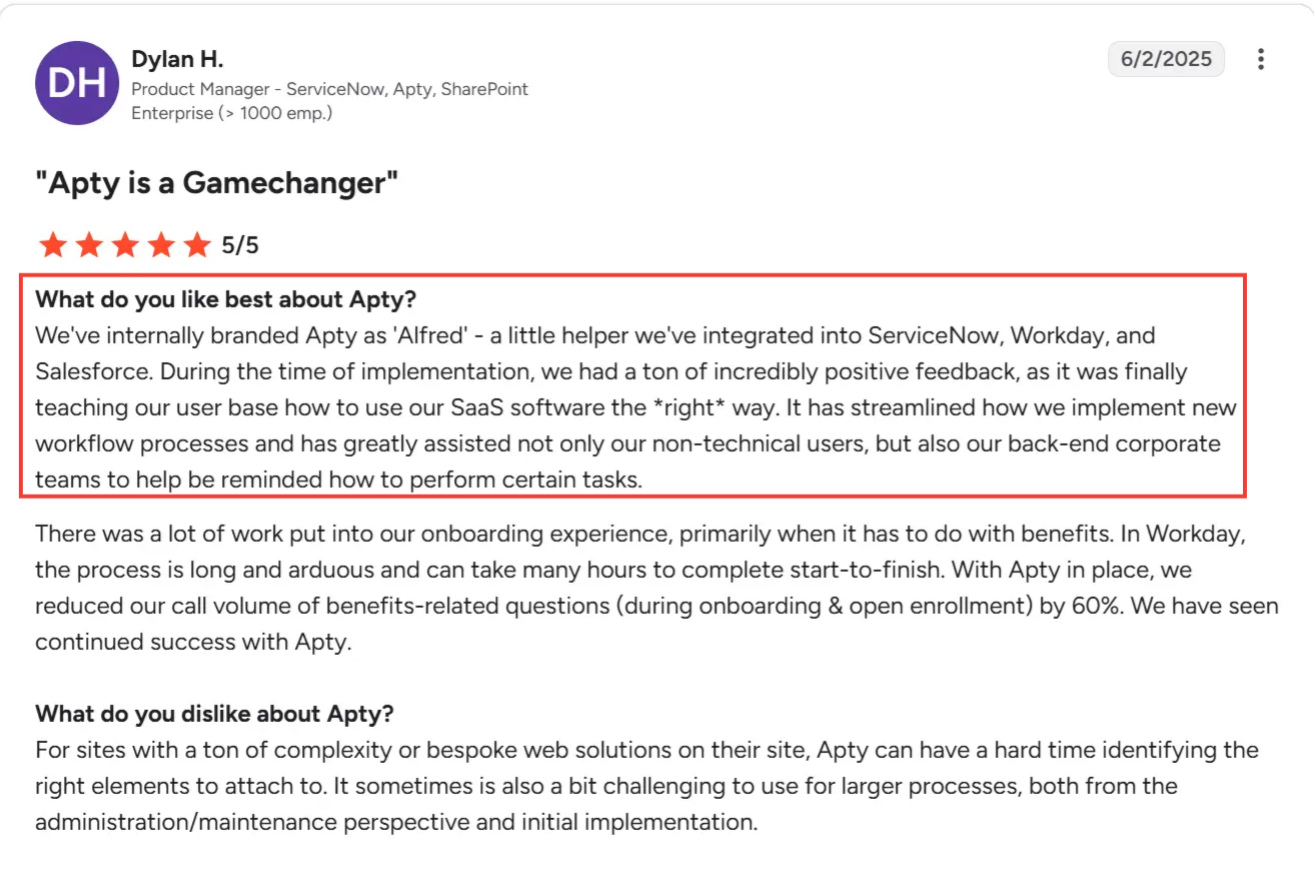
The challenge comes when implementing guidance in heavily customized applications. Apty can struggle to identify certain interface elements, and some workflows require custom scripts or technical assistance.
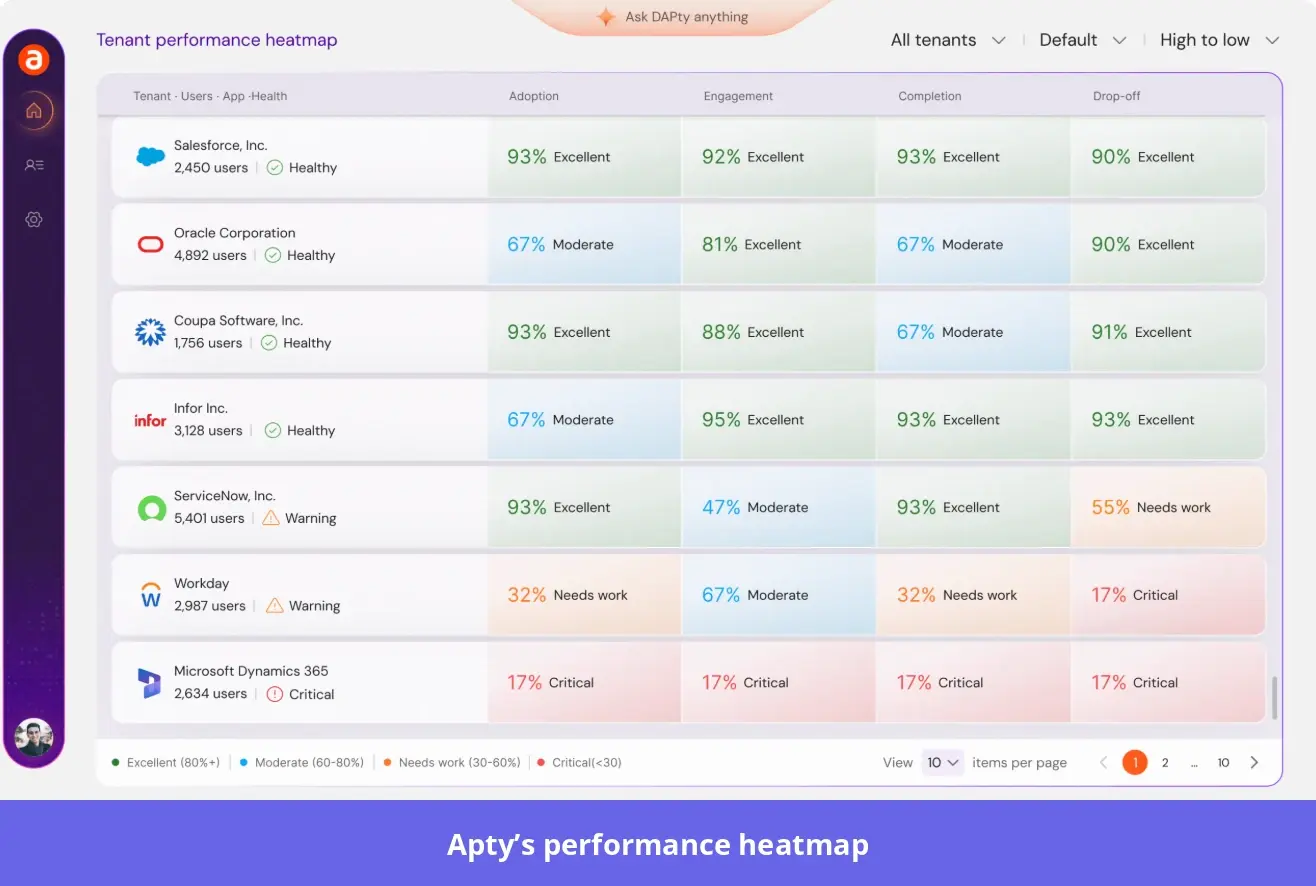
Beyond guiding individual tasks, Apty offers AI-powered process analytics to help teams identify where employees deviate from established workflows. It tracks completion and compliance gaps, recommends targeted guidance, and sends real-time alerts about process risks.
This combination of guidance and process monitoring is reflected in user feedback. For example, here’s what Dylan says about the platform:
Pricing: Apty uses custom pricing based on deployment needs. According to Vendr, the average annual contract value is $44,666.
11. Nexthink Guides (formerly Nexthink Adopt): For IT teams that want guidance tied to device and app performance data
Nexthink Guides grew out of AppLearn, which Nexthink acquired in 2024. It’s now part of the Nexthink Infinity platform, making it particularly relevant to organizations already using Nexthink for IT monitoring.
How it works: IT deploys Nexthink’s browser extension across employee devices, although existing Nexthink customers don’t need a separate extension for Guides. Administrators then use the no-code editor to create guidance and manage content through Infinity.
Once deployed, Nexthink brings together three capabilities:
- In-app guidance and training: Build walkthroughs, checklists, tooltips, and self-service help to guide employees through workflows in browser-based enterprise applications.
- AI-driven adoption analytics: Track application usage, workflow completion, and engagement with guidance. Predictive insights help identify where employees struggle and which features are underused.
- DEX monitoring and automation: Combine adoption data with Infinity’s real-time device and application monitoring to investigate whether employees are struggling with a workflow or experiencing a technical issue. IT can then provide guidance or automate supported remediation.
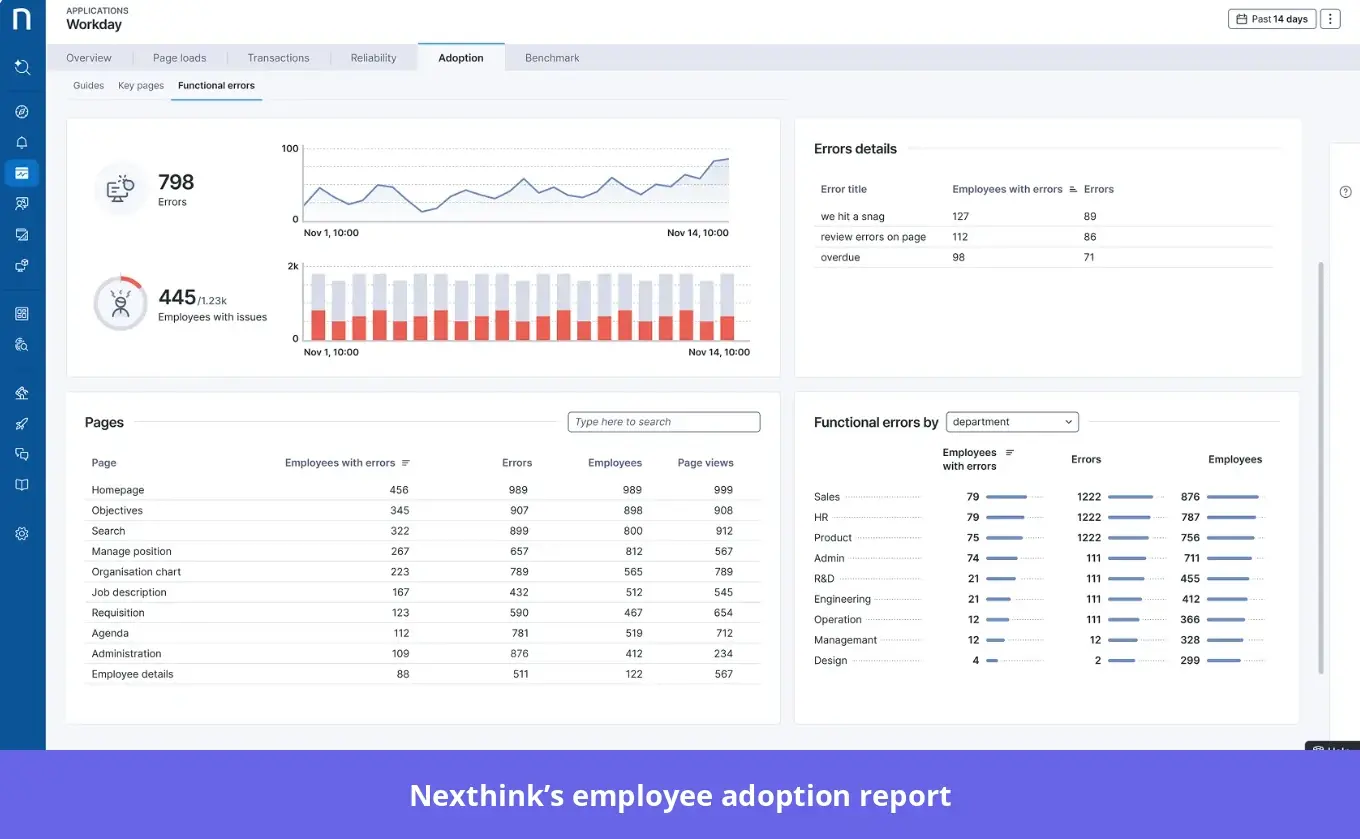
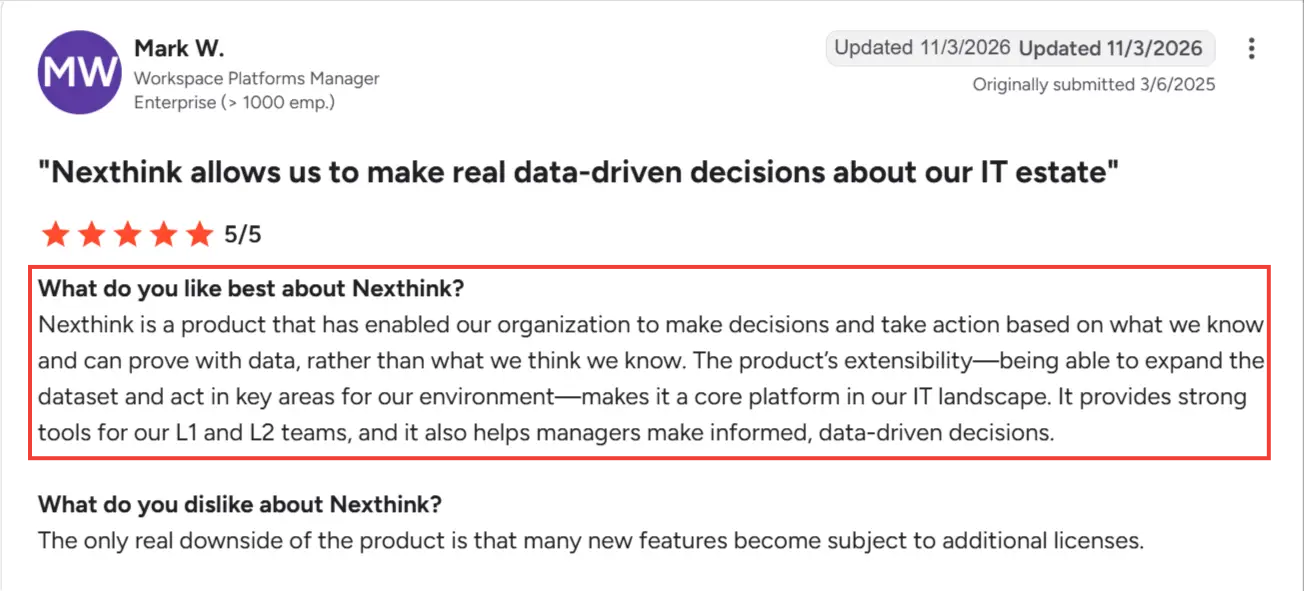
This visibility is a strength highlighted in Nexthink’s broader platform reviews. Here’s what Mark says:
The trade-off is the effort involved in getting value from the platform.
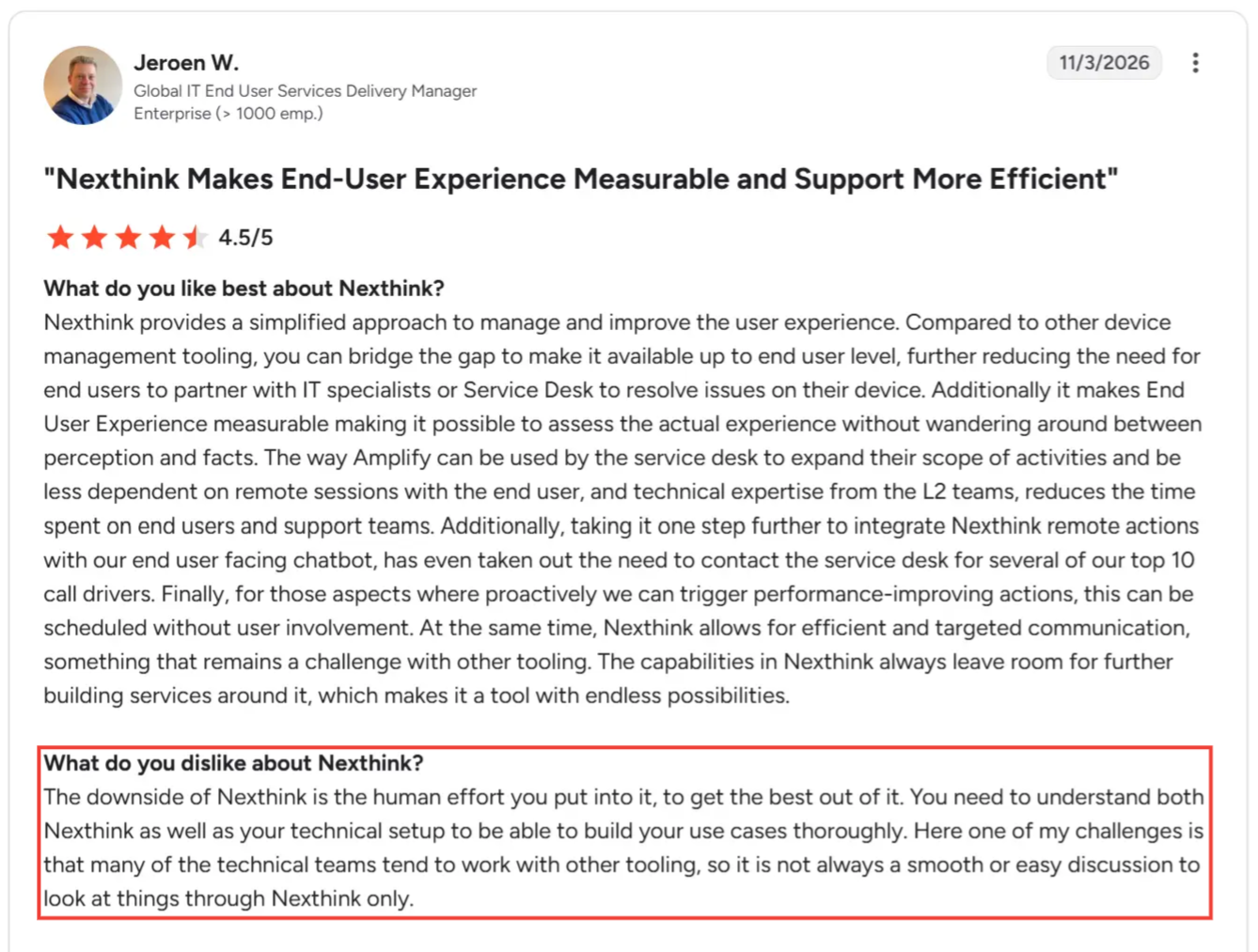
And for teams that only need in-app guidance, adopting the broader Infinity platform means they may end up paying for capabilities they won’t use.
Pricing: Nexthink doesn’t publish separate pricing for Guides. Depending on your existing Infinity subscription, Guides may require an additional license.
How do you know if adoption is working?
Measure adoption by what users do after receiving guidance, not how many people complete a flow. The right metrics depend on whether you’re driving customer adoption or helping employees use internal tools.
Adoption metrics for customer-facing products
- Activation rate: The percentage of new users who complete an action that signals they’ve experienced your product’s value.
- Feature adoption rate: The percentage of eligible users who use a specific feature within a given period.
- Time to value: How long it takes users to achieve their first meaningful outcome after signing up.
- Stickiness (DAU/MAU): The percentage of monthly active users who engage with your product on a given day.
💡Pro tip: Knowing how many users reach your key milestones doesn’t tell you where others get stuck. That’s why it’s important to track the steps leading to those outcomes.
For example, when we launched Userpilot’s email feature, usage looked good. But when I examined the setup funnel, I found a significant drop-off at domain setup and a 60-day gap between domain verification and adding an email address.
This pointed to technical setup friction rather than necessarily a problem with the feature itself. Our product team started exploring targeted in-app flows and checklists to help users complete those steps.
Takeaway: Build funnels around key adoption milestones to find where users drop off, then target guidance at those friction points.
Adoption metrics for employee adoption
- Task completion: The percentage of employees who successfully complete key workflows, such as submitting an expense report or updating a CRM record.
- Time to proficiency: How long it takes employees to complete their work accurately and independently after learning a new application.
- Fewer support tickets: A reduction in help desk requests related to the application or workflows employees have been trained on.
Turn a feature launch into real adoption with Userpilot
As you’ve seen by now, digital adoption platforms solve different problems. The right one for your team depends on whether you’re helping customers adopt your own product or rolling out third-party software to employees. Your budget, technical requirements, and the outcomes you want to measure also matter.
If you’re responsible for customer adoption, Userpilot is the agentic product adoption platform that helps you connect product usage insights with in-app action.
When a feature launch falls short, you can use our product analytics to identify who has adopted the feature and where others drop off. Lia, our AI agent, can then identify the users who are stuck and create targeted flows or checklists to help them move forward. You review and edit the guidance before publishing, then track whether feature adoption improves.
Book a demo to see how Userpilot can spot adoption gaps and guide users toward the actions that matter.
Disclaimer: Userpilot strives to provide accurate information to help businesses determine the best solution for their particular needs. Due to the dynamic nature of the industry, the features offered by Userpilot and others often change over time. The statements made in this article are accurate to the best of Userpilot’s knowledge as of its publication/most recent update on November 19, 2026.
FAQ
What is the best digital adoption platform?
It depends on your use case. Userpilot is a strong option for customer-facing product adoption, while WalkMe and Whatfix are better suited to large employee adoption and training programs.
What are some examples of digital adoption platforms?
Customer-facing examples include Userpilot, Appcues, Userflow, UserGuiding, Chameleon, and Frigade. Employee-facing options include WalkMe, Whatfix, Userlane, Apty, and Nexthink Guides.
What's the difference between employee-facing and customer-facing DAPs?
Customer-facing DAPs help people adopt your own product through onboarding and in-app guidance. Employee-facing DAPs help staff learn and use third-party business applications such as Salesforce, SAP, and Workday.
How much does a digital adoption platform cost?
Entry-level DAP plans start at around $279/month, while enterprise contracts can average over $40,000/year. Actual costs depend on user volume, application coverage, and the features you need.
Do I need both a DAP and a product analytics tool?
Not necessarily. Platforms like Userpilot combine in-app guidance with funnels, retention, and session replay. DAPs with lighter analytics usually need a separate tool to measure adoption.
What’s the difference between an LMS and a DAP?
A learning management system (LMS) delivers formal training outside the software, like courses and certifications. A DAP guides people inside the software while they work. Many companies use both.
Is there a free digital adoption platform?
Some DAPs offer limited free plans, but most are paid, and you can test them with a free trial. Userpilot, UserGuiding, and Chameleon each offer a 14-day free trial.
About the author