Pendo vs Gainsight: The Differences That Matter


When you’re looking at Pendo vs Gainsight PX, both give teams product analytics and in-app engagement capabilities to understand how customers use a product and influence what they do next.
But comparing their feature lists alone misses a more important question: What are you trying to accomplish with that data?
I’ve seen what happens when the workflow around product data breaks down. When your analytics and in-app engagement data live across different tools, with different events and segmentation logic, you could end up debating which numbers are right instead of acting on them.
So, I’ll use that lens for this Pendo vs Gainsight comparison. Beyond product analytics and in-app guidance, we’ll look at who needs the data, how each platform helps you act on it, what their newer AI capabilities change, and what you’ll need to budget for.
Executive summary
- Pendo and Gainsight PX (Product Experience) overlap but serve different workflows: Pendo centers on product experience, while Gainsight PX connects product usage more closely with customer success.
- Your goal should drive the choice: Pendo for product behavior and experience or Gainsight for account-level customer context.
- Both platforms are expanding their AI capabilities.
- Vendr reports median annual buyer costs of about $49K each for both Pendo and Gainsight, although the Gainsight figure isn’t PX-specific.
- Userpilot offers another option, with plans from $299/month and Lia helping teams turn product insights into action.
Is Pendo a direct alternative to Gainsight?
No, especially when you look at who buys them and what they’re trying to accomplish. Pendo has traditionally served product teams that want to understand user behavior and improve the broader product experience through analytics and in-app engagement. Its focus has since expanded, now targeting product, IT, revenue, customer success, HR, and marketing teams.
Gainsight is a customer success platform, and its PX module overlaps with Pendo in analytics and in-app engagement. The distinction becomes clearer when you ask what you’re aiming to do.
If you want to understand and improve how users experience your product, Pendo is built around that broader product experience. If you want product usage data to help customer success teams understand the health of specific accounts, Gainsight PX connects those signals more directly to account-level customer context. You can then identify risks and opportunities and decide where to intervene using features such as Accounts Explorer.
In my experience, this distinction has practical consequences. Most “Gainsight” evaluations are full Customer OS (operating system) suite evaluations: CS Cloud, PX, Communities, Skilljar, and Staircase AI together. A product team evaluating Gainsight PX as a standalone Pendo alternative is buying a narrower product through a different purchasing path, with a different implementation scope and a different ROI definition.

| Pendo | Gainsight PX | What the difference means | |
|---|---|---|---|
| Orientation | Product-experience platform with use cases across product, IT, revenue, CS, marketing, and HR. | Product-experience platform within Gainsight’s broader customer success platform. | Pendo spans more software-experience use cases; Gainsight PX connects more closely with CS workflows. |
| Analytics model | Autocapture, retroactive analytics, PES, funnels, paths, and retention. | Accounts Explorer, account health, Product Score, at-risk accounts, and product analytics. 1K events/MAU/month limit. | Pendo emphasizes behavioral analytics; Gainsight PX connects usage with account-level customer context. |
| In-app guidance | Lifecycle governance, multi-step guides, and six guide states. | Personalized customer guidance through Engagements and KC Bot, with a 50-step-per-guide limit. | Both support guidance, but with different controls and customer context. |
| Session replay | Unlimited captures, 30-day default retention, 90-day tier, and saved clips for one year. | Session recordings available through its FullStory integration. | Pendo provides native replay; Gainsight PX relies on an external FullStory integration for session recordings. |
| Data retention | Raw event data retained for up to seven years. | 36-month retention and 1K events/MAU/month limits. | Pendo provides a longer historical analysis window. |
| AI layer | Leo, Pendo MCP, Agent Analytics, and Agent Toolkit (open beta). | PX MCP Server plus AI capabilities across the wider Gainsight platform. | Pendo focuses on product and agent workflows; Gainsight extends AI into broader CS workflows. |
| Suite breadth | Product-experience platform serving several business functions. | Broader customer platform with PX alongside customer success products. | Pendo centers on product experience; Gainsight offers a broader CS ecosystem. |
Choose Pendo if:
- You’re a product manager or product ops lead who needs to drive feature adoption and improve user onboarding for a customer-facing SaaS product.
- You need faster time-to-value. Retroactive analytics lets you analyze product behavior captured since you installed Pendo without defining every event upfront.
- You want a product-led growth strategy where session replay works alongside your product analytics so that you can investigate the behavior behind your quantitative data.
- You need a product-data AI layer. Leo lets you explore product usage through natural-language questions, Pendo MCP connects product and customer data to external AI clients, and Agent Analytics measures how users interact with AI agents in your product. Pendo also offers Agent Toolkit in open beta, giving AI agents access to product context and Pendo capabilities.
- You need more than surface-level usage metrics. Pendo combines user-level behavioral analytics with session replay and AI-assisted analysis.
- You don’t have a CS function, or you don’t need account-health scoring and renewal playbooks in the same platform as your product analytics.
Choose Gainsight if:
- You’re a CS leader managing account health, renewal risk, and expansion. Gainsight PX’s Accounts Explorer is built specifically for this workflow.
- You already own Gainsight CS Cloud and want PX to extend it natively without adding a separate product analytics vendor to your CS stack.
- Account-level usage tied to renewal decisions is critical for your CS team, and user behavior analytics matter less than account-level signals.
- You need CS playbooks, customer health scoring, and journey orchestration alongside product analytics, and your team has the resources to implement and manage a broader customer success platform.
How do their AI capabilities compare?
Pendo’s AI layer is built around product data:
- Leo lets you ask questions about product usage inside Pendo.
- MCP Server lets you query Pendo data from external AI clients such as ChatGPT and Claude.
- Agent Analytics focuses on how customers interact with AI agents in your product, including prompts, conversations, use cases, and issues.
- Agent Toolkit (currently in open beta) goes a step further by giving AI agents product context so they can surface guides, use session context, collect feedback, and respond to signals such as workflow drop-offs or frustration.
Gainsight is also bringing AI closer to product data through its PX MCP Server, while its broader AI strategy extends across the Gainsight customer platform.
Look at where you want AI to work. Pendo is building AI capabilities around product intelligence, AI-agent performance, and product context for external agents. Gainsight connects its PX data to an AI strategy that also spans broader customer success workflows.
What is Gainsight built to do?
Gainsight PX is the product-experience module inside the broader Gainsight platform. It bundles product analytics, user analytics, and in-app engagement to help product and customer success teams understand how customers use the product and act on those insights.
Gainsight also connects PX data with CS and CRM systems so that product usage can inform customer retention, expansion, and other customer success operations.
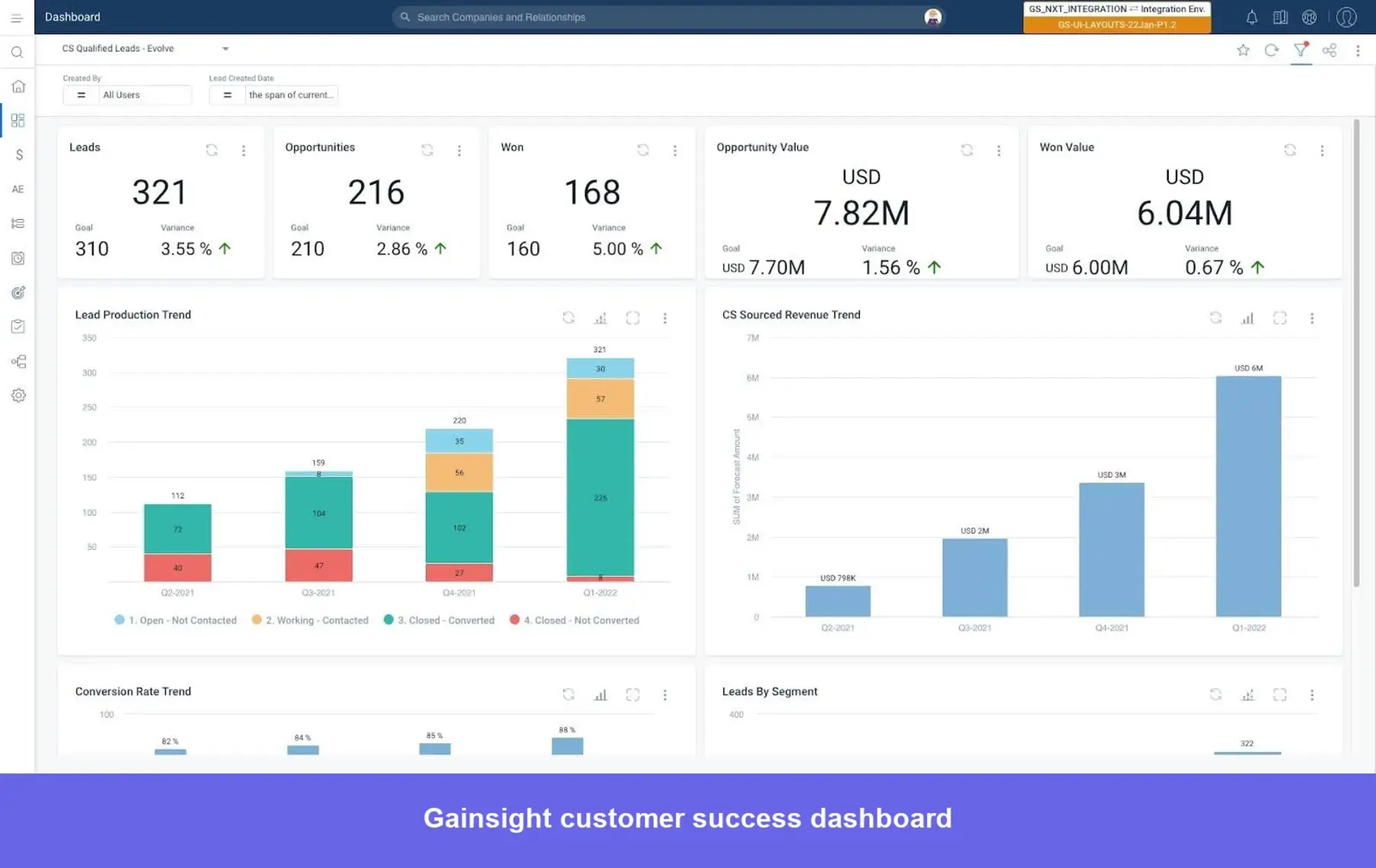
Gainsight PX’s capabilities include:
- Product analytics: Funnels, paths, retention cohorts, and usage trends show whether an account is actively engaging with the product, which matters when you’re building a case for expansion or flagging churn risk early.
- Accounts Explorer: It brings health scores, at-risk flags, Product Score, core feature usage, and stickiness into one account view. This helps customer success teams use product analytics and usage insights at scale to prioritize accounts that need attention, then drill into the users and features contributing to those signals.
- In-app engagement: Dialogs, multi-step guides, announcements, and the In-App Hub resource center let you provide personalized customer guidance directly within the product. You can tailor content using persona, customer health, and usage data to improve the customer experience and reduce the need to route every question through a support ticket or a CSM’s calendar.
- User Surveys: Built-in feedback collection lets you catch a dip in sentiment early so that you can act on it before the renewal conversation. Gainsight PX supports survey types including NPS, CES, CSAT, ratings, and multi-question surveys.
- Channel coverage: Web, mobile, and desktop app support matters if your customers don’t all live in a browser. Gainsight PX also now supports native email campaigns alongside its in-app engagement capabilities.
Gainsight PX ships in Essentials and Enterprise tiers, so the feature set you get depends on which one you buy into. If you’re already running Gainsight CS for health scoring, playbooks, and renewal tracking, PX can serve as the product-usage layer. Other Gainsight products extend the platform further into areas such as customer education and customer success automation.
Is there anything you should know before investing in Gainsight? Yes:
- In-app guides are capped at 50 steps per guide, which may limit your team’s ability to build particularly complex, multi-step in-app onboarding flows.
- Both PX Essentials and Enterprise have a maximum of 1,000 events per MAU per month and retain analytics data for 36 months. These limits can matter for high-engagement products or teams that need longer-term cohort retention analysis.
- Because Gainsight PX can connect product analytics with account health and broader customer success workflows, consider whether you need that wider CS context or primarily need a product analytics and engagement platform.
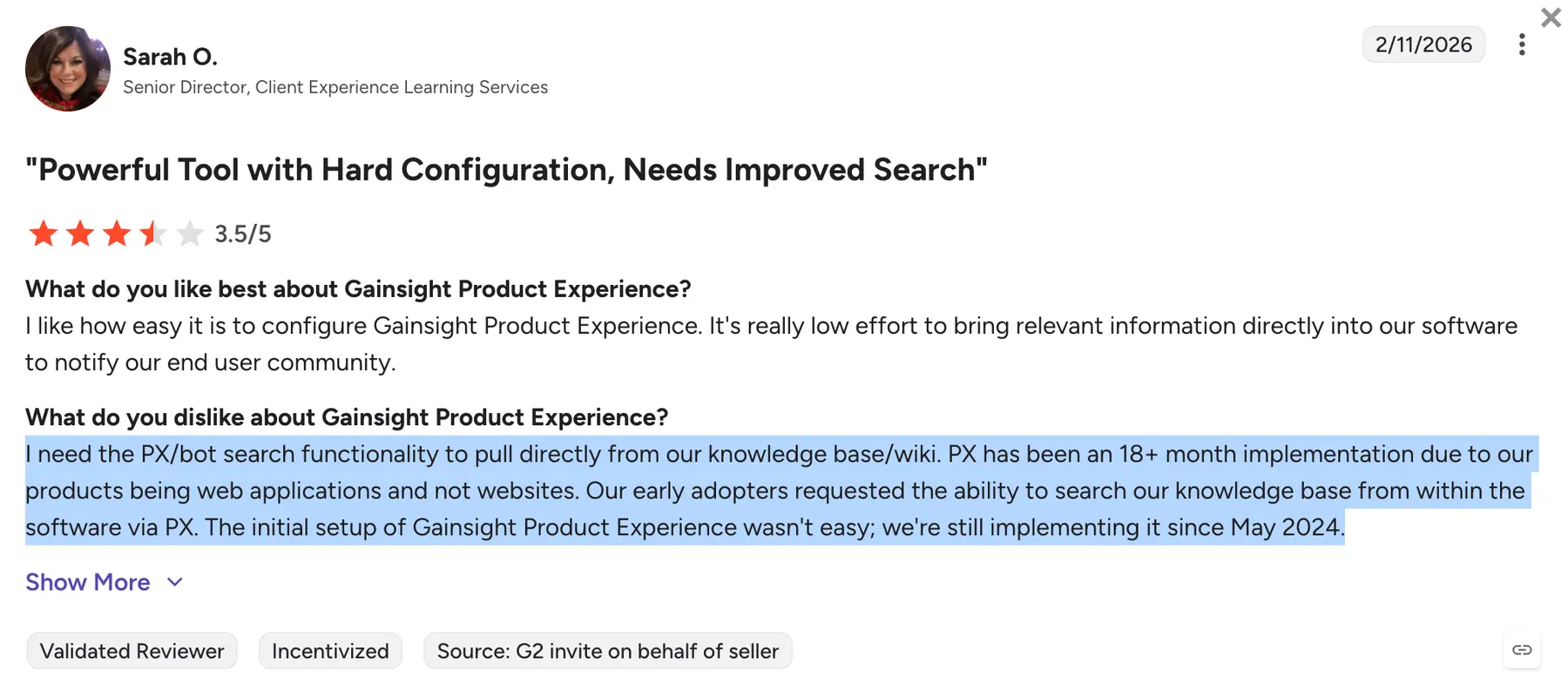
Overall, its users find that Gainsight PX is easy to configure with useful features, but still suffers when it comes to the product experience. This reviewer’s organization is still implementing it two years after starting the process.
What is Pendo built to do?
Pendo is an AI-powered analytics and adoption platform for product and GTM teams, whether they are managing a single app or multiple products.
You install Pendo, and it starts capturing user behavior without requiring an upfront event taxonomy or manual tagging. This gives you real-time data and retroactive analytics from installation. You can then use the same platform to surface meaningful insights and deploy in-app guidance based on them.
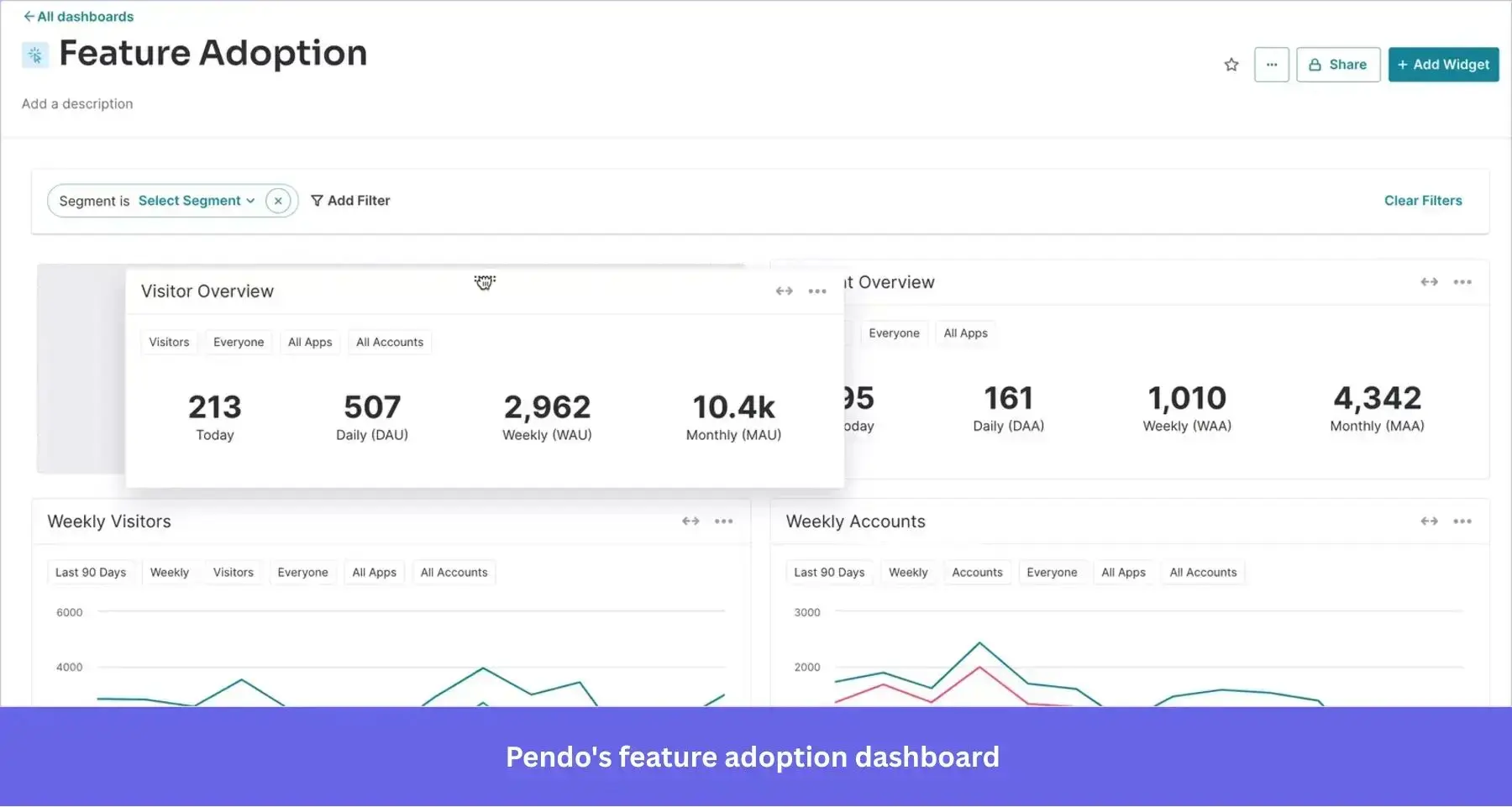
Pendo’s capabilities include:
- Autocapture: Events are captured with no-code setup from day one, so you can track user behavior and analyze it retroactively from the point Pendo was installed rather than waiting for an engineering team to instrument every event first.
- Product Engagement Score: A composite metric (PES = Adoption + Stickiness + Growth, divided by 3) that rolls your product health metrics into one number to track over time, useful for reporting to leadership without walking through five separate dashboards.
- Funnels analysis: Shows where users drop off in a task sequence, then lets you connect those insights to guides that address the friction.
- Paths: Reveal what users do right before or after a key feature, guide event, or AI agent interaction, useful for spotting unexpected workarounds or confirming whether a new feature changed behavior at all.
- User retention reports: Show whether users keep coming back, broken out by engagement and growth cohorts, so you can tell whether a feature launch moved the needle or only looked good in week one.
- Guides: Full lifecycle governance with six states (Draft, Pending Review, Staged, Public, Scheduled, Inactive), segment-based targeting, and category management, which matters once you have more than a handful of guides live and need to know what’s published versus still in review.
- Session Replay: Unlimited replays with 30-day default storage (90-day tier available, saved clips up to a year) let you watch exactly where a user got stuck instead of guessing from a funnel drop-off alone. Privacy masking is applied client-side at capture.
- Pendo Listen: Customer feedback management, an idea portal with voting, product roadmap sync, and AI-surfaced themes are useful if product feedback currently lives scattered across spreadsheets and Slack threads.
- Product NPS survey: Included on Free (Pendo-branded), with full sentiment analysis through Sentiment on paid plans or as an add-on, so you can track satisfaction without adding a separate survey tool.
- 85+ integrations: Integrations span CRM, support, email marketing automation, and analytics tools. Pendo also supports SOC 2, GDPR, and HIPAA requirements, which matters if procurement or security review is part of your buying process.
Where Pendo creates friction points:
- In apps with heavily customized or non-standard front-end code, tagging pages and features can be difficult, especially during initial setup when you need to establish the tagging model.
- Guides can fail to display when your product evolves, app structure changes, page rules shift, or ad blockers are active.
- Without a structured governance process, the guide library can become difficult to manage at scale.
Considering tools similar to Pendo and Gainsight? Try Userpilot!
From my perspective, the biggest question is whether you’re looking for a broader customer success platform or a product growth platform that lets you understand user behavior and act on it in the same place.
If it’s the latter, then Userpilot is the comparison I’d spend the most time on. Pendo and Userpilot are often compared because they solve many of the same jobs: product analytics, in-app guidance, surveys, and session replay.
Gainsight PX overlaps with both, but it’s also part of the wider Gainsight ecosystem, which tends to make the buying decision a bit different.
When I speak to teams evaluating alternatives to Pendo, these are the reasons they most often end up considering Userpilot:
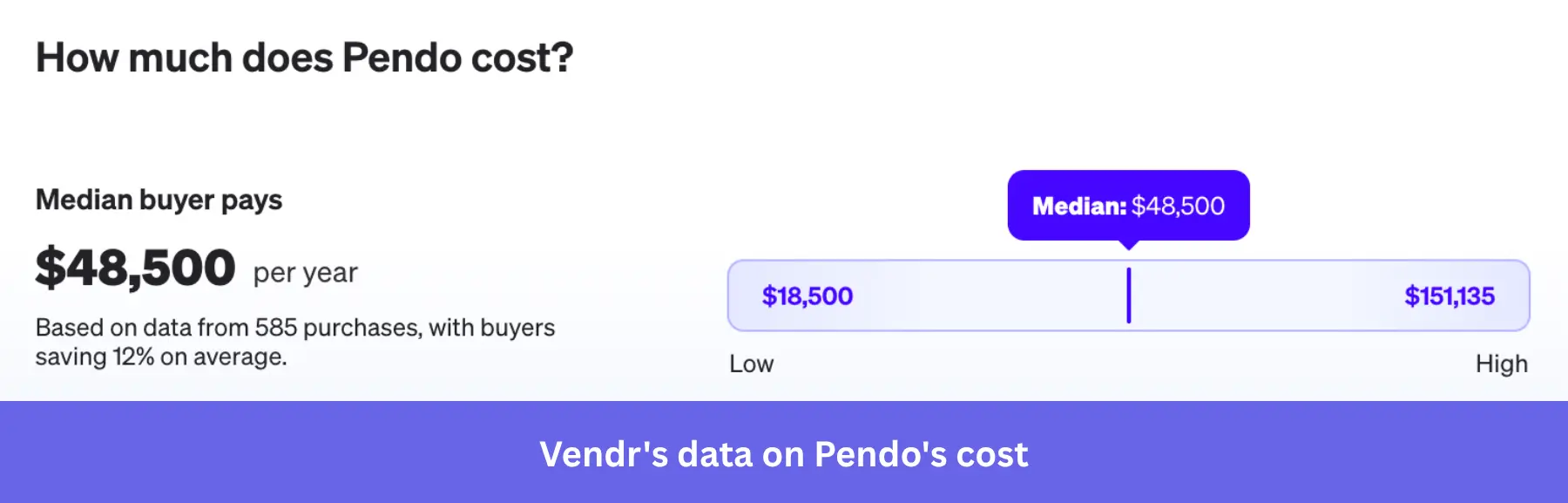
- More affordable and predictable pricing: Our plans start at $299/month, and Vendr reports a median annual buyer cost of $18,000 for Userpilot, compared with $48,500 for Pendo and $49,676 for Gainsight. Keep in mind that the Gainsight figure covers Gainsight overall rather than Gainsight PX specifically.
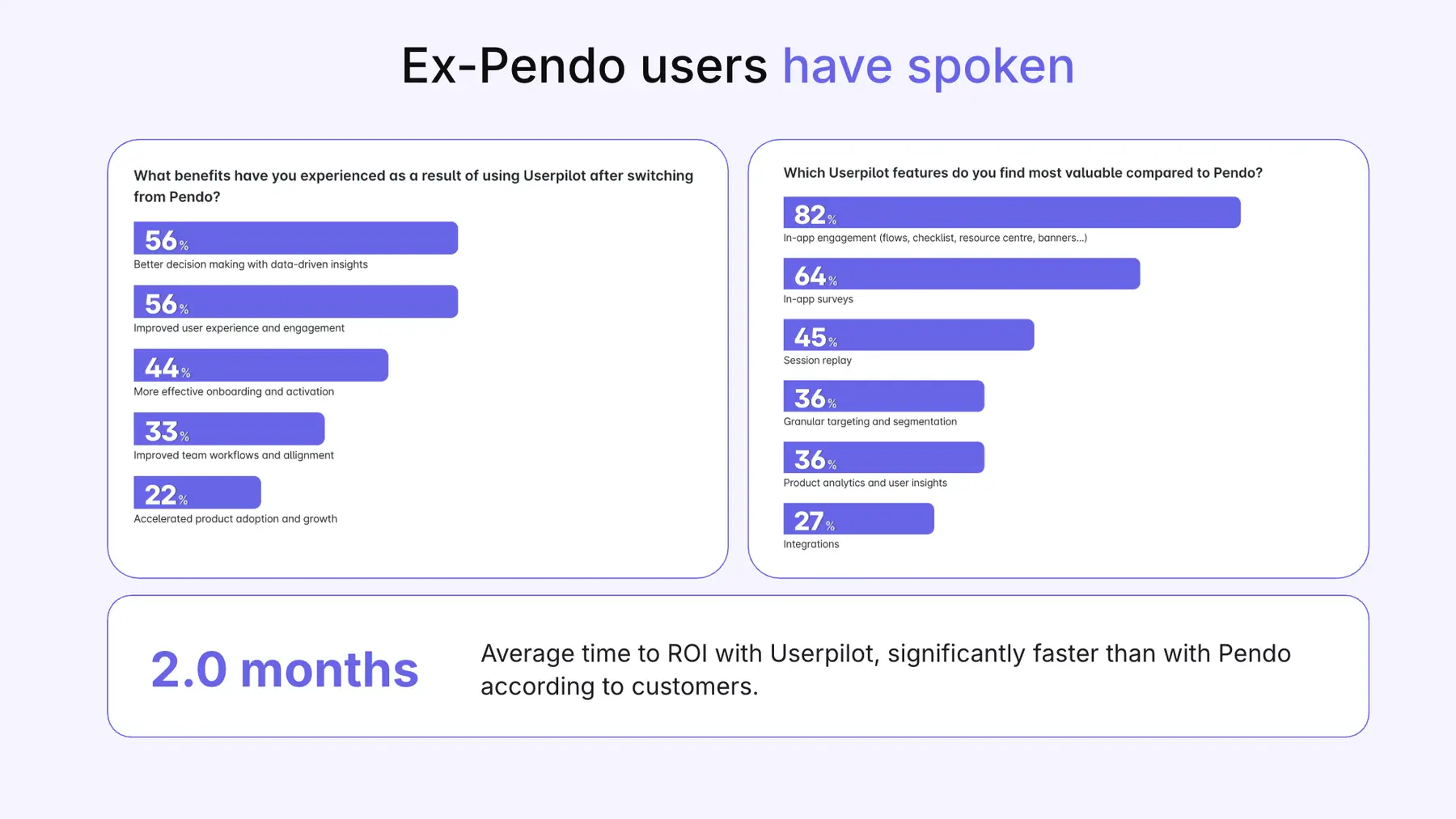
- 40–50% cost savings and 2-month ROI: Ex-Pendo customers in Userpilot’s migration data report ~40% lower contract value for the same use cases (onboarding, adoption, feedback, analytics), and an average of 2.0 months to ROI after switching. 56% report better product decisions, 56% better user engagement, and 44% more effective onboarding.
- Real-time targeting and data: Trigger flows using live user or event attributes and behavioral conditions, with unlimited user segment nesting. Pendo supports up to 25 nested segments and processes general usage analytics hourly. While Pendo evaluates guide eligibility within seconds, newly eligible visitors need to refresh the page before the guide appears.
- AI-assisted analysis and action: Lia makes analytics easier by letting you ask questions about product behavior in natural language, understand what affects important metrics, decide what to do next, and build an in-app response. Userpilot MCP is also live, giving supported AI clients access to relevant Userpilot product and customer context.
- Highest customer satisfaction among DAPs: Userpilot holds the highest satisfaction score of any product in G2’s Summer 2026 Digital Adoption Platforms Grid Report. Its no-code setup also makes it accessible to non-technical teams.
- Migration and support are included, not billed: A specialist imports historical events and analytics data, recreates Pendo guides and surveys 1:1, and onboards the team, free. Priority troubleshooting and a dedicated customer success manager come with Growth and Enterprise plans rather than sitting behind a “Premium Support” SKU.
Book a demo or start a free trial to see how it runs against your own product.
How much do Pendo and Gainsight cost?
Both use custom pricing for their paid offerings, which makes direct cost comparison harder without an active sales conversation. The procurement benchmarks below give a useful directional reference.
| Pendo | Gainsight | |
|---|---|---|
| Pricing model | MAU (Monthly Active Users) – based subscription; no public list prices. | PX: request pricing + free trial. CS Cloud: quote-based. Bundled CS + PX available. |
| Vendr median annual buyer cost | $48,500/year | $49,676/year (Gainsight-wide; not PX-specific) |
| Free / trial | Free plan up to 500 MAU; 30-day full-platform trial | PX free trial available. No free tier for CS Cloud. |
| Cost unit | Monthly active users (MAUs) | PX: MAUs tracked. CS Cloud: Number of customer records. |
| Key caveat | Paid plans use custom pricing; Session Replay, Sentiment, and Journey Orchestration are included in certain bundles or available as add-ons, depending on the plan. | Vendr’s figure reflects Gainsight overall, not PX alone. Request a standalone PX quote if that’s the only product you’re evaluating. |
Pendo pricing
Pendo uses MAU-based pricing, but like most enterprise software vendors, you’ll need to contact sales for a quote.
There are four plans: Free, Base, Core, and Ultimate. The Free plan supports up to 500 MAU, while paid plans offer additional functionality such as Session Replay, Sentiment, and Journey Orchestration, depending on the plan.
If you’re estimating costs, Vendr buyer data puts the median Pendo contract at $48,500 per year. Just remember that Pendo’s pricing depends heavily on the products, add-ons, and usage levels included in your contract.
Those costs are one reason some Pendo customers consider Userpilot instead, particularly when they need similar analytics and engagement workflows without the same pricing structure. If you’re comparing the two, talk to us about what the equivalent setup would look like in Userpilot.
Gainsight pricing
Gainsight PX uses a request-pricing model with no public list price; a free trial is available.
CS Cloud and PX are separately licensed modules that can be bundled, with bundled pricing typically offering better terms than buying each standalone. CS Cloud pricing scales by the number of customer records managed; PX pricing scales by MAUs tracked.
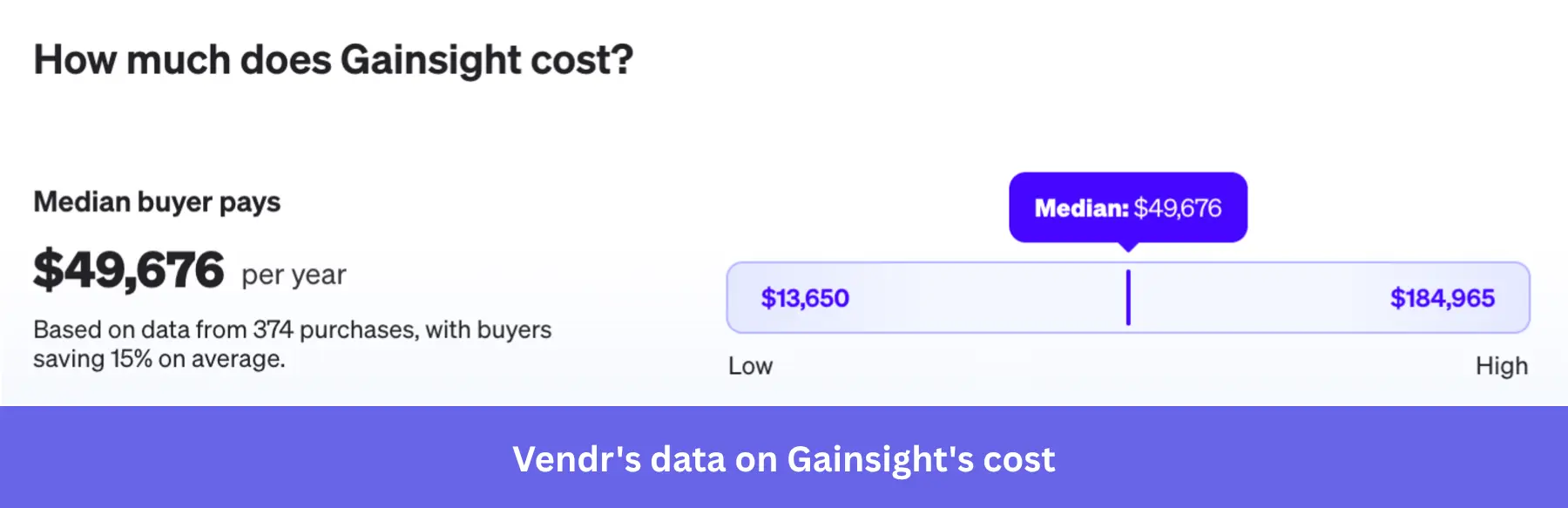
Vendr buyer data shows a median annual buyer cost of $49,676 for Gainsight.
I’d say the catch is that Vendr tracks Gainsight as a whole, not PX specifically. This means the benchmark may overstate the cost if you’re evaluating PX as a standalone product.
If PX is the only product you’re interested in, ask Gainsight for a dedicated quote rather than relying on the Vendr median.
Gainsight, Pendo, or a better alternative?
If you have a product or GTM team and your primary goal is behavioral analytics, adoption measurement, and in-app guidance, Pendo is the cleaner fit. It’s purpose-built for those workflows and combines autocapture, session replay, and an AI layer that includes Leo, Agent Analytics, Pendo MCP, and Agent Toolkit.
If you’re a CS leader who needs account health scoring, renewal playbooks, and product usage data integrated into a single CS workflow, Gainsight is the cleaner fit, particularly if you are already using the broader Gainsight platform and want PX to extend it natively. For businesses where CS and product are tightly integrated, Accounts Explorer and the wider Gainsight ecosystem connect product usage with account-level customer context.
The third path is Userpilot. If you want an AI-powered product growth platform that connects product analytics with in-app engagement and lets your team move from understanding user behavior to acting on it in the same platform, book a demo to see how it compares for your team.
Disclaimer: Userpilot strives to provide accurate information to help businesses determine the best solution for their particular needs. Because the industry is dynamic, Userpilot and other platforms’ features often change over time. The statements made in this article are accurate to the best of Userpilot’s knowledge as of its publication/most recent update on September 28, 2026.
FAQ
Is Gainsight better than Pendo?
Neither is categorically better: they serve different buyers and different team functions. Pendo is a stronger fit for teams focused on product analytics, product adoption, and in-app engagement. In comparison, Gainsight is a stronger fit when product usage needs to connect with customer health, account management, and renewal workflows. The right answer depends on who owns the tool in your company and what outcome you are optimizing for.
What is the main difference between Pendo and Gainsight?
Pendo is a product-experience platform where analytics and adoption are central. Gainsight PX provides overlapping analytics and in-app engagement capabilities but sits within Gainsight’s broader customer success platform. The tooling overlaps, but the organizational context, surrounding workflows, and success criteria differ.
Can you use Pendo and Gainsight together?
Yes. Pendo can sit with the product team for behavioral analytics, adoption measurement, and guide authoring. In contrast, Gainsight CS can sit with the CS team for health scoring, playbooks, and renewal tracking.
Is Gainsight PX available as a standalone product, without the full Gainsight suite?
Gainsight PX can be licensed independently at the Essentials or Enterprise tier without purchasing CS Cloud. If you are evaluating PX only, ask explicitly for a standalone PX quote during your sales conversation. The Vendr benchmark of $49,676 reflects Gainsight overall rather than PX specifically, so don’t treat it as the expected cost of PX alone.
Which tool is faster to implement: Pendo or Gainsight?
Pendo’s autocapture can reduce upfront analytics setup because it captures product behavior from the moment you install it, without requiring an upfront event taxonomy. Gainsight PX requires configuration based on the capabilities and customer data you want to use, particularly when connecting PX with account-level customer success workflows. The exact implementation time for either platform will depend on your setup and integrations.
About the author