
Product Adoption in the Agentic Era



We’re reimagining Userpilot for a future where AI has drastically changed the way software is built and consumed.
AI is making it much easier and faster to build software, but teams still have to figure out what’s being used, how it’s being used, and whether end users or agents are actually getting value from it. When they aren’t, figuring out why can take a lot of work and effort.
With today’s technology, it should now be possible to answer these questions just as fast as we’re able to build and ship software.
Our first attempt at solving this problem was by introducing Lia, the world’s first product adoption agent. Lia automatically instruments all of your data and monitors usage to understand how your product is being used, where users are getting value, where they are getting stuck, and what changes need to be made to drive more value for your users.
We’re also building Userpilot Headless so our customers’ own agents can use Userpilot’s product data and tools just like Lia can.
Enabling Agentic Product Adoption
As development cycles ramp up, product teams will have more and more features to monitor and even more work to do to understand how those are performing in production. It makes no sense for the current manual workflow to stay as it is today.
When users aren’t deriving value from a product, someone needs to understand why and solve the problem. This includes analyzing metrics, watching user sessions, and collecting feedback to understand what’s causing friction and needs to be fixed. Then, someone still needs to prepare the fix, validate it, and figure out whether it actually moved the needle.
A lot of teams today have access to tools such as report builders, dashboards, session replays, and surveys. But having those tools doesn’t equate to actually having the time to look into each and every problem in production. It could, sometimes, take weeks or even months before problems surface, especially when teams are busy working on other priorities. With more software being shipped due to AI advancements, there will only be more of those issues to sit idle.
That is why we see potential in having Lia do more of that. It should be possible for teams to ask Lia why a particular feature isn’t being adopted and have her look into the problem so the team knows how to proceed with it. Eventually, it should be possible for her to detect and look into these issues herself.
How agents change product adoption
There is also a need to rethink product adoption due to agents doing much of the job on behalf of the users.
For instance, a customer could be getting value from your product without being logged in, as their agent uses it via an API or an MCP.
A customer who used to log in every Friday to create a report and share it with colleagues might ask an agent to do the same task for them. Sessions of the customer might be reduced, but that does not mean they are no longer using the product and receiving value from it. Using the activity in the UI alone as a measure of adoption could lead to misinterpretation.
Measuring how many times an agent invokes a tool is not the whole story either. Usage made by the agent could be due to its inability to complete the operation and trying again and again. We should understand if the operation was performed successfully, if there were any interventions by users, and if the expected result was received by them.
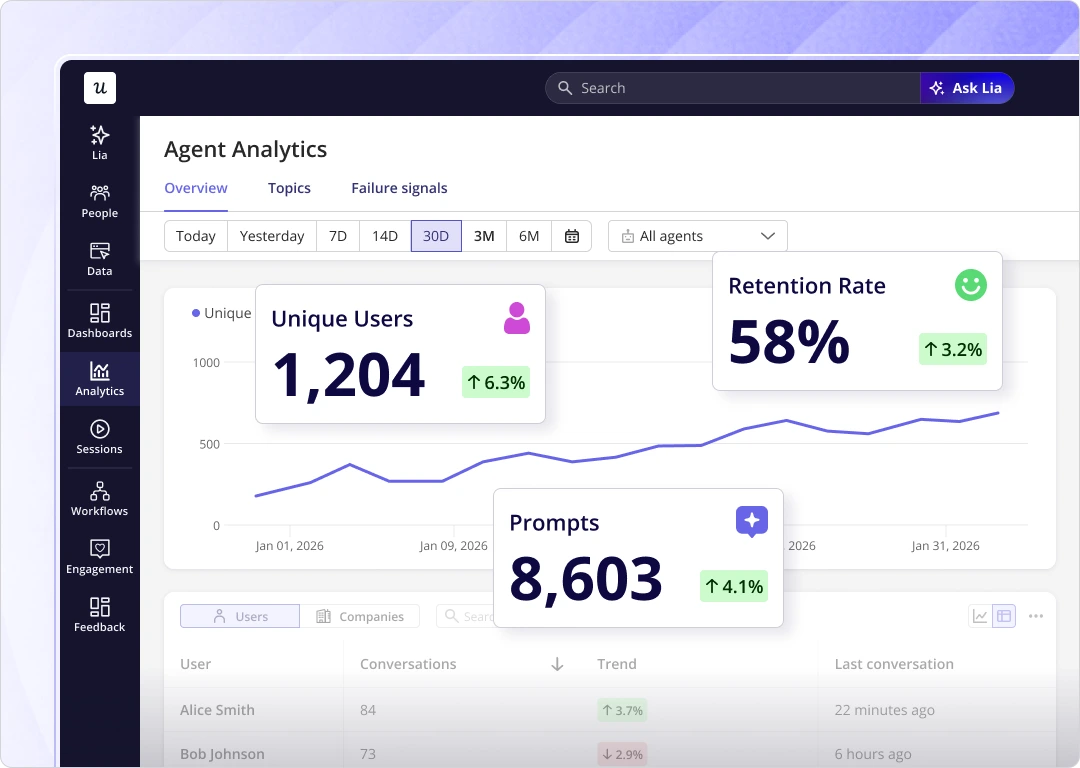
That is why agentic analytics is now being integrated into Userpilot. Agent Analytics will allow companies to learn how users interact with agents in their products and what challenges they face. MCP Analytics allows you to track the tools’ usage by agents, including errors and performance.
See Agent Analytics in Userpilot →
What we want Lia to take on
Today, Lia is already helping 100s of our customers analyze their product data, understand adoption issues, and spot patterns faster than they have ever done. This is like each product team having their own dedicated data scientist on demand.
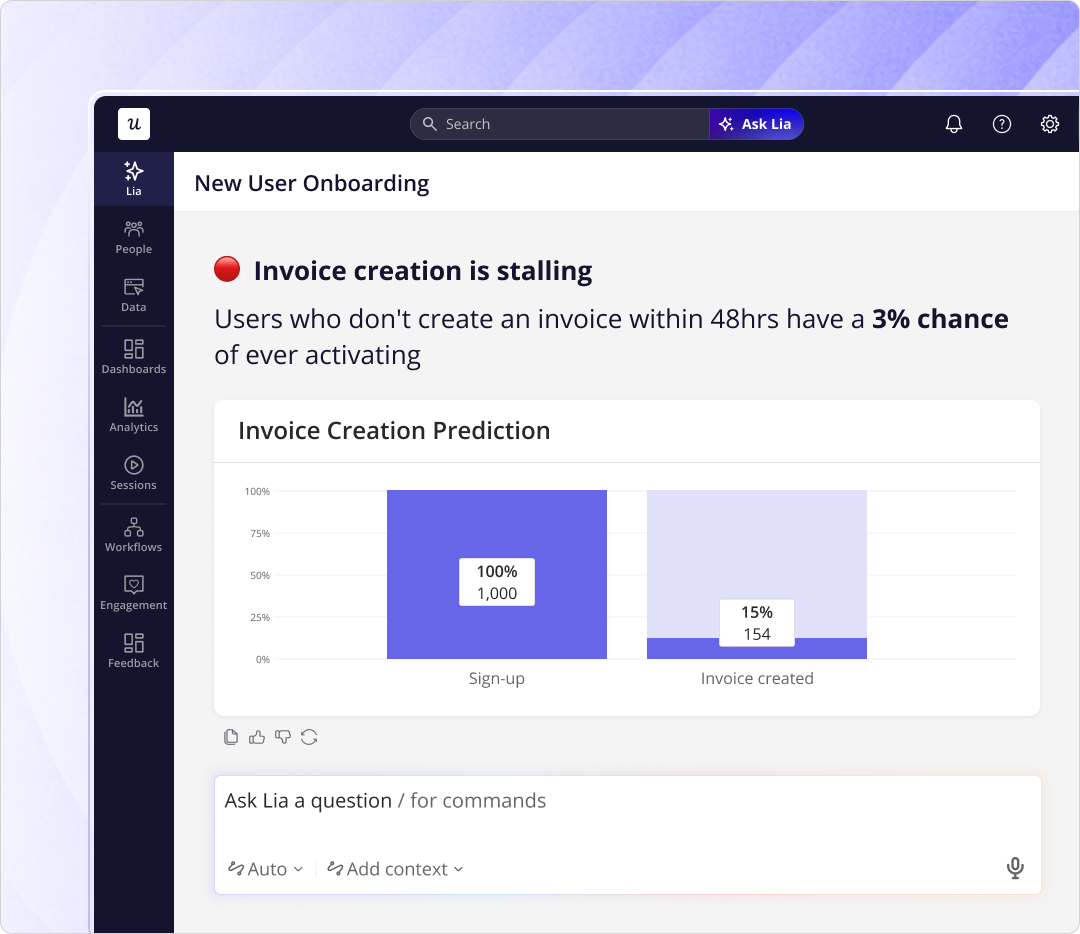
See how Lia helps you investigate product questions, uncover adoption issues, and turn raw product data into answers your team can act on.
In the near future, our aim is to take it a step further by having Lia autonomously identify problems, understand why they happen, and then prepare changes either as user engagement or code changes.
With Discover, Lia will provide four or five useful findings every week by watching how features actually perform in your production. A product manager should be able to go through all of them and understand what needs their attention. Lia might have access to hundreds of observations, but she will specifically pick the ones that matter to your team.
What Lia recommends is also dependent on the problem’s root cause. If users are abandoning setup because they don’t understand a required setting, an explanation at that step could help. But if they’re running into an error, then Lia will recommend an actual codebase fix rather than an in-app guidance.
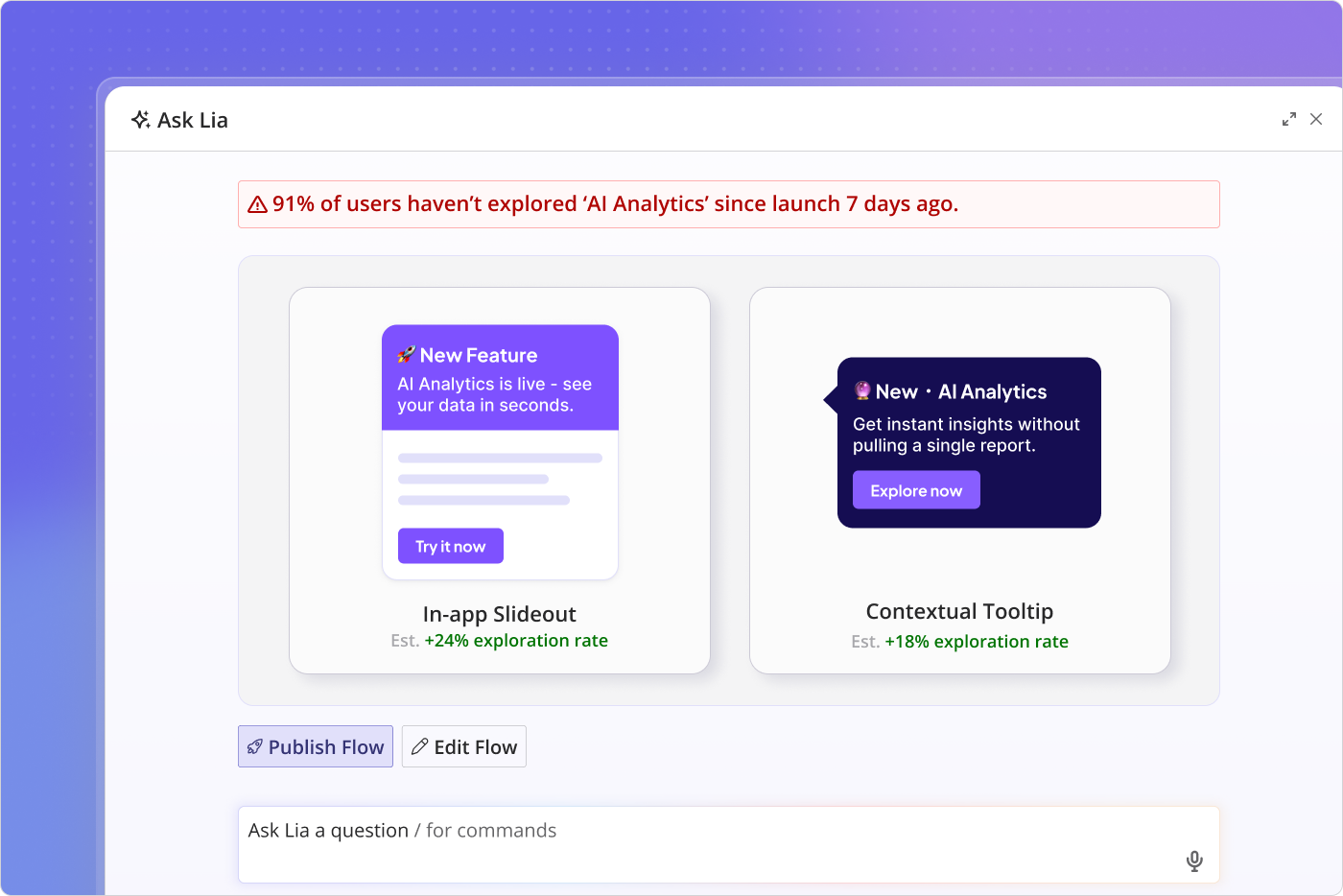
When Lia recommends an in-app experience, we want her to create the actual draft with the content and targeting set up so the team can review it, make changes, and decide whether to publish it. The team shouldn’t have to take a recommendation and start building everything themselves.
Over time, we also want Lia to prepare a PR or ticket when the problem needs an engineering change, with the evidence explaining why that change is needed. Code changes will go through the customer’s engineering process, and content created inside Userpilot will need approval before it goes live.
Why we’re building Userpilot Headless
We want Lia to take on more of this work. But teams should also be able to use their own agents to understand adoption problems and do something about them. That’s why we’re building Userpilot Headless.
I don’t think every company is going to want another agent from every software provider it uses. Some teams already work inside a coding agent. Others are building internal agents that know their processes and connect to their CRM, support system, and documentation. It makes sense for them to keep more of the work there.
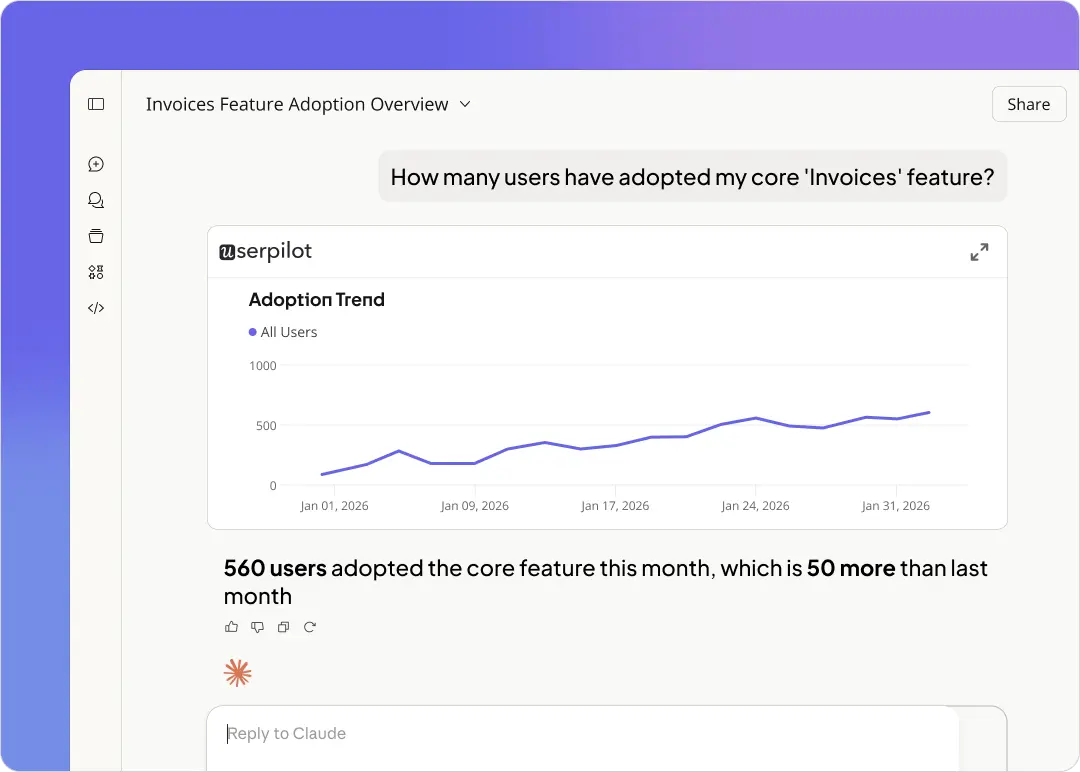
Userpilot Headless gives those agents access to Userpilot’s product data and tools through our APIs and MCP server. In the future, agents will also be able to access these capabilities through the Userpilot CLI.
A coding agent might know your repo very well, but the repo won’t tell it which customers are struggling with a feature or what they said about it in a survey. Through Userpilot, it can look at product behavior, feedback, and relevant sessions to understand what users are running into before deciding what to change.
Our MCP tools at Userpilot let the agent create reports, segments, surveys, and engagement content. So if the problem is that users don’t understand a required setting, it could prepare an explanation for the users who are getting stuck, with the targeting already set up for the team to review.
If the problem needs a code change, the coding agent should be able to use that same context when preparing a fix in the repo. The team can review it through its normal engineering process. After release, we want the agent to come back to Userpilot and check whether the change helped the affected users.
We’re building Lia and Headless on the same foundation, so the team should be able to review and edit the work in Userpilot regardless of which agent prepared it. It can work directly in Platform, use Lia, or use an agent it already has.
Where we’re taking Userpilot
As building products becomes easier, the feedback loop should also become significantly faster. At Userpilot, we aim to equip every team with intelligent tools to understand what’s working and what needs to change.
We already have the product data and tools needed to do much of this work. With Lia, we’re bringing more of it together so an agent can investigate a problem and prepare a fix for the team to review. Through Userpilot Headless, we’re making that same foundation available to external agents companies already use.
Discover is the next step for Lia. From there, we’ll continue expanding the work Lia can take on, including preparing PRs or tickets when an improvement needs engineering. Teams should be able to understand why a change was recommended, review it before it goes live, and see what happened afterward.
That’s the direction we’re taking Userpilot. As teams ship more software, we want them to spend less time piecing together what’s happening and more time making decisions that help their customers get value from it.
If you’re thinking about how AI agents will change the way your team understands users and improves your product, we’d be happy to show you what we’re building.
See how Userpilot brings product data, feedback, analytics, and action together, and how Lia and Userpilot Headless fit into that direction.
About the author