Free trials are one of the most common SaaS growth levers. But not all trials are created equal, and neither are their conversion rates.
In this article, you’ll learn:
-
What qualifies as a good SaaS free trial conversion rate in 2025.
-
How conversion rates vary by trial type (opt-in, opt-out, freemium).
-
Industry-specific benchmarks.
-
Proven ways to improve your trial-to-paid conversions.
What is a free trial conversion rate?
A free trial gives your users free access to your product for a limited time period. The purpose is to get them to experience the value of your product in the time you give them.
A free trial can range from 7-60 days. The more complex your product, the longer your free trial should be. However, you also need to have enough resources to keep everything running because too many free users can put a strain on your resources.
How do you calculate free trial conversion rates?
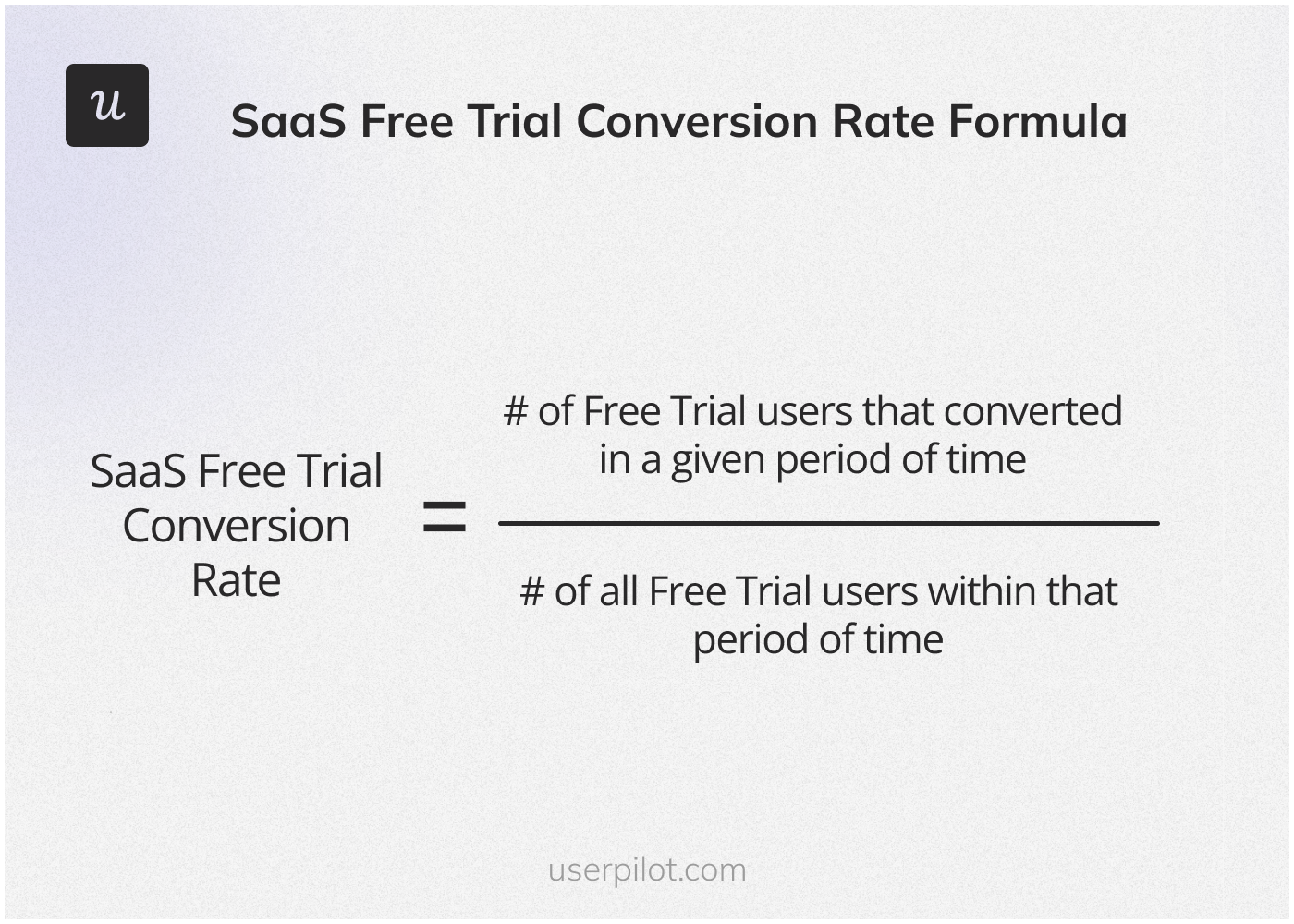
Your trial conversion rate is the percentage of trial users who became paid customers after their free trial.
To calculate your free trial rate, use this formula:
Trial conversion rate = Number of trial-to-paid users/ number of trial users.
For example, if your product has 500 trial users and 90 trial users convert to paying customers. In this case, your trial conversion rate would be:
90/500 x 100 = 18%
Why is a free trial conversion rate important for your SaaS business?
This metric helps you determine if your product offers real value to your customers and if they would be willing to pay for it.
The higher your SaaS trial-to-paid conversion rate, the faster your growth, and the lower your customer acquisition cost.
Once you have a high SaaS free trial conversion rate and a low CAC:LTV ratio combined with a high retention rate, you will have an incredibly sticky product that no one will want to leave.
All that is left is to go ahead and double down on your acquisition!
Another reason why the free trial conversion rate is important is all the PQLs – Product Qualified Leads you get. Basically, all your active free trial users are considered PQLs and they are much easier to convert than Marketing Qualified Leads (MQLs).
This is because they have a more intimate experience with your product than someone who visits your website and reads your blog. But in order to convert them, you need to have a Product-Led Sales strategy. So if your free trial to paid conversion rate is low, it means you need to work on your product-led sales and user engagement strategy.
Finally, the trial conversion rate helps you determine the use cases/user personas for your product. When analyzing your trial conversion data, segment it using various user demographics, e.g., industry or location. This allows you to know which user segments convert from free to paid at the highest rates and their use cases (e.g., individual users vs. agency users).
How to correctly measure free trial conversion rate for SaaS?
Although all it takes is some basic math to calculate your free trial conversion rate, you don’t want to generalize your entire user base.
You first need to segment your audience by persona, plan, company size, etc. – so you know not only the general average conversion rate but also how the conversion rate varies for specific segments.
Secondly, decide which segments are the most important for your business. Are they marketing managers in a medium-sized business? What are they trying to achieve?
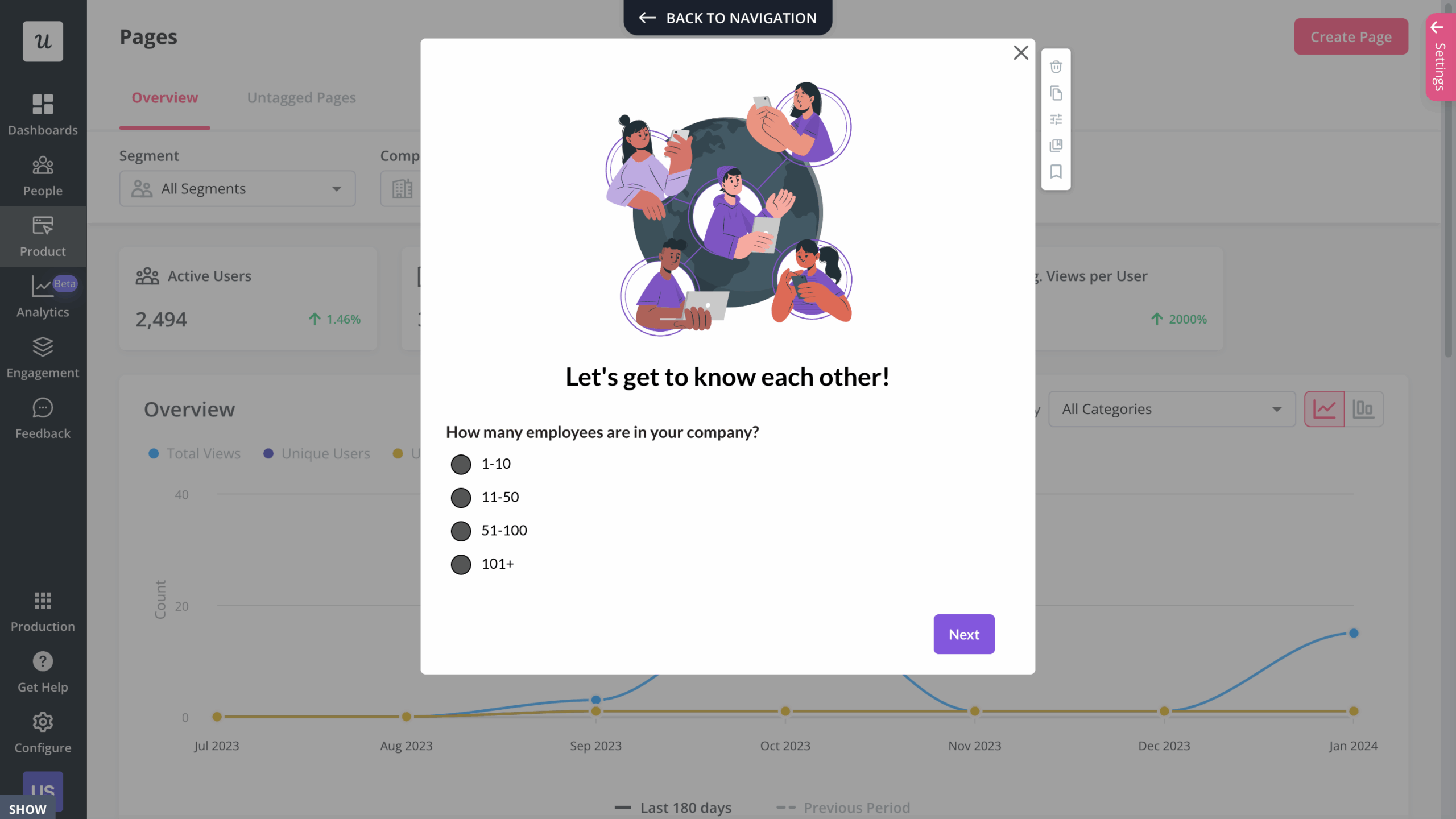
With a product adoption tool, you can create custom welcome screens that ask all these relevant questions that will help with segmentation.
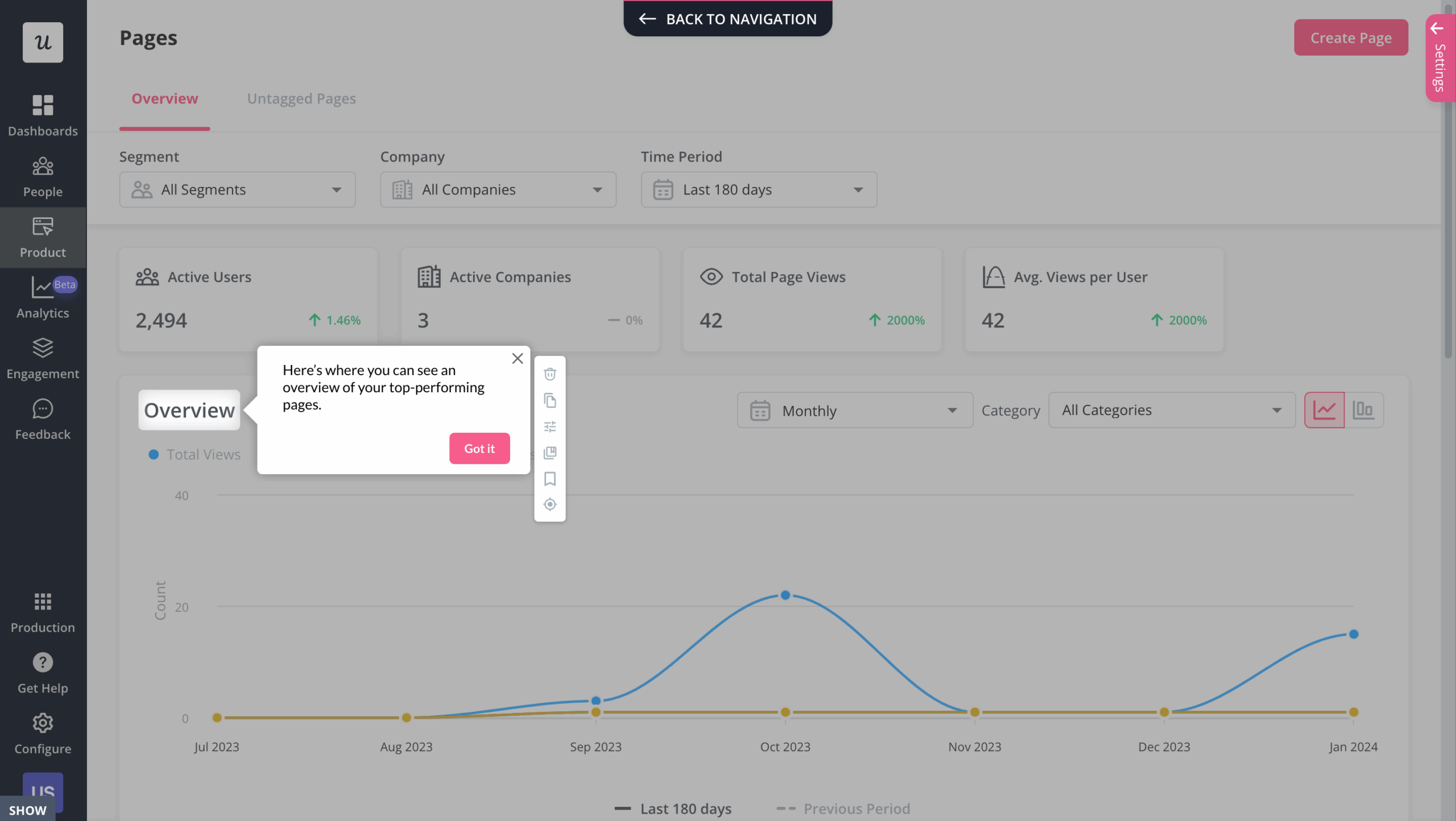
You can also segment your users based on the key actions they perform in-app via custom events or feature tags. This way you will be able to tell which actions relate the most to a user converting into a paying customer and nudge other segments into performing those actions using tooltips.
Just remember, if you have both freemium and free trial, you cannot combine freemium and free trial conversion rates and get a true picture of how free trials convert.
SaaS free trial conversion rate benchmarks
An industry benchmark is an ideal or average metric for an industry that companies should work to meet or surpass.
The interesting thing about the free trial conversion rate is that there are various benchmarks for the SaaS industry.
These come down to the type of free trial you are using, the complexity of your product, your audience (B2C vs. B2B), and how much you focus on onboarding.
- With an opt-in trial, First Page Sage reports an industry benchmark of 18.20% organic free trial to conversion rate.
- For opt-out trials, the same report from First Page Sage presents an average organic conversion rate of 48.80%.
- B2C companies have an industry average of 57%. For example, Netflix’s conversion rate is 93%, while Amazon Prime’s video is 73%.
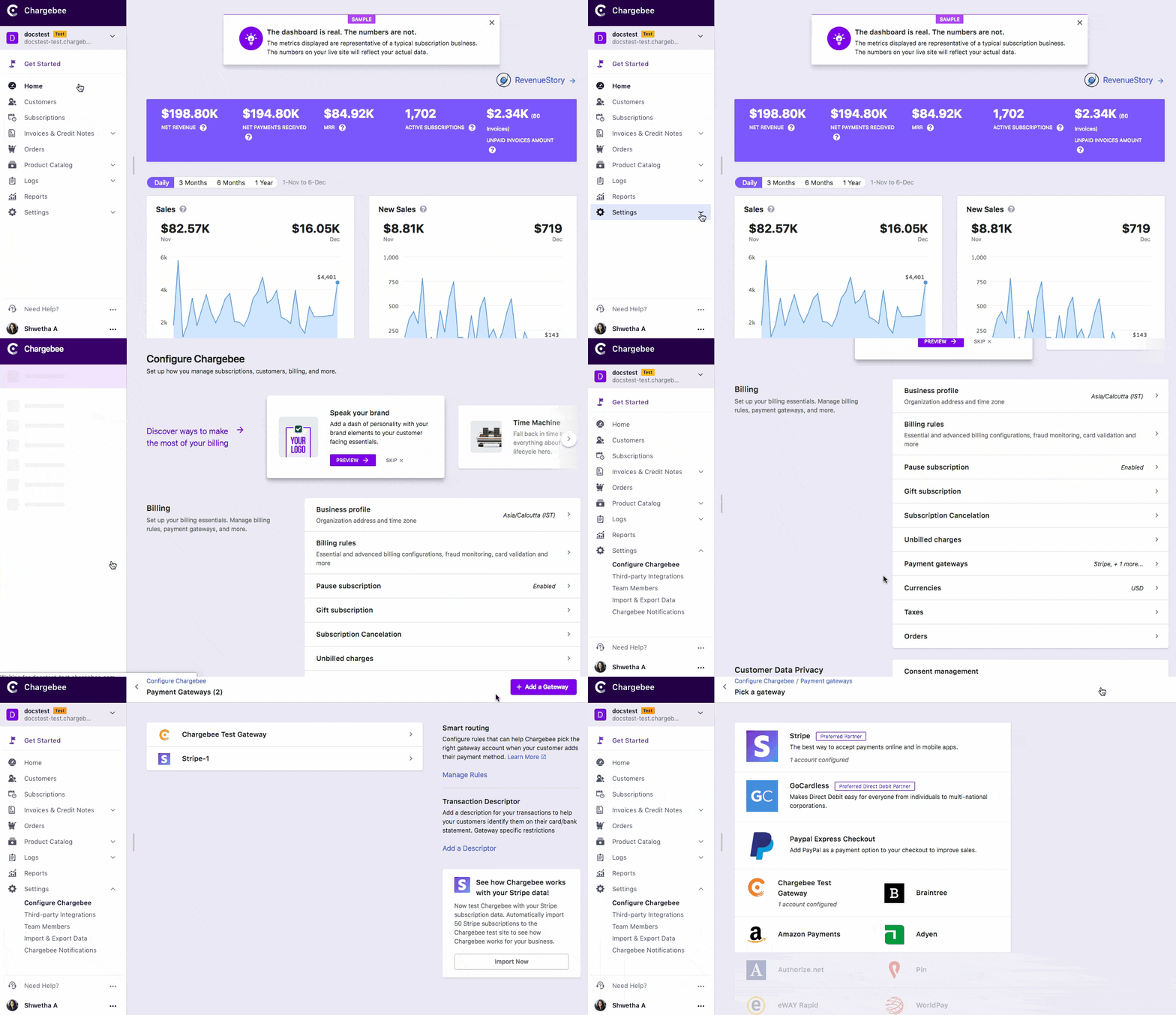
- In the B2B company space, the industry average is between 14-25%. This is a bit lower than the B2C space because of the shorter trial periods and more complex products. For example, a complex billing software like Chargebee’s conversion rate is 15% while still making more than $76.8M ARR.
What is the average conversion rate of SaaS free trial users?
As we covered before, there is no single average conversion rate for SaaS free trials. You should use different benchmarks as a reference point and always strive to provide a better user experience that will increase your conversion rates over time.
If you still want some numbers, here they are:
- If you have a relatively new product in the B2B space, try to aim for a rate between 15%-30%.
- 15% is considered a good rate, 25% is the B2B industry average you should aim for, and a 30% conversion rate and above is excellent.
- If you already have some time in the market and are using an opt-out free trial, you will want to shoot for an average conversion rate between 50-75%.
Your niche matters. Conversion rates differ between tools for developers vs marketers, vs operations.
| Vertical | Avg. Trial-to-Paid Conversion |
|---|---|
| CRM | ~29% |
| Cybersecurity | ~22% |
| MarTech | ~18% |
| Productivity | ~21% |
| HR Tech | ~19% |
Source: First Page Sage, 2025
How to improve your SaaS free trial-to-paid conversion rate?
The best way to improve your free trial-to-paid conversion rate is by using Product-Led Growth (PLG) strategies. This uses your product as the main engine of growth for your annual revenue.
It boils down to marketing a free trial to bring users into your product and providing them with engaging experiences so they see your solution as the best one to get their job done.
It is actually a bit harder than it sounds. If you have a conversion rate of 8%, that means 92% of prospects are not turning into customers. Why?
Many times it has to do with a poor onboarding experience such as:
- Sign-up flow friction is high even when the product is not complicated to use
- Overwhelming dashboard – AKA “Fear of a White Canvas”
- Long and unengaging product tour
- You don’t have a clear activation point and can’t tell when users are engaged or disengaged
- You don’t have a clear user journey that leads to conversion
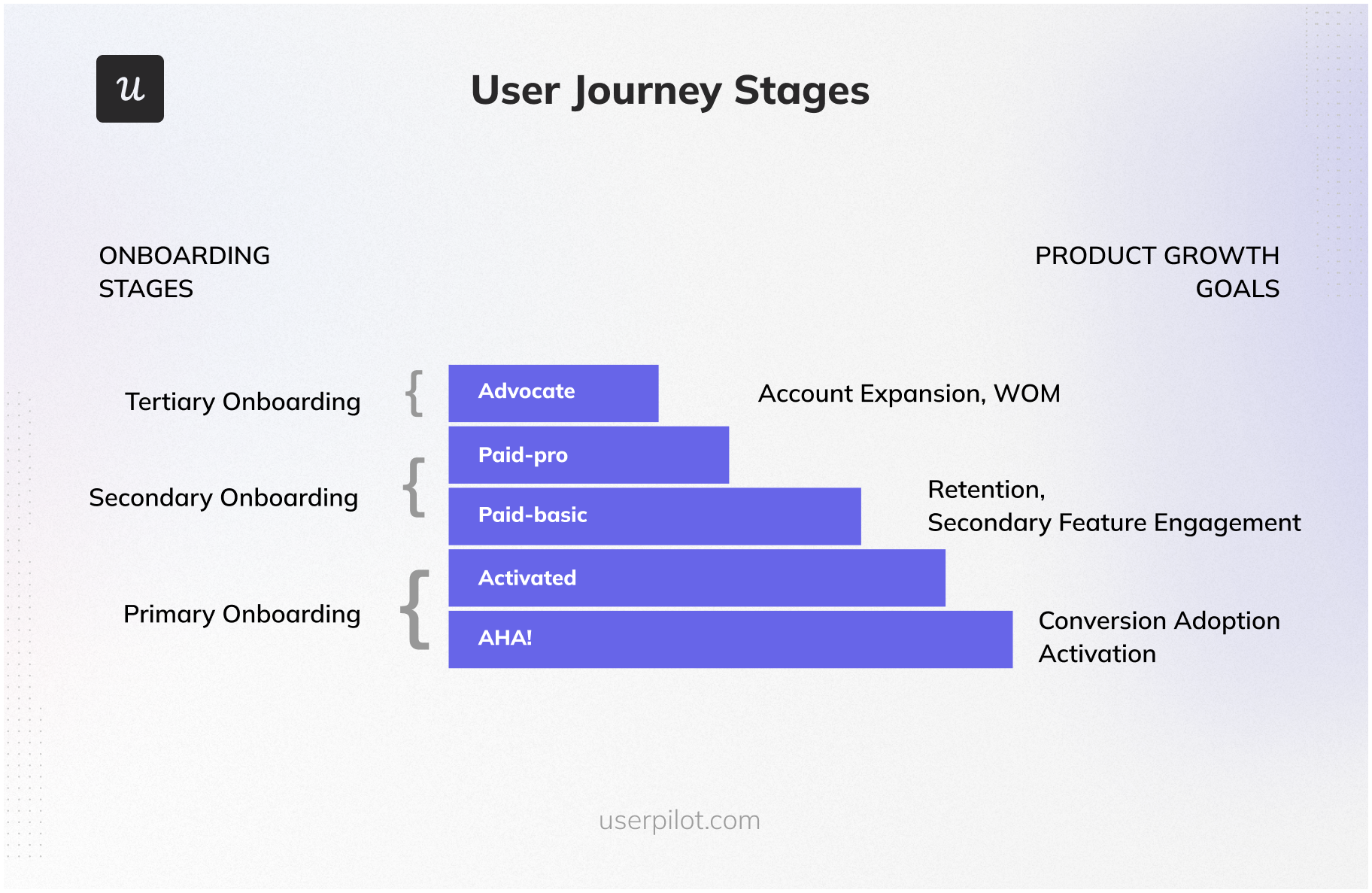
Here are some ways to tackle these issues:
1. Personalize introductions to nail your user onboarding process
To ensure your product meets expectations from the moment they sign up, you should have a personalized welcome screen.
No, that doesn’t mean just putting the user’s name and welcome. A welcome screen is more than just an opportunity to say hi. It’s a place to segment users and gain information that informs the rest of the onboarding process.
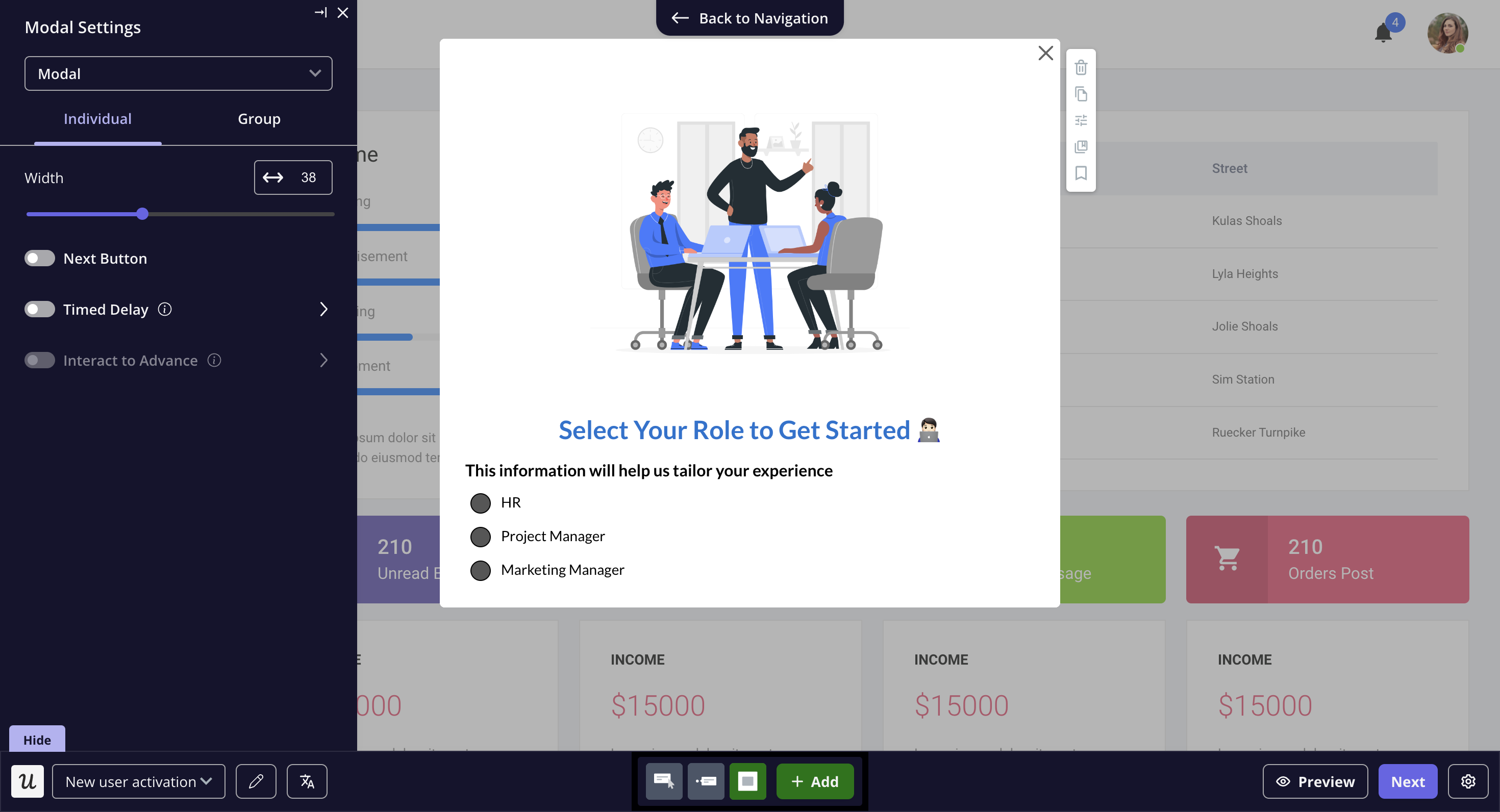
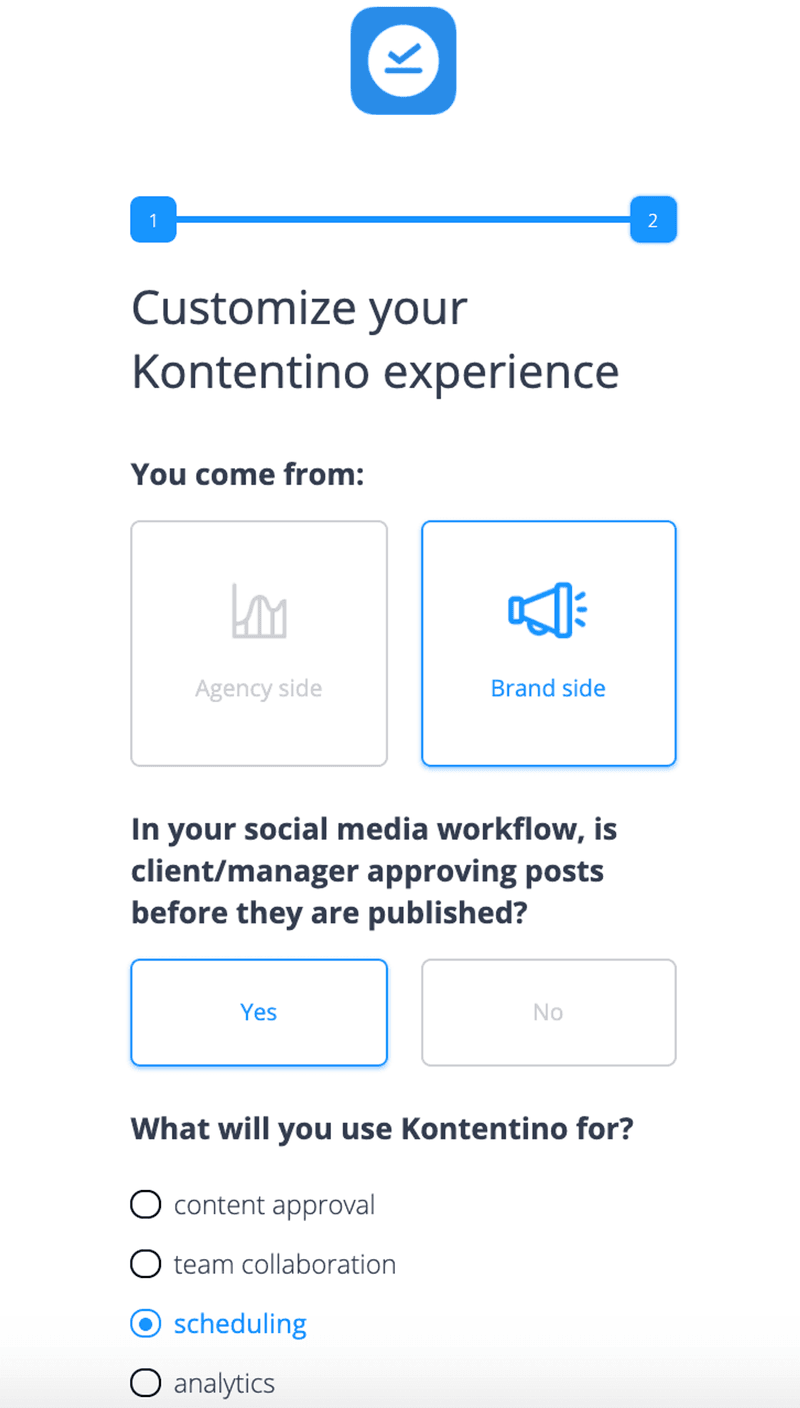
Create welcome screens with microsurveys to capture use cases and user personas. Then you can segment new users based on their persona and provide the most relevant onboarding to help them get their job done.
Check out Kontentino‘s welcome survey below, which, along with the interactive walkthrough they made, resulted in increasing new user activation by 10% in the first month of using Userpilot.
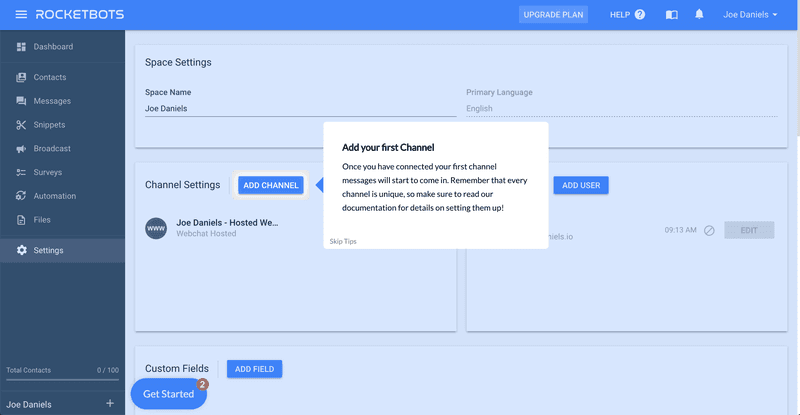
2. Guide free trial users with interactive walkthroughs
An interactive walkthrough helps your user navigate your product for the first time. It is the opposite of a product tour in that it follows a user’s journey rather than a comprehensive feature overview.
Usually, it appears as an overlay on the user interface and teaches your users the specific ways to start using your product to help them reach your activation point. You can only set up a successful onboarding process if you know what constitutes activation for each individual user segment.
Here is an example of a great onboarding from Rocketbots. Adding this interactive walkthrough to their product doubled Rocketbots’ activation rate from 15% to 30%!
3. Add checklists to guide new users toward activation
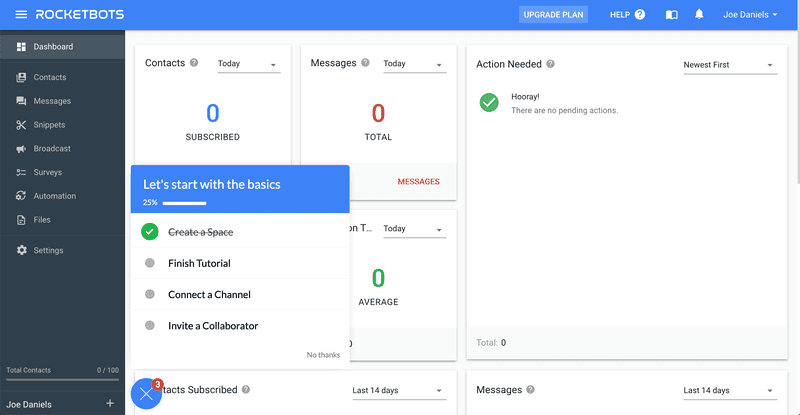
A checklist is another great way to incentivize your users to complete their onboarding and make sure that they reach the activation point in their journey.
Below is an example of Rocketbot’s onboarding checklist.
No onboarding process is perfected in the first iteration, so you can conduct regular A/B tests to improve as you go.
4. Leverage in-app surveys to increase free trial conversions
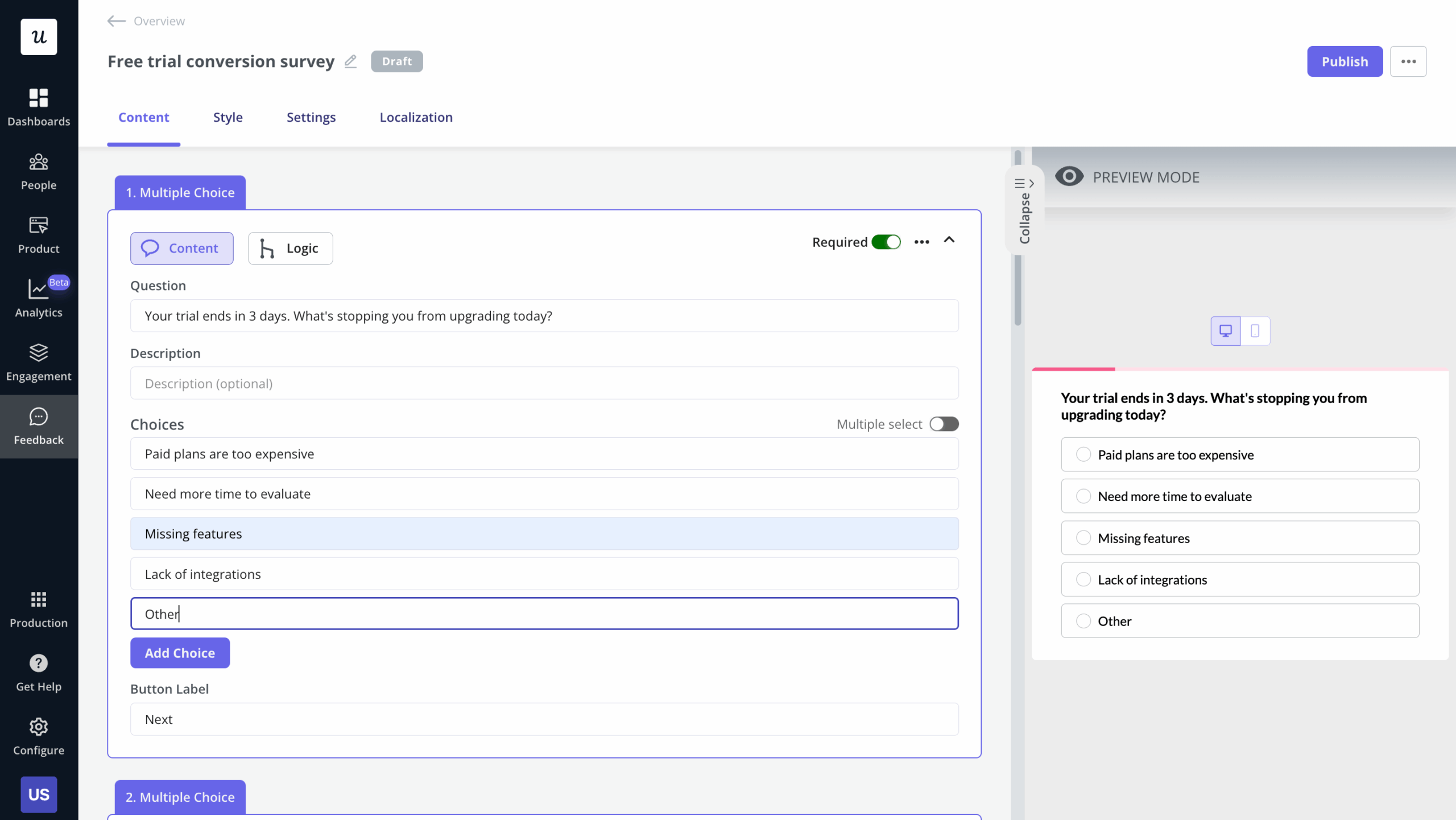
Microsurveys are essential for collecting user feedback that gives you the necessary insights into how you can improve your user experience. This will have a direct influence on your trial-to-paid conversion rates.
For an increasing trial-to-paid conversion rate, here is a great example of a microsurvey you can use. Being proactive and reaching out to users before the trial ends will give you time to act on the insights collected and help users make a purchase decision.
Focus the survey on common objections to upgrading – too expensive, need manager approval, still evaluating the product, etc.
Create in-app guidance to drive user engagement
A user engagement tool provides you with various engagement layers (i.e., modal, tooltips, slideout, etc.) to help you build engaging in-app guidance. As users don’t have to navigate your product themselves, they are more likely to stay engaged and continue using your product.
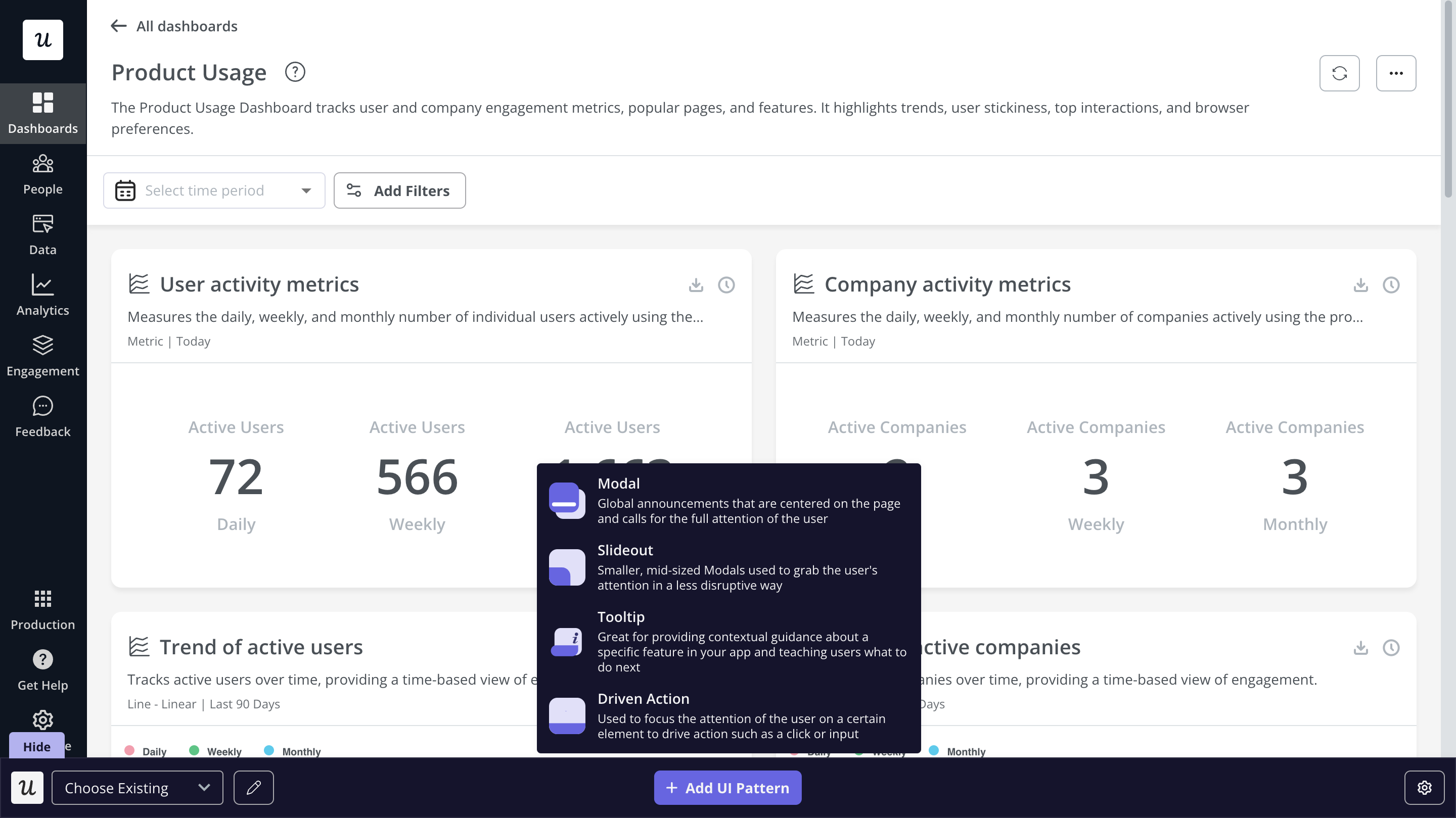
This will ultimately help shorten time to value and boost the free trial conversion rate.
Segment users to send them relevant upgrade messages
Advanced segmentation allows you to filter your users based on a number of criteria. This includes their survey answers and in-app behavior.
In this way, you can target specific segments with relevant upgrade messages.

Analyze product usage to deliver personalized in-app experiences
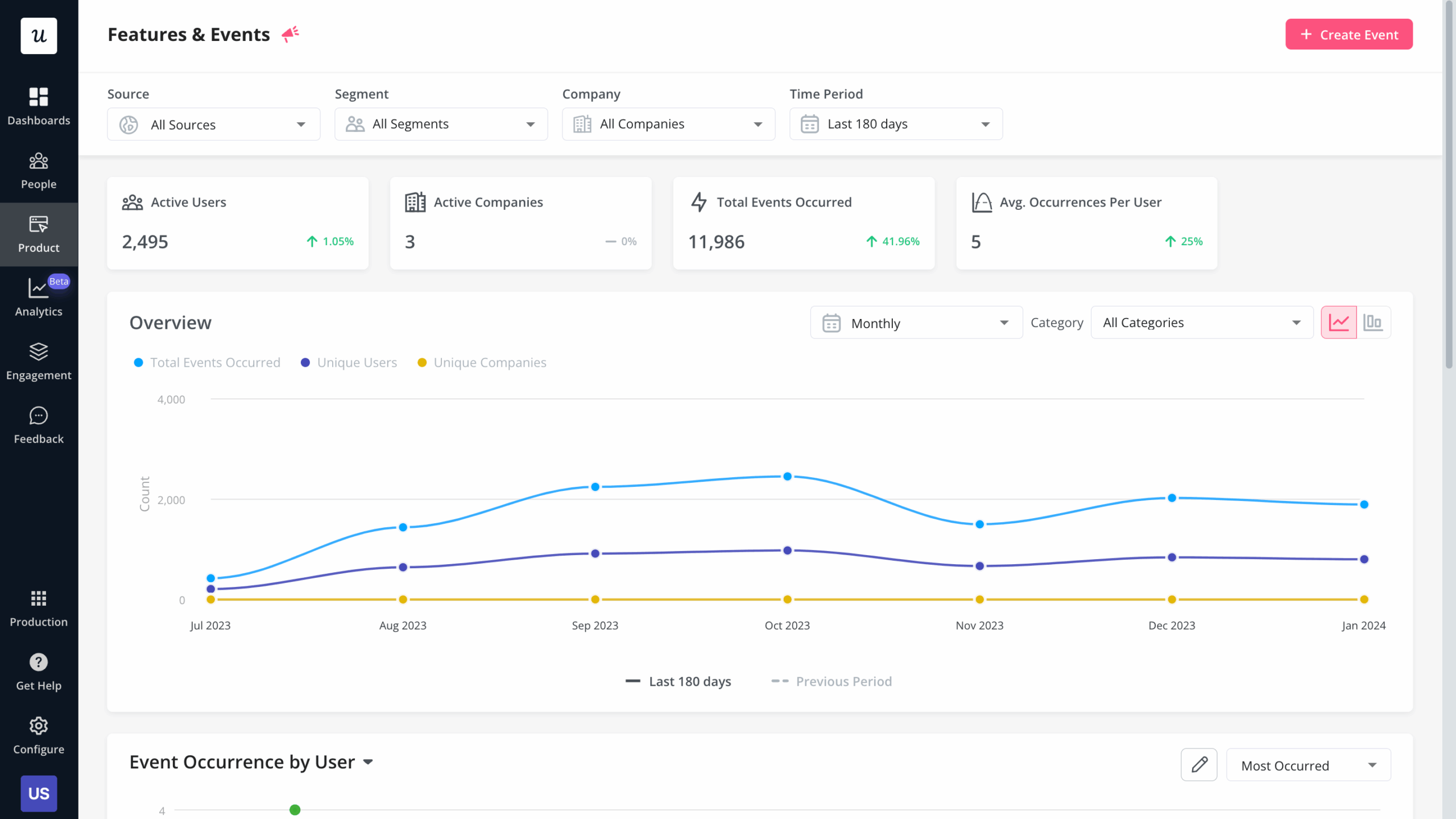
Tracking product usage in real-time enables you to trigger contextual in-app experiences.
These could be upgrade prompts, for example, when the free user gets close to their feature limit. This is not limited to in-app communications. Using webhooks, you can automate sending emails as such events happen.
Not just that, you can also leverage the user behavior data to deliver a personalized onboarding experience that helps users reach activation as soon as possible. That might be what it takes for users to give in their credit card and pay for the paid version.
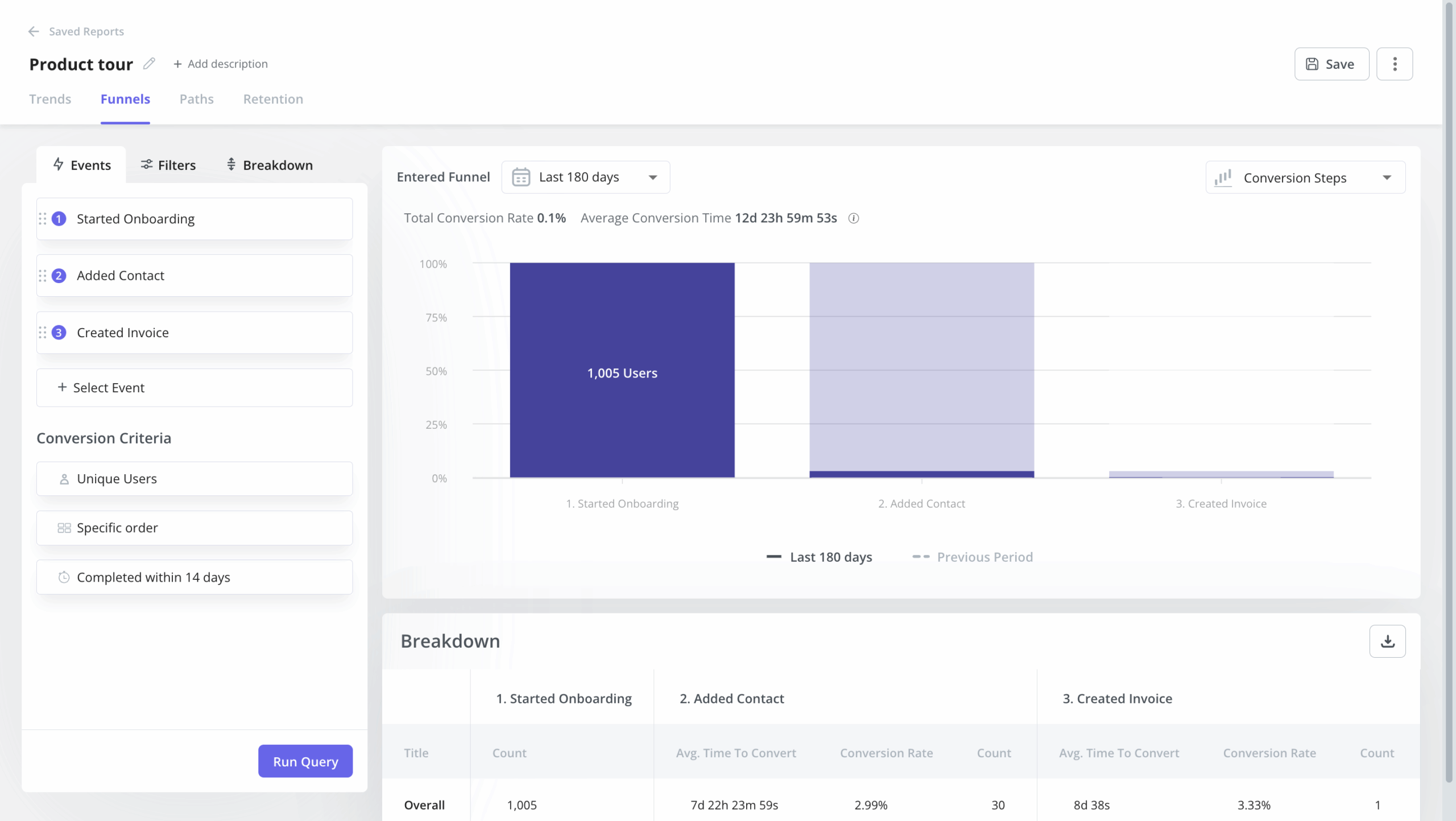
You can also use funnel analysis to find friction points in the free trial conversion funnel. You would need to combine it with session recordings to understand the ‘why’ behind friction and drop-offs.
Conclusion
If you find that your free trial conversion rate isn’t meeting your industry standards, don’t lose hope.
Follow the four tactics discussed here, focus on improving your user onboarding, and results will start to show.
About the author