How Does a Free Trial Work? The Fundamentals That Outlast 2026’s Pricing Trends

A free trial is one of the oldest strategies in SaaS. Yet, most teams wonder about how long trials should run, whether to require a credit card, or which model converts best. But we rarely talk about the fundamentals that make free trials work in the first place.
Basically, free trials follow a combination of sales principles (Robert Cialdini’s reciprocity + commitment and consistency), so once someone invests time in adopting your product for free, they’ll be more likely to keep using it. These principles are why good user onboarding is key to activating users, and principles never change even after the wave of AI or usage-based SaaS.
With that in mind, I wanted to write something more honest than another “what is a free trial?” explainer. This guide does four things:
- Explain the fundamentals of a free trial and the importance of good onboarding.
- Show how to choose the right trial model.
- Share why trial length matters less than you think.
- Show how the onboarding experience inside the trial improves conversions.
What a free trial fundamentally does
A free trial gives prospective customers access to a product for a limited time, so they can evaluate whether it solves their problem before committing to payment. It works because of Cialdini’s principles I mentioned earlier, it reduces perceived risk by providing value for free (reciprocity), and creates a habit that makes switching to a competitor feel inconsistent (commitment and consistency).
However, opening a trial doesn’t automatically deliver those outcomes. Hila Qu, a growth leader at Reforge and GitLab, puts it like this: “Don’t equate launching a free version or trial with PLG. It’s not enough to just open a free trial; you must also consider how to activate users, design an upgrade path, and how this growth team will collaborate with sales and marketing.”
A free trial works as a container. What goes into it (i.e., product onboarding experience, the value delivery, or the path from freemium to premium) is what determines whether a trial user becomes a paying customer.
Ben Williams, host of The Product-Led Geek podcast, tracked this at Snyk, where he called the outcome “product-influenced revenue”:
“Nearly half of all recurring revenue came from companies who started using the product in a really meaningful way before any kind of sales engagement.”
— Ben Williams, The Product-Led Geek
That “product-influenced revenue” starts with a trial, but it can only be realized if the first experiences can demonstrate the value of the product. Thus, it’s equally essential for your product’s success to offer a high-quality onboarding experience.
Free trials in the AI and usage-based pricing era
The fundamentals of a free trial haven’t changed, yet the tactics are. AI is now embedded in almost every SaaS product, and according to Poyar’s 2026 monetization research, AI gross margins average around 50% compared to 70-80%+ for traditional SaaS. This research suggests that free users cost materially more when each session includes LLM calls, vector queries, or AI-agent executions.
This is pushing wider adoption of a model that already existed but is becoming standard: the credit-based or action-limited trial. Credit limits and usage caps on free tiers aren’t new (Dropbox, Mailchimp, and early Twilio all used storage or send limits to gate free access). What’s changing is how common this model has become in a broader set of AI products and features (despite being expensive in AI compute).
The wave also made hybrid pricing the most common model among B2B software companies: 37% describe their pricing as a combination of two or more structures (typically per-seat plus AI consumption on top), up from 25% the prior year. Most are giving free time-limited access to the platform while capping usage of AI features, which brings a balance between letting users evaluate and containing AI token-related costs.
Choosing a trial model is an optimization question
According to Kyle Poyar, Analyst-in-Residence at ChartMogul, whose 2026 free-to-paid conversion report analyzed 200 B2B software products: “Freemium versus free trial is the wrong question. Neither provides the best chance to drive feature adoption or to maximize conversion.”
What matters is what you’re trying to optimize. Your goal is what will ultimately dictate your PLG funnel and trial structures:
- If you want to optimize your adoption funnel for maximum product adoption, an ungated freemium experience (no account required) generates the most users.
- For maximum signups, opt-in free trials and gated freemium both perform well.
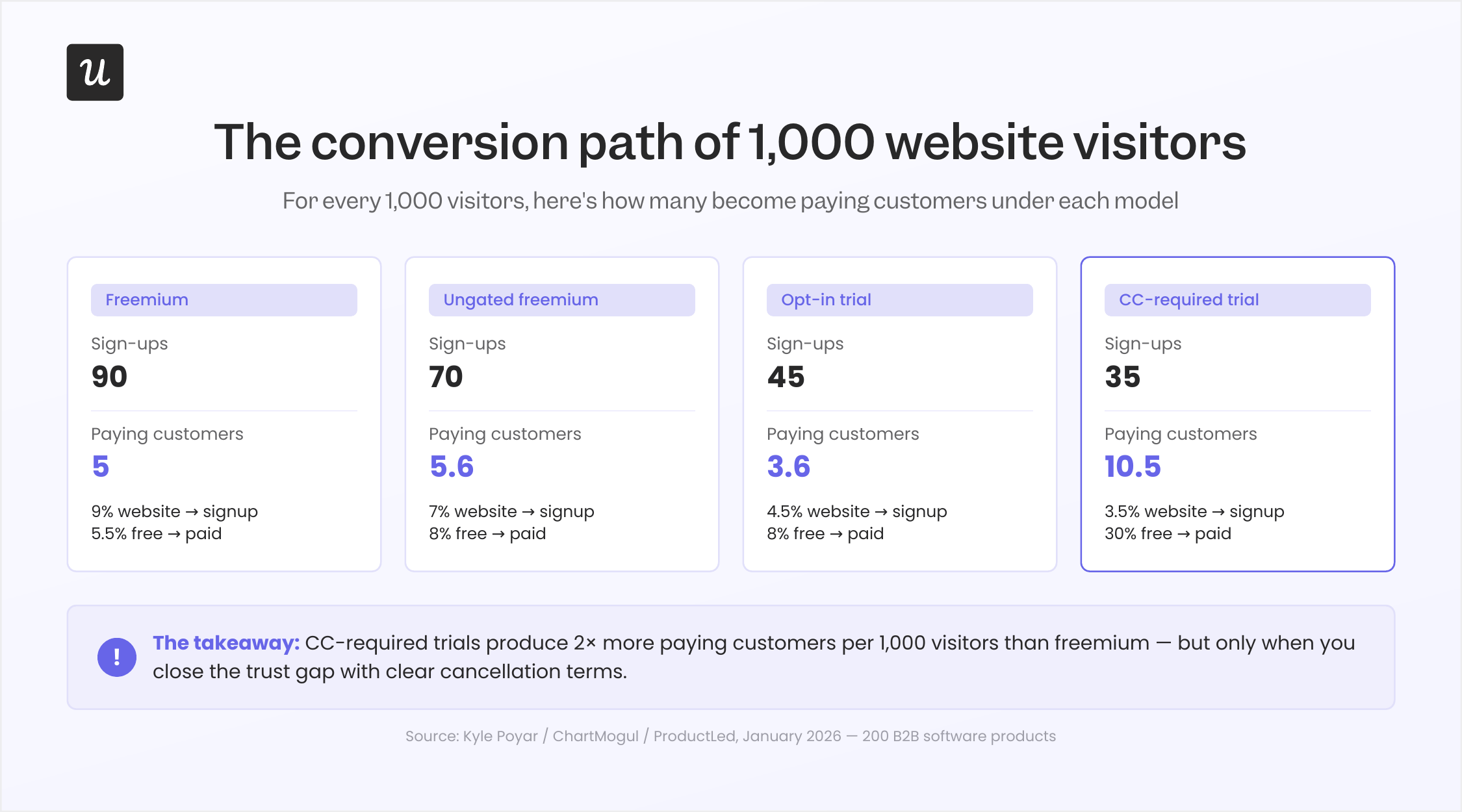
- To optimize paying customers per visitor, a credit-card-required trial converts at roughly 5x the rate of opt-in.
- To combine the conversion urgency of a trial with the user volume of freemium, reverse trials are the strongest option.
These models can also be combined, depending on how your product delivers value, who your buyer is, and overall, what your growth model actually needs. Wes Bush, CEO and Founder at ProductLed, frames the decision correctly. Rather than asking which model is universally better, his advice is to start from user outcomes and align the model to those needs:
“There is no single correct model. Instead of debating whether you should have a free trial vs. freemium model, focus on your user’s desired outcome and their challenges, then arm them with everything they need to succeed. Align your model with those solutions.”
— Wes Bush, ProductLed
So let’s go over the most relevant trials today:
Opt-in free trial
An opt-in free trial gives users time-limited access to the product without requiring payment information upfront. Users provide only an email address to get started, which keeps friction at the top of the funnel low, which is why it’s the most popular model in B2B SaaS. It’s accessible to start, has no financial commitment, and gets low perceived risk for the potential customer.
The conversion benchmarks from the ChartMogul/Poyar data show that for opt-in trials, average conversion rate is 4-6%, and great is 10-15%. These numbers are lower than opt-out trials because there’s no precommitment signal, whereas opt-in trials attract a wider audience, including people who are casually evaluating with no near-term purchase intent.
In short, opt-in free trials work best when:
- Your product can deliver a clear “Aha!” moment within the trial window without complex setup.
- Your buyer is an individual user or a small team that self-serves to make a purchase decision.
- You’re in a competitive category where requiring a credit card would push users toward a competitor with a lower-friction signup.
- Your activation rate and onboarding quality are strong enough to move users from “curious” to “convinced”.
Curiously, Userpilot is a good example of this. We use an opt-in free trial because, although our product requires some setup to deliver value, the core use case (i.e., seeing your first in-app flow live in your product) is achievable within the first session for most users. Also, we already do demos for enterprise clients with more complex needs, which allows us to offer the best experience to each type of customer.
Opt-out free trial (credit card required)
An opt-out free trial requires users to provide payment information before the trial begins. They get full product access during the trial period and are automatically charged when it ends unless they actively cancel. This structure front-loads commitment, which is exactly why it converts so much better: users who provide a credit card have a stronger purchase intent.
The conversion benchmarks are dramatically different from opt-in trials. According to the ChartMogul/Poyar data, products that require a credit card see 30% free-to-paid conversion (more than 5x the rate of opt-in trials), with GOOD defined as 25-35% and GREAT as 50-60%.
The trade-off is a smaller signup funnel. CC-required trials attract around 35 signups per 1,000 visitors versus 45 for opt-in (but those 35 generate almost three times as many paying customers).
In short, this model fits best when:
- Your product handles sensitive data or business-critical workflows where users already expect some kind of commitment.
- The target buyer is a decision-maker who can provide payment information without a lengthy internal approval process.
- You can communicate clearly when the trial ends and when billing starts.
- Your product’s activation moment is reliably delivered within the trial window without heavy setup assistance.
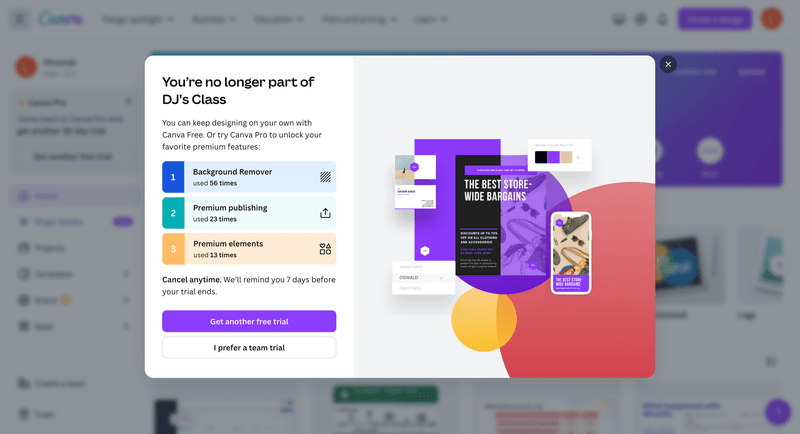
For example, Canva requires a credit card to start a 30-day Pro trial. One of the details that stands out to me is how they ease the commitment. The upgrade prompt tells users that they’ll receive a reminder 7 days before the trial ends, “de-risking” the action. In fact, if you cancel your plan, Canva will offer you an additional trial for you or for an entire team.
Reverse trial
A reverse trial, popularized by Elena Verna (Growth leader at Lovable), starts every new signup automatically on the paid tier without requiring a credit card. When the trial ends, users who haven’t paid drop down to a free or limited tier instead of losing access entirely.
The idea is loss aversion: it’s harder to lose features you’ve already experienced than to miss features you’ve never tried.
Elena explains it in her newsletter while walking through examples from Canva, Asana, Notion, Airtable, and Dropbox: “The Reverse Trial strategy ingeniously combines the best aspects of both approaches. It starts every new signup on a trial, usually without needing an opt-in or a credit card, and gives customers access to all or a select set of paid features. After the trial ends without a payment being made, users are smoothly transitioned to a freemium plan.” The downgrade becomes the conversion trigger instead of the trial length.
Reverse trials are a strong fit when:
- You already have a freemium product and want to accelerate paid conversion without abandoning the freemium top of funnel.
- Your paid features are meaningfully better than your free features, and users need to experience the difference firsthand to appreciate it.
- Your product has strong collaboration or team features that are only accessible on paid plans.
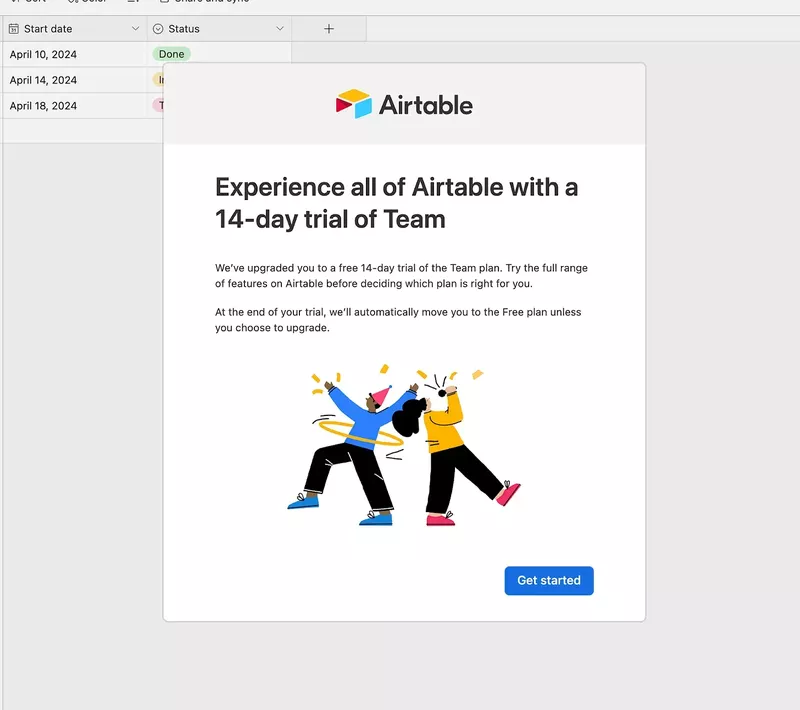
In Airtable, for example, their reverse trial puts every new user on a 14-day team trial and communicates the downgrade terms clearly: “At the end of your trial, we’ll automatically move you to the Free plan unless you choose to upgrade.” That communication, combined with the experience of premium features, is what leads to a conversion in their model.
Limited usage and credit-based trials
Instead of time-limiting access, a credit-based or action-limited trial gives users a defined allocation of credits, queries, or actions. It offers enough to reach a value moment, but not enough to complete a project without paying.
This model has existed for years in products with clear per-unit costs, API platforms, email tools, and cloud storage, but is now showing up in products that never needed it before (mostly due to new AI features that have much higher costs).
The model also has a psychological advantage that time limits sometimes don’t have. A user who has consumed 40 of 50 free credits feels the constraint more acutely than a user on day 12 of a 14-day trial. Credit depletion is a strong conversion moment because the user is actively in the product and actively running out of resources.
This model is a strong fit when:
- Your product has meaningful per-session compute costs (AI inference, API calls, storage processing) that make unlimited trials financially risky at scale.
- Your value moment is clearly achievable within the credit allocation. Users should reach their “aha” moment before running out.
- Usage depletion creates a natural, in-context conversion moment: the user runs out while actively doing something they want to continue.
- Your pricing is already usage-based, making the credit model feel consistent with how the paid product works rather than arbitrary.
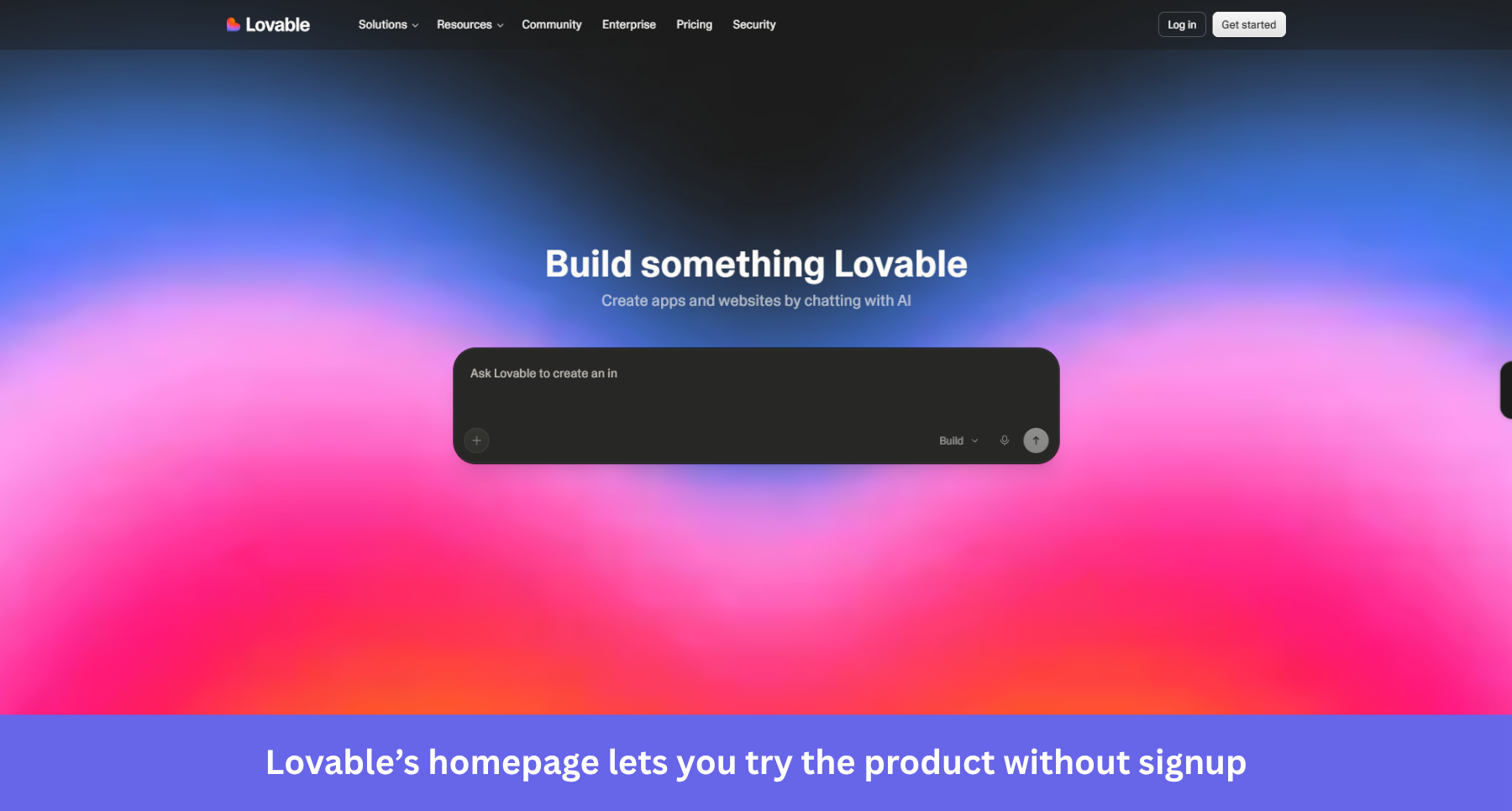
For this, Lovable is a prime example. It lets users start building without creating an account (an ungated product experience) but imposes clear usage limits once they’re engaged. By the time users hit their usage wall, they’ve invested enough effort in their project to feel the pull of commitment.
What about freemium?
Freemium isn’t technically a type of trial, but the underlying purpose is the same: letting potential customers experience product value before committing to payment.
The freemium model does this through permanent but constrained access. The goal isn’t conversion urgency, but adoption volume and product-qualified pipeline built over a longer horizon.
For most B2B SaaS companies, freemium is the wrong choice. It works when your product has strong viral loops, very low marginal cost per free user, and a large addressable market where acquisition at scale justifies supporting a permanent free tier.
Freemium can work when individual users adopt the product personally and later bring it into their organizations. Slack and GitHub are the canonical examples of this bottom-up PLG dynamic working at scale.
Specific reasons to consider freemium over a free trial:
- Your product has a strong bottom-up adoption dynamic where individuals adopt it for personal use and later introduce it to their organizations.
- The marginal cost of each free user is very low, with no meaningful AI compute costs, minimal storage requirements, and a low support burden.
- You’re building for an ecosystem: developer tools, open source projects, etc.
- You have a clear, defensible upgrade path, and the value of premium is clearly differentiated from free.
- You can afford a long conversion timeline (freemium median time-to-purchase runs 60-90 days versus 14 days for a standard free trial).
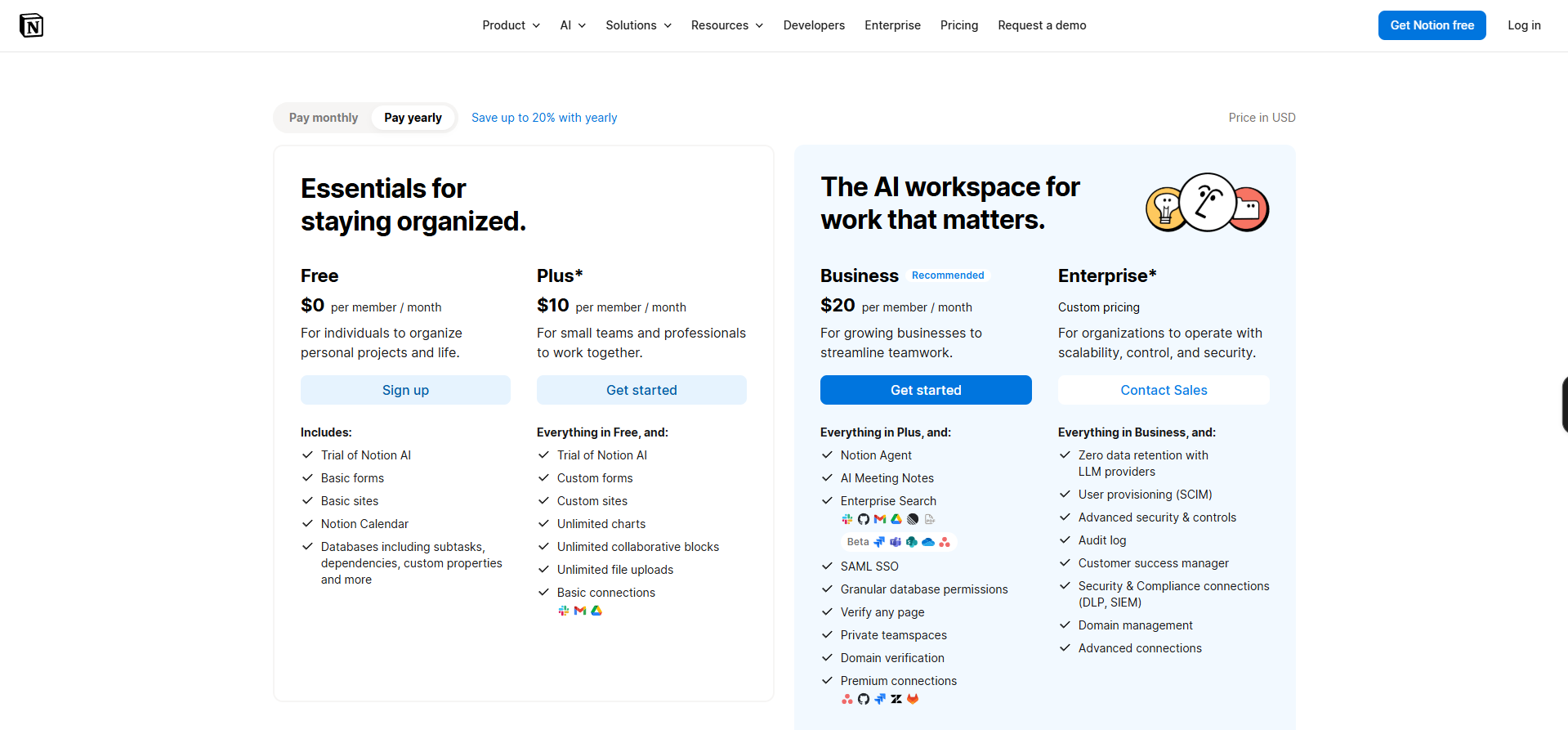
Notion is a good example of gated freemium working at scale in B2B. Individual users get meaningful free access, enough to build a genuine workflow dependency, but the features that matter most for teams (guests, version history, advanced permissions) sit behind the paid tier. The upgrade happens naturally when the product’s value expands from personal to collaborative, without any trial clock creating artificial urgency.
Free trial length is less important than most teams think
Many teams spend too much time debating trial length. The research on free trial length points to 14 days as the most common choice, 62% of products in the ChartMogul/Poyar study used a 14-day trial, followed by 7 days and 30 days at 14% each.
The boring reality is that it depends. Free trial length should be based on how long it takes a new user to experience the “aha” moment. A product that delivers its core value in the first session is well-served by a 7-day trial. A product that requires extensive data setup or workflow integration before delivering value may need 30 days. But usually, it won’t affect conversions that much.
Here are the only factors that should guide your trial length:
- Time to value: How long does it take a new user to complete the action that correlates with eventual conversion? Users should reach the value moment with time left to consider the upgrade decision.
- Product complexity: Simple products with immediate value are better with short trials. Complex products with longer setup requirements need longer windows to deliver what they promise.
- Buying process length: If your typical customer needs a security review, a team decision, or a procurement process, a 14-day trial won’t be enough. Enterprise-oriented products with longer decision cycles won’t offer trials with less than 30 days.
- Your pricing tier and ACV: The trial length needs to match the weight of the buying decision. According to ProductLed’s PLG benchmarks, products with a $1K–$5K ACV see the highest median free-to-paid conversion. But higher-ACV products typically need longer, more supported evaluation windows.
How to make your free trial convert
The trial model you choose matters, but the model only sets the conditions. The role of a free trial is to allow your product to show what it does, and the faster that value moment arrives, the better the conversion outcome.
That’s why onboarding quality is the most important variable in free trial conversion. Users who reach their aha moment early convert more than users who don’t.
So, the strategies below are all meant to accelerate that value moment and reduce friction:
Simplify the sign-up process
The first friction point in any free trial is the sign-up page. Every extra field, every required decision, every confusing step at signup is a leak in the funnel before the trial has even started.
To improve it, offering single sign-on through Google removes the password setup step entirely. Also, limiting the form to email or SSO reduces friction at exactly the moment when intent is highest.
In short, the harder you make it to start a trial, the less committed a user feels. If starting the trial is confusing, users assume using the product will be too.
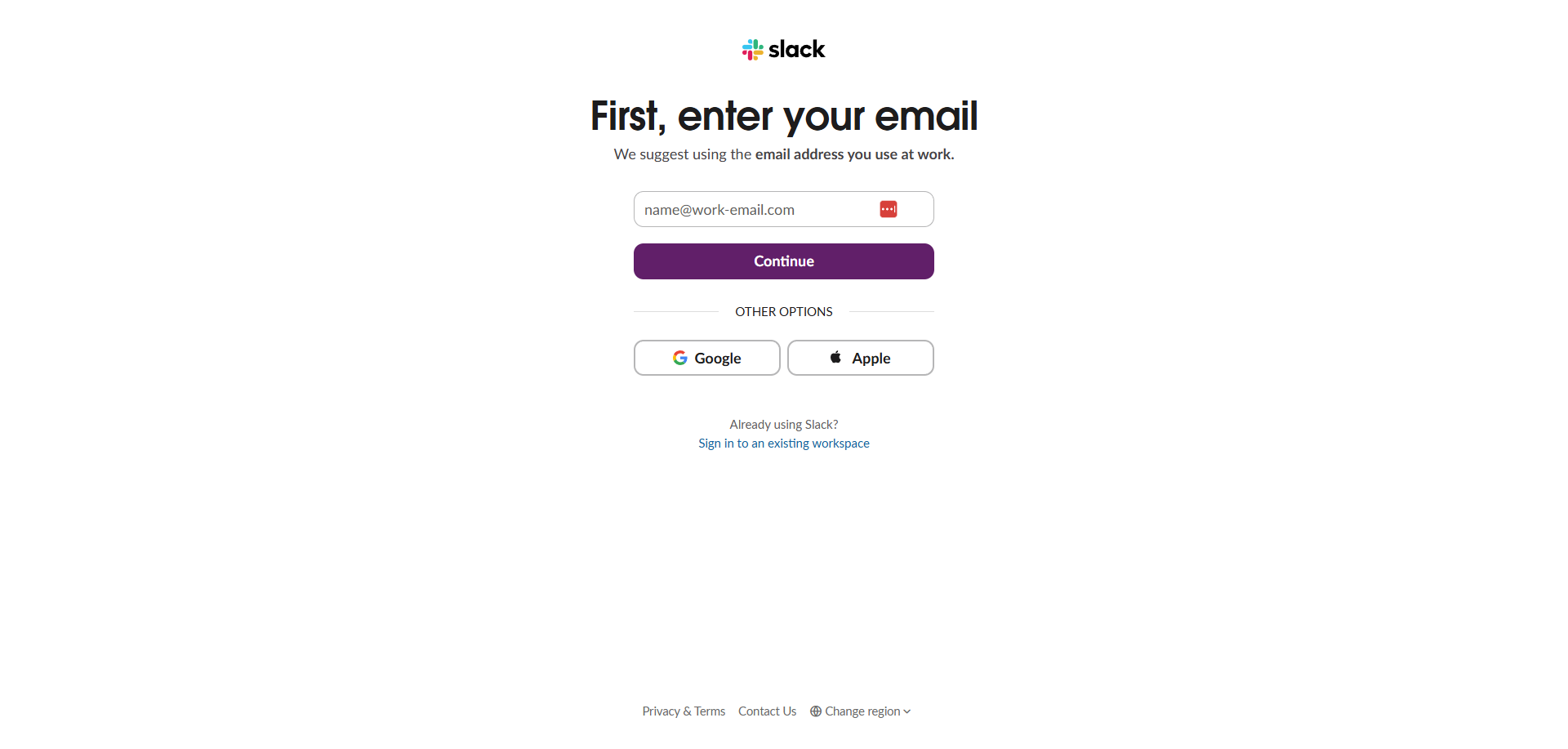
For example, Slack’s signup page shows “Sign in with Google” as the primary action, with email and password as a secondary option. The typical signup completes in under 15 seconds.
Build a personalized onboarding experience
Contextual onboarding closes the gap between what a user needs and what they see.
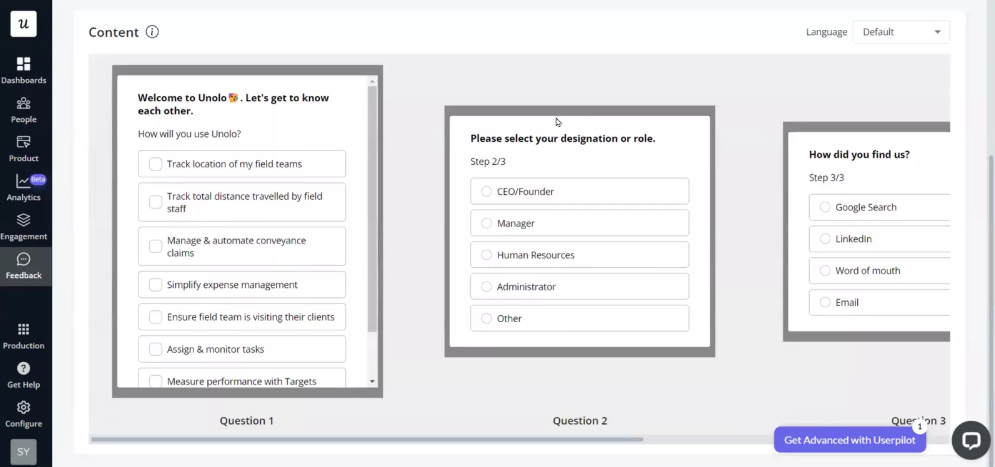
The most efficient way to start personalizing immediately is by triggering a welcome survey, which is a brief set of questions that captures the user’s role, goal, and use case. These responses let you segment trial users and show them checklists, walkthroughs, and flows relevant to their specific job-to-be-done (rather than a generic product tour designed for a hypothetical average user).
When users see onboarding content that matches their JTBD, engagement goes up, and time-to-value goes down. Both of those outcomes correlate directly with conversion.
Guide users to activation with onboarding checklists
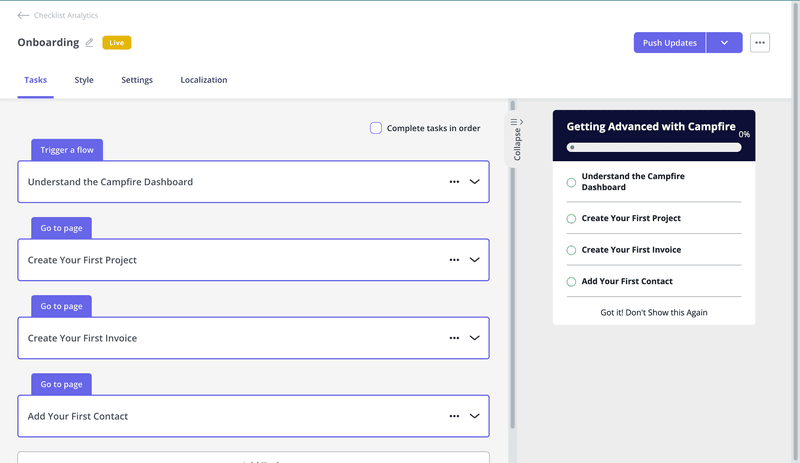
A user onboarding checklist gives trial users a structured path to their first value moment. Without a checklist, users explore randomly: they click around, discover some features by accident, miss others entirely, and may never reach the activation point. A checklist creates a directed path without requiring a sales call or a CS handoff.
Two details make checklists more effective. One is pre-loading the checklist with one completed task, which capitalizes on the Zeigarnik effect (the psychological tendency to want to complete unfinished sequences), making users more likely to complete the list. Another one is adding a progress bar that shows users how close they are to finishing the list, preventing the drop-off that happens when onboarding feels endless, and progress is invisible.
Use interactive walkthroughs to shorten time-to-value
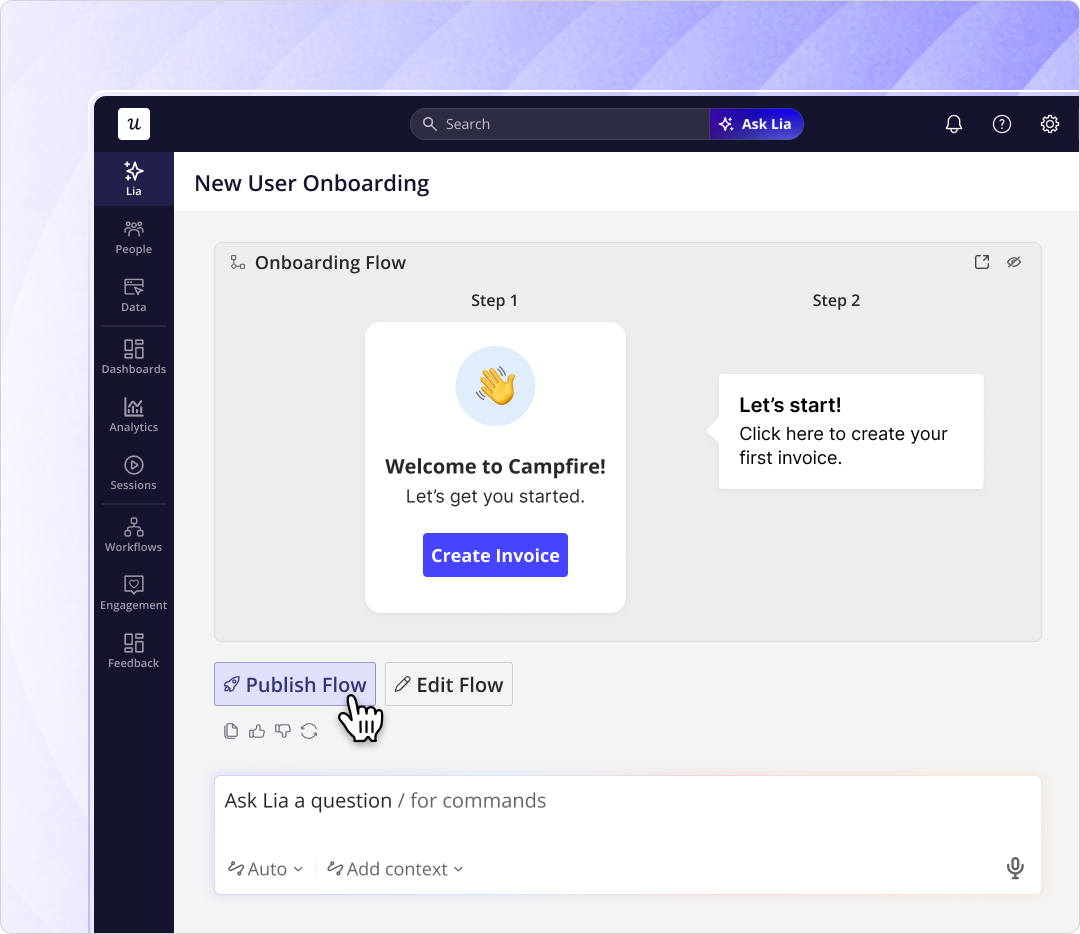
Unlike product tours, interactive walkthroughs make users complete meaningful actions inside the actual product, teaching them how to use the product by using it.
By the time the walkthrough ends, the user has experienced the feature firsthand rather than merely been told about it. That difference is what creates the conditions for conversion to happen.
For example, when we launched Userpilot’s email feature, the funnel showed a sharp drop-off at domain verification. Users were getting stuck at a technical step before they’d experienced any value from the feature at all.
Within a few hours, I built a targeting tooltip highlighting exactly what users needed to do to complete verification. That interactive guidance reduced the drop-off rate within days, without involving the engineering team.
Trigger contextual upgrade messages at the right moment
Upgrade prompts fail when they’re timed to a calendar rather than to user behavior.
A generic “your trial ends in 3 days” email is easy to ignore. But a contextual prompt that triggers when a user hits a feature gate is much harder to dismiss, because it appears exactly when the user needs a premium plan.
Loom is a classic example. They prompt upgrades when users hit their 5-minute recording limit, which is exactly when the user needs it.
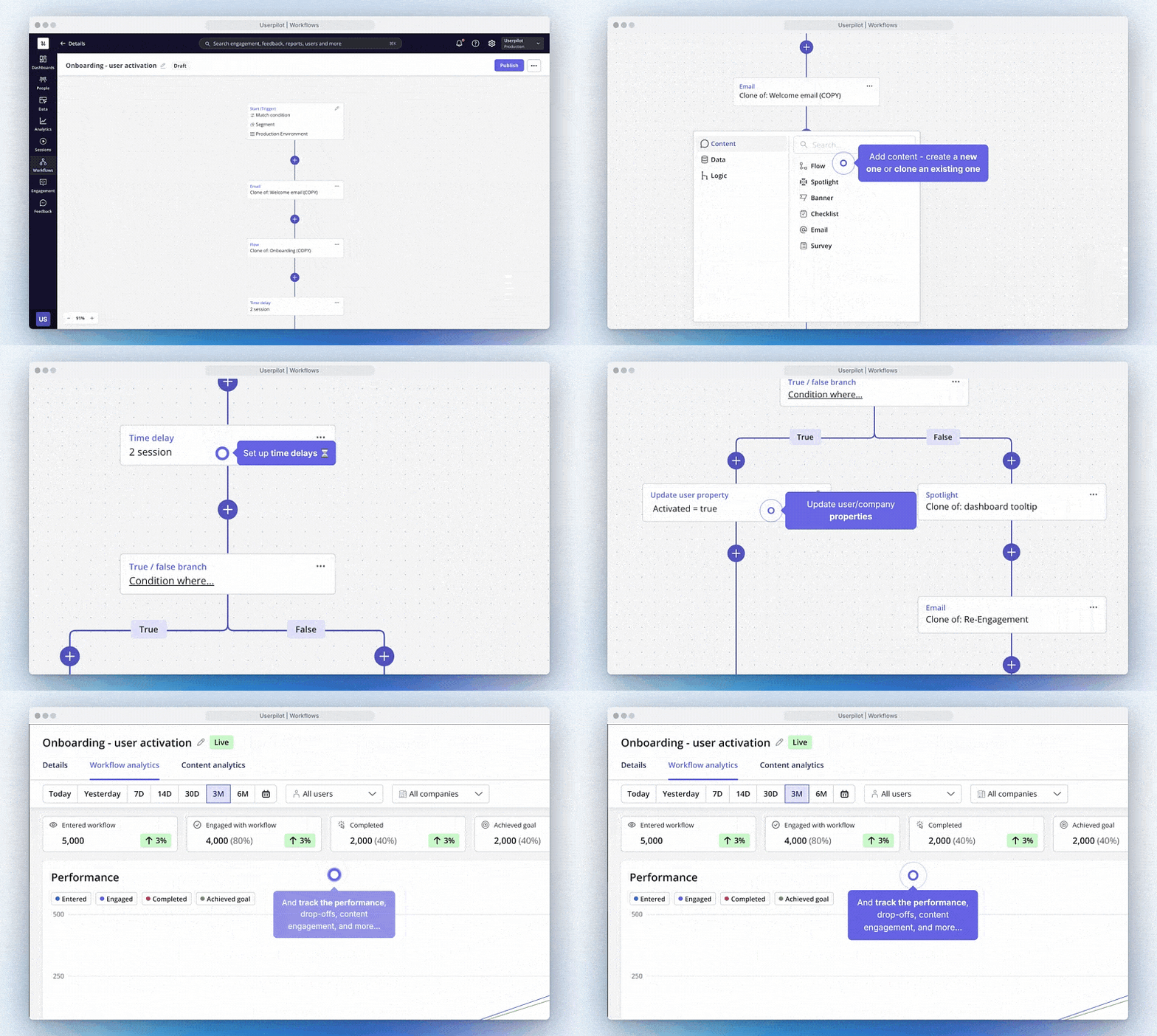
To apply this, Userpilot’s Workflows lets you build these triggered upgrade nudges across channels, in-app, email, and mobile, without engineering involvement. You can configure a rule that triggers an upgrade prompt when a trial user completes their third core workflow, when they’ve activated on all key features but haven’t upgraded, etc.
The fundamentals outlast the pricing model
SaaS trends s will keep changing. What won’t change is the fundamentals: people want to experience value before paying for it, and once they’ve invested time in something, they want to stay consistent with that investment.
The free trial doesn’t need to be reinvented for 2026. It needs to be executed well. That means choosing the trial structure that matches your business, determining the trial length to your real time-to-value, and building a user onboarding experience that delivers fast value.
If you want to see how Userpilot can help you build that experience (i.e., personalized onboarding flows, behavioral upgrade triggers, product analytics, and Lia), book a demo, and we can show you how to optimize your free trials.
About the author